Hooray for Hapgood Lyrics — Anyone Can Whistle
Hooray for Hapgood Lyrics
Hooray for A, the group that's well-adjusted,
Everyone can be trusted
In Group A!
GROUP ONE:
Have fun with One, the group that's not neurotic.
Everyone's patriotic
In Group One!
BOTH GROUPS:
Dignity, integrity and so on,
We haven't much to go on,
Still we go on.
We've a platform strong enough to grow on:
GROUP A:
Whenever they cheer, we're incensed!
GROUP ONE:
Whenever they're for, we're against!
GROUP A:
Hooray for Hapgood,
Hapgood can be trusted,
Friend of the well-adjusted
In Group A!...
NARRATOR:
Hapgood appears, carried aloft in Cora's litter, and they follow him out of the square, leaving it deserted - except for a dazzling redhead in dark glasses.
FAY:
Bonjour.
Song Overview
Review and Highlights
Quick summary
- Work: Act II march-chorus from Anyone Can Whistle (1964).
- Who sings it: The townspeople ensemble, split into Hapgood's two groups.
- Placement: Opens Act II right after the entr'acte, with the groups marching around the town square.
- Sound: A brisk civic chant that flatters authority with muscle-memory rhythm.
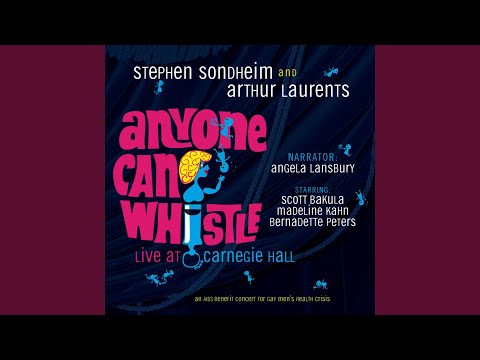
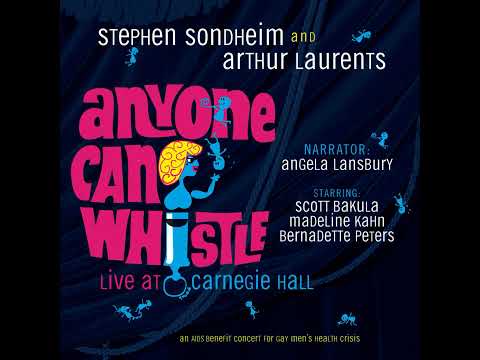
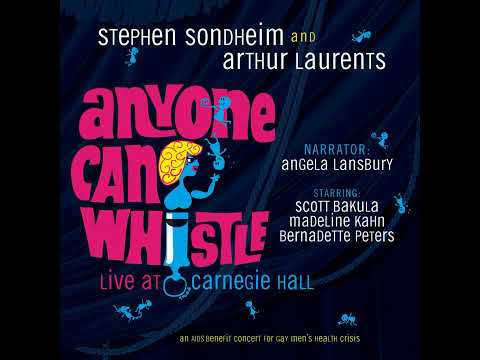
- On record: Most clearly documented as a short track on the 1995 Carnegie Hall concert release.
Anyone Can Whistle (1964) - stage musical - diegetic. The number is the town performing compliance. After Act I ends by turning its mad logic toward the audience, Act II begins by showing that the town will still take orders, even when it has just watched the method break down. The trick is that the song feels cheery and organized, which is exactly how systems of control prefer to sound.
Creation History
Because the Broadway run was short, a lot of the score's connective tissue is easiest to track through later documentation. The 1995 Carnegie Hall concert (released commercially) preserves the number as a discrete cue and places it right where it belongs: the second act begins with Hapgood's two groups marching and singing his praises. The effect is almost architectural. The show uses a march not to celebrate the town but to demonstrate how quickly a crowd accepts a new leader when the beat is persuasive.
Song Meaning and Annotations
Plot
Hapgood has arrived, divided the town into two groups through a mysterious sorting game, and left everyone scrambling to interpret his authority. Act I ends with a theatrical jolt. Then Act II begins with a practical reality: the groups march around the square singing his praises. The story has not calmed down; it has reorganized.
Song Meaning
The lyric is a slogan, and the music treats slogans as engines. The chorus tells you less about Hapgood than about the town. They do not praise him because they understand him. They praise him because praise is a way to belong, and belonging is safer than thinking. It is a short number, but it does a large job: it shows how charisma becomes policy, one chant at a time.
Annotations
The second act begins with Hapgood's two groups marching around the town square singing his praises.
That staging note is the meaning. The groups do not merely sing. They move. The song is choreography for obedience.
Driving rhythm
The march feel is not decorative. It makes the chorus sound unanimous even if individuals are terrified. Once the feet and the accents line up, the crowd can pretend it agrees.
Emotional arc
The arc is compression. It arrives, declares, and passes on, leaving the aftertaste of certainty. The show does not want you to settle. It wants you to notice how quickly certainty gets staged.
Technical Information (Quick Facts)
- Song: Hooray for Hapgood
- Artist: Anyone Can Whistle Ensemble (1995 concert cast recording context)
- Featured: Townspeople ensemble
- Composer: Stephen Sondheim
- Producer: Sony Music Entertainment (concert recording rights line)
- Release Date: July 18, 1995
- Genre: Musical theatre; march-chorus
- Instruments: Orchestra with ensemble voices
- Label: Masterworks Broadway
- Mood: Triumphant on the surface; coercive underneath
- Length: 00:58
- Track #: 12 (Carnegie Hall concert album sequence)
- Language: English
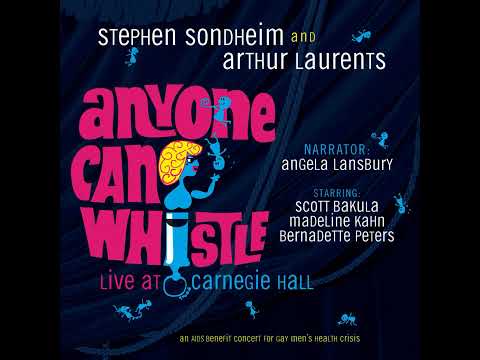
- Album (if any): Anyone Can Whistle - Live at Carnegie Hall 1995
- Music style: Civic-march idiom used as crowd psychology
- Poetic meter: Not stated in official documentation; lyric is slogan-forward and built for repetition
Frequently Asked Questions
- Where does the number happen in the show?
- It opens Act II, immediately after the entr'acte, as Hapgood's two groups march around the town square singing his praises.
- Who is singing, dramatically?
- The townspeople, reorganized into Hapgood's categories, behaving like a marching chorus.
- Is this a full song or a short chorus?
- On the Carnegie Hall concert recording it is a compact cue under one minute, closer to a chant than a stand-alone ballad.
- Why is it written as a march?
- Because a march makes agreement feel physical. The score turns rhythm into a social contract you can hear.
- Does the song return later?
- Yes. A reprise appears on the concert album track list, reinforcing how the town keeps re-performing its loyalty.
- What is the dramatic contrast with Hapgood's Act I scene?
- Act I is confusion and sorting. Act II begins with the crowd acting as if confusion was productive, praising the man who caused it.
- Which recording best documents its placement?
- The 1995 Carnegie Hall concert release is explicit about sequencing, track numbers, and timings.
- Is it connected to any earlier theme?
- It shares the score's public-procession language, echoing how the town turns events into ceremonies, whether the event deserves it or not.
- What does the title tell you?
- It tells you the town is already cheering. The question is why, and whether the cheering is chosen.
Additional Info
This is one of those tiny theatre numbers that does not pretend to be deep, and that is why it is effective. It is propaganda as a toe-tapper. The crowd sings like a civic club, not like individuals, which fits a show that keeps asking who gets to be counted as sane, useful, or loyal. The Carnegie Hall album description even mirrors the structure: Hapgood enters with splendor, as Cora did earlier, and the march-chorus makes that symmetry visible. Power is not only a person, it is a style of entrance.
For listeners mapping the score, several discographies list this as part of an Act II pairing sometimes described as a march into the Hapgood chorus, and the Carnegie Hall track list helps separate the pieces cleanly. According to Masterworks Broadway, the concert format restored transitional material that clarifies how the show moves from scene to scene, which is vital in a score built on sudden pivots.
Key Contributors
| Entity | Type | Relationship |
|---|---|---|
| Stephen Sondheim | Person | Composed the number as an Act II march-chorus praising Hapgood. |
| J. Bowden Hapgood | Work | Fictional doctor whose authority the town chants into place. |
| Anyone Can Whistle Ensemble (1995) | Organization | Performs the track on the Carnegie Hall concert recording. |
| Masterworks Broadway | Organization | Released the Carnegie Hall concert recording and provides plot-linked album notes. |
| Carnegie Hall | Venue | Hosted the 1995 benefit concert performance documented on record. |
| Discogs | Organization | Publishes release track lists that corroborate sequencing and reprise presence. |
Sources
Sources: Masterworks Broadway album page for Anyone Can Whistle live at Carnegie Hall 1995, Apple Music track listing, YouTube Masterworks Broadway topic upload, Stephen Sondheim Society discography page, Discogs release track listing, Ovrtur production entry
Anyone Can Whistle Lyrics: Song List
- Act 1
- Prelude Act I
- I'm Like the Bluebird
- Me and My Town
- Miracle Song
- There Won't Be Trumpets
- Simple
- Act 2
- Entr'acte
- Hooray for Hapgood
- Come Play Wiz Me
- Anyone Can Whistle
- A Parade in Town
- Everybody Says Don't
- Act 3
- I've Got You To Lean On
- See What It Gets You
- The Cookie Chase
- With So Little to Be Sure Of
- Finale