
Not Me Lyrics
Not Me
Radames:I once knew all the answers
I stood on certain ground
A picture of true happiness
Confidence so effortless
No brighter could be found
Mereb:
Oh No
Radames:
I never asked the questions
That trouble me today
I knew all there was to know
Love worn lightly
Put on show
My conquests on display (Mereb:I can't believe He's changing)
And who'd have thought that (Mereb:Oh, no)
Confidence could die?
Not me , Not me (Mereb:Not me, not me)
That all I took for granted was a lie
Not me, Not me
And who'd have guessed
I'd throw my world away
To be with someone I'm afraid will say (Mereb:This can never)
Not me,not me (Mereb:Be)
Mereb:
He's in love
But he's not the only one
Who'll be changed
Aida:
I shall not envy lovers
But long for what they share
Amneris:
An empty room is merciless
Don't be surprised if I confess
I need some comfort there
Aida and Amneris:
And who'd have thought
That love could be so good?
Not me, not me
And show me things I never understood
Not me, not me
Who'd have guessed he'd
Throw his world away
To be with someone til his dying day
Not me, not me
Radames, Amneris,Aida:
And who'd have thought that love
Could be so good
Not me, not me (Mereb:Not me, not me)
My/his secrets &
My/his passions understood
Not me, not me (Mereb:Not me, not me)
Who'd have guessed
I'd/ he throw My/his world away
To be with someone til my/his dying day
Not me/not me (Mereb:This can never be)
Song Overview
Review and Highlights
Quick summary
- Act I quartet for Radames, Mereb, Aida, and Amneris, a character-collision number disguised as introspection.
- On the Original Broadway Cast Recording track list, it is Track 10 and runs 3:46.
- Style: pop-theatre pulse with interlocking lines, built to sound like one thought being argued by four mouths.
- Dramatic job: make Radames's shift visible, then show how each observer weaponizes that shift differently.
Aida (2000) - stage musical - non-diegetic. Placement: Act I, directly after the Nubian ritual sequence. Why it matters: the show turns from community to surveillance, from shared identity to suspicious eyes on one soldier.
This number is a theatrical trick I will never get tired of: the hero insists he has not changed, and the score immediately proves he is lying, even if the lie is sincere. The writing does not hand you a tidy chorus to applaud. Instead, it lets four perspectives overlap, interrupt, and double back, like people circling the same rumor and discovering it is a fact.
The hook is not a slogan, it is a defense. Radames speaks as if certainty can be restored by volume. Aida hears the risk in every syllable. Amneris hears betrayal before it is proven. Mereb hears the disaster he will be asked to contain. Put them together and you get a number that behaves like a courtroom scene without a judge.
Key takeaways
- The song advances plot by assigning motives, not by narrating events.
- The quartet structure makes private thought public, which is exactly the trap Radames is walking into.
- It is a hinge into the Act I escalation: romance is no longer harmless.
Creation History
The Broadway production documentation lists the number as a quartet for Radames, Mereb, Aida and Amneris, and the official cast-album discography indexes it as Track 10 at 3:46. That pairing tells you how it was designed: not a stand-alone pop single, but a narrative checkpoint, the moment the story announces that everybody has noticed the change and nobody agrees on what it means.
Song Meaning and Annotations
Plot
Radames is slipping away from the identity the palace built for him. After the Nubian community sequence, the show snaps back to court reality and asks a blunt question: what happens when a prized soldier stops behaving like property? The quartet lays out the answers. Amneris senses loss of control. Mereb senses fallout. Aida senses exposure. Radames senses a self he cannot unlearn.
Song Meaning
The meaning is identity in motion, and the panic that motion causes in a rigid system. Radames claims he is unchanged because change would require consequence. The others reply, in their own ways, that consequence has already begun. The mood is restless and tightening, and the emotional arc moves from denial toward a grim agreement: something is different, and everyone will pay.
Annotations
The stage song list credits the number to Radames, Mereb, Aida and Amneris.
This credit is the key to performance. Treat it as a Radames solo with background vocals and you flatten the scene. Treat it as four competing inner monologues and it becomes a pressure system, each voice pushing the next.
The cast album places the track at 3:46 and keeps it in Act I, before the larger moral revelations of Act II.
That timing matters. The show is still teaching the audience how the palace thinks. It is not giving answers yet, it is tightening questions.
The concept-album track with the same title is a different recording by Boyz II Men.
Useful footnote for listeners: same name, different function. The concept-album version is built as a pop performance, while the Broadway version is built to sound like plot moving through multiple throats.
Rhythm, tension, and the cultural touchpoint
The groove is pop-theatre propulsion, steady enough to keep the scene marching. In audio-analysis catalogs, tempo estimates cluster around the low one-teens BPM, which fits how the number feels onstage: driven, not frantic. The cultural touchpoint is surveillance culture in miniature, the way institutions read personal change as disloyalty and rush to control the narrative before it spreads.
Technical Information (Quick Facts)
- Song: Not Me
- Artist: Adam Pascal, Damian Perkins, Heather Headley, Sherie Rene Scott (Original Broadway Cast Recording principals)
- Featured: Orchestra
- Composer: Elton John
- Lyricist: Tim Rice
- Release Date: June 6, 2000
- Genre: Musical theatre; pop-theatre ensemble writing
- Instruments: Voices, rhythm section, theatre orchestra
- Label: Buena Vista Records
- Mood: Defensive, suspicious, accelerating
- Length: 3:46
- Track #: 10
- Language: English
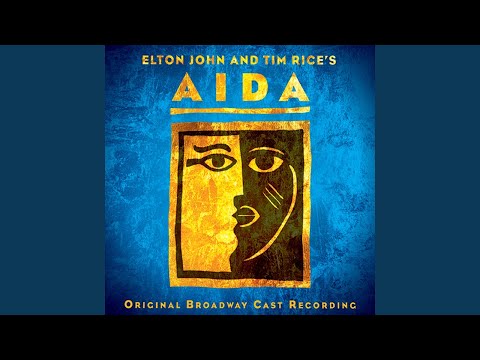
- Album (if any): Aida: Original Broadway Cast Recording
- Music style: Quartet counterpoint used as narrative surveillance
- Poetic meter: Accentual, speech-led scansion
Frequently Asked Questions
- Who sings the number in the stage musical?
- Radames, Mereb, Aida and Amneris.
- Where is it on the cast album?
- It is indexed as Track 10 with a runtime of 3:46 on the official discography listing.
- What is the dramatic purpose of the quartet structure?
- It lets the audience hear four interpretations of the same change at the same time, turning romance into risk.
- Is this the same as the concept-album track with the same title?
- No. The concept-album track is performed by Boyz II Men and functions as a pop recording, separate from the Broadway scene version.
- Why does Radames deny what everyone else sees?
- Because admitting change means admitting consequence, and the palace runs on consequences.
- What key do common PVG listings use?
- A widely used sheet-music listing gives Ab major.
- What is a practical tempo target for rehearsal?
- Audio-analysis catalogs place it around 113 to 115 BPM, which matches its forward, scene-driven feel.
- What is the main acting pitfall?
- Playing it as generic angst. It works best as tactical speech: each character is trying to control what the change will mean.
- Why does the song land so hard right after the Nubian ritual scene?
- Because it yanks the audience from community into scrutiny, showing how quickly private identity becomes public evidence.
Awards and Chart Positions
The track is a theatre scene number, not a chart single, but it sits inside a heavily decorated package. According to Playbill magazine, the original Broadway cast recording won the 2001 Grammy Award for Best Musical Show Album, and Playbill also records the 2000 Tony Award win for Best Original Score for Elton John and Tim Rice. Those awards keep the album in circulation and keep this quartet in singers' ears.
| Award | Result | Date | Scope |
|---|---|---|---|
| Grammy Award - Best Musical Show Album | Win | February 21, 2001 | Cast recording album |
| Tony Award - Best Original Score | Win | June 4, 2000 | Music and lyrics |
How to Sing Not Me
The technique note is counterintuitive: do less, say more. This is a scene. Your job is to sound like someone thinking out loud while trying not to reveal too much. The ensemble has to feel like competing agendas, not four singers sharing a pretty chord.
- Published key (PVG listing): Ab major
- Tempo target (audio-analysis catalogs): about 113 to 115 BPM
- Voice ranges (PVG listing): Voice 1 Bb3 to Ab5; Voice 2 Eb4 to F5; Voice 3 Eb5 to Bb5
- Tempo: rehearse with a click until the overlaps line up. If entrances smear, the plot argument blurs.
- Diction: prioritize consonants on the denial phrases. The text is the character armor.
- Breathing: take quick, quiet inhales between thought units. Avoid big breaths that turn tension into melodrama.
- Flow and rhythm: keep phrases speech-led. Let the pulse carry you rather than leaning on sustained notes.
- Quartet balance: decide who drives each moment. Rotate focus so the audience hears shifting power, not four equal solos.
- Accents: stress words that imply identity and control. That is where the character stakes live.
- Pitfalls: do not over-sing the denial. The sharper choice is to sound convinced while the music contradicts you.
Additional Info
There is a simple reason the number sticks. It is the first time the show makes Radames's inner shift a public crisis. The romance has been building in glances and private scenes, but here the palace begins to read him as a problem. That shift is dramatic gold because it does not require a villain speech. It requires only observation, and then interpretation, and the interpretations are where tragedy starts.
Key Contributors
| Entity | Type | Relation | Statement |
|---|---|---|---|
| Adam Pascal | Person | Original performer | Adam Pascal originated Radames and leads the quartet line on the cast album. |
| Heather Headley | Person | Original performer | Heather Headley originated Aida and joins the quartet as the voice of risk and restraint. |
| Sherie Rene Scott | Person | Original performer | Sherie Rene Scott originated Amneris and colors the quartet with suspicion and status. |
| Damian Perkins | Person | Original performer | Damian Perkins originated Mereb and grounds the quartet with pragmatic loyalty. |
| Buena Vista Records | Organization | Label | Buena Vista Records released the Original Broadway Cast Recording. |
| Walt Disney Music Publishing | Organization | Publisher | Walt Disney Music Publishing administers the published sheet music listing. |
Sources
Data verified via official discography and production song lists; sheet-music arrangement data sourced from a major catalog; award history sourced from theatre trade reporting; tempo references taken from audio-analysis catalogs.
Sources: Elton John official discography, Ovrtur, Musicnotes, Playbill magazine, YouTube, Musicstax, Chordify