
Easy as Life Lyrics
Easy as Life
Aida:This is the moment when the gods expect me
To beg for help but I won't even try
I want nothing in this world but myself to protect me
But I won't lie down, roll over and die
All I have to do is to forget how much I love him
All I have to do is put my longing to one side
Tell myself that love's an ever-changing situation
Passion would have cooled and all the magic would have died
It's easy, it's easy
All I have to do is to pretend I never knew him
On those very rare occasions when he steals into my heart
Better to have lost him when the ties were barely binding
Better the contempt of the familiar cannot start
It's easy, It's easy
Until I think about him as he was when I last touched him
And how he would have been were I to be with him today
Those very rare occasions don't let up they keep on coming
All I ever wanted and I'm throwing it away
It's easy, it's easy as life
But then I saw the faces of a worn , defeated people
A father and a nation who won't let a coward run
is this how the gods reward the faithful through the ages ?
Forcing us to prove the hardest thing we've done
Are easy
So easy
And though I'll think about him til the earth draws in around me
And though I choose to leave him for another kind of love
There is no denial, no betrayal but redemption
Redeemed in my own eyes and in the pantheon above
It's easy
It's easy as life
It's easy as life
It's easy as life
Song Overview

Review and Highlights
Quick summary
- What it is: Aida's solo reset button - a vow to live with the damage and keep moving.
- Where it appears: Act 2, after the triangle has tightened and Aida can no longer pretend love is consequence-free.
- Character job: not a love song, but a self-instruction manual - grief, pride, discipline.
- Performance profile: a belter showcase with long, sustained phrases that still need conversational bite.
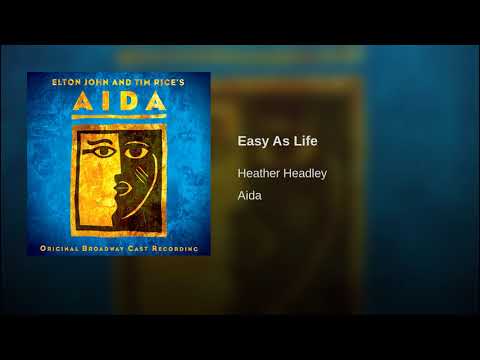
Aida (2000) - stage musical - not diegetic. Act 2 solo placement for Aida, typically staged as a private decision played in public space. It matters because the show lets Aida choose her own posture: she will not beg the gods, and she will not beg the empire either.
This number is a smart piece of Broadway mechanics dressed in pop theatre tailoring. It gives Aida the big vocal canvas, yes, but the real trick is its attitude. She is not pleading. She is drawing a boundary and then daring herself to keep it. The melody climbs in a way that invites a singer to let it all rip, yet the lyric keeps pulling the focus back to self-control: what do you do with love when it is also a liability? You do not erase it. You build a life around the scar.
Key takeaways
- Best feature: the mix of defiance and tenderness - a spine under a soft center.
- Most theatrical move: the song turns private heartbreak into a political stance without turning into a speech.
- Listening tip: track the shift from present-tense pain to future-tense planning. That gear change is the story beat.
Creation History
Elton John and Tim Rice wrote Aida as a pop-forward stage score, and this solo carries that DNA: hook-minded phrasing, clear rhyme, and a chorus that lands like a decision rather than a decoration. The Original Broadway Cast Recording was recorded at Sony Music Studios in New York in April 2000, and the track is credited to Heather Headley, whose original performance set the bar for how much steel and warmth can share a single line. As stated on the MTI show page, the piece sits among the show list that anchors Act 2, and it plays like a hinge: Aida starts acting from her own code, not just reacting to other people's power.
Song Meaning and Annotations
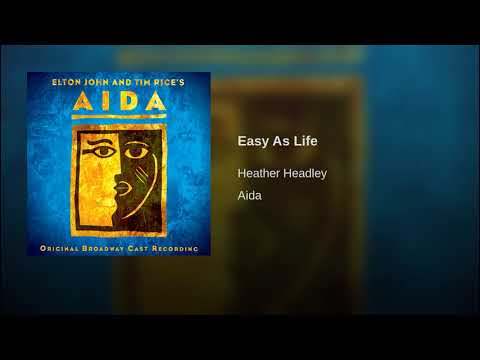
Plot
Act 2 pushes Aida into the cruel math of the story: love for Radames pulls her toward the center of Egyptian power, while loyalty to her people pulls her the other way. In this moment she refuses the fantasy of rescue. The song is her choosing how to stand up inside a world designed to keep her bent.
Song Meaning
The title is a dry joke with teeth. Nothing is easy here, and Aida knows it. She is rehearsing survival: if she cannot have the man without betraying herself, then she will have herself without apology. Under the belting, the meaning is discipline - learning to carry longing without turning it into surrender. The mood is not soft. It is steady. There is sorrow in it, but the governing force is pride, the kind that keeps you from negotiating your dignity away in a bad moment.
Annotations
-
Refusal as prayer.
The lyric sets up the expectation of begging, then rejects it. Onstage, that reads as a spiritual posture: she will not perform helplessness for anyone, not even the heavens.
-
Belting as argument, not ornament.
The climaxes are not just vocal fireworks. They are the sound of someone convincing herself - one more breath, one more step, no collapse.
-
Love triangle fallout.
After the Act 2 trio pressure, this solo feels like closing the door and finally hearing your own thoughts. It is the show handing Aida her own scene again.
-
Pop theatre clarity.
The writing favors direct language and strong forward motion. You do not need footnotes to understand the stakes, which is why the performance can carry so much subtext without getting muddy.
Driving rhythm and style fusion
The groove stays grounded while the vocal line stretches. That combination is classic pop theatre: the band keeps time like a metronome with manners, and the singer gets to sound free without losing the scene.
Instrumentation and vocal architecture
In practice, the arrangement behaves like a piano-driven audition piece even when the full recording brings in richer color. The phrasing alternates between long arcs (for sustained tone) and shorter, speech-adjacent bursts (for intent). If a performer treats it as one continuous power-ballad, the text can flatten. The best readings keep the consonants sharp and the tempo honest.
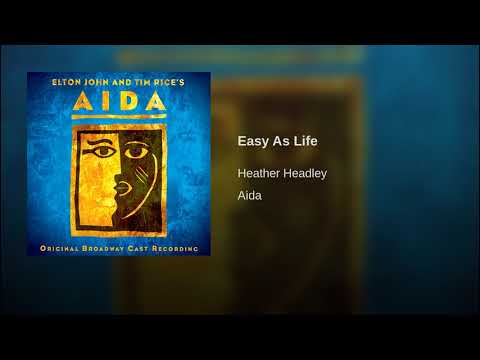
Technical Information (Quick Facts)
- Song: Easy as Life
- Artist: Heather Headley (Original Broadway Cast Recording)
- Featured: solo (Aida)
- Composer: Elton John
- Lyricist: Tim Rice
- Release Date: June 6, 2000
- Genre: musical theatre; pop-rock
- Instruments: voice; studio band and orchestral blend
- Label: Buena Vista Records
- Mood: resolute; reflective
- Length: 4:13
- Track #: 14 (cast recording)
- Language: English
- Album (if any): Elton John and Tim Rice's Aida: Original Broadway Cast Recording
- Music style: belter-led pop theatre with a steady pulse and lyric-forward phrasing
- Poetic meter: conversational iambic lean with syncopated stresses for emphasis
Frequently Asked Questions
- Who sings the number in the Broadway story?
- Aida sings it alone, and the solitude is part of the point: she is finally speaking without negotiating with anyone else's gaze.
- What is Aida deciding, exactly?
- She is deciding how to live with wanting someone she cannot safely choose. The song is a plan for self-respect under pressure.
- Is this a breakup song?
- It behaves like one, but it is really a boundary song. The romance is the trigger; the subject is personal agency.
- Why does it work so well in auditions?
- It offers a clear objective, a strong build, and enough text to act. It also tests whether a singer can sustain power without losing diction.
- What should the actor play under the notes?
- Play the act of refusing collapse. Each lift in the line can be a choice: stand, breathe, continue, do not bargain away dignity.
- Does the song require constant belting?
- No. The smartest performances save the biggest sound for the moments that read as decision, not just volume.
- What is the common staging approach?
- Directors often isolate Aida in a tight pool of light or a bare strip of stage, so the audience watches resolve being built rather than announced.
- How does it connect to the Act 2 trio tension?
- It feels like the aftermath: after everyone has argued in harmony, Aida gets to choose her own voice again.
- What lyric idea shapes the whole number?
- The refusal to beg. The text frames help as something expected, then rejects the performance of helplessness.
- Is there a definitive key?
- Published sheet music frequently lists C minor, while streaming metadata can label alternate keys. For performance, trust the arrangement you are using and pick the key that keeps the text clear at the top.
Awards and Chart Positions
The cast recording sits inside a show that the industry took seriously: Aida won the Tony Award for Best Original Score, and the Original Broadway Cast Recording won the Grammy Award for Best Musical Show Album. According to Playbill's RIAA certification roundup, the cast album was certified Gold on September 21, 2004, which fits its reputation as a steady-seller rather than a flash-in-the-pan souvenir.
| Category | Work | Result | Date |
|---|---|---|---|
| Grammy Award - Best Musical Show Album | Original Broadway Cast Recording | Won | February 21, 2001 |
| Tony Award - Best Original Score | Aida (stage musical) | Won | June 3, 2001 |
| RIAA Certification | Original Broadway Cast Recording | Gold | September 21, 2004 |
How to Sing Easy as Life
This is a belter showcase that still wants acting. The published sheet music provides practical guardrails: a commonly listed original key of C minor and a range around G3 to C5 for voice and piano-vocal editions. That tells you the real assignment: stamina, clean vowels up top, and enough breath management to keep the text crisp.
- Tempo: streaming metadata often tags it around 73 to 74 BPM (ballad feel, not draggy).
- Key: published arrangements frequently list C minor; other editions may transpose.
- Range (one common PVG edition): G3 to C5.
Step-by-step rehearsal plan
- Tempo discipline: set a steady click, then speak the text in rhythm. If the words rush, the resolve turns into rant.
- Diction and vowels: unify vowel shapes on sustained notes, especially near the top. Keep consonants forward so the character stays present.
- Breath plan: mark two or three safe catch-breaths that do not break meaning. The aim is control, not endurance-as-sport.
- Build the arc: map three dynamic levels and earn each increase. Reserve the biggest sound for the lines that read as decision.
- Mix strategy: if C5 sits high for you, plan a mixed approach on the climb rather than muscling the whole phrase in one color.
- Text-first acting: assign actions by section (refuse, remember, commit). It keeps the song from becoming one long note.
- Mic and balance: in amplification, stay consistent and let the engineer help. Sudden proximity jumps can make the phrasing feel frantic.
- Common pitfalls: starting too loud, flattening the beat, and letting sustained notes blur the consonants.
Practice materials: work with the PVG sheet first, then rehearse with a simple piano pulse. Add recorded accompaniment only after you can keep the tempo steady without chasing it.
Additional Info
One reason this song keeps reappearing in concerts and TV clips is that it is built like a standalone dramatic monologue. You can drop it into a set, give the audience two minutes of context, and it still lands because the stakes are internal and legible. In the show, though, it also works as a tactical pause: the plot is about to ask Aida for compromises, and she answers first by strengthening her spine.
Key Contributors
| Entity | Type | Relationship (S-V-O) |
|---|---|---|
| Elton John | Person | Elton John composed the music for Aida (stage musical). |
| Tim Rice | Person | Tim Rice wrote the lyrics for Aida (stage musical). |
| Heather Headley | Person | Heather Headley originated Aida on Broadway and performs the cast recording track. |
| Linda Woolverton | Person | Linda Woolverton co-wrote the book for Aida (stage musical). |
| Robert Falls | Person | Robert Falls directed the Broadway production of Aida. |
| Wayne Cilento | Person | Wayne Cilento choreographed the Broadway production of Aida. |
| Buena Vista Records | Organization | Buena Vista Records released the Original Broadway Cast Recording. |
| Palace Theatre (Broadway) | Venue | The Broadway production of Aida played at the Palace Theatre. |
| Aida | Work | Aida includes the solo number Easy as Life in Act 2. |
Sources
Sources: MTI show page for Aida, Discogs release notes (Sony Music Studios recording dates, Buena Vista imprint), Apple Music track listing (track number and duration), Spotify track page (duration), Playbill RIAA certification list (Gold date), Wikipedia - Aida (musical) (awards overview), YouTube Topic upload details (label and track credit), Musicnotes sheet music listing (key and vocal range), Musicstax tempo and key tagging