
Another Pyramid Lyrics
Another Pyramid
Zoser:While you've been away cavorting
Matters here have moved apace
Now I need you home supporting
All the plans I've put in place
First of all this means your wedding
You'll recall your future bride
For the way that Pharaoh's heading
Time's no longer on our side
According to the hawk god, Horus
Our most regal invalid
Is not that much longer for us
Build another pyramid!
There are many who'll be tearful
As our leader fades away
But our architects are cheerful
And each dog must have its day
If our country is to flourish
Then my son must take the lead
Be our inspiration, nourish
All our hopes our dreams our creed
Soon our monarch will have filled a
Tomb just like his fathers did
Summon Egypt's greatest builders
Re: another pyramid
Ministers:
Build it, build it
Another pyramid
There will be a time for mourning
But for now put plans on hold
Ministers:
Hold
For I give the nation warning
That before the corpse is cold
Ministers:
Cold
We'll extend fair Egypt's power
Egypt's glory strength and style
We shall have our finest hour
Far beyond the mighty Nile
He must have a vault that's grand by
Any standards, floor to lid
Put five thousand slaves on stand by
Build another pyramid!
Ministers:
Build it, build it
Build it, build it
Build it, build it
Build it-
Build it, build it
Build it-
Zoser:
He must have a vault that's grand by
Any standards, floor to lid
Put five thousand slaves on stand by
Build another pyramid!
Song Overview
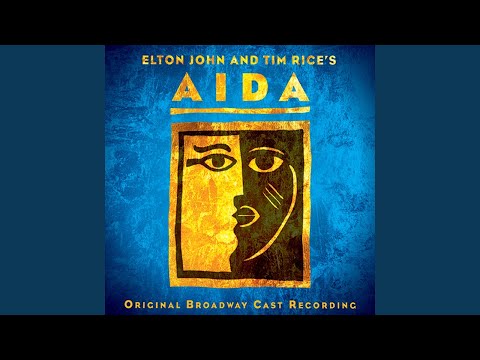
Review and Highlights
Quick summary
- Act I political number for Zoser with his ministers, positioned just after Aida's first solo in the show sequence.
- On the Original Broadway Cast Recording, it appears as Track 4 and is listed at 3:35.
- Style: propulsive pop-theatre with a schemer's grin, built for choreographed bureaucracy.
- Dramatic job: reveal the engine under the romance - succession, control, and a man who treats power like a construction project.
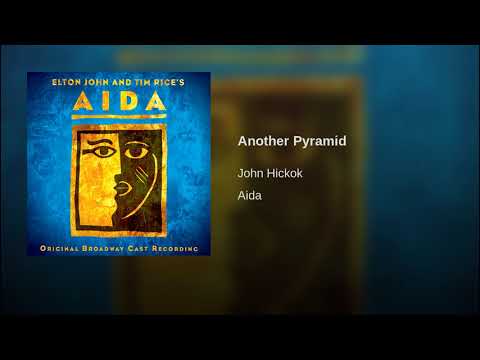
Aida (2000) - stage musical - non-diegetic. Placement: Act I, "Another Pyramid" is assigned to Zoser and Ministers in the show list. Why it matters: it turns the plot from battlefield spectacle to boardroom menace, with Radames positioned as the next asset to be managed.
"Another Pyramid" is the score putting on a suit. The earlier Act I numbers sell viewpoint and vulnerability; this one sells policy. Zoser sings like a man already drafting the press release, and the band gives him a brisk, purposeful tread that reads as work getting done. It is not subtle, and it does not need to be. Villains in musical theatre do not whisper their business plan when the audience needs to understand the stakes before intermission.
The hook is built around ambition that pretends to be tradition. A pyramid is a monument, yes, but also a budget, a labor force, a legacy narrative carved into stone. The number plays like a cheerful meeting where everyone agrees, which is the exact nightmare. The ministers are not characters so much as a chorus of complicity, and the music keeps them moving so the scene feels inevitable rather than debated.
Key takeaways
- Zoser is established as a strategist, not a hothead - a cleaner kind of danger.
- The song reframes "glory" as infrastructure: monuments, optics, succession.
- Ensemble writing functions as political pressure, not community warmth.
Creation History
The number sits within Elton John and Tim Rice's pop-forward theatre score, and it shows how quickly the writing can pivot from personal lament to public manipulation. On the documented Broadway musical numbers list, the song belongs to Zoser and Ministers, with John Hickok credited as the original Broadway Zoser in cast listings. The cast recording track listing and timings are published in major discographies, and this cue is consistently placed as Track 4 with a mid-three-minute runtime.
Song Meaning and Annotations
Plot
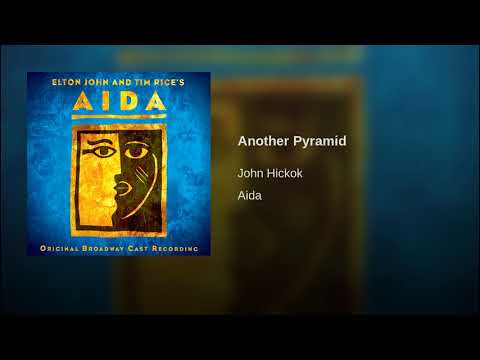
With captives in play and the court celebrating conquest, Zoser steps in to steer the future. The song occurs as political momentum gathers: the Pharaoh is failing, Radames is being positioned, and the machinery of the state turns romance into a liability. This is the moment the musical makes clear that private love is about to collide with public design.
Song Meaning
The meaning is straightforward and chilling: Zoser equates legacy with construction, and he sells that legacy as national pride. The pyramid becomes a symbol for rule by spectacle - a monument that proves someone was in charge long after the bodies are gone. Under the bright tempo, the mood is control dressed up as optimism. If the number feels almost cheerful, that is the point: tyranny often arrives with paperwork and a smile.
Annotations
The song is assigned to "Zoser and Ministers" in the Broadway musical numbers list.
That credit line tells you how to stage it. This is not a private confession. It is a coordinated public moment, a political chorus functioning like a well-trained committee.
Discographies list the cast recording track as Track 4 with a runtime of 3:35.
The timing matters because the song is built as a tight scene tool. It is long enough to clarify motive and hierarchy, short enough to keep the plot moving toward the next personal fracture.
A pyramid is both monument and message.
In a story about conquest, the monument is never neutral. It is history written by the winning side, with a workforce that does not get a program credit.
Driving rhythm and style fusion
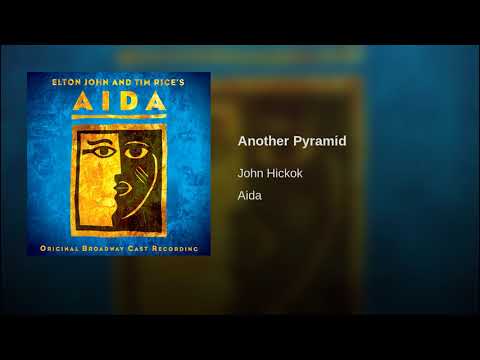
The rhythm keeps a purposeful push, closer to pop theatre than ceremonial march. That fusion is a signature of the score: contemporary pulse used to animate ancient imagery. The effect is sly. It makes Zoser's agenda feel current, like office politics wearing a crown.
Technical Information (Quick Facts)
- Song: Another Pyramid
- Artist: John Hickok (Original Broadway Cast Recording principal vocal)
- Featured: Ministers ensemble and orchestra
- Composer: Elton John
- Lyricist: Tim Rice
- Release Date: June 6, 2000
- Genre: Musical theatre; pop-theatre ensemble number
- Instruments: Voice, rhythm section, theatre orchestra
- Label: Buena Vista Records
- Mood: Calculating, buoyant, ceremonial in posture
- Length: 3:35
- Track #: 4
- Language: English
- Album (if any): Aida: Original Broadway Cast Recording
- Music style: Pop hook writing used for political ensemble storytelling
- Poetic meter: Accentual, speech-driven scansion
Frequently Asked Questions
- Who sings the number on the original Broadway cast album?
- Zoser leads it, performed by John Hickok with ministers ensemble on the cast recording.
- Where does it appear in the show?
- In Act I, as a political scene number for Zoser and his ministers, positioned early in the story once victory talk gives way to succession planning.
- What is the song really about?
- Legacy as control. The pyramid is a monument, but also a slogan for consolidating power and shaping how history will be told.
- Is it diegetic music inside the story world?
- No. It functions as theatrical underscoring and narration of intent, not as music the characters stage as entertainment.
- What makes it feel different from the earlier Act I songs?
- It trades personal stakes for institutional stakes. The energy is upbeat, but the subject is administration and leverage.
- Why does the song often play well in staged concerts?
- Because it has a clear hook, strong ensemble architecture, and a built-in dramatic situation that reads quickly without scenery.
- What do common sheet music listings suggest about vocal writing?
- Arrangements are published in G minor and include multiple vocal lines for ensemble, which fits the onstage identity as Zoser plus ministers.
- Does the cast recording have formal recognition?
- Yes. According to Playbill magazine, the Original Broadway Cast Recording won the 2001 Grammy Award for Best Musical Show Album.
Awards and Chart Positions
This track is not treated as a pop single in standard catalogs, but the album surrounding it has major theatre-and-recording credentials. According to Playbill magazine, the Original Broadway Cast Recording won the 2001 Grammy Award for Best Musical Show Album, and the show earned the Tony Award for Best Original Score in 2000. That recognition is part of why the cast album remains the reference version for pacing and character tone.
| Item | Result | Date | Notes |
|---|---|---|---|
| Grammy Award | Best Musical Show Album - win | February 21, 2001 | Awarded to the cast recording as a whole. |
| Tony Award | Best Original Score - win | June 4, 2000 | Awarded to Elton John (music) and Tim Rice (lyrics). |
How to Sing Another Pyramid
The trick is to sound gleeful without sounding silly. Zoser is selling a plan, not mugging for applause. Keep the rhythm clean, the consonants sharp, and the attitude contained, like a politician smiling for the camera while tightening a grip behind the podium.
- Key reference (published PVG): G minor
- Ensemble approach (published scoring): multiple vocal lines for group sections, with a lead line for Zoser
- Range notes (published listing): lead and ensemble parts span roughly D4 to G5 across the listed voices
- Tempo first: rehearse with a steady pulse. This number thrives on forward motion, and any dragging makes the plotting feel lazy.
- Diction: articulate the transactional words. The character wins by sounding precise, not by sounding loud.
- Breath: take quick inhales between clauses. Avoid theatrical gasps that signal vulnerability.
- Rhythm and flow: ride the groove like a confident walk. Do not over-accent every beat, save emphasis for the hook.
- Ensemble blend: unify vowels on group lines, then let the lead cut through with brighter placement and clearer consonants.
- Character stance: keep charm in the front of the voice and threat in the subtext. Smile, but do not soften.
- Mic and space: if amplified, keep consistent distance so the hook reads as controlled authority, not barked command.
- Pitfalls: avoid turning it into a cartoon villain number. The fear comes from how normal the ambition sounds.
Additional Info
There is a fun, nasty theatrical irony here: a pyramid is built to outlast everybody, and the song is built to move fast. That contrast mirrors the character. Zoser wants permanence, but he operates with impatient urgency, which is why the scene often plays best with crisp blocking and minimal sentiment. If the ministers look too celebratory, the danger evaporates. If they look too terrified, the politics become melodrama. The sweet spot is professional agreement.
Key Contributors
| Entity | Type | Relation | Statement |
|---|---|---|---|
| John Hickok | Person | Original performer | John Hickok originated Zoser on Broadway and leads the cast recording track. |
| Elton John | Person | Composer | Elton John composed the music for Aida, including this Act I ensemble number. |
| Tim Rice | Person | Lyricist | Tim Rice wrote the lyrics that frame ambition as national legacy. |
| Buena Vista Records | Organization | Label | Buena Vista Records released the Original Broadway Cast Recording. |
| Ovrtur | Organization | Reference database | Ovrtur documents the Broadway musical numbers list and original cast roles. |
Sources
Data verified via official discography listings, a musical-theatre reference database, and major music catalogs. Track timing and placement sourced from the Elton John discography page and discography-style release listings; show placement sourced from the Broadway musical numbers list; award history sourced from theatre trade reporting and Tony Awards records.
Elton John discography - Original Broadway Cast Recording track list
Ovrtur - Broadway musical numbers list and cast roles
Playbill - Grammy win report
Tony Awards - winners listing (Aida score)
Discogs - release track timings and credits
YouTube - official audio upload (UMG)
Sources: Elton John discography, Ovrtur, Playbill, Tony Awards, Discogs, YouTube