
Elaborate Lives Lyrics
Elaborate Lives
Radames:We all lead such elaborate lives
wild ambitions in our sights
How an affair of the heart survives
days apart and hurried nights
Seems quite unbelievable to me
I don't want to live like that
seems quite unbelievable to me
I don't want to love like that
I just want our time to be
slower and gentler, wiser,free
We all live in extravagant times
playing games we can't all win
Unintened emotional crimes
Take some out, take others in
I'm so tired of all were going through
I don't want to live like that
I'm so tired of all were going through
I don't want to love like that
I jsut want to be with you
Now and forever ,peaceful,true
This may not be the moment
to tell you face to face
But I could wait forever
for the perfect time and place
Aida & Radames:
We all lead such elaborate lives
We don't know whose words are true
Strangers, lovers, husbands, wives
Hard to know who's loving who
Aida:
Too many choices tear us apart
I don't want to live like that
Radames:
Too many choices tear us apart
I don't want to love like that
I just want to touch your heart
May this confession
Radames and Aida:
be the start
Song Overview
Review and Highlights
Quick summary
- Act I duet for Radames and Aida - the show’s big argument in the form of a love scene.
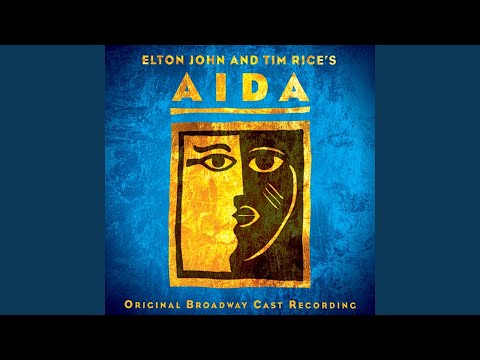
- On the Original Broadway Cast Recording, it is Track 11 and runs 4:29.
- Style: pop-theatre ballad energy with scene-first pacing and a clear, rising spine.
- Dramatic job: force the lovers to name what they are risking, while the palace keeps tightening its grip offstage.
Aida (2000) - stage musical - non-diegetic. Placement: Act I, credited to Radames and Aida in production song lists. Why it matters: it is the moment the show stops hinting and starts testifying. Two people confess they are trapped in roles, then dare to imagine stepping out of them.
This is the number where Aida turns its love triangle into a moral knot you can actually feel in your hands. The writing is direct, almost blunt, and that is the point. There is no time for decorative poetry when the characters are staring at the architecture of their own lives and realizing the walls are load-bearing.
The duet works because it refuses to make romance a soft place to land. The melody rises, yes, but it rises like a decision, not like a sigh. Radames is still a public figure, Aida is still a captive with a hidden crown, and every tender phrase carries the weight of being overheard by history. I have always thought the best performances treat it like two people in the same room, speaking too honestly for safety.
Key takeaways
- The song is a thesis statement for the show’s central conflict: duty versus selfhood.
- It gains power from clarity and sustained breath, not from vocal fireworks.
- It sets up the Act I transition into "The Gods Love Nubia" with a sharper emotional edge.
Creation History
Elton John and Tim Rice write this as an Act I peak, and the album indexing reflects that architecture: Track 11 at 4:29, long enough to let the argument unfold, short enough to keep plot pressure alive. According to the Musicnotes arrangement listing, the published edition anchors it in Gb major with a rubato-friendly tempo marking and metronome reference, a combination that invites singers to play thought and breath as much as pitch.
Song Meaning and Annotations
Plot
Act I has already shown us the palace machine: war pride, succession games, and the quiet brutality of ownership. By the time this duet arrives, Radames and Aida have crossed the line from fascination to attachment, but attachment is not a solution in this world - it is evidence. In the scene, they articulate what they have been circling: their lives are structured by other people’s expectations, and those expectations are not harmless. The duet does not resolve the conflict. It clarifies it, which is more dangerous.
Song Meaning
The meaning is a confrontation with identity as performance. The title suggests costumes, ceremonies, and the daily labor of being who others need you to be. The song argues that love can expose the performance, but exposure is not freedom by itself. The mood starts contemplative, then tightens into resolve, and the emotional arc lands on a hard truth: change will cost them something real. That cost is the story’s engine.
Annotations
The Broadway musical numbers list credits the duet to Radames and Aida in Act I.
That credit is not just paperwork. It tells you how to stage and sing it: equal weight, equal agency, and a sense that each line is answered, not merely harmonized.
The cast album indexes it as a substantial Act I track, running 4:29.
In theatre terms, that length reads as a scene that must be listened to. The show slows down here because it is making a promise about what the story is really about.
A published PVG listing sets the song in Gb major and marks the tempo as moderately with rubato, with a metronome reference of quarter note equals 90.
That combination is a gift and a trap. It allows flexibility, but it demands discipline: rubato must sound like thought, not like drifting.
Rhythm, arc, and touchpoints
The rhythm is steady enough to keep the scene moving, with room for rubato where a character needs a second to choose honesty. The style fusion is classic Aida: contemporary pop contour inside a theatre scene that is all consequence. The touchpoint is the way institutions script people’s lives - class, power, occupation, family - and how intimacy can make that script suddenly visible.
Technical Information (Quick Facts)
- Song: Elaborate Lives
- Artist: Adam Pascal and Heather Headley (Original Broadway Cast Recording)
- Featured: Orchestra
- Composer: Elton John
- Lyricist: Tim Rice
- Release Date: June 6, 2000
- Genre: Musical theatre; pop-theatre duet
- Instruments: Voices, rhythm section, theatre orchestra
- Label: Buena Vista Records
- Mood: Reflective, decisive, high-stakes
- Length: 4:29
- Track #: 11
- Language: English
- Album (if any): Aida: Original Broadway Cast Recording
- Music style: Scene-driven duet built on pop contour and sustained legato
- Poetic meter: Accentual, speech-led scansion with lyrical expansions at key turns
Frequently Asked Questions
- Who sings the song in the Broadway version?
- Radames and Aida sing it as a duet in Act I.
- Where is it on the cast album?
- The official discography indexes it as Track 11 with a runtime of 4:29.
- What is the core conflict inside the lyrics?
- Two people realize they have been living roles assigned by power, and they weigh what it would cost to live by choice instead.
- Is this the same recording as the concept album track?
- No. The concept album includes a different recording credited to Heather Headley, released earlier than the Broadway cast album.
- Why does the song feel more like an argument than a love ballad?
- Because it is a negotiation with consequence. The romance is real, but the scene is about what the romance threatens.
- What key and tempo do common PVG listings use?
- A widely used PVG listing sets it in Gb major and marks it moderately with rubato, with a metronome reference of quarter note equals 90.
- What is the main performance challenge?
- Sustaining legato and intensity while keeping the text conversational and scene-driven.
- Where does the story go immediately after this number?
- The musical turns toward community and resistance with "The Gods Love Nubia," shifting the focus from private choice to collective stakes.
- Is it a good audition song?
- It can be, but it is safest when you can show acting choices through dynamic control, not only big sound.
Awards and Chart Positions
"Elaborate Lives" is a theatre track rather than a chart single, but it sits inside a score and album with major recognition. As stated in Playbill magazine coverage, the Original Broadway Cast Recording won the 2001 Grammy Award for Best Musical Show Album, and the Broadway production won the 2000 Tony Award for Best Original Musical Score (music and lyrics).
How to Sing Elaborate Lives
Sing it like two people thinking out loud, not two people showing off. The power comes from sustained breath, long legato arcs, and the courage to let silence and rubato feel like choices rather than delays.
- Published key (PVG listing): Gb major
- Tempo (PVG listing): Moderately, with rubato; metronome quarter note equals 90
- Vocal range (PVG listing): Bb3 to Ab5
- Tempo: set a steady internal pulse first, then add small rubato only where the thought turns.
- Diction: keep consonants clean on the thesis lines. The audience has to understand the argument.
- Breathing: map breaths around long legato phrases. Avoid grabbing air in the middle of a confession.
- Flow and rhythm: shape phrases as sentences, with a clear beginning, turn, and landing.
- Accents: stress words tied to identity, choice, and consequence. That is where the scene lives.
- Duet craft: match vowel color on shared ideas, then let individual timbre return when each character asserts a different fear.
- Mic: if amplified, keep distance consistent and let intensity come from phrasing and resonance, not push.
- Pitfalls: do not inflate every climax. Save your biggest sound for the moments that change the characters’ decisions.
Additional Info
There is a neat piece of Aida archaeology here: the concept album also includes a track titled "Elaborate Lives," credited to Heather Headley, released before the Broadway production settled into its final shape. Comparing them is instructive. The concept version leans toward pop-record polish, while the cast-album version leans toward scene logic - the difference between a studio statement and a moment that has to land under stage lights.
Key Contributors
| Entity | Type | Relation | Statement |
|---|---|---|---|
| Adam Pascal | Person | Original performer | Adam Pascal originated Radames on Broadway and performs the duet on the cast album. |
| Heather Headley | Person | Original performer | Heather Headley originated Aida on Broadway and performs the duet on the cast album. |
| Elton John | Person | Composer | Elton John composed the music for Aida, including this Act I duet. |
| Tim Rice | Person | Lyricist | Tim Rice wrote the lyrics that frame identity and duty as a lived script. |
| Buena Vista Records | Organization | Label | Buena Vista Records released the Original Broadway Cast Recording. |
| Walt Disney Music Publishing | Organization | Publisher | Walt Disney Music Publishing is listed as publisher for a widely used PVG arrangement. |
Sources
Data verified via official discography track lists and production musical-numbers documentation; arrangement metrics sourced from a major sheet-music catalog; concept-album disambiguation verified via official discography; award history referenced via theatre trade reporting.
Sources: Elton John official discography, Ovrtur, Musicnotes, YouTube (Provided to YouTube by Universal Music Group), Playbill magazine