
Gods Love Nubia Lyrics
Gods Love Nubia
Aida:Take me in my dreams recurring
Cheerful as a childhood dance
Into one more taste of freedom
One more longing backward glance
In the sway of somber music
I shall never, never understand
Let me slip into the sweeter
Chorus of that other land
The gods love Nubia, the beautiful, the golden
The radiant, the fertile, the gentle and the blessed
The pain of Nubia is only for the moment
the desolate the suffering
the plundered, the opressed
Nehebka:
The gods love Nubia, their glorious creation
Its songs roll sweetly across the harvest plain
Nehebka & Aida:
The tears of Nubia, a passing aberration
They wash into the river and are never cried again
Nehebka, Aida, Mereb, and Nubian Woman:
The gods love Nubia, we have to keep believing
The scattered and divided, we are still it's heart
Aida:
The fall of Nubia, ephemeral and fleeting
The spirit always burning though the flesh is torn apart.
All:
The fall of Nubia
Ephemeral and fleeting
The spirit always burning
Though the flesh is torn apart
Take me in my dreams recurring
Cheerful as a childhood dance
Into one more taste of freedom
One more longing backward glance
The gods love Nubia, the beautiful, the golden
The radiant, the fertile, the gentle and the blessed
The pain of Nubia is only for the moment
the desolate the suffering
the plundered, the opressed
The gods love Nubia
we have to keep believing
Though scattered and divided we are still it's heart
The fall of Nubia ephemeral and fleeting the spirit always
Burning though the flesh is torn apart
The spirit always burning though the flesh is torn apart
Aida:
Apart
All:
Take me in my dreams recurring
One more longing backward glance
Song Overview
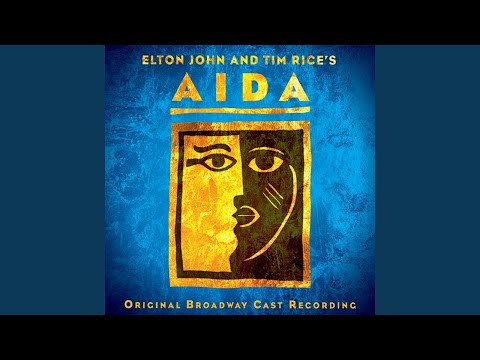
Review and Highlights
Quick summary
- Act I finale for Aida, Nehebka, and the Nubians: a communal vow that turns captivity into defiance.
- On the Original Broadway Cast Recording, it is Track 12 and runs 4:42.
- Style: pop-theatre anthem with choral drive - less solo spotlight, more collective lift.
- Dramatic job: push the love story off its private track and back onto the people it endangers.
Aida (2000) - stage musical - non-diegetic. Placement: Act I finale, credited to Aida, Nehebka and the Nubians in production musical-numbers lists. Why it matters: it is the show insisting that romance does not get to be neutral when empire is doing its work.
This is where the score stops letting the audience hide behind palace wit and couple chemistry. The chorus arrives like a tide: not gentle, not polite, and not interested in your excuses. Onstage, it can play as a rally, a prayer, or a warning - often all three in the same four minutes.
What makes the number sting is its discipline. It is not built as a diva climax, it is built as an argument made by many mouths. Aida might be the focal point, but the scene belongs to the group. The effect is theatrical and a little unnerving: the show turns the ensemble into a moral force that the principals cannot easily outrun.
Key takeaways
- The ensemble functions as the story's conscience, and it does not whisper.
- Rhythmic drive is the engine: the scene moves forward even when characters want to hesitate.
- As stated on the official Elton John discography page, the cast recording became an awards-carrying reference text, which helps explain why this finale remains widely studied.
Creation History
Elton John and Tim Rice write this as an Act I capstone: the sort of finale that makes intermission feel like a cliff. The cast album indexes it at 4:42, long enough to let the choral architecture bloom. A widely used piano-vocal-guitar listing sets it in C major with a clear metronome marking, which tells you the intended feel is measured and forward, not airy or floating.
Song Meaning and Annotations
Plot
Act I has been tightening the net around Aida: she is a captive with a hidden royal identity, drawn toward Radames while the palace writes her future without consent. By the finale, the Nubian community steps forward as a counter-authority. They claim their story, their gods, and their endurance, pushing Aida to remember that personal desire does not cancel political reality. The scene ends Act I by making the stakes explicit and communal.
Song Meaning
The meaning is resilience with teeth. The song frames faith and cultural continuity as resistance - not as passive comfort, but as a reason to keep fighting to be seen. The mood starts as invocation, then grows into defiance. The emotional arc is the shift from isolation to belonging, the moment a character realizes that survival is not only individual, it is shared.
Annotations
Production documentation credits the number to Aida, Nehebka and the Nubians.
That credit is the staging note. The scene should read as community-led, not as a solo surrounded by atmospheric chorus. The weight must come from many bodies insisting on one truth.
A PVG listing specifies "Measured, with inner strength" and a metronome of quarter note equals 96.
That phrasing is practical theatre advice. Keep the beat grounded, let intensity come from unity and text, and avoid the temptation to slow down for grandeur.
Audio-analysis catalogs estimate a much faster playback BPM than the published metronome.
This is a common modern-data mismatch: automatic beat detection can read subdivisions and land on a larger number. For rehearsal choices, treat the published metronome as the musical intention and treat analytics as rough listening metadata.
Driving rhythm and touchpoints
The rhythm is steady, insistent, and choral - a pulse that makes the ensemble feel like one organism. The cultural touchpoint is ritual as resistance: the way songs and shared language keep identity intact when power tries to rename and reduce people. I have heard directors call it a "finale anthem," but it is closer to a public vow, the kind that costs something to sing.
Technical Information (Quick Facts)
- Song: The Gods Love Nubia
- Artist: Ensemble - Aida; Heather Headley; Schele Williams (Original Broadway Cast Recording)
- Featured: Nubians ensemble; orchestra
- Composer: Elton John
- Lyricist: Tim Rice
- Release Date: June 6, 2000
- Genre: Musical theatre; pop-theatre ensemble anthem
- Instruments: Voices, piano and band core, theatre orchestra
- Label: Buena Vista Records
- Mood: Resolute, communal, defiant
- Length: 4:42
- Track #: 12
- Language: English
- Album (if any): Aida: Original Broadway Cast Recording
- Music style: Choral-driven finale writing with measured forward motion
- Poetic meter: Accentual, slogan-clear scansion designed for ensemble unity
Frequently Asked Questions
- Who sings the number in the stage musical?
- Production musical-numbers lists credit it to Aida, Nehebka and the Nubians.
- Where is it on the cast album?
- The official discography indexes it as Track 12 with a runtime of 4:42.
- Why is it the Act I finale?
- Because it reframes the story around collective stakes, making intermission feel like a moral deadline.
- Is it diegetic within the plot world?
- It plays as theatrical ritual rather than a staged entertainment inside the narrative.
- What is the central idea of the lyric?
- That identity and faith can function as resistance, and that survival is shared labor, not private luck.
- What key and tempo do common PVG listings use?
- A widely used PVG listing sets it in C major with a metronome marking of quarter note equals 96.
- Why do some online BPM tools show a much faster number?
- Beat detection can lock onto subdivisions and report a larger BPM. Use published score markings for musical intent.
- Is there a concept-album track with the same title?
- Yes. The 1999 concept album includes "The Gods Love Nubia" performed by Kelly Price, separate from the Broadway scene version.
- What is the main staging pitfall?
- Treating it as pageant. It should feel like a vow with consequence, not a pretty intermission button.
Awards and Chart Positions
The track is a theatre finale, not a chart single, but it sits inside a cast album with documented recognition. According to the official Elton John discography page, the Original Broadway Cast Recording won the 2001 Grammy Award for Best Musical Show Album, a credential that keeps this Act I finale in the standard listening canon.
How to Sing The Gods Love Nubia
Approach it like choral leadership under pressure. The lead lines must be clear and centered, while the ensemble sound stays unified, like a crowd that has learned how to breathe together. The temptation is to inflate the climax. The better choice is to keep the pulse steady and let conviction do the heavy lifting.
- Published key (PVG listing): C major
- Tempo (PVG listing): Measured, with inner strength; metronome quarter note equals 96
- Lead vocal range (PVG listing): C4 to C5
- Tempo: rehearse to the published metronome first. Finale energy comes from unity, not rushing.
- Diction: keep consonants together across the ensemble. If the text blurs, the vow weakens.
- Breathing: coordinate breath points in sections. A scattered inhale makes the group sound like individuals.
- Flow and rhythm: aim for steady forward motion. Treat it like procession, not sprint.
- Dynamic build: widen the sound by layering voices, not by pushing throats. Let resonance carry.
- Lead focus: sing the lead lines with calm authority. The character is not begging, the character is declaring.
- Pitfalls: avoid melodrama. The scene is fierce because it is controlled.
Additional Info
The title can confuse listeners because it exists in two major public versions. The Broadway Act I finale is an ensemble-driven scene number. The concept album version, performed by Kelly Price, leans into late-1990s pop production and stands alone as a studio track. Both share the headline idea, but the Broadway version uses it as dramaturgy: the phrase becomes a banner the community raises at the exact moment the plot tries to reduce them.
Key Contributors
| Entity | Type | Relation | Statement |
|---|---|---|---|
| Heather Headley | Person | Original performer | Heather Headley originated Aida and is credited on the cast recording performance of this Act I finale. |
| Schele Williams | Person | Original performer | Schele Williams originated Nehebka and is credited on the cast recording performance. |
| Elton John | Person | Composer | Elton John composed the music for Aida, including this finale. |
| Tim Rice | Person | Lyricist | Tim Rice wrote the lyric that frames cultural survival as resistance. |
| Buena Vista Records | Organization | Label | Buena Vista Records released the Original Broadway Cast Recording. |
| Walt Disney Music Publishing | Organization | Publisher | Walt Disney Music Publishing is listed as publisher for a widely used PVG arrangement. |
Sources
Data verified via official discography track lists and production musical-numbers documentation; arrangement metrics sourced from a major sheet-music catalog; audio metadata and thumbnails sourced from the official YouTube audio upload.
Sources: Elton John official discography, Ovrtur, Musicnotes listing, Tunebat, YouTube (Provided to YouTube by Universal Music Group)