
Every Story Is a Love Story Lyrics
Every Story Is a Love Story
Amneris:Every story, tale or memoir
Every saga or romance
Whether true or fabricated
Whether planned or happenstance
Whether sweeping through the ages
Casting centuries aside
Or a hurried brief recital
Just a thirty-minute ride
Whether bright or melancholy
Rough and ready, finely spun
Whether with a thousand players
Or a lonely cast of one
Every story, new or ancient
Bagatelle or work of art
All are tales of human failing
All are tales of love at heart
This is the story
Of a love that flourished
In a time of hate
Of lovers no tyranny could separate
Love set into motion on the Nile's shore
Destiny ignited by an act of war
Egypt saw the mighty river as its very heart and soul
Source of life for all her people
That only Egypt could control
Destruction of her southern neighbor justified
Nubia exploited, left with little more than pride
Song Overview
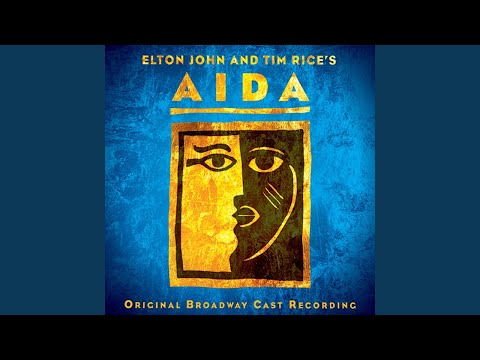
Review and Highlights
Quick summary
- Opening number for Aida on Broadway, delivered by Amneris as a self-appointed narrator with courtly swagger.
- On the cast album it is Track 1 and it runs straight into "Fortune Favors the Brave" with practically no air between them.
- Style: pop-theatre with a percussive kick and a chorus built for a proscenium-sized grin.
- Dramatic job: establish that this is a memory play with attitude, not museum pageantry.
Aida (2000) - stage musical - non-diegetic. Placement: Act I opener, then it returns at the end in reprise form as Amneris reframes what we have just witnessed (bookending the evening). Why it matters: the song appoints a guide who is also implicated, which keeps the romance from floating away into pure postcard tragedy.
The first thing the number does is claim the room. Amneris walks in as if she owns the house lights, and the band backs her up with a groove that is part pep rally, part royal procession. This is a canny choice: the show is about conquest and captivity, but the opening refuses to whisper. It sells confidence first, then lets the cracks show later.
Lyrically, the hook is a neat theatrical dare. By declaring that every tale can be reduced to love, Amneris sounds wise, even generous. Yet the phrasing also reads like control: if she gets to name the story, she gets to shape the verdict. That tension is the number's secret engine, and it makes the opening feel like narration with teeth.
Key takeaways
- Amneris is introduced as commentator and participant, a slippery but magnetic combination.
- The chorus functions like a thesis statement, but the subtext hints at denial and self-protection.
- The track-to-track handoff into the next song keeps Act I moving like a single, long scene change.
Creation History
With music by Elton John and lyrics by Tim Rice, Aida was shaped as pop-forward musical theatre rather than opera pastiche, and the cast album became a reference recording quickly. According to Playbill, the original Broadway cast recording won the 2001 Grammy Award for Best Musical Show Album, and the Broadway production took the Tony Award for Best Original Score in 2000. Those honors matter here because this opener is doing brand work: it announces, in three minutes, the sound world the creators wanted audiences to accept as both contemporary and mythic.
Song Meaning and Annotations
Plot
The song opens the musical by placing Amneris at the center of the telling. She frames the coming events as a love story first, which conveniently turns political violence into romantic inevitability. The plot proper follows: war, a captured Nubian princess, an Egyptian soldier caught between duty and desire, and Amneris watching with a smile that keeps changing shape.
Song Meaning
"Every Story Is a Love Story" is less a greeting than a thesis delivered with stagecraft. On its surface, it insists that love is the universal engine behind every saga. Underneath, it suggests something sharper: love is also the excuse people use when they cannot bear to name ambition, fear, or complicity. The mood rides that double track - buoyant, even playful - while quietly planting the question of who gets to narrate suffering.
Annotations
"Every story, tale or memoir... whether true or fabricated."
Amneris does not separate history from fiction; she flattens them into entertainment. In theatre terms, that is a warning label. We are about to watch events filtered through memory, status, and desire.
"Every hero needs a theme... every wicked scheme."
This is character analysis disguised as a chorus. She is naming archetypes like a director calling blocking, and it is hard not to hear her trying to pre-assign roles before the audience starts deciding for itself.
"Every story is a love story."
The line can sound generous, but it also sounds defensive. If everything is love, then nobody has to say, out loud, what power did to people along the way.
Driving rhythm and style fusion
The rhythmic feel sits in that late-1990s Broadway pocket where pop drums and theatre brass share the same grin. It is dance-friendly without turning into a club track, and that balance is the point: the number has to carry spectacle while also acting as narration. The chorus rises in broad strokes because it is meant to be understood in the back row, even when the staging is busy.
Metaphor and symbol
The "story" is the symbol that keeps moving. Amneris treats narrative as a crown: whoever wears it gets to define what happened. That makes the opener a setup for the show’s moral tug-of-war, where romance is real but never separate from class, conquest, and the politics of who survives to speak.
Technical Information (Quick Facts)
- Song: Every Story Is a Love Story
- Artist: Sherie Rene Scott (Original Broadway Cast Recording principal vocal)
- Featured: Original Broadway company and orchestra
- Composer: Elton John
- Producer: Chris Montan; Frank Filipetti; Guy Babylon; Paul Bogaev (album production team)
- Release Date: June 6, 2000
- Genre: Musical theatre; pop-theatre
- Instruments: Voice, rhythm section, brass and reeds, theatre orchestra
- Label: Buena Vista Records
- Mood: Confident, bright, slightly barbed
- Length: 3:20 (album listing)
- Track #: 1 (Act I)
- Language: English
- Album (if any): Aida: Original Broadway Cast Recording
- Music style: Pop melody writing shaped for Broadway narration
- Poetic meter: Predominantly accentual, conversational musical-theatre scansion
Frequently Asked Questions
- Who sings the song in the Broadway version?
- Amneris sings it, and on the original Broadway cast album the principal vocal is performed by Sherie Rene Scott.
- Where does it sit in the show?
- It opens Act I as a framing device, then the show later echoes the idea in reprise form to close the narrative loop.
- Why does it feel like narration rather than a normal character song?
- Because it functions as a contract with the audience: Amneris announces the terms of the telling before the plot asks you to pick sides.
- Is the number meant to be funny?
- It has wit and a sparkle in the delivery, but the humor is strategic. It makes the storyteller likable before the story complicates her.
- Does the cast album separate it cleanly from the next track?
- Not really. The recording flows straight into "Fortune Favors the Brave," which mirrors the stage feel of a continuous opening sequence.
- What is the central idea in the lyric?
- That love sits behind every saga - a claim that can read as wisdom or as a way to avoid naming violence and ambition.
- Is it useful as an audition cut?
- Yes for performers who want a confident, story-driving belt with crisp diction and comic timing, especially for roles with status.
- What should listeners focus on first?
- The chorus and the attitude in the phrasing. The number tells you how the show plans to treat its own legend.
- Is this connected to Verdi’s opera directly?
- Indirectly. The musical inherits the story lineage, but the sound world is modern musical theatre with pop DNA.
Awards and Chart Positions
The number itself is not typically discussed in pop chart terms, but the ecosystem around it matters. According to Playbill, the original Broadway cast recording won the 2001 Grammy Award for Best Musical Show Album, and the Broadway production won the 2000 Tony Award for Best Original Score. That makes this opener a front door to an award-backed score: the first handshake has to be strong.
| Item | Result | Date | Notes |
|---|---|---|---|
| Grammy Award | Best Musical Show Album - win | February 21, 2001 | Recognized the cast recording as a major release in its field. |
| Tony Award | Best Original Score - win | June 4, 2000 | Awarded to Elton John (music) and Tim Rice (lyrics). |
| RIAA certification | Gold album - cast recording | September 21, 2004 | Playbill list cites RIAA certification data for the original Broadway cast album. |
How to Sing Every Story Is a Love Story
This is a narrating belt that has to sound effortless while staying rhythmically neat. The challenge is not vocal fireworks; it is authority. If the storyteller does not sound in charge, the whole premise wobbles.
- Vocal range (published PVG): G3 to Ab4
- Published key (sheet music listing): Eb minor
- Tempo reference: commonly indexed around the mid-80 BPM range in audio-analysis listings
- Tempo first: speak the lyric in time before singing. The patter-like lines want precision more than volume.
- Diction: keep consonants forward, especially on the list-making phrases. You are selling categories, not floating vowels.
- Breath plan: treat the long enumerations as scripted breath marks. Take quick, silent inhales that do not interrupt the thought.
- Flow and rhythm: lock to the groove like a drummer. A tiny drag can make the character sound uncertain.
- Accents: punch the rhetorical turns that shift from "stories" to "schemes." That is where the bite lives.
- Ensemble awareness: the chorus moments should widen without turning into shouting. Let the placement brighten rather than forcing more air.
- Mic technique: if amplified, use proximity for intimacy on the sly asides, then step back a touch for chorus peaks.
- Pitfalls: do not mug the comedy too early. The song is funny because it is controlled, not because it is frantic.
Additional Info
The show gives Amneris the first word for a reason. In classical tragedy, the chorus often frames events from a moral height. Here, the framing comes from inside the mess, from a woman who benefits from the empire and still wants to be loved by the audience. That is delicious theatre, the kind that keeps a cast album track from turning into background listening.
Key Contributors
| Entity | Type | Relation | Statement |
|---|---|---|---|
| Elton John | Person | Composer | Elton John composed the music for Aida, including this opening number. |
| Tim Rice | Person | Lyricist | Tim Rice wrote the lyrics for Aida, shaping Amneris as the narrator here. |
| Sherie Rene Scott | Person | Original performer | Sherie Rene Scott originated Amneris on Broadway and leads this track on the cast recording. |
| Buena Vista Records | Organization | Label | Buena Vista Records released the original Broadway cast album. |
| Palace Theatre, New York | Place | Broadway venue | The Broadway production of Aida played at the Palace Theatre. |
| Music Theatre International | Organization | Licensing | Music Theatre International licenses Aida for productions. |
Sources
Data verified via official discography and theatre trade reporting; track timing sourced from the Elton John discography listing; awards and certification notes sourced from Playbill and IBDB; arrangement range sourced from Musicnotes.
Elton John official discography entry
Playbill - Grammy win report
Playbill - Tony score win report
IBDB - Aida production awards
Playbill - cast albums certification list
Musicnotes - sheet music range listing
Music Theatre International - show page
Sources: Elton John official discography, Playbill, IBDB, Musicnotes, Music Theatre International