

Old Hundred Lyrics
Old Hundred
[Congregation]Praise God, from whom all blessings flow
Praise him, all creatures here below
Praise him above, ye heav’nly host
Praise Father, Son, and Holy Ghost
Song Overview
Review and Highlights
Quick summary
- What it is: A hymn moment for the full company, using a famous church tune as stage architecture.
- Who sings it: Ensemble.
- Where it appears: Act I, Scene 5 in at least one licensed production packet, directly before "In the Bible."
- What it does: It lets St Petersburg perform respectability in public, which is never just about faith, it is about control.
- How it lands: Straight-faced ceremony with a faint theatrical wink, because the show knows how Twain loved a good Sunday contradiction.
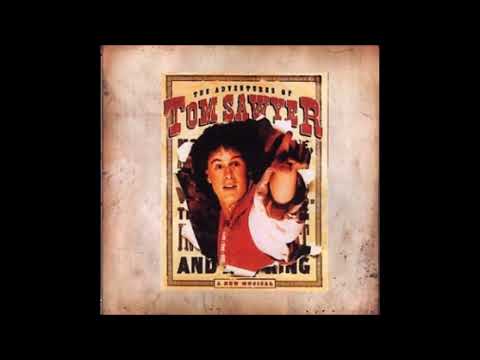
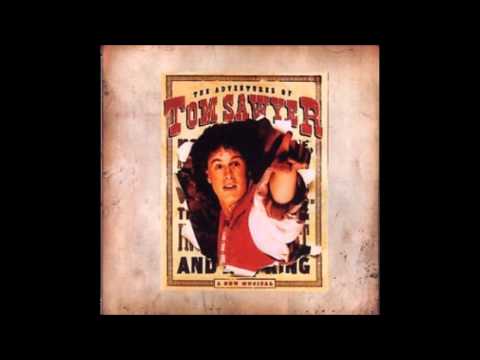
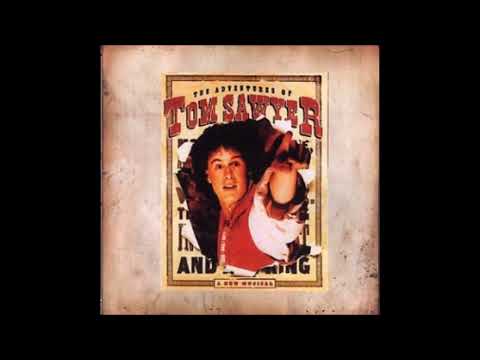
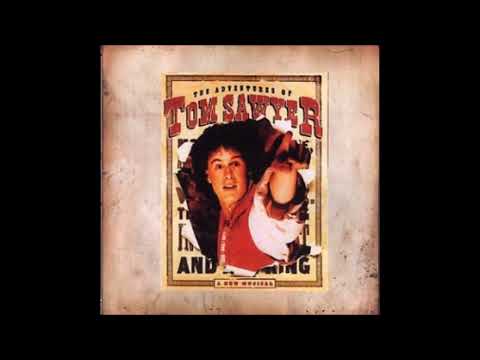
The Adventures of Tom Sawyer (2001) - stage musical - non-diegetic. Act I church sequence. Placement: the number is positioned as Scene 5, immediately preceding the preacher-focused "In the Bible" in a widely shared audition packet. That ordering matters: it makes the hymn the town's intake of breath, and the next song the sermon that follows. In other words, the community sings together, then someone tells them what togetherness is supposed to mean.
There is a director's pleasure here: you can stage it as pure devotion, or as a communal costume that Tom will keep tugging at. A hymn on Broadway is a litmus test. If it is sung too prettily, it turns into wallpaper. If it is sung with weight and clear vowels, it becomes the sound of a town putting itself on display.
Creation History
The musical was conceived and written by Ken Ludwig, with music and lyrics by Don Schlitz, and it opened on Broadway at the Minskoff Theatre on April 26, 2001. The show pulls familiar Twain episodes into a stageable chain of scenes, and using a well-known hymn tune is a shortcut with purpose: you do not need exposition to understand "Sunday in a river town." As stated in Music Theatre International's licensed song listings, this number is treated as a show extraction with published arrangement details, which is theatre-speak for "here is the official in-show version, ready for your pit and chorus."
Song Meaning and Annotations
Plot
After the graveyard violence and the boys' oath, the story returns to daylight and public ritual. The hymn functions as a bridge into the church scene where authority figures, and especially the Reverend, reassert the town's rules. The plot does not advance through new facts here. It advances through atmosphere: the community is back in formation.
Song Meaning
This is the town's "civilized" voice. In the Twain source, the same hymn tune is associated with church spectacle and social feeling, including the famous moment where the congregation sings it with gusto and Tom privately basks in the attention. That subtext is useful onstage: a hymn can be worship, and it can be performance, and those two impulses can coexist in the same breath.
Annotations
A tune that arrives pre-loaded: The Old Hundredth psalm tune carries instant church context, even for audiences who do not know its name.
That is its dramaturgical muscle. You borrow cultural memory, then you decide whether to play it sincerely or let it shade into social theatre. Either choice can work, but the ensemble must commit.
Placement as meaning: Putting the hymn right before "In the Bible" makes the service feel like a single dramatic unit.
It is a clean handoff: collective sound into individual authority. On a stage, that is a power transfer you can see and hear.
Twain's built-in irony: A hymn can amplify a town's joy, and also underline how easily the crowd turns into a chorus of judgment.
Play the vowels open and the faces earnest, and the irony becomes sharper, not softer. The audience senses what happens when the same unity is aimed at the wrong target.
Rhythm, sonority, and stage picture
Because the material is hymn-shaped, clarity beats cleverness. The chorus should sing with firm consonants, measured phrases, and a sound that feels communal rather than soloistic. If you stage it with small, repeatable gestures (hymnals, hats, a shared turn of the body), the number becomes a living tableau of "town life" that the rest of the act can disrupt.
Technical Information (Quick Facts)
- Song: Old Hundred
- Artist: The Adventures of Tom Sawyer - Original Broadway Cast
- Featured: Ensemble
- Composer: Don Schlitz
- Producer: Not publicly listed for a standard commercial album release
- Release Date: April 26, 2001
- Genre: Musical theatre
- Instruments: Pit orchestra and full chorus
- Label: Not publicly listed
- Mood: Ceremonial, communal
- Length: 3 min 07 sec (licensed show extraction listing)
- Track position: Act I, Scene 5 in a published audition packet
- Language: English
- Album: Licensed show materials and circulating reference audio
- Music style: Ensemble hymn scene with Americana choral writing
- Poetic meter: Mixed (choral text-setting in hymn style)
Frequently Asked Questions
- Who sings this number?
- The ensemble, functioning as the town in church formation.
- Where does it sit in Act I?
- A published audition packet places it as Scene 5, leading directly into "In the Bible."
- Is it meant to feel like a real hymn?
- Yes, but it is theatre. The trick is to keep the ceremony believable while letting the audience sense the town's social performance underneath.
- What is the dramatic job of using a church tune here?
- Instant context. Before anyone explains the rules, the sound implies them.
- How should a chorus approach the diction?
- Prioritize unified consonants and straight tone, so the number reads as communal speech rather than a collection of solos.
- How can a director stage it without turning it into a static concert?
- Build a simple ritual: entrances in rows, shared focal points, small repeated gestures. Let the ritual do the acting.
- Does the number connect to Twain's novel?
- The Old Hundredth tune is explicitly referenced in the novel during a church moment, which makes it a natural choice for a stage adaptation to echo that world.
- Is there an official pop single release with chart history?
- No widely used chart archives treat it as a standalone commercial single.
- What are the key and duration in the licensed listing?
- Starting key F, estimated duration 3 min 07 sec.
Awards and Chart Positions
There is no standard chart history for this stage number as a standalone release. The Broadway production, however, has documented awards recognition that signals the kind of craft supporting a church scene: the Internet Broadway Database lists 2001 Tony nominations for Scenic Design (Heidi Ettinger) and Lighting Design (Kenneth Posner), plus a Drama Desk nomination for Outstanding Orchestrations (Michael Starobin). According to Playbill, Joshua Park (the original Tom) received a Theatre World Award.
| Award body | Year | Recognition | Named recipient(s) |
|---|---|---|---|
| Tony Awards | 2001 | Nominations | Heidi Ettinger (Scenic Design), Kenneth Posner (Lighting Design) |
| Drama Desk Awards | 2001 | Nomination | Michael Starobin (Outstanding Orchestrations) |
| Theatre World Awards | 2001 | Win | Joshua Park |
Additional Info
The title points beyond the musical. "Old Hundred" is a common shorthand for the Old Hundredth psalm tune, widely associated with "All People That on Earth Do Dwell." Wikipedia notes that Twain directly references the tune in The Adventures of Tom Sawyer, which helps explain why a stage adaptation would want it nearby: it is not just church ambience, it is a Twain-signature detail that locates the story in public worship and public spectacle.
Key Contributors
| Entity | Type | Relationship (S-V-O) |
|---|---|---|
| Don Schlitz | Person | Schlitz wrote music and lyrics for The Adventures of Tom Sawyer. |
| Ken Ludwig | Person | Ludwig conceived and wrote the book for The Adventures of Tom Sawyer. |
| Michael Starobin | Person | Starobin orchestrated the Broadway production music (Drama Desk nominee). |
| Music Theatre International | Organization | MTI publishes licensed song listings and show extraction details. |
| Internet Broadway Database | Organization | IBDB documents awards nominations for the Broadway production. |
| Old 100th (Old Hundredth) | Work | The psalm tune provides the cultural model for the hymn moment. |
Sources
Sources: Music Theatre International song listings and show extraction details, Internet Broadway Database awards record, Playbill awards listing for Joshua Park, audition packet (licensed production materials), Wikipedia entry on the Old 100th tune