
Adventures of Tom Sawyer, The Lyrics: Song List
- Act 1
- Overture: Civilization
- Hey, Tom Sawyer
- Here's my Plan
- Smart like That!
- Hands all Clean
- The Vow
- Raising A Child by Yourself
- Old Hundred
- In The Bible
- It Just Ain't Me
- To Hear You Say My Name
- Murrell's Gold
- The Testimony
- Act 2
- Ain't Life Fine
- This Time Tomorrow
- I Can Read
- Murrell's Gold (Reprise)
- Angels Lost
- Light
- Angels Lost (Reprise)
- Light (Reprise)
-
Finale

About the "Adventures of Tom Sawyer, The" Stage Show
Release date of the musical: 2001
"The Adventures of Tom Sawyer: A New Broadway Musical" – Album Guide to Tracks and Key Scenes
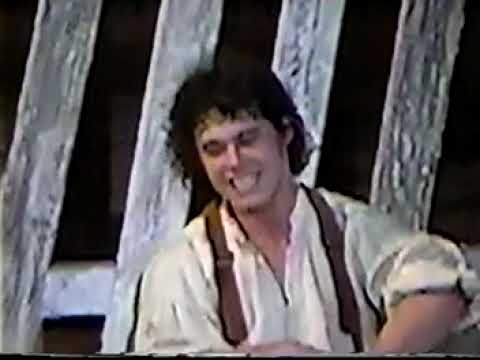
Review
What happens when Twain’s scrappy river rats get handed a Nashville-bred Broadway score? You end up with a cast recording that sounds like a family musical, but occasionally aches like a grown-up country album. Even in its promo and unreleased forms, The Adventures of Tom Sawyer: A New Broadway Musical lives in that tension: a bright, fiddle-tinged romp about mischief and murder where choir-like harmonies keep brushing up against real fear.
The songs track the novel’s big beats in a pretty linear way. “Hey, Tom Sawyer” explodes out of the speakers with small-town bustle, “Hands All Clean” dives into the graveyard killing with an ominous pulse, and the late-show pairing of “Angels Lost” and “Light” leans into full melodrama as Tom and Becky fight despair underground. The writing never chases the darker theatricality of something like Sweeney Todd, but the music does a lot of emotional lifting whenever the book softens Twain’s rough edges.
Stylistically, the score moves in clear phases. Early numbers lean on country-inflected, guitar-and-fiddle bounce – that “indie grit” equivalent that signals Huck’s freedom and Tom’s rebellion. The mid-show ballads borrow from contemporary musical-theatre pop, giving Becky and Aunt Polly a polished musical sheen that contrasts their messy choices. And any time church or community shows up, the writing slides toward hymn and 19th-century Americana: “Old Hundred,” “In the Bible,” “Angels Lost.” Hymn textures equal social pressure here – whenever the town sings together, someone’s about to get judged.
How It Was Made
The musical started life at a Nashville songwriters’ retreat in the early 1990s, where country hit-maker Don Schlitz (“The Gambler,” “When You Say Nothing at All”) was nudged toward Broadway. He teamed up with playwright Ken Ludwig, who had already scored with farces like Lend Me a Tenor and Crazy for You, to adapt Twain’s novel into a two-act family musical. Over several years Schlitz reportedly wrote dozens of songs, with the final show cherry-picking the most theatrical ones.
The Broadway production opened at the Minskoff Theatre in April 2001, directed by Scott Ellis with choreography by David Marques, and anchored by Joshua Park as Tom, Kristen Bell as Becky, Jim Poulos as Huck, and Linda Purl as Aunt Polly. Paul Gemignani served as musical director, with orchestrations by Michael Starobin and a warmly detailed physical production by designer Heidi Ettinger. The show arrived in a brutally competitive season dominated by The Producers and closed after only 21 performances, but not before the score was partially preserved.
On the recording side, things got complicated. A four-track promo CD was pressed in 2000 by Gehrig Music, featuring “Hey, Tom Sawyer,” “Smart Like That,” “To Hear You Say My Name,” and “This Time Tomorrow,” sung by Broadway cast members. A more complete cast album was recorded but never commercially released; snippets have leaked via archival uploads and individual track shares. That’s why fans today talk about “the Tom Sawyer album” in the plural: one rare promo sampler you can occasionally find on auction sites, and a ghostly, nearly-complete OBCR that lives in private collections and stray online clips.
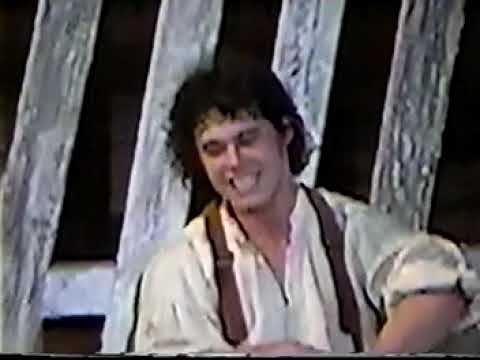
Tracks & Scenes
Because the show follows Twain’s story very closely, listening to the recording feels like walking beat-by-beat through Tom’s summer: fence to graveyard to courtroom to cave. Below are key songs and how they play onstage. (Exact timings vary by production and recording, so think in terms of early/mid/late in each act.)
“Hey, Tom Sawyer” (Company)
- Where it plays:
- Opens Act I as Tom fishes on the banks of the Mississippi while his friends play Robin Hood nearby. Town voices pile in – Aunt Polly, the schoolmaster, Reverend Sprague – so by the time Tom is dragged off to class, we’ve met half of St. Petersburg. It functions as a kinetic “welcome to our town” montage, with kids swarming the stage and adults trying (and failing) to corral them.
- Why it matters:
- It sets the sound-world: banjo-ish bounce, big choral refrains, and a rhythm that feels like kids running in every direction at once. You hear immediately that the story belongs to the children, even as the adults complain over the top.
“Here’s My Plan” (Tom Sawyer)
- Where it plays:
- Early Act I, right after Aunt Polly sentences Tom to the infamous fence-painting punishment. Alone with his bucket, Tom vents about how badly the adults “just don’t get it,” sketching out fantasies of running away downriver or reinventing himself as a hero somewhere else. Onstage it tends to be staged downstage with the fence as a looming backdrop, giving the song an almost rock-ballad confessional feel.
- Why it matters:
- This is the show’s first real character song. The tune is catchy, but the lyric is the key: we watch Tom justify bending rules as survival rather than mischief, a mindset that will guide him through the graveyard and the cave.
“Smart Like That” (Tom, Huck, Ben & Boys)
- Where it plays:
- Still in early Act I, as Tom turns fence-painting into a con. One by one, local boys wander in ready to gloat, and Tom flips the script, convincing them that whitewashing is a rare privilege worth paying for. Onstage, the number stretches into a miniature production sequence, with choreographed brush-swings and a physical pile of traded treasures at Tom’s feet.
- Why it matters:
- Musically it’s pure musical-comedy swagger – percussive, rhythmic, and full of call-and-response. Dramatically it cements Tom as a charming manipulator, and the repeated hook “smart like that” turns into a sly question: clever…or just lucky?
“Hands All Clean” (Injun Joe & Doc Robinson)
- Where it plays:
- Mid Act I in the graveyard sequence. Under low, eerie lighting, Doc Robinson hires Muff Potter and Injun Joe to rob a grave; the argument over money and respect escalates. The music shifts into a minor-key, almost bluesy feel as Joe strikes and kills the doctor, then coolly frames Muff for the murder. Tom and Huck witness it from behind the tombstones, the last bars underscoring their horrified faces.
- Why it matters:
- This is where the score stops being cute. The groove is slower, heavier, and the lyric dwells on guilt, blood, and survival. Later songs about “keeping your hands clean” echo this moment, so the title becomes shorthand for complicity.
“The Vow” (Tom & Huckleberry Finn)
- Where it plays:
- Immediately after the murder, still in the graveyard. Tom and Huck, shaking and terrified, swear in blood never to tell anyone what they saw. The staging is intimate – often just the two boys with a lantern – while the orchestra wraps them in tense, suspended chords that never quite resolve.
- Why it matters:
- The song pins the show’s central moral knot: loyalty to a friend versus justice for an innocent man. Every later decision – Tom’s testimony, Huck’s rescue of Widow Douglas, their bravery in the cave – is them trying to grow out of this frightened promise.
“It Just Ain’t Me” (Huckleberry Finn)
- Where it plays:
- Late in Act I, on the road into town. After Huck saves Widow Douglas from his drunken father, she offers him a home, schooling, and stability. Huck wanders the stage alone, describing what that life would look like…and why he can’t quite bear it. The band leans hard into country-ballad territory: gentle guitar, rolling piano, a melody that could sit comfortably on a 90s Nashville record.
- Why it matters:
- It’s Huck’s thesis statement. Freedom versus safety, river versus front porch. The song explains why the later “I Can Read” feels so huge: he’s not just learning letters, he’s choosing a different future than the one he sings about here.
“To Hear You Say My Name” (Tom & Becky)
- Where it plays:
- End of Act I’s school sequence. After Tom takes the blame for Becky’s borrowed poetry book and saves her from punishment, the kids scatter and the classroom empties. The two of them stay behind, shyly circling each other among the desks, confessing crushes and plotting a future “engagement.” It plays like a classic musical-theatre love duet, with overlapping lines and a key change as they finally kiss.
- Why it matters:
- On the album, this is the track everyone remembers. It gives Tom a vulnerable side and lets Becky be more than a prize – she calls him out, teases him, and still chooses him. It’s also the melody the show quietly recalls when they’re lost in the cave, so their romance and their survival stay musically linked.
“Murrell’s Gold” (Injun Joe, Muff, Tom & Huck)
- Where it plays:
- Late Act I, just before Muff’s trial. In a jailhouse and then in shadowy corners of town, Muff gives Joe a treasure map in exchange for a promise of help, while Tom and Huck argue about whether to tell what they know. The staging often crosscuts between cells and alleyways, with the chorus whispering about the legendary hoard in the cave.
- Why it matters:
- The song braids together greed, fear, and adventure. Instrumentally it has a galloping, almost Western feel – you can hear the cave-chase coming – but the lyric underlines how much of the town’s morality can be bought.
“The Testimony” (Tom & Ensemble)
- Where it plays:
- Climactic Act I courtroom scene. The townsfolk pack into church pews, murmuring over Muff’s fate, while Injun Joe lies on the stand. When Tom finally steps forward, the music drops to a hush, then builds as he describes the murder and names Joe as the killer. The number ends in chaos as Joe throws a knife at Tom and bolts through the crowd.
- Why it matters:
- Structurally it’s the act’s “I believe” moment. The boy who sang “Here’s My Plan” to run away now risks everything to tell the truth. On record, it plays like a mini-oratorio – children’s voices, church chords, and a single terrified kid in the middle.
“Ain’t Life Fine” (Company)
- Where it plays:
- Opens Act II with the town celebrating the start of summer vacation. Kids swarm the stage with kites and props, listing all the fun they’ll have; parents chase them with chore lists and warnings. It’s one of the more dance-heavy numbers, usually staged as a swirl around Tom and Huck.
- Why it matters:
- On the album, it’s a shot of pure serotonin after the courtroom. The lyric about “twiddling thumbs” and “no more school” is almost aggressively cheerful, which makes the lurking threat of Injun Joe feel even sharper underneath.
“This Time Tomorrow” (Aunt Polly)
- Where it plays:
- Early Act II in Tom’s bedroom. Tom admits he’s too scared of Injun Joe to go on the town picnic. Aunt Polly tucks him into bed, insisting Joe is far away and crooning a lullaby about how different things will feel “this time tomorrow.” Many productions reprise a fragment when Tom later disappears into the cave.
- Why it matters:
- It’s the adult emotional centerpiece of the score. While kids get the flashy uptempo songs, this one lets a parent sing about fear, faith, and letting go, in language that feels both simple and piercing.
“I Can Read” (Huck & Widow Douglas)
- Where it plays:
- Mid Act II, on Widow Douglas’s porch or in a cozy parlor. After weeks of secret tutoring, Huck finally manages to sound out a page. The song becomes a goofy celebration duet – he stumbles over big words, she corrects him, they both end up laughing. It often segues directly into preparations for the picnic.
- Why it matters:
- It’s the musical answer to “It Just Ain’t Me.” Same kid, same fear of being civilized, now choosing literacy because it belongs to him, not just to “respectable folks.” On record it’s one of the warmest tracks.
“Angels Lost” / “Light” (Aunt Polly, Judge, Becky & Tom)
- Where it plays:
- Late Act II, in and around McDougal’s Cave. “Angels Lost” is sung by Aunt Polly, Judge Thatcher, and townspeople as they scour the hills with lanterns, terrified that Tom and Becky have died underground. Inside the cave, “Light” gives Tom a soaring solo as he tries to keep Becky hopeful while their last candle burns low. A reprise of “Angels Lost” from Becky’s point of view bridges into the final confrontation with Injun Joe.
- Why it matters:
- Together they form the emotional peak of the score: one hymn-like, one almost pop-gospel. Thematically, “light” here means faith, love, and literal survival. If you only hear one sequence from the unreleased cast album, it should be this pairing.
“Finale” (Tom, Huck, Becky & Company)
- Where it plays:
- Final scene in the church. As the town holds a funeral for the three missing children, Tom, Huck, and Becky sneak into the balcony to watch people mourn them. When they finally reveal themselves, chaos erupts into joy and the whole company reprises material from “Ain’t Life Fine” and earlier songs, folding in Huck’s proud announcement that he can now read.
- Why it matters:
- The finale reiterates the show’s thesis: childhood is messy, dangerous, and glorious, but a small-town community can still be a net of grace. Musically it ties up the country, hymn, and pop threads into one last, big curtain-call button.
One quick note on trailers and extra music: unlike many film soundtracks, this property doesn’t really have “trailer-only” songs. Promotional reels and sneak peeks for the Broadway and TYA productions almost always cut together existing score cues (“Hey, Tom Sawyer,” “Ain’t Life Fine,” or “To Hear You Say My Name”) rather than licensed pop tracks, so what you hear in ads is essentially the same material you hear on stage or on the promo CD.
Notes & Trivia
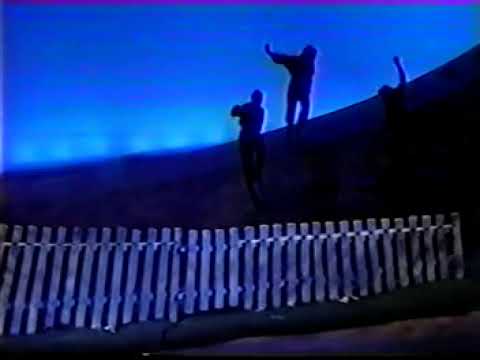
- In performance, “Hands All Clean” is often underscored by a slow tolling bell or low drum hits, giving the graveyard its own sonic signature that never appears elsewhere in the show.
- “Raising a Child” is a rare duet between two single parents in a family musical – Aunt Polly and Judge Thatcher compare notes on raising kids alone, without any romantic subplot between them.
- Many regional productions lean into gospel colors for “Old Hundred” and “In the Bible,” using handclaps and call-and-response to underline how public and performative the town’s religion can be.
- Injun Joe’s material is written in a darker, more chromatic style than anyone else’s; his songs sit lower and use more spoken rhythm, so he always sounds just left of the show’s “home key.”
- The Theatrical for Young Audiences (TYA) adaptation trims several introspective numbers (“The Vow,” “This Time Tomorrow,” “Angels Lost”) to keep a one-act length, shifting the tonal center toward action and comedy.
- Because there’s no widely available full cast album, bootleg audio and video have become semi-canonical for fans. Some arrangements people now think of as “standard” actually come from specific school or regional productions.
- “Ain’t Life Fine” has a sly meta-joke: kids sing about how perfect life is the exact season Broadway audiences watched the show get swamped by flashier hits.
Reception & Quotes
Critically, The Adventures of Tom Sawyer landed in the “pleasant but not essential” bucket. Reviewers praised the craftsmanship of the score and the visual polish of the production, but many felt the adaptation smoothed out Twain’s sharper satire. Families, especially kids seeing their first Broadway show, tended to respond more warmly than adults who knew the novel inside-out.
Over time, the music has quietly outlived the run. Regional and school productions keep the score in circulation, and the elusive recordings have developed a small cult following among cast-album collectors. For a show that ran less than three weeks, it’s surprisingly present in the repertoires of community theatres and educational programs.
“Sunny, handsome and energetically performed, but missing Twain’s unruly spark – the show feels safe where the book feels dangerous.”
– Paraphrasing reviews in New York and trade press
“A joyous, wholesome, literate production… Schlitz’s songs feel like tunes you learned in childhood and forgot until now.”
– Summary of Talkin’ Broadway’s reaction
“Tom Sawyer had charm, melody and real professional polish. The score blended country flavor with classic musical-comedy form.”
– From later historical surveys of 2000s Broadway
“This show deserved a far better fate… Whatever its shortcomings, it’s a tuneful, family-friendly take on Twain.”
– Retrospective commentary from musical-theatre historians
Interesting Facts
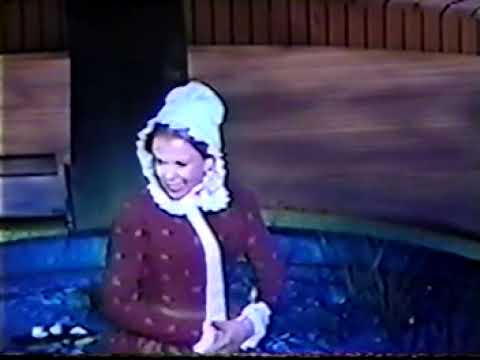
- The Broadway production opened at the Minskoff Theatre in April 2001, right in the same spring window that The Producers exploded. Being the “nice family musical” next door did it no favors.
- There is no fully released commercial cast album. Instead you get: a four-song promo CD (distributed free to industry and press) and an unreleased full cast recording that circulates privately.
- That four-track sampler – pressed by Gehrig Music – has become a white whale for collectors, regularly fetching high prices on secondary markets despite its short running time.
- Because the promo disc omits “Angels Lost” and “Light,” fans who only know the CD are missing the score’s emotional high-water mark; those songs primarily survive via archival uploads and sheet music.
- Huck’s solo “It Just Ain’t Me” is often compared to Big River’s “River in the Rain” in fan discussions – two different musical versions of a boy looking at a river and deciding who he wants to be.
- A TYA (Theatre for Young Audiences) version streamlines the show into a tight, one-act adventure. It keeps core numbers like “Here’s My Plan,” “Murrell’s Gold,” and “Light,” making them the de facto “greatest hits.”
- Modern productions often wrestle with how to present the villain’s name and language, acknowledging that the original “Injun Joe” terminology is rooted in racist caricature. Some licensees adjust dialogue or program notes to contextualize it.
- Confusingly, there’s also a completely separate French musical called Tom Sawyer (music by Julien Salvia, lyrics by Ludovic-Alexandre Vidal). Same Twain novel, totally different score – easy to mix up when you’re searching online.
- Don Schlitz is better known for country radio than showtunes, but this score earned him theatre cred and is often cited when people talk about country songwriters crossing into Broadway.
Technical Info
- Title: The Adventures of Tom Sawyer: A New Broadway Musical (promo cast recordings & unreleased OBCR)
- Year of recording: 2000 (promo studio recordings) aligned with the 2001 Broadway production at the Minskoff Theatre.
- Type: Stage musical soundtrack / cast recording (promotional sampler plus unreleased full album).
- Source work: Based on Mark Twain’s 1876 novel The Adventures of Tom Sawyer, set in 1840s St. Petersburg, Missouri.
- Music & lyrics: Don Schlitz.
- Book: Ken Ludwig.
- Key songs featured on recordings: “Hey, Tom Sawyer,” “Here’s My Plan,” “Smart Like That,” “It Just Ain’t Me,” “To Hear You Say My Name,” “Murrell’s Gold,” “Ain’t Life Fine,” “This Time Tomorrow,” “I Can Read,” “Angels Lost,” “Light,” plus orchestral Overture/Entr’acte material.
- Label / catalogue: Gehrig Music – promo CD (catalogue UCGR-00022-2), distributed in limited quantities for marketing.
- Music direction & orchestration (Broadway): Musical director/conductor Paul Gemignani; orchestrations by Michael Starobin.
- Staging context: Originally produced on Broadway by a commercial team at the Minskoff Theatre; standard licensed version administered by Music Theatre International (MTI), including a TYA adaptation.
- Recording status: No standard commercial cast album. Known audio documents include the 4-song promo CD and a full-length cast recording noted in theatre discographies as “unreleased.”
- Availability: Promo discs occasionally surface via collectors and auction sites; individual tracks and archival transfers appear on platforms like YouTube and SoundCloud. Licensing materials include piano/vocal arrangements for most songs.
- Awards context: The production received multiple design and orchestration nominations (Drama Desk, Outer Critics Circle) and a Theatre World Award for Joshua Park’s performance, indirectly spotlighting the score and its presentation.
Key Contributors
| Entity | Type | Relation (S–V–O) |
|---|---|---|
| Don Schlitz | Person | Don Schlitz composed and wrote lyrics for The Adventures of Tom Sawyer musical. |
| Ken Ludwig | Person | Ken Ludwig wrote the book for the musical adaptation of The Adventures of Tom Sawyer. |
| Scott Ellis | Person | Scott Ellis directed the original Broadway production at the Minskoff Theatre. |
| David Marques | Person | David Marques choreographed the Broadway staging of The Adventures of Tom Sawyer. |
| Paul Gemignani | Person | Paul Gemignani served as musical director and conductor for the Broadway production and associated recordings. |
| Michael Starobin | Person | Michael Starobin orchestrated the score for the Broadway production. |
| Heidi Ettinger | Person | Heidi Ettinger designed the scenic environment of St. Petersburg and the cave for Broadway. |
| Kenneth Posner | Person | Kenneth Posner designed the lighting, including the graveyard and cave sequences. |
| Anthony Powell | Person | Anthony Powell designed costumes for the Broadway production. |
| Joshua Park | Person | Joshua Park originated the role of Tom Sawyer in the Broadway cast and on related recordings. |
| Kristen Bell | Person | Kristen Bell originated Becky Thatcher on Broadway and sings on key promo and archival tracks. |
| Jim Poulos | Person | Jim Poulos played Huckleberry Finn in the Broadway production and appears on associated recordings. |
| Linda Purl | Person | Linda Purl played Aunt Polly and is featured on numbers like “This Time Tomorrow.” |
| Minskoff Theatre | Venue | Minskoff Theatre hosted the original Broadway run of The Adventures of Tom Sawyer in 2001. |
| Music Theatre International (MTI) | Organization | Music Theatre International licenses The Adventures of Tom Sawyer and its TYA version. |
| Gehrig Music | Organization | Gehrig Music issued the 2000 promo CD The Adventures of Tom Sawyer: A New Broadway Musical. |
| The Adventures of Tom Sawyer (musical) | Work | The musical provides the source score and scenes for the promo and unreleased cast recordings. |
| The Adventures of Tom Sawyer: A New Broadway Musical | Album | The album collects selected songs from the Broadway score in studio and promotional form. |
Questions & Answers
Some quick Q&A for anyone hunting down this soundtrack or planning a production.
- Is there an official, full cast album of The Adventures of Tom Sawyer?
- Not in the usual sense. There’s a four-song promo CD and an unreleased full cast recording noted in theatre discographies, but no widely issued commercial OBCR.
- What songs are actually on the rare promo CD?
- The sampler focuses on the most “sellable” tracks: typically “Hey, Tom Sawyer,” “Smart Like That,” “To Hear You Say My Name,” and “This Time Tomorrow,” performed by Broadway cast members.
- How “country” is the score compared with other Broadway Twain shows like Big River?
- It borrows country vocabulary – guitars, easy swing, conversational lyrics – but sits closer to mainstream musical theatre than the rootsier, bluegrass-leaning Big River.
- If I’m directing a production, which songs are non-negotiable to feature as musical highlights?
- For most audiences, the essential spine is “Here’s My Plan,” “Smart Like That,” “It Just Ain’t Me,” “To Hear You Say My Name,” “Murrell’s Gold,” “Ain’t Life Fine,” “I Can Read,” and the “Angels Lost” / “Light” sequence.
- Why is this soundtrack so hard to track down online?
- The show had a short Broadway run, the promo disc was never mass-marketed, and the full cast album stayed in the vault. What survives is mostly through collectors and archival uploads, not mainstream labels or streamers.
Sources: Wikipedia (musical & novel entries); Music Theatre International show and TYA pages; Internet Broadway Database; Discogs (Gehrig Music promo release); The Complete Book of 2000s Broadway Musicals; Ken Ludwig’s official site; Playbill and trade-press coverage; Ovrtur production and recording notes; assorted archival audio/video listings and regional production materials.