

Hands all Clean Lyrics
Hands all Clean
[Doctor Robinson]Spirits, ha, well hurry up
The time has come to earn your pay
I need that grave dug up tonight, no matter what your spirits say
Before that rain starts fallin' down
I need that body from the ground
I need that body from the ground
[Joe]
It's been this way my whole life through
When rich folks need some bad deed done
It's always me that they turn to
Old Injun Joe, yea I'm the one
They call me trash, they call me mean
It's me who keeps their hands all clean
Five dollars Doc, and you will see
Nobody robs a grave like me
Nobody robs a grave like me
[Doc and Joe fight]
[Joe]
Doc, I guess we're even now
I won't trouble you no more
Like everybody in this town, you left me hungry at the door
I'd just wished your eyes could see
Nobody hides a knife like me
Nobody hides a knife like me
Song Overview
Review and Highlights
Quick summary
- What it is: A shadowy, plot-turning duet for the villain (Injun Joe) and Doc Robinson.
- Where it appears: Act I, graveyard scene - the musical’s first true drop into danger.
- What it does: It yanks the story from boyish games into real violence, then leaves the kids carrying the secret.
- How it plays: A crime scene rendered as musical theater - tight pacing, ugly intent, and just enough theatrical polish to keep the audience leaning in.
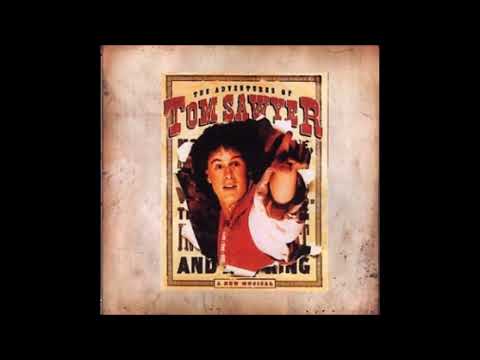
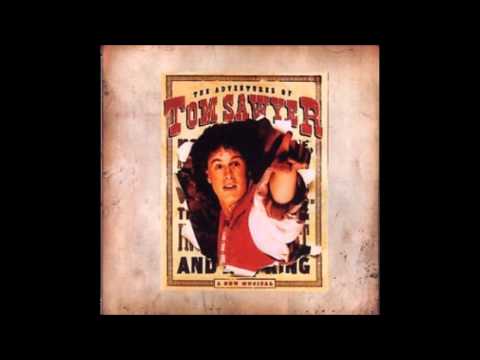
The Adventures of Tom Sawyer (2001) - stage musical - non-diegetic. Act I, graveyard sequence. Placement: Tom and Huck spy on Doc Robinson, Muff Potter, and Injun Joe as they rob a grave. Why it matters: the show needs a hinge - a moment when childhood dares collide with adult consequences. This number is that hinge, and it lands hard when the staging treats the graveyard as a workplace for cruelty, not a haunted-house gag.
As a piece of musical dramaturgy, it is efficient in a way I admire. The audience already knows the town likes its stories tidy; now we see what happens when somebody refuses tidy. The title reads like a cheap alibi, which is exactly the point: the villain claims cleanliness while the scene shows moral grime spreading across the plot. According to Variety’s Broadway review, the adaptation is "sunny and handsome" but can feel bland; this number is one of the spots where the material tries to earn sharper teeth.
Creation History
Ken Ludwig conceived and wrote the book, and Don Schlitz wrote the music and lyrics, with the Broadway production opening April 26, 2001 at the Minskoff Theatre. The graveyard episode is a central Twain beat, so the musical has to solve a practical question: how do you stage murder in the same evening as fence-painting comedy? A number like this answers with form. Put the menace in a focused duet, keep the scene moving, then let the aftermath belong to the boys.
Song Meaning and Annotations
Plot
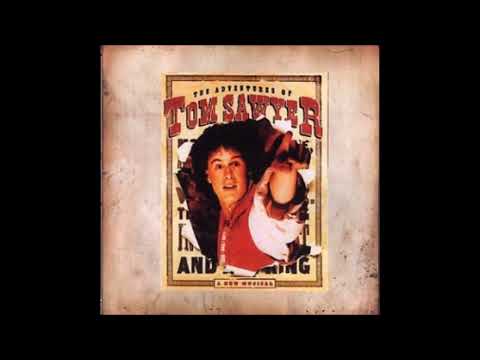
Tom and Huck sneak to the graveyard at night and witness Doc Robinson, Muff Potter, and Injun Joe robbing a grave. A quarrel over property escalates, and Injun Joe kills Doc Robinson, then frames Muff Potter. The boys flee, terrified, and the story’s center of gravity shifts from mischief to fear and silence.
Song Meaning
"Hands All Clean" is a theatrical study in denial. The phrase suggests a man trying to rinse responsibility away, as if wrongdoing were a stain instead of a choice. In a musical, that kind of self-justifying language is gold: it can be sung with swagger, spat like a threat, or delivered with icy calm. Any of those readings point to the same meaning - power wants permission, and if permission is not granted, it manufactures it.
Annotations
Title as cover story: The words sound like an excuse prepared in advance.
Play that idea in performance and the song becomes more than "villain time." It becomes a preview of how the framing will work: blame will land on the easiest target, not the right one.
Two-man scene, three-man crime: Even if Muff Potter is present in the action, the number centers the argument between Joe and Doc.
That focus matters. It keeps the scene legible, and it makes the murder feel like the result of a personal power struggle, not random stage violence.
Witnesses as audience doubles: Tom and Huck are the watchers - so are we.
This is where a director can tighten the screws. Let the boys be visible, trapped in their hiding place, and the audience feels complicit in the silence that follows.
Rhythm, color, and stagecraft
This number is a reminder that "Americana" in musical theater is not only picnics and parades. It can also be the creak of a night scene and the pulse of a threat. Keep the scene’s tempo purposeful. If it drags, it becomes melodrama. If it moves, it becomes dread.
Technical Information (Quick Facts)
- Song: Hands All Clean
- Artist: The Adventures of Tom Sawyer - Original Broadway Cast
- Featured: Injun Joe; Doc Robinson
- Composer: Don Schlitz
- Producer: Not publicly listed for a standard commercial album release
- Release Date: April 26, 2001 (Broadway opening date for the production that defined the score)
- Genre: Musical theatre
- Instruments: Pit orchestra with two-voice scene writing
- Label: Not publicly listed
- Mood: Menacing, nocturnal, plot-driving
- Length: Not reliably published in major public listings
- Track position: Act I, graveyard sequence
- Language: English
- Album: Circulating reference audio exists; major databases list no commercial cast album
- Music style: Scene duet for antagonist and accomplice-victim dynamic
- Poetic meter: Mixed (speech-forward dramatic writing)
Frequently Asked Questions
-
Who sings "Hands All Clean"?
Injun Joe and Doc Robinson.
-
Where is it in the story?
Act I, during the graveyard scene where Tom and Huck witness a crime.
-
What plot event happens in this scene?
Injun Joe kills Doc Robinson and frames Muff Potter, forcing the boys into silence.
-
Is it a "villain song" or a narrative scene?
Both. It gives the antagonist space while also accomplishing the show’s major turn into danger.
-
How should the scene feel compared to the earlier schoolyard material?
Colder and faster. The comedy can still exist in the show, but not in this moment.
-
What is the simplest directing principle for the number?
Clarity over atmosphere. The audience must track who does what, and who will be blamed.
-
Does this song have pop-chart history?
No standard chart record is associated with it as a standalone release.
-
Is there a one-act edition that handles this material differently?
Yes. The Theatre for Young Audiences version lists "Hands All Clean (Part 1)," reflecting a shorter structure.
Awards and Chart Positions
This number is not part of a singles marketplace, so chart peaks and certifications are not a meaningful category for it. The parent Broadway production, however, has well-documented awards recognition: Tony nominations for Scenic Design (Heidi Ettinger) and Lighting Design (Kenneth Posner), and Drama Desk nominations including Outstanding Orchestrations (Michael Starobin). Those credits matter in a scene like this because design and orchestration do much of the storytelling when the stage goes dark.
| Award body | Year | Recognition | Named recipient(s) |
|---|---|---|---|
| Tony Awards | 2001 | Nominations | Heidi Ettinger (Scenic Design), Kenneth Posner (Lighting Design) |
| Drama Desk Awards | 2001 | Nominations | Michael Starobin (Orchestrations), plus design categories |
Additional Info
The most interesting thing about "Hands All Clean" is where it sits in the evening. Musical comedy loves to flirt with danger, but this scene requires the flirtation to stop. In a good staging, the number does not shout "dark turn" - it simply behaves like a different genre for a few minutes. The graveyard becomes a working environment for men who do not fear consequences, and the kids, for once, cannot talk their way out. As stated in a Playbill preview report from March 2001, the creative team reshaped the opening during tryout, cutting songs and strengthening the start; that kind of craft pressure is exactly what makes later set pieces like this land with clean narrative force.
Key Contributors
| Entity | Type | Relationship (S-V-O) |
|---|---|---|
| Don Schlitz | Person | Schlitz wrote music and lyrics for The Adventures of Tom Sawyer. |
| Ken Ludwig | Person | Ludwig conceived and wrote the book for The Adventures of Tom Sawyer. |
| Michael Starobin | Person | Starobin provided orchestrations for the Broadway production. |
| Scott Ellis | Person | Ellis directed the Broadway production. |
| Minskoff Theatre | Venue | The production opened at the Minskoff Theatre on April 26, 2001. |
| Music Theatre International | Organization | MTI licenses the show and publishes song listings and versions. |
| Injun Joe | Character | Injun Joe sings "Hands All Clean" and commits the onstage murder in the graveyard scene. |
| Doc Robinson | Character | Doc Robinson sings in the number and is killed in the scene. |
Sources
Sources: Music Theatre International show page and full synopsis, Internet Broadway Database production record, Variety Broadway review archive, Playbill Theatre Week in Review (March 2001), Wikipedia production and song list summary, StageAgent song list page