
Wonderland: Alice's New Musical Adventure Lyrics: Song List
- Act 1
- Overture
- Worst Day of My Life
- Down the Rabbit Hole
- Welcome to Wonderland
- Drink Me
- Advice From a Caterpillar
- Go With The Flow
- One Knight
- Mad Tea Party
- The Mad Hatter
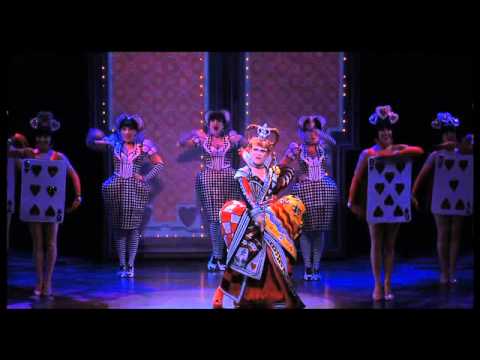
- Hail to the Queen
- Home
- A Nice Little Walk
- Through the Looking Glass
- Act 2
- I Will Prevail
- I Am My Own Invention
- Off with Their Heads!
- Once More I Can See
- Heroes
- Together
- Finding Wonderland
- Other Songs
- Curiouser and Curiouser
- The Mad Hatter (alternative)
- Don't Wanna Fall in Love
- Love Begins
- Nick of Time
- Advice From a Caterpillar (alternative)
- Misunderstood
- Hail the Queen
About the "Wonderland: Alice's New Musical Adventure" Stage Show
Release date of the musical: 2011
"Wonderland: Alice's New Musical Adventure" – The Musical Guide & Song Meanings
Review
“Wonderland” wants to be a fantasy musical about a grown woman remembering who she is. It also wants to be a pop-concert character parade. The lyrics sit in the middle, trying to connect an adult marriage crisis to a kaleidoscopic underworld without letting either side feel like homework. The best moments are blunt and legible. The worst ones are slogan-shaped, like the show is auditioning for a motivational poster.
Jack Murphy’s lyric strategy is clear: every major figure gets a self-branding number, and Alice’s journey is framed as a fight between fear and agency. You can hear the show’s central metaphor, again and again, in the language of games and rules. Alice is competing at work. She is competing in Wonderland. She is competing with the version of herself that never got tired. That repetition is smart. It is also risky. When the book is busy, repeated thematic language can feel like the score is stalling for time.
Musically, Wildhorn builds on his house style: big pop hooks, bright ensemble lifts, and ballads that crest hard at the chorus. It matters because this Wonderland is not a whispered dream. It is a club, a theme park, and an office nightmare with better lighting. If you like your musical theatre with radio muscle, the cast album is a clean entry point. If you want story nuance, you will find yourself wishing the lyric writing trusted silence more often.
How It Was Made
“Wonderland” did not arrive fully formed. It had a long development road through readings and regional runs, starting with a Tampa world premiere in 2009 and later work in Houston, before landing on Broadway in 2011. Playbill’s early reporting positions the show as a Straz Center commissioning project with a creative team built around Wildhorn, Murphy, and director Gregory Boyd. The 2010 concept recording was part of that “Broadway-bound work-in-progress” phase, and it tells you what the writers thought the show was before Broadway clarified, or complicated, the assignment.
Here is the other key fact for lyric watchers: the show has multiple lyric lives. The 2011 Original Broadway Cast Recording was recorded during rehearsals and is documented as not fully reflecting the final versions heard onstage. That means the album is both a souvenir and an artifact of a moving target, with phrases and emphases that do not always match later iterations.
Fast-forward to the present, and the big behind-the-scenes story is revision. MTI is licensing a newly revised version with a rewritten book by Jennifer Paulson-Lee and Gabriel Barre, based on the earlier book by Boyd and Murphy. That revision premiered at Tuacahn Center for the Arts in 2022 and was announced as now available for licensing in late 2025. The subtext is plain: the writers and rights-holders are still trying to solve the same puzzle the lyrics have been tackling since 2009, which is how to make “believe in yourself” feel specific.
Key Tracks & Scenes
"Home" (Alice, Jack, Chloe)
- The Scene:
- Morning in New York City. Alice bolts for work, Jack is a bruised co-parent presence, Chloe is the emotional truth-teller. Domestic light. Fast exits. A doll named Dinah becomes a tiny talisman.
- Lyrical Meaning:
- The lyric sets the show’s real stakes early: this is not about escaping into fantasy, it is about rebuilding a family’s vocabulary for love.
"Worst Day of My Life" (Alice)
- The Scene:
- A corporate pressure-cooker. Alice is given an overnight chess-based assignment that will determine a promotion, with Madelyn Quizzle as her rival. White office light. No oxygen. No time.
- Lyrical Meaning:
- Murphy writes anxiety as acceleration. The lyric is less “I am sad” and more “my brain is sprinting.” It motivates the dream logic that follows.
"Down the Rabbit Hole" (Alice)
- The Scene:
- At her desk, Alice reads a note from Dinah and drifts into sleep. A rabbit appears, steals the doll, and Alice follows him into a violently fast elevator. The lighting goes surreal. The floor drops out.
- Lyrical Meaning:
- The lyric makes surrender feel active. Alice chooses chase over control. It is the first time she stops managing and starts moving.
"Welcome to Wonderland" (Company)
- The Scene:
- Club Wonderland. Chaz, a DJ ringmaster, announces Alice like she is celebrity content. Strobes, glitter, chorus-line energy. The crowd welcomes her with manufactured warmth.
- Lyrical Meaning:
- It is seduction with a warning label. The lyric invites Alice in, but the rhythm says: you are being handled.
"Go with the Flow" (El Gato)
- The Scene:
- A boat of cats arrives in the middle of a memory flood. El Gato takes control of the temperature in the room, turning panic into something like dance therapy.
- Lyrical Meaning:
- This is the show’s central instruction, stated outright. The lyric insists that resistance is Alice’s real antagonist, more than any villain in a hat.
"The Mad Hatter" (Mad Hatter)
- The Scene:
- The Mad Tea Party. The Hatter enters like a political candidate and a fashion threat, outlining her plan to rule Wonderland. Harsh spotlights. Crowd as jury.
- Lyrical Meaning:
- The lyric makes ambition theatrical, then turns it predatory. In later revisions, this character often reads as Alice’s shadow self. The song is where that argument starts.
"I Am My Own Invention" (Alice)
- The Scene:
- Behind a locked door, Alice solves a riddle and confronts what the dream is actually about: her “pure self,” the younger Alice. The staging usually cleans up. The noise drops. The idea finally speaks.
- Lyrical Meaning:
- It is self-authorship stated as a chorus. The lyric’s job is to turn abstract empowerment into a decision Alice can make onstage.
"Once More I Can See" (Alice)
- The Scene:
- A mirror-hall encounter with Young Alice. The two versions reunite and “come together as one.” Soft light. Time slows. The plot stops explaining and starts feeling.
- Lyrical Meaning:
- The lyric reframes the fantasy as therapy, but with melody. It is the show’s emotional pivot: remembrance becomes action.
"Finding Wonderland" (Alice)
- The Scene:
- Morning after the dream. Jack and Chloe arrive at the office. Alice pitches a new kind of “heart” game, seeing work through the eyes of her inner child. Bright daylight. Second chances, briefly believable.
- Lyrical Meaning:
- The lyric closes the loop: imagination is not escape, it is a tool for repairing the life you wake up in.
Live Updates
Information current as of 2 February 2026. “Wonderland” is newly relevant because it is newly licensable in a revised edition. MTI’s listing and news coverage emphasize a rewritten book by Jennifer Paulson-Lee and Gabriel Barre, and points back to a 2022 premiere at Tuacahn Center for the Arts as the launchpad for the new version. If you are tracking where the show is “now,” that is the answer: it is moving through the licensing pipeline, which is where this title is most likely to be seen in 2025 and 2026.
For cast-album listeners, the 2011 recording remains the easiest way in. Just keep in mind the documented timing: it was recorded during rehearsals, and it does not perfectly mirror what audiences heard after the final Broadway changes.
Notes & Trivia
- The Broadway production opened April 17, 2011 at the Marquis Theatre and closed May 15, 2011 after 31 previews and 33 performances.
- MTI is licensing a newly revised edition announced in November 2025, reflecting a revision that premiered at Tuacahn Center for the Arts in 2022.
- MTI’s synopsis frames Alice’s “Wonderland” journey as a dream triggered by a work deadline and a family rupture, with the Wonderland chess-game as the externalized conflict.
- Playbill reported the 2011 cast album was recorded March 6, 2011, with a booklet that includes lyrics and production photos.
- There is a 2010 concept recording that predates Broadway, released digitally via Sony Masterworks as part of a Wildhorn distribution partnership.
- “Welcome to Wonderland” is staged as a nightclub arrival in MTI’s synopsis, which explains the number’s performance DNA: it is a show opener disguised as a party.
- In the Act 2 chess match, the plot hinges on reaching the “Eighth Square,” a game-rule metaphor that the lyrics keep echoing as fate and choice collide.
Reception
The Broadway reviews were rough, and they tended to make the same complaint in different fonts: impressive stage gloss, story confusion, pop pastiche fatigue. Still, the reception story has evolved. The 2025 licensing release signals institutional confidence that the revised book has addressed the narrative problems that critics kept circling. In other words, the show’s reputation is no longer frozen in 2011. It is being actively re-argued.
“Beware of Wonderland, I warn! The jokes that cloy, the scenes that flop!”
“Wonderland is the worst kind of nonsense, the sort that attempts little and achieves less.”
“The book… flattens the wacky and enchanting parts of Alice’s coming-of-age story.”
Quick Facts
- Title: Wonderland: Alice's New Musical Adventure
- Year: 2011 (Broadway); revised licensed edition announced 2025
- Type: Contemporary fantasy musical inspired by Lewis Carroll
- Music: Frank Wildhorn
- Lyrics: Jack Murphy
- Original book: Gregory Boyd and Jack Murphy
- Revised book (licensed edition): Jennifer Paulson-Lee and Gabriel Barre (based on the earlier book)
- Broadway venue: Marquis Theatre (opened Apr 17, 2011; closed May 15, 2011)
- Primary setting: New York City with a dream-world Wonderland
- Selected notable placements (per MTI synopsis): “Home” (morning family fracture), “Welcome to Wonderland” (Club Wonderland), “Once More I Can See” (mirror reunion), “Finding Wonderland” (office reconciliation pitch)
- Album: Wonderland (Original Broadway Cast Recording)
- Label: Masterworks Broadway (Sony)
- Recording note: Playbill reported the cast album was recorded during rehearsals (March 6, 2011)
- Licensing status: Available via Music Theatre International (revised edition)
Frequently Asked Questions
- Who wrote the lyrics for “Wonderland”?
- Jack Murphy wrote the lyrics, with music by Frank Wildhorn.
- Is “Wonderland” the same story as the Lewis Carroll books?
- It is inspired by the books, but it is built around a modern New York mother whose dream-world journey reframes her family and identity crisis.
- Where does “Welcome to Wonderland” happen in the show?
- In MTI’s synopsis it is staged as a nightclub arrival at Club Wonderland, where Alice is treated like a celebrity and pulled into the world’s logic.
- What is the emotional point of “Once More I Can See”?
- It is the moment Alice reunites with her younger self and the show’s metaphor becomes literal: self-connection unlocks the exit.
- Is the show currently touring in 2025 or 2026?
- The clearest current indicator is licensing. MTI announced a revised version is now available for production, following a 2022 premiere at Tuacahn.
- Does the 2011 cast album match what was onstage by opening night?
- Not perfectly. Playbill reported the album was recorded during rehearsals, and later reporting notes it does not fully reflect final onstage versions.
Key Contributors
| Name | Role | Contribution |
|---|---|---|
| Frank Wildhorn | Composer | Built a pop-forward score with big hooks and character-driven anthem structure. |
| Jack Murphy | Lyricist | Wrote lyrics that frame Alice’s crisis as a battle between fear, ambition, and self-belief. |
| Gregory Boyd | Director / Original book co-writer | Shaped the early production life and co-authored the original stage story. |
| Jennifer Paulson-Lee | Revised book co-writer | Co-authored the revised edition now licensed by MTI. |
| Gabriel Barre | Revised book co-writer | Co-authored the revised edition now licensed by MTI. |
| Music Theatre International | Licensing | Released the revised version for licensing and hosts the current show synopsis. |
| Masterworks Broadway | Label | Released the 2011 Original Broadway Cast Recording. |
Sources: Music Theatre International (MTI), Playbill, IBDB, Time Out New York, Vulture (New York Magazine), Newsday, Tuacahn Center for the Arts.