
Scandalous Lyrics: Song List
- Act I
-
Stand Up

- Minnie's Prayer
- Why Can't I?
- He Will Be My Home
- Come Whatever May
- He Will Be My Home (Reprise)
- That Sweet Lass From Cork
- Come Whatever May (Reprise)
- How Could You?
- You Have a Fire
- Minnie's Prayer (Reprise)
- Follow Me (Part 1)
- A Girl's Gotta Do What a Girl's Gotta Do
- Follow Me (Part 2)
- For Such a Time as This
- Act II
- Hollywood Aimee
- Adam and Eve
- Foursquare March
- Samson and Delilha
- Hollywood Aimee (Reprise)
- Moses and Pharaoh
- It's Just You
- The Coconut Grove
- No Other Choice
- Lost or Found?
- What Does It Profit?
- I Have a Fire
About the "Scandalous" Stage Show
Scandalous: The Life and Trials of Aimee Semple McPherson is a musical with a book and lyrics by Kathie Lee Gifford and music by David Pomeranz and David Friedman. The musical has had productions in 2005 at the White Plains, New York Performing Arts Center, at the Signature Theatre in 2007, in 2011 at the 5th Avenue Theatre in Seattle and in 2012 on Broadway. The musical is based on the life of Aimee Semple McPherson
Release date of the musical: 2012
"Scandalous: The Life and Trials of Aimee Semple McPherson" – The Musical Guide & Song Meanings
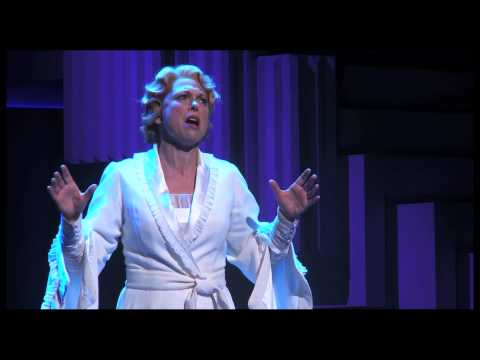
Review: the pop-oratorio problem
How do you write a Broadway bio-musical about a woman who turned church into show business without turning the show into a church bulletin? That is the core dare of Scandalous, and you can feel the creators reaching for a hybrid: part glossy 1920s pageant, part uplift anthem, part tabloid recap. The lyrics mostly function as narration with feelings attached. They keep time, keep plot moving, and keep the title character on a treadmill of purpose. The best moments are when the text stops reporting the life and starts arguing with it: desire versus duty, charisma versus control, and the particular ache of a woman asked to be both icon and example.
Musically, the score leans toward big pop-Broadway declarations, frequently built to launch Aimee into another high-stakes address to the crowd. When it works, it mirrors Aimee’s own genius for performance: she preaches in hooks, she confesses in crescendos. When it does not, the writing can flatten nuance into bumper-sticker reassurance. Critics in 2012 noticed the imbalance: a life famous for controversy, dramatized with a surprisingly polite appetite for scandal. That gap is not only a dramaturgical issue; it is a lyrical one. If your central figure sells salvation as spectacle, the words have to risk spectacle too.
How it was made
Scandalous arrived on Broadway after a long, revision-heavy road under earlier titles and regional runs. Kathie Lee Gifford has described decades of fascination with Aimee Semple McPherson and an obsessive writing stretch lasting more than a decade, with the project developing through multiple productions before the 2012 Broadway opening. The show’s creative DNA is unusually direct: a celebrity librettist-lyricist pursuing a faith-forward subject, paired with Broadway-seasoned composers, and backed by producers connected to the Foursquare world that Aimee helped build. This matters because it shapes the lyric posture. The text often reads as if it is trying to be fair to Aimee in real time, even as the plot begs for sharper interrogation.
If you want an “origin story” you can actually hear, Broadway.com captured the songwriting team talking shop and trading anecdotes in the week of opening. It is not an academic source, but it is a valuable window into intent: the writers present the show as celebratory, not prosecutorial. That single choice explains a lot about why the score keeps returning to exhortation, and why the most pointed questions often come late.
Viewer tip, because this show is visually busy: sit where you can read faces, not just costumes. The “illustrated sermon” sequences are designed to play big, but the character stakes live in the pivots between sermon and private doubt.
Key tracks & scenes
"Stand Up!" (Aimee & Company)
- The Scene:
- Early in the story, the stage hits you with the show’s thesis in showbiz lighting: Aimee steps into the public eye, the ensemble turns into a crowd, and the evening announces itself as a rally with choreography. The world is already watching, even when she is still becoming herself.
- Lyrical Meaning:
- The lyric is command language, built for call-and-response. It frames faith as action and identity as performance, which is exactly the trap and the superpower Aimee carries for the rest of the show.
"Why Can’t I?" (Aimee)
- The Scene:
- A young woman chafes against the rules that define “good” and “proper.” The staging often plays this as domestic conflict with theatrical longing humming underneath, the kind of moment where the footlights feel like an escape hatch.
- Lyrical Meaning:
- This is Aimee’s engine: the hunger to live widely while being asked to live narrowly. The lyric makes her ambition emotional, not strategic. Even her rebellion sounds like a prayer for permission.
"Come Whatever May" (Robert & Aimee)
- The Scene:
- Romance arrives with a missionary’s certainty. The air changes. The score flirts with Celtic color, and the couple sings as if vows can outrun geography.
- Lyrical Meaning:
- The lyric links love to destiny, which is sweet and dangerous. It tells you why Aimee keeps choosing grand narratives, even when life refuses to behave like one.
"Follow Me" (Aimee & Ensemble)
- The Scene:
- On the road, in a tent-revival rhythm, the ensemble becomes a moving congregation. The lighting tends toward heat and glare, the kind that makes sweat look like devotion. Aimee’s voice has to cut through noise, doubt, and distance.
- Lyrical Meaning:
- It is recruitment and confession in the same breath. The lyric doubles as branding. “Follow” is spiritual invitation, but also the start of celebrity.
"For Such a Time as This" (Aimee & Company)
- The Scene:
- Aimee’s mission goes from personal to public institution. The staging swells, bodies align, and the show briefly becomes what Aimee wanted her services to be: communal theatre.
- Lyrical Meaning:
- The lyric is purpose-laced inevitability. It argues that she was made for this moment, which is inspiring until you realize the same logic can excuse anything.
"Hollywood Aimee" (Reporters)
- The Scene:
- Act II opens with the press turning Aimee into a headline. Stylized movement, synchronized gestures, and a whiff of period satire. The world of worship collides with the world of publicity.
- Lyrical Meaning:
- The lyric treats fame like a chorus you cannot stop humming. It is the score admitting that the loudest voice in the room might be the newspaper, not the pulpit.
"Samson & Delilah" (Aimee, David & Company)
- The Scene:
- One of the “illustrated sermon” numbers: costumes pop, props skew theatrical, and the biblical story lands like vaudeville with a halo. It is knowingly tacky, and that is the point.
- Lyrical Meaning:
- The lyric uses scripture as mirror. It refracts Aimee’s own temptations and the audience’s appetite for spectacle. The show becomes self-aware here: sermon as entertainment, entertainment as sermon.
"Lost or Found?" (Aimee, Asa & Company)
- The Scene:
- The disappearance and its fallout tighten the air. The crowd becomes jury, the lighting goes harder, and the story finally steps into the title’s promise: suspicion, gossip, pressure.
- Lyrical Meaning:
- The lyric is the show’s moral hinge. It asks what the public is really judging: a woman’s truth, or a woman’s audacity.
"What Does It Profit?" (Aimee)
- The Scene:
- Late in the evening, the glittery architecture of the set feels less celebratory and more isolating. Aimee is surrounded by what she built and still alone with what she did.
- Lyrical Meaning:
- This is the lyric finally interrogating success. It sharpens the show’s central question: when you trade in souls and headlines, who collects the interest?
"I Have a Fire" (Aimee & Company)
- The Scene:
- The finale aims for uplift. The ensemble returns as believers, skeptics, and witnesses, and Aimee’s voice pushes toward legacy.
- Lyrical Meaning:
- The lyric insists on inner fuel as the last word. It is less about evidence than conviction, which is faithful to Aimee’s persona and to the show’s chosen tone.
Live updates (2025/2026)
Information current as of February 1, 2026. Public records and major theatre databases still define Scandalous primarily by its short 2012 Broadway run at the Neil Simon Theatre. No major new Broadway mounting or national tour is broadly listed in the mainstream Broadway news cycle right now, which keeps the show’s afterlife centered on the cast album and on secondary-stage interest rather than marquee commercial revivals.
What has aged into relevance is the subject, not the box office: Aimee Semple McPherson as an early architect of fame, media, and persuasion. In 2026, that reads less like a period biography and more like a prehistory of influencer culture. If a future production wants to “update” anything, it does not need new jokes. It needs a clearer stance in the lyrics: admiration, indictment, or the uncomfortable third option, admiration that admits the cost.
Listening tip for newcomers: start with “Hollywood Aimee” and “What Does It Profit?” before you run the full album. You will hear the show’s tension between celebration and scrutiny immediately.
Notes & trivia
- The Broadway production opened on November 15, 2012 and closed on December 9, 2012, after 31 previews and 29 regular performances.
- Carolee Carmello played Aimee across a huge age span and was the production’s lone Tony nomination (Leading Actress in a Musical).
- Playbill reported that Carmello was offstage for only 11 minutes during the show, intermission excluded.
- The cast album is a 22-track single-disc recording released by Shout! Broadway, recorded in February 2013 with a digital release reported in late May 2013.
- Before Broadway, the piece developed through earlier productions including a Washington, DC-area run under the title Saving Aimee and a Seattle staging at The 5th Avenue Theatre.
- Act II’s “Hollywood Aimee” was frequently singled out by reviewers as the evening’s most stylized, press-driven sequence.
- During the Broadway run, a special ticket purchase by the New York Dream Center (connected to Aimee’s historical charitable legacy) boosted grosses, though attendance remained low.
Reception
The critical split is blunt: reviewers often praised Carmello as the night’s electricity while questioning the show’s dramatic focus and lyrical sharpness. Several notices also circled the same irony: a title promising heat, paired with writing that prefers reassurance.
“It’s easy to worship Carolee Carmello, but the evangelical new musical she stars in won’t be moving any bodies.”
“Unfortunately, the storytelling is too democratic.”
“The subtitle of ‘Scandalous’ is a more accurate description of it: ‘The life and trials of Aimee Semple McPherson.’”
Quick facts
- Title: Scandalous: The Life and Trials of Aimee Semple McPherson
- Broadway year: 2012
- Type: Bio-musical drama
- Book & lyrics: Kathie Lee Gifford
- Music: David Pomeranz, David Friedman
- Director: David Armstrong
- Choreography: Lorin Latarro
- Orchestrations: Bruce Coughlin
- Music direction: Joel Fram
- Original Broadway venue: Neil Simon Theatre (New York)
- Selected notable placements: Act II opens with “Hollywood Aimee” (press chorus); multiple “illustrated sermon” numbers include “Samson & Delilah.”
- Cast album: Original Broadway Cast Recording, Shout! Broadway (22 tracks; released 2013)
- Availability: Streaming platforms carry the cast album; physical CD release followed the digital launch.
Frequently asked questions
- Is there a movie version of Scandalous?
- There is no widely released feature film adaptation. Most official viewing material is limited to promotional and performance clips from the Broadway run.
- Who wrote the lyrics?
- Kathie Lee Gifford wrote the book and lyrics, with music credited to David Pomeranz and David Friedman.
- Is the cast recording the full show?
- No. The cast album captures the musical numbers, but the plot mechanics and courtroom framing still live in the book scenes.
- Why does the show include biblical “pageant” numbers?
- Aimee’s real ministry used theatrical, illustrated sermons to draw crowds. The musical mirrors that strategy by staging Bible stories as show-within-the-show sequences.
- How much of the “kidnapping” is central to the plot?
- It is the narrative ignition for the late-story trial and public backlash, but several critics noted that the show spends much of its first act on earlier biography before the scandal arrives.
Key contributors
| Name | Role | Contribution |
|---|---|---|
| Kathie Lee Gifford | Book, lyrics (and additional music credit in some production listings) | Shapes the narrative stance toward Aimee and writes the lyric voice that drives the evening’s exhortational style. |
| David Pomeranz | Composer | Co-writes the pop-Broadway score built for large declarations and headline-sized hooks. |
| David Friedman | Composer | Co-writes the score and supports ensemble structures, including press and congregational sequences. |
| David Armstrong | Director | Stages the bio narrative and balances revival spectacle with courtroom and private scenes. |
| Lorin Latarro | Choreographer | Builds the crowd language: worship as movement, media as choreography. |
| Carolee Carmello | Original Broadway star (Aimee) | Anchors the score’s vocal demands and carries the character through decades of life in one evening. |
| Joel Fram | Music director & vocal arrangements | Leads the musical execution and vocal architecture of the cast recording and production. |
| Bruce Coughlin | Orchestrations | Translates the pop-writing into Broadway-scale orchestral muscle. |
Sources: Playbill, IBDB (Internet Broadway Database), TheaterMania, Entertainment Weekly, Talkin’ Broadway, Broadway.com, New York Theater (Jonathan Mandell), New York Theatre Guide.