Why Should I Wake Up? Lyrics — Cabaret
Why Should I Wake Up? Lyrics
This dream is going so well.
When you're enchanted,
Why break the spell?
Drifting in this euphoric state,
Morning can wait.
Let it come late.
Why should I wake up?
Why waste a drop of the wine?
Don't I adore you?
And aren't you mine?
Maybe I'll someday be lonely again.
But why should I wake up till then?
Drifting in this euphoric state,
Morning can wait.
Let it come late.
Why should I wake up?
Why waste a drop of the wine?
Don't I adore you?
And aren't you mine?
Maybe I'll someday be lonely again.
But why should I wake up,
Why should I wake up till then?
[Thanks to Suki, Pierre Nelli for lyrics]
Song Overview
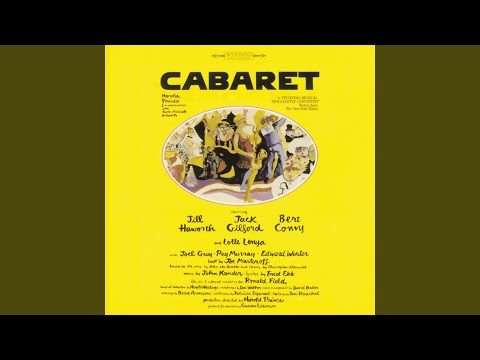
Review and Highlights
Quick summary
- Where it lives: Written for the 1966 stage version of Cabaret, sung by Cliff Bradshaw.
- What it does in the story: A private reverie that frames Cliff choosing comfort over clarity, right before the plot tightens its grip.
- Release context: First LP release of the Original Broadway Cast Recording is dated November 28, 1966.
- Version note: Later stage revisions frequently replaced or removed this number (for example, with "Don't Go" or "Maybe This Time").
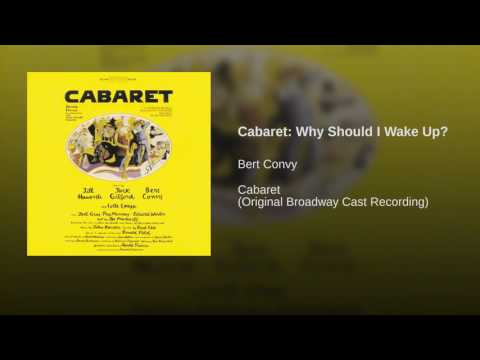
Cabaret (1966) - stage musical - not. In Cliff's room, after the cohabitation promise of "Perfectly Marvelous" and before the story pivots to risk and compromise. On the cast album it runs about 2:30, so it plays like a thought that slips out before you can stop it - short, sweet, and faintly suspicious of its own sweetness.
Key takeaways: This is a seduction without a villain: the melody coaxes, the lyric bargains, and the character lets himself be bought for the price of one more morning. According to Concord Theatricals, the song is exclusive to the 1966 version, which says a lot about how later revivals rebalanced the evening - fewer quiet corners, more blunt instruments.
Creation History
John Kander and Fred Ebb wrote the song for the original Broadway Cabaret, a score that knows how to smile while reading the room. The cast recording, issued by Columbia Masterworks with producer Goddard Lieberson, preserves this number as a compact character study rather than a showstopper. In later revisions, creators and directors often traded it out, and Playbill notes its absence in the 1998 rethink - a practical choice, maybe, but it also changes how we understand Cliff's complicity: less sung longing, more spoken drift.
Song Meaning and Annotations
Plot
Cliff is living with Sally in Berlin, telling himself this can last if he does not look too closely. He calls it a dream and argues, softly, that waking would be the true waste. The story immediately pressures that dream with money, errands, and the creeping sense that the city has a new soundtrack outside the window.
Song Meaning
The lyric is a self-bribe. Cliff knows he is enchanted, and he also knows enchantment is a deadline wearing perfume. I hear the song as the moment he makes a trade: if the dream continues, he will accept the terms, even if those terms are blurred. In a show built on performance, this is the rare number that feels like it is not performed at anyone - except the singer's own better judgment.
Annotations
Why should I wake up?
That opening is not rhetorical so much as tactical. The line sets the argument: reality is not denied, it is postponed. In Cabaret, postponement is a habit with consequences.
Morning can wait
A gentle phrase, but it lands like a trapdoor. The show keeps asking who gets to wait and who does not. This is Cliff trying to buy time with charm.
Music and staging texture
Musically it is a restrained ballad, the kind of theater writing that trusts subtext. The harmony does not need to shout; it just keeps nudging the melody toward comfort, then away from it. If you listen for the undercurrent, it is not romance alone - it is resignation dressed as romance. As stated in Encyclopaedia Britannica, Cabaret is built from Berlin nightlife and political shadow; this number is where those two worlds overlap without a spotlight.
Technical Information
- Artist: Bert Convy
- Featured: None
- Composer: John Kander
- Lyricist: Fred Ebb
- Producer: Goddard Lieberson
- Release Date: November 28, 1966
- Genre: Broadway, musical theatre, show tune
- Instruments: Voice with theater orchestra
- Label: Columbia Masterworks
- Mood: Lulling, conflicted
- Length: About 2:30
- Track #: 9 (Original Broadway Cast Recording)
- Language: English
- Album: Cabaret (Original Broadway Cast Recording)
- Music style: Intimate ballad with cabaret-adjacent shading
- Poetic meter: Mostly iambic, conversational phrasing
Questions and Answers
- Who wrote the song?
- John Kander composed it and Fred Ebb wrote the lyric, for the 1966 stage version of Cabaret.
- Who is singing in the Original Broadway Cast Recording?
- Bert Convy performs it as Cliff Bradshaw on the 1966 cast album.
- Where does the number sit in the story?
- It appears in Cliff's room as a moment of self-persuasion, close to the point where he accepts work that pulls him toward danger.
- Why do later productions often cut it?
- Revisions reshaped pacing and reassigned Cliff's musical material - the 1987 revision introduced "Don't Go," and later revivals often preferred other interpolations and structural changes.
- Is it in the 1972 film of Cabaret?
- No. The film uses different song choices and additions, and this number is associated with the original stage configuration.
- What is the central metaphor?
- The dream is both romance and denial: a private world that feels safer than the street outside, until the street finds a way in.
- Why does the lyric keep returning to time and morning?
- Because dawn means consequences. The song is a negotiation with the clock, trying to postpone adulthood, politics, and responsibility in one bargain.
- What kind of voice suits Cliff here?
- Most casting resources treat Cliff as a baritone role; the number works best with an easy conversational top and a warm lower register.
- What is a good acting objective for the singer?
- To convince yourself. If it starts as a serenade to Sally, it should end as a pact you sign with your own hesitation.
- Are there notable later recordings?
- Yes - for example, Gregg Edelman and Maria Friedman recorded it for a complete studio score project, keeping the song in circulation even when productions omit it.
Awards and Chart Positions
The Original Broadway Cast album for Cabaret won a Grammy at the 10th Annual Grammy Awards (dated February 29, 1968) in the category Best Score From an Original Cast Show Album, credited to Kander, Ebb, producer Goddard Lieberson, and the original cast.
| Item | Recognition | Date | Notes |
|---|---|---|---|
| Cabaret (Original Broadway Cast Recording) | Grammy - Best Score From an Original Cast Show Album | February 29, 1968 | Credits include the producer and original cast. |
| Cabaret (Original Broadway Cast Recording) | Billboard 200 peak | 1966-1967 | Reported peak position: 37, with a short chart run of about three weeks. |
How to Sing Why Should I Wake Up?
Key and tempo: Multiple trackers list the original key as E major, with tempo readings that vary by source and beat interpretation. Treat it as a slow ballad and choose a pulse you can sustain without pushing.
Range: One vocal-range database lists B3 to E5 for the song, while casting guides commonly label Cliff as a baritone role. Use that as a practical hint: keep the tone speech-close, not operatic.
- Tempo first: Set a slow metronome and speak the lyric in rhythm before singing. This number collapses if it drags, and it cheapens if it rushes.
- Diction: Crisp consonants, but never percussive. The text is persuasion, not proclamation.
- Breath plan: Mark your long lines. The trick is to sound like you are thinking in real time while still managing phrasing.
- Flow and rubato: Allow small elastic moments at the ends of phrases, but keep an underlying pulse so the dream does not turn to mush.
- Dynamic contour: Start intimate, then widen slightly as the argument grows more convincing. Let the final statements settle rather than soar.
- Color: Use a warmer mix on higher notes - not brighter, just more present. The charm should feel a little practiced.
- Mic and room: If amplified, sing as if confiding. If unamplified, keep the resonance forward but avoid "big theater" vowels.
- Pitfalls: The biggest mistake is playing it as pure romance. Let the unease leak in, lightly, like a draft under a door.
Additional Info
One of the quiet jokes of Cabaret is that the most dangerous ideas often arrive as something soothing. This number is not a club act, not a wink to the audience - it is a lullaby Cliff sings to his own caution. That may be why it is so easy to cut: it does not advertise itself. Yet when it is gone, Cliff can feel like a tourist in his own plot.
The song also became a kind of score-keeper for the show's many versions. Concord Theatricals explicitly flags it as unique to the original 1966 script, and Wikipedia-style production histories map how later revisions swapped in different Cliff material. For listeners, that means the cast album is not only a souvenir - it is one of the most accessible ways to encounter this specific dramatic beat.
Key Contributors
| Entity | Type | Relation | Statement |
|---|---|---|---|
| John Kander | Person | Composer | Kander composed the music for the song and the musical. |
| Fred Ebb | Person | Lyricist | Ebb wrote the lyric for the song and the musical. |
| Bert Convy | Person | Original performer | Convy performed the number as Cliff on the Original Broadway Cast Recording. |
| Goddard Lieberson | Person | Producer | Lieberson produced the original cast album and is credited in its Grammy recognition. |
| Columbia Masterworks | Organization | Label | Columbia Masterworks issued the original cast album on LP. |
| Concord Theatricals | Organization | Licensing and version notes | Concord distinguishes which songs belong to the 1966, 1987, and 1998 versions. |
| Cabaret | Work | Musical | The song was written for the stage musical Cabaret and is tied to the original 1966 configuration. |
Sources: Masterworks Broadway album page and chart feature, Concord Theatricals version notes, 10th Annual Grammy Awards winners list (Wikipedia), Legacy Recordings tracklist page, Playbill report on the 1998 revival changes, Chordify and Tunebat tempo and key listings, Singing Carrots and StageAgent range guides, Apple Music track and album listings, JAY Records studio score tracklist
Music video
Cabaret Lyrics: Song List
- Act 1
- Wilkommen
- So What
- Telephone Song
- Don't Tell Mama
- Mein Herr
- Perfecly Marvelous
- Two Ladies
- It Couldn't Please Me More
- Tomorrow Belongs to Me
- Why Should I Wake Up?
- Maybe this Time
- Money Song
- Married
- Meeskite
- Act 2
- Entr'acte
- If You Could See Her
- What Would You Do?
- Tomorrow Belongs to Me (Reprise)
- Cabaret
- Finale