
It Couldn't Please Me More Lyrics
It Couldn't Please Me More
[FRAULEIN SCHNEIDER (spoken)]Herr Schultz. Can I beleive what I see?
But this is too much to accept.
It's so rare... so costly... so luxurious...
If you brought me diamonds,
If you brought me pearls,
If you brought me roses
Like some other gents
Might bring to other girls,
It couldn't please me more
Than the gift I see;
A pineapple for me.
[SCHULTZ]
If in your emotion
You begin to sway
Went to get some air
Or grabbed a chair
To keep from fainting dead away,
It couldn't please me more
Than to see you cling
To the pineapple I bring.
[BOTH]
Ah...
[FRAULEIN SCHNEIDER]
I can hear Hawaiian breezes blow
[BOTH]
Ah...
[SCHULTZ]
It's from California
[FRAULEIN SCHNEIDER]
Even so.
How am I to thank you?
[SCHULTZ]
Kindly let it pass,
[FRAULEIN SCHNEIDER]
Would you like a slice?
[SCHULTZ]
That might be nice,
But frankly, it would give me gas.
[FRAULEIN SCHNEIDER]
Then we shall leave it here,
Not ot eat, but see:
[BOTH]
A pineapple...
[FRAULEIN SCHNEIDER]
For me.
[SCHULTZ]
From me.
[BOTH]
Ah...
[dance]
[FRAULEIN SCHNEIDER (spoken)]
But you must not bring me any more pineapples.
Do you hear? It is not proper.
It is a gift a young man would bring to his lady-love.
it makes me blush.
[SCHULTZ (spoken)]
But there is no-one... no-one in all of Berlin who is
more deserving.
If I could, I would fill your entire room with pineapples!
A pineapples
For you,
[FRAULEIN SCHNEIDER]
From you.
[BOTH (with Emcee)]
Ah...
Ah...
[FRAULEIN SCHNEIDER (spoken)]
I think I will lie down for a few moments. My head is
spinning!
[SCHULTZ]
Fraulein Schneider... good evening.
[FRAULEIN SCHNEIDER]
Good evening, Herr Schultz.
(Opens her bedroom door, turns to Schultz.)
I am... overwhelmed!
(She goes in and closes the door.)
Song Overview
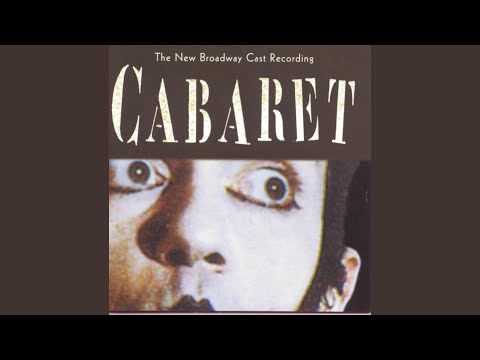
Review and Highlights
Quick summary
- Where it sits: Track 7 on the 1998 New Broadway cast album, following the club trio and before the political chill begins to seep in.
- Who sings: Fraulein Schneider and Herr Schultz, performed here by Mary Louise Wilson and Ron Rifkin.
- What kind of number: A gentle character duet with spoken asides, using politeness as flirtation.
- Why it matters: It makes their romance feel ordinary and precious, so the later pressure on it lands harder.
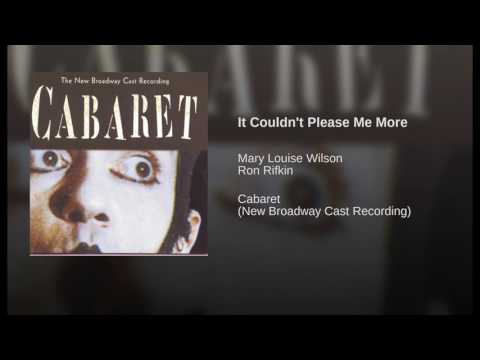
Cabaret (1998) - cast recording - not diegetic. Placement: A boarding house scene in Act I where Herr Schultz arrives with a pineapple, and Fraulein Schneider tries to refuse the romance while enjoying every second of it. Why it matters: this is the show at its most domestic, and that domesticity is the point: two working people allowing themselves a small, risky happiness.
The genius of the number is that it does not chase big melody. It chases manners. Schneider is cautious to the bone, so the song lets her accept love by pretending she is only accepting fruit. Schultz, sweetly stubborn, keeps returning the same offer in different wrapping: not diamonds, not pearls, just an absurd luxury that says, I see you. The rhyme is tidy, almost old-fashioned, as if the music itself is trying to behave.
On the 1998 recording, Wilson and Rifkin lean into conversational timing: the spoken lines land like two people trying not to blush, then the sung phrases hover a little longer, like they cannot help themselves. The whole scene is a modest miracle. According to New York Theatre Guide's rundown of the show's songs, the duet is often described as one of the score's sweetest pauses, a brief shelter before harsher forces arrive.
Creation History
John Kander and Fred Ebb wrote the duet for the stage version, giving Schneider and Schultz their own musical language: practical, restrained, and quietly funny. The 1972 film adaptation removed their entire subplot, and with it this song, which is why listeners who come to Cabaret through the movie sometimes discover this duet as a missing piece of the story. The 1998 Broadway revival restored the boarding house material as a crucial counterweight to the Kit Kat Klub's sparkle, and the cast album producer Jay David Saks captured the scene songs with a close, uncluttered feel, leaving space for breath, pauses, and those little embarrassed laughs.
Song Meaning and Annotations
Plot
Schneider is stunned by Schultz's gift. She tries to refuse because it feels improper, too expensive, too intimate. He insists she deserves it, and she cannot resist the symbolism. They end by deciding not to eat it, but to keep it on display, a shared secret sitting in plain sight.
Song Meaning
The pineapple is a love letter disguised as produce. It stands for excess, yes, but also for intention: Schultz is saying he will show up, he will bring something rare, and he will do it without demanding that Schneider change who she is. Schneider answers with the language of someone trained by hardship: she is overwhelmed, suspicious of happiness, and still hungry for it. The duet turns a simple prop into a moral test of sorts: can they allow themselves tenderness when the world is getting meaner by the day?
Annotations
A pineapple for me.
In the story's time and class setting, the fruit reads as extravagance, not snack food. Pineapples carried a long European reputation as a high-status display item, a symbolism the Smithsonian Libraries blog traces to the costs and difficulty of cultivation and import. In this scene, that history becomes character detail: Schultz chooses a gift that looks frivolous, but functions as proof of devotion.
Driving rhythm and style
The tempo sits in a comfortable lilt, closer to speech than showstopper. The orchestration stays light, letting the lyric do the work. That is why the punchlines land: "it would give me gas" is funny because the music does not wink at it too hard.
Touchpoints and subtext
The duet is a study in how people talk around what they want. Schneider performs respectability because she has had to. Schultz performs cheer because he has learned that warmth can be a defense. Put them together, and the pineapple becomes a stand-in for a marriage proposal that neither person dares to speak aloud yet.
Technical Information
- Artist: Ron Rifkin, Mary Louise Wilson
- Featured: None
- Composer: John Kander
- Lyricist: Fred Ebb
- Producer: Jay David Saks
- Release Date: June 30, 1998
- Genre: Musical theatre, Broadway
- Instruments: Voice duet, small theatre orchestra (rhythm section with light reeds and brass colors)
- Label: RCA Victor Broadway (original release); Masterworks Broadway (catalog branding)
- Mood: Tender, shy, amused
- Length: 3:32
- Track #: 7
- Language: English
- Album: Cabaret (New Broadway Cast Recording)
- Music style: Scene duet with conversational phrasing and gentle comic turns
- Poetic meter: Mixed conversational stresses with neat end-rhymes
Questions and Answers
- Who produced this cast recording track?
- Jay David Saks produced the 1998 cast album, including this scene duet.
- When was the recording released?
- It was released on June 30, 1998 as part of the New Broadway cast album.
- Who wrote the song?
- John Kander wrote the music and Fred Ebb wrote the lyrics.
- Why a pineapple and not flowers?
- Because the gift is meant to be extravagant without being romantic cliche. It is comic, slightly embarrassing, and unmistakably deliberate.
- Why do they decide not to eat it?
- Keeping it as an object of display lets them savor the meaning without admitting the full implication of the gesture.
- Is the number performed in the Kit Kat Klub?
- No. It is a boarding house scene, which is why its quiet tone feels like a breath between club acts.
- Was it in the 1972 film?
- The film removed Schneider and Schultz's subplot, and this duet was cut with it.
- What does the duet tell you about Schneider?
- She wants tenderness but polices herself with rules. The lyric lets her accept affection while pretending it is only etiquette.
- What does it tell you about Schultz?
- He leads with generosity and steadiness. His humor is a way of making love feel safe.
- Why does it land so strongly in revivals?
- Because it is human-scale. It gives the audience a reason to care about what politics will later threaten.
Awards and Chart Positions
The track itself was not a singles-chart entity, but the revival and its recording were decorated. The 1998 Broadway revival won the Tony Award for Revival (Musical). The cast album was also in the awards conversation for the 41st Grammy cycle in the Best Musical Show Album category, a nod that places the recording alongside the era's biggest theatre documents.
| Year | Award | Category | Work credited | Result |
|---|---|---|---|---|
| 1998 | Tony Awards | Revival (Musical) | Cabaret (Broadway revival) | Won |
| 1999 | Grammy Awards | Best Musical Show Album | Cabaret (New Broadway Cast Recording) - producer Jay David Saks | Nominated |
How to Sing It Couldn't Please Me More
Public tempo and key trackers for this recording commonly list a moderate pace around the low-80s BPM range, often placing the tonality in E flat major territory. Treat those numbers as rehearsal scaffolding, then adjust to your production's orchestration and dialogue pacing.
- Tempo: set a gentle pulse first. If you rush, the politeness disappears and the scene turns pushy.
- Diction: keep consonants soft but clear. This is a duet about manners, so the words should sound carefully handled.
- Breath: plan for speech-to-song turns. Take quick breaths after spoken lines so the first sung phrase feels unforced.
- Blend: aim for a warm, conversational blend on shared "ah" moments. They are the emotional hinge even when the lyric stays modest.
- Comic timing: land the "gas" line like a shy confession, not a punchline mug. The joke works best when it is tossed away.
- Acting objective: Schneider tries to refuse romance; Schultz tries to make romance feel harmless. Sing those objectives, not just the notes.
- Dynamics: keep it intimate. Save volume for the moments of surrender, when they admit delight despite themselves.
- Pitfalls: do not over-sentimentalize it. The restraint is the tenderness.
Additional Info
The pineapple has a theatrical afterlife beyond this show. In European visual culture it became a shorthand for luxury and hospitality, which is why the prop reads instantly even if an audience member has never priced fruit in a 1930s market. The Smithsonian Libraries essay on pineapple symbolism notes how the fruit served as a status marker for centuries, a fact the duet turns into a small character revelation: Schultz is not flashy, but he will stretch for her.
The song also helps explain why the stage version hits differently than the 1972 film. The movie's decision to remove Schneider and Schultz cleans up the plot, but it strips away this working-class tenderness that makes the political story feel personal. When a modern revival restores this duet, it restores a moral center: love that is ordinary, and therefore vulnerable.
Key Contributors
| Entity | Type | Relationship (S-V-O) |
|---|---|---|
| John Kander | Person | Kander - composed - the music. |
| Fred Ebb | Person | Ebb - wrote - the lyrics. |
| Jay David Saks | Person | Saks - produced - the 1998 cast recording album. |
| Mary Louise Wilson | Person | Wilson - performed - Fraulein Schneider on the 1998 recording. |
| Ron Rifkin | Person | Rifkin - performed - Herr Schultz on the 1998 recording. |
| Cabaret (1998 Broadway revival) | Work | The revival - restored - the Schneider-Schultz material central to the stage narrative. |
| Cabaret (1972 film) | Work | The film - cut - Schneider and Schultz, removing the duet from the story. |
| Masterworks Broadway | Organization | Masterworks Broadway - distributed - the track to major platforms and YouTube. |
Sources: Masterworks Broadway YouTube track page for It Couldn't Please Me More, Playbill RCA Victor cast album release announcement (June 30, 1998), Discogs release notes for Cabaret (The New Broadway Cast Recording), Concord Theatricals Cabaret (1998 Version) track and score listing, Apple Music Cabaret (New Broadway Cast Recording) album listing, New York Theatre Guide article on Cabaret songs (2024), Smithsonian Libraries blog essay The Prickly Meanings of the Pineapple, Cabaret (1972 film) comparison to source materials, Grammy Award for Best Musical Theater Album category list