
Maybe this Time Lyrics
Maybe this Time
[SALLY]Maybe this time, I'll be lucky
Maybe this time, he'll stay
Maybe this time
For the first time
Love won't hurry away
He will hold me fast
I'll be home at last
Not a loser anymore
Like the last time
And the time before
Everybody loves a winner
So nobody loved me;
'Lady Peaceful,' 'Lady Happy,'
That's what I long to be
All the odds are in my favor
Something's bound to begin
It's got to happen, happen sometime
Maybe this time I'll win
Song Overview
Review and Highlights
Quick summary
- Writers: John Kander (music) and Fred Ebb (words).
- Breakout version: Interpolated into the 1972 film adaptation of Cabaret, performed as a club number by Sally.
- Score history: First recorded in 1964, then adopted by major revivals from 1998 onward as a signature ballad for Sally.
- Why it lands: A torch-song setup with a gambler's grin - hope stated like a dare, then tested line by line.
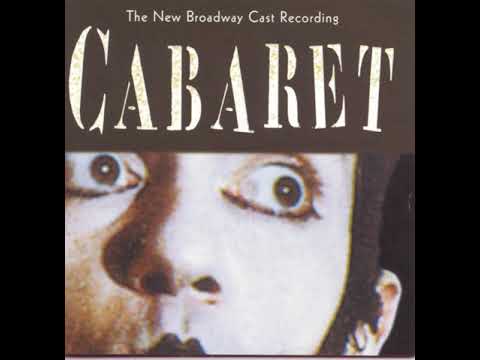
Cabaret (1972) - film soundtrack - diegetic. Performed as a Kit Kat Klub number in the clip (timestamp 0:00). It plays like Sally's public mask cracking just enough to show what she is wagering beneath the sequins: the wish that love might finally stick.
As a piece of stage-pop craft, this number is deceptively simple. The melody keeps returning to the same hopeful ledge, as if the singer is pacing a small room, telling herself the story again until it sounds true. The phrasing invites conversational timing, but the harmony keeps tugging toward a brighter answer that never quite arrives. You can hear why directors treat it like a close-up: the song does not need fireworks, it needs nerve.
Creation History
It began life outside Cabaret: written in 1964 and recorded that same year, then later pulled into the film when Bob Fosse decided the story needed a private confession disguised as performance. That move rewired the song's reputation, and its popularity helped push it back into the stage canon, with many productions after 1998 folding it into Sally's musical portrait.
Song Meaning and Annotations
Plot
Sally frames her romance like a winning streak she can almost touch. The scene is not about certainty - it is about the choice to believe, even when experience says otherwise. In Cabaret's world, tomorrow is never guaranteed, so she tries to cash in happiness right now, while it still feels possible.
Song Meaning
The core idea is a wager against her own pattern. She admits she has been left behind before, then flips that history into a vow: this time will be different because she needs it to be. The mood is bright on the surface, but the subtext is anxious: every repeated "maybe" is both optimism and self-protection. The rhythm stays steady as if she is holding herself upright through the confession, refusing to sound as shaken as she might be.
Annotations
Maybe this time I'll be lucky - maybe this time he'll stay
Notice the plain language: no grand poetry, just a hard-working hope. It is the kind of line you say quickly so nobody notices how much you mean it.
He will hold me fast - I'll be home at last
This is the moment the mask slips. The fantasy is not glamour, it is safety - the wish that affection could turn into a place to rest.
Not a loser anymore - like the last time and the time before
She turns her own bruises into a punchline, but the joke has teeth. The line reads like a defense mechanism learned through repetition.
Everybody loves a winner - so nobody loved me
Here comes the sting. The lyric is blunt, almost show-biz cynical, and it makes the earlier optimism sound like an act she is forcing herself to play.
Lady Peaceful, Lady Happy - that's what I long to be
A smart cultural wink: she borrows the language of purity and contentment to describe something more complicated - the longing to stop performing desire for everyone else and finally feel steady inside.
Style, rhythm, and arc
This is classic theatre ballad writing with pop clarity: a tight verse-chorus shape, an easy-to-grip hook, and room for spoken-natural rubato without losing the pulse. The drive is not percussion - it is insistence. Each chorus returns like a new attempt at belief, slightly firmer, slightly more exposed. If you have heard critics call the film version a defining torch-song moment, it is because the song makes hope sound like work.
Symbols and key phrases
"Winner" and "loser" are more than romance talk. They are survival categories in a city that is sliding toward catastrophe. The lyric turns love into a scoreboard because that is the language of a world where people are judged fast and discarded faster.
Technical Information
- Artist: Liza Minnelli
- Featured: None
- Composer: John Kander
- Producer: Credited on many releases as part of the 1972 film soundtrack production team; music direction and conducting for the film soundtrack are widely credited to Ralph Burns.
- Release Date: February 13, 1972 (film soundtrack release date on major streaming services)
- Genre: Broadway, film musical ballad, torch song
- Instruments: Voice with orchestral accompaniment
- Label: Geffen Records release; UMG recordings (digital listings)
- Mood: Hopeful, wary, confessional
- Length: About 3:08
- Track #: 4 on the 1972 film soundtrack LP sequence
- Language: English
- Album: Cabaret (Original Soundtrack Recording)
- Music style: Theatre-pop phrasing with a sustained ballad line
- Poetic meter: Mixed meter with conversational stresses; many phrases begin with trochaic emphasis ("MAY-be") and drift into speech-like iambic flow
Questions and Answers
- Who wrote the song?
- John Kander composed it and Fred Ebb wrote the words, the same duo behind the score of Cabaret.
- Was it always part of the stage musical?
- No. It was written and recorded in 1964, then later interpolated into the 1972 film. Many modern productions include it because audiences now expect that big Sally ballad.
- Why does it feel like a confession even though it is performed onstage in the story?
- The lyric is private and plainspoken. Directors lean into the contrast: the character is entertaining a room while admitting what she would rather hide.
- What is the dramatic engine of the refrain?
- Repetition. Each return to "maybe" is a fresh attempt to talk herself into courage, a little braver and a little more exposed.
- Is the tone optimistic or anxious?
- Both. The brightness is the act of choosing belief; the anxiety is the reason she has to choose it so deliberately.
- What does "Everybody loves a winner" do in the middle of a love song?
- It turns romance into social judgment. The line widens the lens from one relationship to a world that keeps score.
- How did the song spread beyond theatre fans?
- The film version made it a pop-standard style showcase, and covers across jazz, cabaret, and TV performances kept it circulating.
- Are there notable screen covers besides the 1972 film?
- Yes. A widely seen TV performance came via Glee in 2009, which introduced the song to a new generation of listeners.
- What is a practical audition cut that captures the point fast?
- The section beginning around "Everybody loves a winner" gives you the pivot from bravado to vulnerability without needing the full build.
- What should a singer avoid interpretively?
- Do not rush to the big finish. The power is in restraint and honest phrasing - let the certainty arrive late, if it arrives at all.
Awards and Chart Positions
The song itself is not typically tracked as a standalone charting single, but the 1972 film soundtrack became a commercial force. According to Playbill's certification roundup, the Cabaret film soundtrack reached Gold status in the United States (certified August 17, 1973). A separate chart history frequently cited for the album places its Billboard 200 peak at number 25, with an unusually long run.
| Category | Result | Date / Note |
|---|---|---|
| RIAA certification (album) | Gold | Certified August 17, 1973 |
| Billboard 200 peak (album) | Number 25 | Peak reported for the soundtrack's chart run |
As stated in Rolling Stone magazine coverage of Kander and Ebb's legacy, their best songs often survive because they can be staged in a dozen different lights without breaking - this one is a prime example.
How to Sing Maybe This Time
Common reference metrics: The original key is often treated as B flat major in theatre materials, with a ballad tempo around the high 70s to low 80s BPM. A widely circulated vocal-range estimate for the standard arrangement sits around Bb3 to F5, though productions transpose freely.
- Tempo first: Set your metronome around 79-82 BPM and practice speaking the text in rhythm. The goal is steady insistence, not loungey drag.
- Diction: Keep the consonants crisp on repeated phrases. The refrain can blur if you soften every edge.
- Breath plan: Map breaths before the chorus returns. Save air for the longer thought-lines ("All the odds are in my favor...") so they feel like one impulse.
- Flow and rhythm: Treat the verse like confidential talk, then let the chorus lock into a clearer pulse. That contrast is the drama.
- Accents: Lean into the stressed syllables of "MAY-be" without punching them. The emphasis should sound like resolve, not comedy.
- Ensemble and doubles: If you are performing with a band, ask for lighter textures under the first chorus. Let the arrangement grow with the story.
- Mic craft: Start closer and warmer, then create distance as the hope gets louder. It is a subtle way to show control.
- Pitfalls: Avoid going full-throttle too soon. The lyric is a wager - it needs room to convince itself.
Additional Info
One reason this song keeps resurfacing is that it works in multiple worlds: jazz rooms, theatre auditions, TV talent showcases, and full-scale revivals. It was first recorded in 1964 by Kaye Ballard, and the same year it was recorded by Minnelli for her debut studio album. Then the 1972 film performance lit the fuse. After that, the cover history reads like a map of modern cabaret taste, from club singers to orchestral pop.
For screen afterlives, Glee staged it in 2009, using the number as a character reveal rather than a plot stop. In theatre, major revivals and cast recordings in the 21st century continue to treat it as a signature Sally moment, and even recent press around new productions still name-check it among the show's most recognizable songs.
Key Contributors
| Entity | Type | Relationship (S-V-O) |
|---|---|---|
| John Kander | Person | John Kander composed the music for the song. |
| Fred Ebb | Person | Fred Ebb wrote the words for the song. |
| Liza Minnelli | Person | Liza Minnelli popularized the song globally via the 1972 film performance. |
| Kaye Ballard | Person | Kaye Ballard made the first known recording of the song in 1964. |
| Bob Fosse | Person | Bob Fosse incorporated the song into the 1972 film adaptation. |
| Ralph Burns | Person | Ralph Burns directed and conducted the film soundtrack music. |
| Cabaret (1972 film) | Work | The film features the song as a Kit Kat Klub performance. |
| Cabaret (Original Soundtrack Recording) | Work | The soundtrack album presents the film performance and achieved Gold certification. |
| Geffen Records | Organization | Geffen Records issued major digital releases of the 1972 soundtrack listing. |
| Glee | Work | The TV series performed the song in 2009 with a high-profile guest vocalist. |
Sources: Apple Music listing for the 1972 soundtrack, Playbill certification roundup, SecondHandSongs cover database, Spotify track metadata, Vogue theatre feature