
Two Ladies Lyrics
Two Ladies
[EMCEE (spoken)]So, you see, everybody in Berlin has a perfectly
marvellous roommate. Some people have two people.
[GIRL 1]
Beedle dee, deedle dee, dee!
[GIRL 2]
Beedle dee, deedle dee, dee!
[EMCEE]
Beedle dee, deedle dee, Beedle dee, deedle dee,
Dee!
[GIRLS]
Beedle dee, dee dee dee,
[EMCEE]
Two ladies.
[GIRLS]
Beedle dee, dee dee dee,
[EMCEE]
Two ladies.
[GIRLS]
Beedle dee, dee dee dee,
[EMCEE]
And I'm the only man,
Ja!
[GIRLS]
Beedle dee, dee dee dee...
[EMCEE]
I like it.
[GIRLS]
Beedle dee, dee dee dee...
[EMCEE]
They like it.
[GIRLS]
Beedle dee, dee dee dee...
[EMCEE]
This two for one.
Beedle dee, dee dee dee...
[GIRLS]
Two ladies.
[EMCEE]
Beedle dee, dee dee dee...
[GIRLS]
Two ladies.
[EMCEE]
Beedle dee, dee dee dee,
[GIRLS]
Und he's the only man
[EMCEE]
Ja!
[GIRLS]
Beedle dee, dee dee dee...
[GIRL 1]
He likes it.
[EMCEE]
Beedle dee, dee dee dee...
[GIRL 2]
We like it.
[EMCEE]
Beedle dee, dee dee dee...
[GIRLS]
This two for one.
[GIRL 2]
I do the cooking...
[GIRL 1]
Und I make the bed.
[EMCEE]
I go out daily
To earn our daily bread.
But we've one thing in common,
[GIRL 1]
He...
[EMCEE]
She...
[GIRL 2]
And me,
[GIRL 1]
The key,
[EMCEE]
Beedle dee, dee,
[GIRL 2]
The key,
[EMCEE]
Beedle dee, dee, the key,
[GIRLS]
Beedle dee, deedle dee, deedle dee, dee!
[DANCE]
[GIRLS]
Ooh! Aah! Ooh! Aah!
[EMCEE]
We switch partners daily
To play as we please.
[GIRLS]
Twosies beats onesies,
[EMCEE]
But nothing beats threes.
I sleep in the middle,
[GIRL 1]
I'm left,
[GIRL 2]
Und I'm right,
[EMCEE]
But there's room on the bottom
If you drop in some night.
[GIRLS]
Beedle dee, dee dee dee...
[EMCEE]
Two ladies.
Beedle dee, dee dee dee...
[GIRLS]
Two ladies.
Beedle dee, dee dee dee,
And he's the only man.
[ALL]
Ja!
Beedle dee, dee dee dee...
[EMCEE]
I like it,
[GIRLS]
Beedle dee, dee dee dee...
[EMCEE]
They like it!
[GIRLS]
Beedle dee, dee dee dee...
[ALL]
This tow for one.
Beedle dee, deedle dee, deedle dee,
Deedle dee, dee!
[EMCEE (spoken)]
Thank you! Lulu! Bobby! And me!!
Oh, I'm so hot now!
Come, my Lieblings, upstairs!
Song Overview
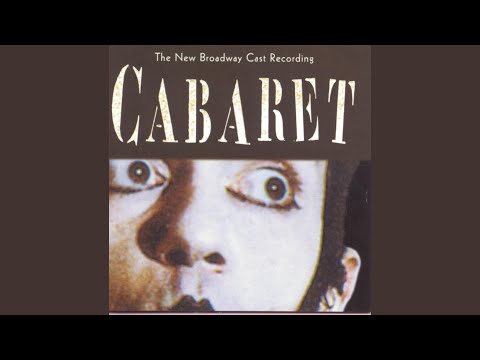
Review and Highlights
Quick summary
- Where it appears: A Kit Kat Klub floor-show trio that follows the room-mate storyline beat and needles it with nightclub logic.
- Who leads it: The Emcee with Lulu and Bobby (a Kit Kat boy performing in drag in this revival).
- How it plays: Nonsense syllables, tight comic timing, and choreography that dares the audience to pretend it is only a joke.
- What it does in the plot: It parodies private life as entertainment, then invites the crowd to join the game.
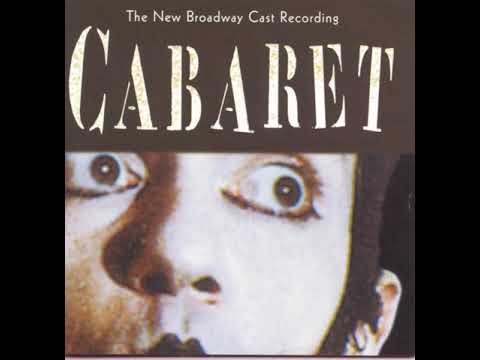
Cabaret (1998) - cast recording - diegetic. Placement: A club number staged by the Emcee with two companions, set up by his spoken quip about Berlin room-mates, then launched into a patter-and-scat routine. Why it matters: the show uses the club to gossip about the book scenes, turning Cliff and Sally's cohabitation into a public gag. It is funny, then it keeps getting a little too accurate.
In this number, the music is almost secondary to the rhythm of the act. Those beedle-dee syllables behave like percussion, a human drum-kit that lets the Emcee lean into timing, looks, and insinuation. The lyric is a sales pitch for pleasure, but it is also a commentary on how the Kit Kat Klub packages bodies: domestic tasks become a burlesque ledger, and intimacy becomes a bargain. I have seen audiences laugh fast here, because the joke is easy. The second laugh is slower, because the invitation is not entirely metaphorical.
The 1998 revival sharpened the edge by changing the trio itself. One of the partners is Bobby, a club boy playing the scene in drag, so the number flips from a straight dirty song into a wink about labels. According to Variety, the revival treated the club ensemble as a central engine of the evening, not a decorative chorus, and this is one of the clearest examples: it is a sketch that also tells you how the production thinks about desire, performance, and complicity.
Creation History
John Kander and Fred Ebb wrote the song for the stage score, where it functions as a compact cabaret act that can be restaged to match a director's temperature. It was performed in the 1966 Broadway original, then carried into the 1972 film in a version sung by the Emcee. For the 1998 Broadway revival captured on this album, the staging choice that gets discussed most is structural: the trio includes a drag element (Bobby), which turns the lyric's counting game into a comment on gender presentation as part of the club's nightly theater. The cast recording was produced by Jay David Saks and released at the end of June 1998, while the revival was still dominating the season conversation.
Song Meaning and Annotations
Plot
The Emcee steps forward and announces a joke about Berlin living arrangements, tying the club directly to the private storyline. Then the trio performs a brisk, suggestive routine about a three-way domestic setup, complete with choreographic hints and a punchline invitation to "drop in." It ends with the Emcee calling the partners "my lieblings" and urging them upstairs, putting a period on the gag and keeping the club's momentum rolling.
Song Meaning
The meaning is not hidden: the club sells freedom, and it sells it with a smile that expects you to buy. On one level, the number is a naughty postcard from a permissive city. On another, it is a satire of how quickly intimacy becomes a transaction when it is performed nightly for strangers. The "two for one" joke is deliberately crass, but it also echoes Cabaret's larger argument: when culture becomes a party with no consequences, politics will walk in uninvited and claim the room.
Annotations
Unlike previous stagings of the show, in this revival one of the two ladies is played by a man.
This is the staging decision that changes the temperature. It pushes the routine away from simple heterosexual ribaldry and toward the club's broader theme: identity is a costume, and the audience is part of the dressing-room mirror.
Two ladies ... in the 1998 revival ... one of the "ladies" is Bobby in drag.
Bobby is not just a gimmick here. The trio becomes a visual argument: the Emcee is not trapped by categories, he is curating them, and he is letting the crowd watch the curation happen in real time.
Ja!
In performance, that quick "ja" can read as agreement, mock surprise, or a needle of sarcasm, depending on where the Emcee aims his gaze. Point it at Bobby and it becomes a comic side-eye that admits the whole premise is theater while still enjoying the theater.
My lieblings
"Liebling" is often translated as "darling," closer to an affectionate pet name than a literal "favorite." The pluralized club address makes the trio feel like a household, then the upstairs invitation reminds you it is a household built for show.
Genre fusion and driving rhythm
The song is cabaret patter with Broadway precision, built on a counting hook and a repeated nonsense refrain that acts like swing-era scat. Musically it moves like a quick march in dance shoes: compact phrases, clear accents, little pockets for choreography and reaction shots. The humor is structural, not decorative, because the lyric is basically stage business written down.
Cultural touchpoints
The number trades in Weimar-era decadence as a kind of entertainment product, a theme that has stayed relevant because it is not really about Berlin alone. Directors return to it when they want the audience to feel the line between watching and participating get blurry. That blur is part of Cabaret's enduring bite, and it is why modern revivals still use this song as a friendly trapdoor.
Technical Information
- Artist: New Broadway Cast of Cabaret
- Featured: Alan Cumming (Emcee), Erin Hill (Lulu), Michael O'Donnell (Bobby)
- Composer: John Kander
- Lyricist: Fred Ebb
- Producer: Jay David Saks
- Release Date: June 30, 1998
- Genre: Broadway, musical theatre, cabaret-pop
- Instruments: Vocal trio, small theatre orchestra (brass and reeds forward, rhythm section driving)
- Label: RCA Victor Broadway (original release), Masterworks Broadway (catalog)
- Mood: Bawdy, playful, predatory
- Length: 2:51
- Track #: 6 (Cabaret - New Broadway Cast Recording)
- Language: English with brief German words
- Album: Cabaret (New Broadway Cast Recording)
- Music style: Hook-and-patter cabaret routine built for choreography
- Poetic meter: Mixed conversational stresses, engineered for punchline landings
Questions and Answers
- Who produced the 1998 cast recording track?
- Jay David Saks produced the recording, one of the key reasons the club numbers feel like staged acts rather than neutral studio takes.
- When was this recording released?
- June 30, 1998, as part of the Cabaret (New Broadway Cast Recording) release.
- Who wrote the song?
- John Kander wrote the music and Fred Ebb wrote the lyrics.
- Who are the three performers in the 1998 version?
- The trio is the Emcee with Lulu and Bobby, with Bobby performed by a Kit Kat boy playing in drag in this revival's staging tradition.
- Why does the Emcee introduce it with a room-mate joke?
- It is a narrative bridge. The club comments on the book scenes, turning Cliff and Sally's living arrangement into a public sketch.
- What is the job of the nonsense syllables?
- They function like rhythmic glue, giving dancers space and letting the Emcee land looks and pauses without breaking momentum.
- Is the number meant to be celebratory or satirical?
- Both. It is a party on the surface, but the lyric is a parody of domestic life reduced to chores, bargains, and invitation-only pleasure.
- How does the drag element change the point?
- It turns a simple ribald gag into a comment on performance itself: the club stages identity as entertainment, and the audience applauds the staging.
- Was the song part of earlier versions of Cabaret?
- Yes. It was performed in the 1966 Broadway original and appears in the 1972 film soundtrack in a version led by the Emcee.
- Why does the ending feel like a sales pitch?
- Because it is. The song invites the audience into the fantasy while reminding them the Kit Kat Klub is always selling a product.
Awards and Chart Positions
This track is best understood through the production that carried it. The 1998 Broadway revival won the Tony Award for Revival (Musical). The cast album also entered the awards conversation: Playbill reported the recording competing for Best Musical Show Album at the 41st Grammy Awards, with Jay David Saks credited among the key album figures.
| Year | Honor | Work credited | Result |
|---|---|---|---|
| 1998 | Tony Awards - Revival (Musical) | Cabaret (Broadway revival, Roundabout Theatre Company) | Won |
| 1999 | Grammy Awards - Best Musical Show Album | Cabaret (New Broadway Cast Recording) - producer Jay David Saks | Nominated (reported) |
I did not find a verified pop-singles chart run for this specific cast-album track, which is typical for theatre recordings where the album functions as the primary release unit.
How to Sing Two Ladies
Tempo and key vary by production, but common audio-metadata trackers list this recording around 100 BPM in F sharp major. Treat those values as practical rehearsal anchors, not gospel.
- Tempo: rehearse the beedle-dee patterns like drum rudiments. Start slow, then tighten to performance speed without rushing the consonants.
- Diction: the humor lives in crisp stops: "two," "one," and the job-division lines need to land like cues, not like melody.
- Breath: mark short sips before the longer sentences. The number is short, but it is relentless, and you cannot rely on long held notes for recovery.
- Rhythm: lock the trio together on the nonsense syllables. If one singer drifts, the whole routine loses its dance-like snap.
- Character split: play the Emcee as ringmaster, not participant. Lulu and Bobby can lean more playful, but the Emcee should always feel like he is selling the scene.
- Style: keep the tone bright, almost tossed-off. Over-singing makes the joke heavy.
- Movement: practice while moving early. The number is built for staging, and breath support changes once you add hips, turns, and levels.
- Pitfalls: do not blur the final invitation. It should sound friendly, but it should also sound like a trapdoor opening.
Additional Info
This is one of those Kander and Ebb numbers that acts like a weather report. When it is played as a light dirty joke, the show leans toward glamour. When it is played with a cold smile, it becomes a warning about spectatorship: the club is training the audience to laugh at intimacy the same way it later asks them to ignore uglier realities.
The song's history across media explains its durability. It lives in the 1966 Broadway original as a compact club act, then it reappears in the 1972 film soundtrack as an Emcee-led number, which helped turn it into a recognizable Cabaret calling card. Modern revivals and cast albums keep it because it is modular: it can be staged as silly, sinister, or both at once, depending on how brave the director feels that night.
Key Contributors
| Entity | Type | Relationship (S-V-O) |
|---|---|---|
| John Kander | Person | Kander - composed - the music for the number. |
| Fred Ebb | Person | Ebb - wrote - the lyrics. |
| Jay David Saks | Person | Saks - produced - the 1998 cast recording album. |
| Alan Cumming | Person | Cumming - performed - the Emcee on the 1998 recording. |
| Erin Hill | Person | Hill - performed - Lulu on the 1998 recording. |
| Michael O'Donnell | Person | O'Donnell - performed - Bobby, staged as one of the partners in drag in the revival. |
| Sam Mendes | Person | Mendes - directed - the 1998 Broadway revival. |
| Rob Marshall | Person | Marshall - co-directed and choreographed - the 1998 Broadway revival. |
| Roundabout Theatre Company | Organization | Roundabout - produced - the Broadway revival honored by the 1998 Tony Awards. |
| Cabaret (New Broadway Cast Recording) | Work | The album - documents - the revival's staging and vocal character choices. |
| Cabaret (1972 film soundtrack) | Work | The film soundtrack - preserved - an Emcee-led version that broadened the song's audience. |
Sources: Masterworks Broadway album page for Cabaret (New Broadway Cast Recording) (1998), Tony Awards winners list (1998), Playbill report on Best Musical Show Album Grammy nominees (41st awards cycle), Concord Theatricals Cabaret (1998 Version) listing, Presto Music track listing, Apple Music Cabaret (Original 1972 Movie Soundtrack) track list, Masterworks Broadway Cabaret (Original Broadway Cast Recording) (1966) track listing, Variety review of Cabaret (1998)