What Would You Do? Lyrics — Cabaret
What Would You Do? Lyrics
With time rushing by,
What would you do?
With the clock running down,
What would you do?
The young always have the cure-
Being brave, being sure
And free,
But imagine if you were me.
Alone like me,
And this is the only world you know.
Some rooms to let?
The sum of a lifetime, even so.
I'll take your advice.
What would you do?
Would you pay the price?
What would you do?
Suppose simply keeping still
Means you manage until the end?
What would you do,
My brave young friend?
Grown old like me,
With neither the will nor wish to run;
Grown tired like me,
Who hurries for bed when day is done;
Grown wise like me,
Who isn't at war with anyone?
Not anyone!
With a storm in the wind,
What would you do?
Suppose you're one frightened voice
Being told what the choice must be.
Go on; tell me,
I will listen.
What would you do?
If you were me?
[Thanks to Suki for lyrics]
Song Overview
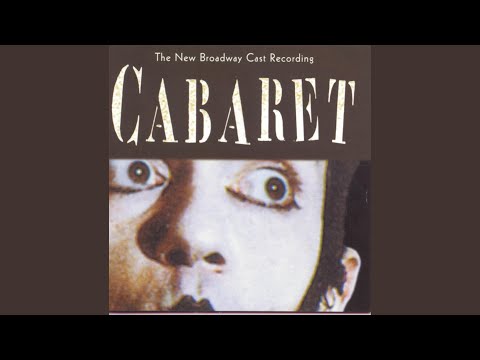
Review and Highlights
Quick summary
- Character and moment: Fraulein Schneider turns on the lights and asks a younger man to stop moralizing and start listening.
- Where it sits: Act II, right after she returns the engagement present and cancels the wedding.
- Recording context: Track 16 on the 1998 New Broadway Cast recording, a book scene rather than a Kit Kat Klub number.
- Writers: John Kander and Fred Ebb, built as a calm argument that keeps tightening.
- Why it lands: The refrain is not a slogan, it is a trapdoor - the question keeps changing as the danger gets closer.
Cabaret (1998) - cast recording - not diegetic. Fraulein Schneider has just ended her engagement to Herr Schultz; Cliff presses her to resist, and she answers with a measured inventory of what she stands to lose. The number functions as the show’s reality check: private fear, public pressure, and a single life built room by room.
This is one of those theater songs that refuses to “sing pretty.” It starts as a conversation with its sleeves rolled up, then turns into a melodic cross-examination. Each time the refrain returns, the stakes shift: first it is about youth and certainty, then about property and survival, then about the storm outside. The craft is sly - the line lengths feel speech-like, but the harmonies lean into that Kander and Ebb knack for making reassurance sound like doom.
And the performance style matters. Fraulein Schneider is not pleading for sympathy. She is setting boundaries: if Cliff wants heroics, fine, but heroics are easier when you have an exit strategy. According to Masterworks Broadway, the 1998 cast album splits cabaret numbers (with crowd response) from book songs recorded cleanly in studio, which suits this piece - no applause cushion, just the hard air of the room.
Creation History
The song was written by John Kander and Fred Ebb for the 1966 stage musical and built around the character’s late-life romance colliding with rising antisemitism. In the 1998 Broadway revival, the material was reframed in a darker, club-adjacent aesthetic associated with director Sam Mendes, but this scene stays stubbornly domestic: a landlady, her rooms, her habits, and a future closing in. The 1998 recording, produced by Jay David Saks, documents that tension in close-up, with spoken dialogue sliding into sustained phrases like an argument that has finally found its melody.
Song Meaning and Annotations
Plot
Cliff confronts Fraulein Schneider after she calls off her engagement to Herr Schultz. He frames resistance as a moral duty and treats retreat as cowardice. She answers by describing the asymmetry between them: he can leave Berlin and start over, while she is rooted to a lifetime of work, aging, and limited options. The scene ends with the refrain turned outward - not as advice, but as a demand that he imagine her constraints as real.
Song Meaning
The meaning is blunt: courage is not a universal currency. The song argues that “choice” is shaped by age, class, and the cost of being wrong. Fraulein Schneider is not selling compliance as virtue; she is describing survival as a set of ugly math problems that young idealists prefer not to calculate. The emotional arc is quiet but sharp: restrained annoyance becomes grief, then hard clarity, then something like resignation that still feels like agency.
Annotations
"Fight, and if you fail, what does it matter? You pack up your belongings, you move to Paris."
In plain terms: Cliff’s bravery is partly funded by mobility. The lyric is less about Paris than about the privilege of a second draft. On stage, it also plants a narrative seed - his exit is imaginable because it is already been named.
"Suppose simply keeping still means you manage until the end?"
This is the song’s coldest pivot. “Keeping still” sounds passive, yet she frames it as a strategy. In a city sliding toward terror, stillness can be a form of camouflage - and the line makes the audience sit with how often that is what people choose.
Style and rhythm
Musically, it is a Broadway torch scene disguised as a lecture. The rhythm favors natural speech, then lets key words lengthen: “alone,” “lifetime,” “storm.” That stretching creates a feeling of time slowing down, like someone watching the clock and refusing to blink. The phrasing also sets up a subtle power move: Cliff is interrupted by structure. Once the melody takes hold, the conversation belongs to her.
Cultural and historical touchpoints
The show’s Berlin is not a postcard. The backdrop is late Weimar instability with Nazism gaining control, and this number drags politics into the room without slogans. LondonTheatre.co.uk describes the moment as Fraulein Schneider being forced to choose security over love, and the song translates that choice into something painfully familiar: when the world tilts, people do not all have the same footing.
There is also a craft-level irony worth savoring. The refrain asks “what would you do,” but it does not invite an answer. Each repetition narrows the space for debate, until the final “if you were me” lands like a door closing. That is why the song lasts in memory: it is not a plea for agreement, it is a demand for perspective.
Technical Information
- Artist: Mary Louise Wilson
- Featured: John Benjamin Hickey (dialogue within the scene)
- Composer: John Kander
- Lyricist: Fred Ebb
- Producer: Jay David Saks
- Release Date: June 30, 1998
- Genre: Broadway, Musical theatre, Pop
- Instruments: Pit orchestra (piano, reeds, brass, strings, plus stage-band colors used across the recording)
- Label: Masterworks Broadway
- Mood: Reflective, wary, resolute
- Length: 3:29
- Track #: 16
- Language: English
- Album: Cabaret (New Broadway Cast Recording)
- Music style: Book-scene ballad with cabaret-era harmonic shadows
- Poetic meter: Mixed, speech-like phrasing with iambic-leaning passages
Questions and Answers
- Who produced this 1998 recording?
- Jay David Saks produced the New Broadway Cast recording session, keeping the book scenes intimate and the club numbers theatrically noisy.
- When was it released?
- The track was issued on June 30, 1998 as part of the cast album Cabaret (New Broadway Cast Recording).
- Who wrote it?
- John Kander composed the music and Fred Ebb wrote the lyrics for the stage musical.
- Which character sings it, and to whom?
- Fraulein Schneider sings it to Cliff Bradshaw, answering his push for defiance with the realities of age and limited exits.
- Is it a Kit Kat Klub number?
- No. It is a book scene: private, narrative, and designed to land without the shield of club spectacle.
- What is the central dramatic action?
- She reframes “bravery” as a luxury and forces Cliff to imagine the cost of being wrong when you cannot simply leave.
- Why does the Paris line matter?
- It names the gap between principle and consequence. Cliff can relocate if things turn dangerous; she is anchored to her rooms, her income, and her age.
- How does the song build tension without belting?
- By tightening the question. Each refrain reduces Cliff’s argument into something smaller: first idealism, then practicality, then fear.
- What makes the lyric "keeping still" so unsettling?
- It treats passivity as strategy, implying that survival can mean invisibility, even when invisibility feels like surrender.
- What should a performer prioritize?
- Clarity of thought. The best readings sound like someone choosing words carefully because every word has consequences outside the room.
Awards and Chart Positions
The song itself is not a pop-chart object, but its revival context carried hardware. According to the official Tony Awards site, Cabaret won the 1998 Tony Award for Best Revival of a Musical. The same season, Mary Louise Wilson was nominated for Featured Actress in a Musical for her performance as Fraulein Schneider.
| Year | Award body | Category | Result |
|---|---|---|---|
| 1998 | Tony Awards | Best Revival of a Musical (Cabaret) | Won |
| 1998 | Tony Awards | Featured Actress in a Musical (Mary Louise Wilson) | Nominated |
How to Sing What Would You Do?
Think of this as sung argument, not “big number.” Many databases list an original-key center around C major and a practical range of about G sharp 3 to E 5, with the cast recording often clocking in around a moderate tempo near 111 BPM. Treat those as starting points, because keys shift across productions and performers.
- Tempo first: Set a steady pulse that feels like controlled speech. If you rush, the character sounds panicked; if you drag, it becomes sermon.
- Diction: Make the questions crisp. Land the consonants on “what,” “would,” and “do” so the refrain reads as insistence, not whining.
- Breathing: Plan breaths after the thought, not the bar line. The point is inevitability - she keeps going because she has rehearsed these fears for years.
- Flow and rhythm: Let the verse feel conversational, then allow the refrain to widen. The music is the moment she stops negotiating.
- Accents: Emphasize “alone,” “lifetime,” and “storm.” Those are the three pillars: isolation, investment, and threat.
- Ensemble and space: If staged tightly, keep the voice intimate. This song can be devastating at a near-speaking dynamic.
- Mic and balance: If amplified, do not over-sing. Use the mic to preserve the character’s age and restraint while keeping every word readable.
- Pitfalls: Avoid playing her as weak. The power is that she is right, and she knows it.
- Practice material: Speak the text as a monologue, then add pitch on the final words of each thought. Only then connect the lines into full phrases.
Additional Info
Cabaret is famous for seduction and spectacle, but this is one of its plainest knives. It is also a structural turning point: after this scene, the score’s pleasures feel more compromised, as if the club lights are dimming from the outside in. If You Could See Her may deliver the shock line, but this is the quieter one that makes the shock believable.
SecondHandSongs lists early commercial life for the song in the original Cabaret album era and documents its cover lineage, reminding you how often performers return to this piece when they want a dramatic monologue that happens to be set to music.
Key Contributors
| Entity | Type | Relationship (S-V-O) |
|---|---|---|
| Mary Louise Wilson | Person | Performs - Fraulein Schneider - on the 1998 cast recording. |
| John Benjamin Hickey | Person | Plays - Cliff Bradshaw - and appears in the scene dialogue. |
| Jay David Saks | Person | Produces - the 1998 New Broadway Cast recording - for release. |
| John Kander | Person | Composes - the music - for the song. |
| Fred Ebb | Person | Writes - the lyrics - for the song. |
| Masterworks Broadway | Organization | Releases - the cast album - containing the track. |
| Cabaret | Work | Includes - the scene - as Act II confrontation. |
| Roundabout Theatre Company | Organization | Produces - the 1998 Broadway revival - at Studio 54. |
Sources: Tony Awards official site, Masterworks Broadway, LondonTheatre.co.uk, Shazam, Singing Carrots, TuneBat, SecondHandSongs, Wikipedia, Vanity Fair
Music video
Cabaret Lyrics: Song List
- Act 1
- Wilkommen
- So What
- Telephone Song
- Don't Tell Mama
- Mein Herr
- Perfecly Marvelous
- Two Ladies
- It Couldn't Please Me More
- Tomorrow Belongs to Me
- Why Should I Wake Up?
- Maybe this Time
- Money Song
- Married
- Meeskite
- Act 2
- Entr'acte
- If You Could See Her
- What Would You Do?
- Tomorrow Belongs to Me (Reprise)
- Cabaret
- Finale