Telephone Song Lyrics — Cabaret
Telephone Song Lyrics
Hello?
[GIRL 1]
Hello!
Sitting all alone like that
You happened to catch my eye
Would you like to buy a girl a drink?
[CLIFF]
Sorry!
[GIRL 1]
Ach, goodbye
[BOY]
Hello
[GIRL 2]
Hello
Table four is calling number nine
How are you, mister?
[BOY]
Danke, fine
[GIRL 2]
Sitting all alone like that
You happened to catch my eye
Would you like to give a girl a dance?
[BOY]
Yeah, why not?
[GIRL 2]
Goodbye
[BOY 2]
Hello
[GIRL 3]
Hello
[BOY 3]
Hello
[GIRL 4]
Hello
[GIRLS 3 & 4]
Table seven calling number three
How are you, handsome?
[BOYS 2 & 3]
You mean me?
[GIRLS 3 & 4]
We can see you, can you see us?
Would you like to have a dance?
The minute that the music's hot
Maybe we could talk it over, ja?
[BOYS 2 & 3]
Ja, of course, why not?
[BOYS 4 & 5]
Alone, alone
You shouldn't sit alone like that
Alone, alone
Not on a night like this
[ENSEMBLE]
Alone, alone
You shouldn't sit alone like that
Alone, alone
Not on a night like this
Ja
Look
Hello, hello, hello, hello, hello, hello, hello
Table seven calling number nine, how are you?
Table eight is calling number two, how are you?
Table five is calling number three, how are you?
Sitting all alone like that
You happened to catch my eye
Would you like to buy a girl a drink?
Would you like to buy a man a drink?
Would you like to buy a boy a drink?
You will? Why not? Goodbye!
Song Overview
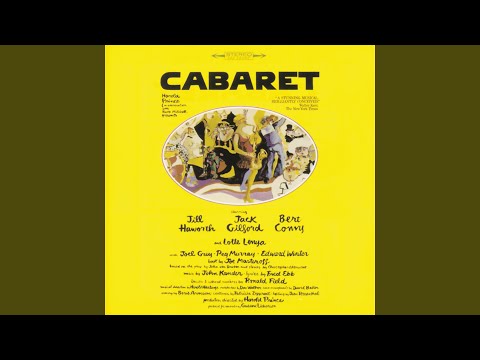
In the 1966 Broadway version of Cabaret, this number is a quick hit of nightlife sociology: strangers trading flirtation over an internal phone system, like a pre-digital chat room with cigarette haze and a live band. Its sparkle is not just comic relief - it is how the show teaches you the Kit Kat Klub rules before the story starts breaking them.
Review and Highlights
Quick summary
- Type: ensemble vignette for the Kit Kat Klub, built around phone-call pickup lines and fast exits.
- Where it appears: the Original 1966 (and 1987) stage versions, not the 1998 Broadway version.
- Dramatic job: shows how the club turns loneliness into commerce, then hands Cliff the social script of Berlin nightlife.
- Recording context: released on the 1966 original cast album, with the album producer credited as Goddard Lieberson.
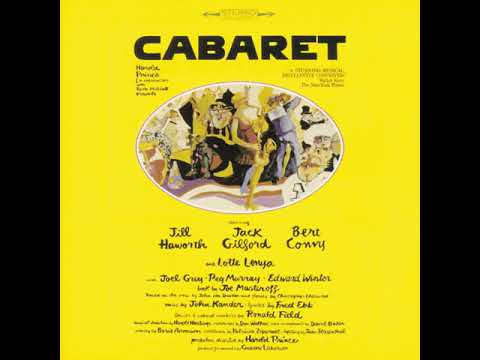
Cabaret (1966) - stage musical number - diegetic. Kit Kat Klub guests flirt through an internal phone system, trading invites for drinks and dances; the bit plays like a crowd-sourced come-on reel. Cast recording Track 4, approx 0:00-2:30. Why it matters: it sets the club as a machine that converts boredom into appetite, while Cliff watches (and learns) how quickly charm becomes transaction.
The fun of this piece is how it refuses to settle into a tidy verse-chorus shape. It is built as a chain reaction: a ring, a pitch, a dodge, a new ring. That structure is the joke and the critique at once. Nobody is committing, everybody is prospecting, and even the word "goodbye" lands like a cymbal choke. You can hear Kander and Ebb working in cabaret shorthand - brisk setups, punchline cadence, and the sly promise that the night is always young, right up until it is not.
What I still admire, decades on, is the way the number makes the room feel crowded without turning it into a choral sermon. The lines are tiny, specific, and disposable - which is exactly the point. Desire gets packaged into templates you can repeat at Table Seven or Table Four, and the moment the offer is accepted, the caller vanishes. In a show obsessed with masks, this is one of the earliest: the mask of casual confidence, worn by people who do not want to be caught alone.
Creation History
John Kander and Fred Ebb wrote the score to behave like the club itself - switching from narrative scenes to "acts" that comment, distract, seduce, and sometimes trap the audience in its own laughter. In the official album notes, the internal phone gimmick is framed as part of the club fever that pulls Cliff away from his typewriter and into the night. The number later became a practical marker of version history: licensing notes for the 1966 edition keep it in, while the 1998 Broadway version drops it, reorganizing the first-act flow around other material.
Song Meaning and Annotations
Plot
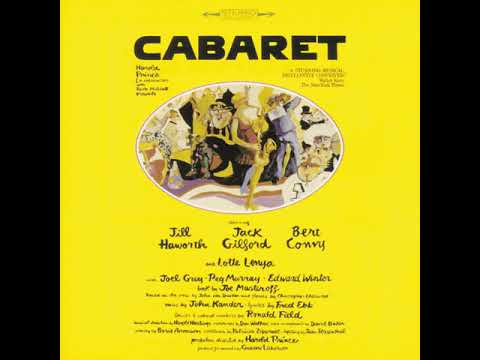
Cliff sits at the Kit Kat Klub, alone enough to be noticed. Voices come in over the phones: invitations to buy a drink, share a dance, or simply stop looking solitary. The calls multiply, the room starts talking to itself, and the nightlife economy reveals its simplest rule - attention goes to whoever looks available.
Song Meaning
On the surface, it is a cheeky montage of approaches and rejections. Underneath, it is a tiny lesson in how Berlin's party culture sells belonging. The phones create a low-risk intimacy: you can flirt without crossing the floor, retreat without consequence, and try again with a new voice. The mood arc is quick - playful, then slightly predatory, then giddy with group momentum - and the driving rhythm makes the whole exchange feel inevitable, like the room itself is calling.
There is also a cultural touchpoint hiding in plain sight: modernity. Telephones were still a symbol of speed and access, and Cabaret turns that technology into choreography. The club becomes a network, and the network becomes a dance.
Annotations
No official annotation packet was provided for this song, so here are a few close-read notes drawn from the text and common staging practice.
"Sitting all alone like that / You happened to catch my eye"
This is a pick-up line that doubles as social policing. The club pretends to rescue you from solitude, but it also announces that solitude is suspicious - something to be corrected, preferably with a purchase.
"Would you like to buy a girl a drink?"
The exchange is blunt about the venue's logic: romance as a micro-transaction. Cabaret keeps returning to money, but here it shows the earliest, smallest unit - a drink as admission to attention.
"We can see you, can you see us?"
The line is funny because it is true: the phone is a mask, yet the caller claims visibility anyway. It hints at the show’s bigger habit of watching - who gets seen, who is ignored, and how quickly the rules change once politics arrives at the door.
Style and groove
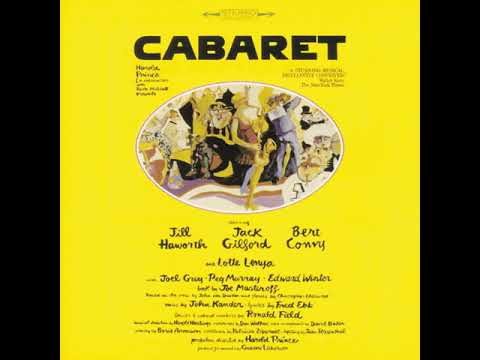
The number sits in a patter-adjacent pocket: short phrases, quick handoffs, and a pulse that feels like tapping a finger on the table while you wait for the next ring. Even when singers stretch a note, it tends to land as a signal rather than a showcase. The best performances keep the diction crisp and the exits sharp - each "goodbye" should sound like a door swing.
Technical Information
- Artist: Original Broadway Cast of Cabaret
- Featured: Kit Kat Klub ensemble voices (multiple callers)
- Composer: John Kander
- Producer: Goddard Lieberson
- Release Date: November 28, 1966
- Genre: Broadway, musical theatre, cabaret pastiche
- Instruments: stage band (brass and reeds implied), rhythm section, percussion accents
- Label: Columbia Masterworks (later cataloged through Masterworks Broadway)
- Mood: flirtatious, quick-witted, social
- Length: 2:30
- Track #: 4 (Cabaret - Original Broadway Cast Recording)
- Language: English with brief German interjections (e.g., "Ach", "Danke", "ja")
- Album: Cabaret (Original Broadway Cast Recording)
- Music style: ensemble cabaret vignette, call-and-response montage
- Poetic meter: mixed conversational meter (patter-like phrasing, speech-rhythm priority)
Questions and Answers
- Who produced "Telephone Song" for the original cast album?
- The album producer credit is commonly given to Goddard Lieberson, who oversaw major Columbia cast recordings in the period.
- When did the original cast recording release this track?
- The cast album release date is November 28, 1966.
- Who wrote the song?
- Music is by John Kander, with lyrics by Fred Ebb.
- Where does the number sit in the story?
- It is a Kit Kat Klub sequence on Cliff's early night out, when the room uses phones to turn strangers into potential partners for drinks and dances.
- Is it the same thing as "Telephone Dance"?
- Some materials split the concept into a shorter phone-flirt section and a separate dance extension. Cast albums and productions sometimes merge or reshape the beat depending on pacing.
- Why is it missing from some modern versions?
- Cabaret exists in multiple licensed versions. The 1998 Broadway version rearranged Act I and dropped certain 1966-era material, including this number, to match its redesigned flow.
- Is it in the 1972 film adaptation?
- No - the film keeps only a small portion of the stage score and drops several stage numbers, including this one.
- What makes the lyric writing work so fast?
- The lines are built like scripts you could reuse at any table: short setup, direct ask, quick retreat. The humor comes from repetition and the speed of social turnover.
- What is the performance trick that sells it?
- Clarity. Each caller needs a distinct intention in a few words, and each "goodbye" must land like a clean cut, not a fade.
Awards and Chart Positions
Cabaret was never shy about trophies. As stated in the Tony Awards official records, the original production won top honors in 1967, including Best Musical and Best Original Score. The cast album was also recognized in Grammy history for its score category, a reminder that these records were once treated like major popular releases, not just souvenirs.
| Year | Award | Category | Result | Work referenced |
|---|---|---|---|---|
| 1967 | Tony Awards | Best Musical | Won | Cabaret (stage production) |
| 1967 | Tony Awards | Best Original Score | Won | Cabaret (Kander and Ebb) |
| 1968 | Grammy Awards | Best Score From an Original Cast Show Album | Won | Cabaret (original cast album) |
How to Sing Telephone Song
This is less a belting showcase than a precision drill. Streaming metadata and production materials often place it in E-flat major with a brisk pulse (frequently cited around 145 BPM), while some rehearsal and MIDI references treat parts of it more like a steady walk-in. Either way, the goal is the same: keep the calls intelligible and the rhythm locked, so the comedy lands on time.
- Approx. key: E-flat major
- Approx. tempo: fast, often cited around 145 BPM (with some materials reflecting a slower count for the intro feel)
- Practical vocal range: ensemble-friendly, centered in conversational mid-range with brief higher flicks for emphasis
- Core challenge: diction and character switches at speed
- Tempo first: rehearse on a neutral syllable, then add words without letting consonants drag behind the beat.
- Diction: treat each ask as a headline - "drink", "dance", "alone" should pop. Do not smear vowels; crisp is funny.
- Breath: plan quick sips of air between phone beats. If you wait for comfort, you will be late.
- Flow and rhythm: avoid singing it like a ballad. Think of it as spoken music with pitch, not the other way around.
- Accents and color: keep any German interjections clean and light. It is seasoning, not a costume party.
- Ensemble balance: if multiple voices overlap, assign priorities - one line leads, the rest support, or the text turns to mush.
- Mic and space: on stage, aim the sound forward like you are cutting through a crowded room. In studio, keep proximity consistent so the "phone" illusion stays believable.
- Pitfalls: rushing the punchlines, swallowing the "goodbye", or making every caller the same character.
Additional Info
One of the quiet curiosities of Cabaret history is how this number marks the fault line between versions. Licensing notes spell it out: the 1966 and 1987 stage editions keep the phone scene, while the 1998 Broadway version drops it. And once the 1972 film radically reduced the stage score, this kind of ensemble texture was the first to go - the movie had no patience for a room full of voices unless the camera could make a star out of it. That is the trade-off: cinema gains focus, theatre keeps the swarm.
There is also a structural joke in how the calls make "alone" sound like a problem that can be fixed in thirty seconds. Cabaret spends the rest of the night proving the opposite. By Act II, the club still sells companionship, but the world outside is changing the price.
Key Contributors
| Entity | Type | Relationship (S-V-O) |
|---|---|---|
| John Kander | Person | John Kander composed the music for "Telephone Song". |
| Fred Ebb | Person | Fred Ebb wrote the lyrics for "Telephone Song". |
| Joe Masteroff | Person | Joe Masteroff wrote the book for Cabaret, which frames the Kit Kat Klub numbers. |
| Goddard Lieberson | Person | Goddard Lieberson produced the original cast album recording. |
| Concord Theatricals | Organization | Concord Theatricals licenses the 1966 version and documents which songs appear in each version. |
| Masterworks Broadway | Organization | Masterworks Broadway maintains official catalog notes for the original cast recording release. |
| Cabaret (Original Broadway Cast Recording) | Work | The original cast album contains "Telephone Song" as Track 4. |
| Kit Kat Klub | Fictional venue | The Kit Kat Klub stages the phone-flirt sequence as part of its floor show world. |
Sources: Masterworks Broadway album notes for Cabaret (Original Broadway Cast Recording) (1966), Concord Theatricals licensing page for Cabaret (Original 1966), The Tony Awards official records (1967), Grammy Winners Book 1958-1998 (World Radio History PDF), Spotify track listing for "Cabaret: Telephone Song", Oxford University Press chapter excerpt on Cabaret revisions
Music video
Cabaret Lyrics: Song List
- Act 1
- Wilkommen
- So What
- Telephone Song
- Don't Tell Mama
- Mein Herr
- Perfecly Marvelous
- Two Ladies
- It Couldn't Please Me More
- Tomorrow Belongs to Me
- Why Should I Wake Up?
- Maybe this Time
- Money Song
- Married
- Meeskite
- Act 2
- Entr'acte
- If You Could See Her
- What Would You Do?
- Tomorrow Belongs to Me (Reprise)
- Cabaret
- Finale