Tomorrow Belongs to Me (Reprise) Lyrics — Cabaret
Tomorrow Belongs to Me (Reprise) Lyrics
Herr Ludwig! You are not leaving so early?
[ERNST]
I do not find this party amusing.
[FRAULEIN KOST]
Ah- but it is just beginning. Come, we will make it
amusing- you and I- Ja?
Herr Ludwig- this is for you:
The sun on the meadow is summery warm.
The stag in the forest runs free.
But gather together to greet the storm.
Tomorrow belongs to me.
The branch of the linden is leafy and
Green,
The Rhine gives its gold to the sea.
But somewhere a glory awaits unseen.
Tomorrow belongs to me.
Herr Ludwig! Sing with me!
[FRAULEIN KOST AND ERNST]
The babe in his cradle is closing his eyes
The blossom embraces the bee.
But soon, says a whisper;
"Arise, arise,
Tomorrow belongs to me"
[FRAULEIN KOST]
Everybody!
[ALL (except FRAULEIN SCHNEIDER, SCHULTZ, CLIFF
and SALLY, who stand watching)]
Oh Fatherland, Fatherland,
Show us the sign
Your children have waited to see.
The morning will come
When the world is mine.
Tomorrow belongs to me!
Song Overview
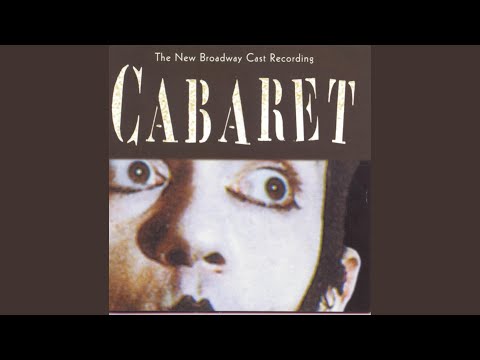
Review and Highlights
Quick summary
- This is the Act One party reprise where the room finally "sings the quiet part out loud" and Cliff realizes Berlin is changing faster than his friendships can keep up.
- Primary voices here are Fraulein Kost and Ernst Ludwig, with the guests swelling into a chorus while key characters stand apart and watch.
- It flips the earlier rendition from staged spectacle into social proof: linked arms, clapped backs, and a crowd moving as one.
- On the 1998 cast album, the track lands late in Act One (Track 12), right after "Married" and before the entr'acte.
- It is the same tune-family as the earlier number, but the reprise plays like a verdict, not a preview.
Cabaret (1998) - stage cast recording - diegetic. Act One engagement party scene (late Act One), where Ernst appears with a Nazi armband and the guests join the refrain while Cliff, Sally, Schneider, and Schultz stand aside. Why it matters: the show stops flirting with danger and starts naming it, using choral unity as a plot device and a warning siren.
This reprise works because it is not written like a showstopper. It is written like a folk promise that turns into a marching-room consensus. The lyric images stay pastoral - meadow, linden, Rhine - but the staging idea is the real hook: ordinary people making a choice together, one handshake at a time. As stated in Playbill, the 1998 revival recording leaned into a hybrid studio-plus-audience approach for club numbers, which makes the dramatic numbers outside the club land with a colder clarity.
Creation History
John Kander and Fred Ebb wrote the song for Cabaret as part of a deliberately anti-fascist score, dressing menace in familiar clothing. The 1998 Broadway revival, staged by Sam Mendes, reframed the material with a tighter, darker grain, and the cast album was produced by Jay David Saks. Recorded in April 1998, the album documents a production where the boundary between performance and participation is the whole point - and the reprise is where that boundary snaps.
Song Meaning and Annotations
Plot
We are at the engagement celebration for Fraulein Schneider and Herr Schultz. What should be a warm, slightly messy gathering turns into an ideological sorting hat. Ernst Ludwig shows up changed - not in temperament at first, but in allegiance - and the room begins to reorganize around him. Fraulein Kost, nursing grudges and seeking leverage, pushes the conflict into the open by pointing at Schultz's Jewish identity. The song rises as the party chooses sides, and Cliff finally understands that "keeping your head down" is not neutral when the street is filling with uniforms.
Song Meaning
The reprise is the sound of consent being manufactured in real time. Musically, it leans on a simple, singable shape - the kind of melody that makes strangers feel like a choir after one pass. Dramatically, it weaponizes comfort: nature imagery, cradle imagery, then the fatherland refrain. The track is not asking you to admire anything; it is showing how a crowd can be taught to admire itself. According to Vanity Fair, the song's power in Cabaret has long been tied to how gently it begins before the context reveals the threat.
Annotations
"I do not find this party amusing."
The line reads like small talk, but it is a temperature check. In this scene, "amusing" really means "acceptable." The party is only "fun" as long as identity and policy stay politely unspoken. Once Schultz is marked as Jewish, the logic of belonging shifts from citizenship to ideology - the moment where a neighbor stops being a neighbor and becomes a category.
"All, except Schneider, Schultz, Cliff and Sally, who stand watching."
This is the show drawing a stage picture you can feel in your gut: chorus versus witnesses. The watchers are not heroic yet; they are simply not moving with the herd. That tiny refusal is enough to isolate them. The reprise turns the room into a referendum, and the silence of the observers becomes a kind of spotlight.
Style and rhythm
Call it Broadway craft wearing folk clothing. The melody sits in a mid-tempo pocket that is easy for a crowd to lock into, with phrases that sound like they have always existed. That is the trick: familiarity lowers defenses. Even when the arrangement stays relatively spare, the rhythmic insistence comes from bodies joining in, not just instruments.
Symbols and touchpoints
The Rhine and the linden tree are not random postcards - they are shorthand for homeland myth. The cradle image is even more pointed: innocence is invoked to justify the future, and "tomorrow" becomes a claim of ownership. The historical backdrop is Weimar-era instability sliding toward authoritarian certainty, and Cabaret keeps reminding you that the slide can look tidy while it happens.
Technical Information
- Artist: New Broadway Cast of Cabaret
- Featured: Michele Pawk, Denis O'Hare (with ensemble)
- Composer: John Kander
- Lyricist: Fred Ebb
- Producer: Jay David Saks
- Release Date: June 30, 1998
- Genre: Stage and Screen - Cast Recording - Musical Theatre
- Instruments: Ensemble chorus; pit-band colors documented for the production include piano, drums, bass, brass, reeds, strings, accordion, banjo
- Label: RCA Victor Broadway (BMG)
- Mood: Pastoral surface, tightening menace
- Length: 2:27
- Track #: 12 (on the 1998 cast album)
- Language: English (with brief German dialogue)
- Album: Cabaret (New Broadway Cast Recording)
- Music style: Musical theatre chorus with folk-hymn framing and march-like lift
- Poetic meter: Mostly iambic-leaning lines with flexible folk stresses
Questions and Answers
- Who produced this 1998 reprise recording?
- Jay David Saks is credited as the producer for the 1998 cast album version.
- When was the track released?
- The cast album release date is June 30, 1998.
- Who wrote the song?
- Music is by John Kander and lyrics are by Fred Ebb.
- Who is actually singing in the reprise?
- Fraulein Kost and Ernst Ludwig lead the number, then the party guests join as a chorus while a small group watches in silence.
- Where does it happen in the story?
- It lands at the engagement party for Schneider and Schultz, late in Act One, after the room realizes Schultz is Jewish and Ernst shows his Nazi affiliation.
- How is the reprise different from the earlier "Tomorrow Belongs to Me"?
- The earlier number can play like a staged demonstration or a broadcast, but the reprise is social participation: the neighbors are the instrument, and the pressure is face-to-face.
- Why does the lyric keep returning to nature images?
- Pastoral language sells safety. The show uses those images to show how ideology can borrow the tone of lullabies and hymns to sound inevitable.
- Why do Cliff and Sally stand apart?
- It is the first moment where denial stops being comfortable. Cliff realizes the people around him are not passive bystanders, and that recognition becomes a reason to leave Germany.
- Is the song meant to endorse the ideology it depicts?
- No. Cabaret positions it as a warning device inside an anti-fascist work, showing how seduction can masquerade as tradition.
- Is there a well-known screen version connected to the tune?
- The 1972 film uses "Tomorrow Belongs to Me" in a famous outdoor scene, separate from the party reprise, to underline how quickly a crowd can be pulled into a salute.
Awards and Chart Positions
The 1998 revival cast album sits in the shadow of a production that was already racking up prestige. The show was billed as Tony-winning at release time, and the recording later landed major industry recognition in the musical-theatre category.
| Year | Award | Category | Work Recognized | Result |
|---|---|---|---|---|
| 1999 | Grammy Awards | Best Musical Show Album | Cabaret: The New Broadway Cast Recording | Nominated |
How to Sing Tomorrow Belongs to Me (Reprise)
Key and tempo: Bb major at about 111 BPM, a mid-tempo pace that invites group singing without sounding rushed.
Range (practical): The tune commonly sits high when sung in its bright "anthem" placement. A useful benchmark for the main melodic excerpt is around A4 to Bb5, though ensemble staging can distribute pressure across parts.
- Tempo first: Count a steady 111 BPM pulse before you sing. The danger of this piece is dragging - it should feel inevitable, not sleepy.
- Diction: Treat consonants like cues for the crowd. Crisp T and D sounds keep the refrain from turning into mush when more voices join.
- Breath plan: Mark breaths before long lines (for example, before the lift into the refrain). Do not wait until you are out of air; the chorus effect collapses when the line sags.
- Flow and phrasing: Keep the pastoral images legato, then tighten the phrase as the refrain arrives. Think "song to slogan" in one breath.
- Accent and color: Let the vowels brighten on the fatherland refrain, but avoid shouting. The chill comes from unity, not volume.
- Ensemble discipline: If you are in a group, assign roles: one section leads the opening, another thickens the harmony, and everyone aligns cutoffs together.
- Mic and staging: In modern productions, the trick is proximity. Sing as if you are inches from someone you want to persuade - that is more unsettling than a belt to the balcony.
- Pitfalls: Do not turn it into parody. Play it straight. Also watch intonation on the high anchor notes in Bb major; a flat top note drains the threat.
Practice materials: Work with a Bb major scale up to the top anchor note you need, then rehearse the refrain on a neutral syllable to lock pitch. If you have access to backing-track libraries in Bb, use them to practice cutoffs and entrances with a click.
Additional Info
One of the strangest twists in theatre history is that this number has repeatedly been mistaken for an authentic Nazi anthem, even though it was written by Jewish American theatre-makers as part of an anti-fascist story. That misunderstanding is not a footnote - it is part of the song's design: it demonstrates how style can impersonate tradition.
Onstage, the 1998 revival's structure makes the reprise hit like a trapdoor. Earlier, the tune is introduced as a "popular anthem" via a boy voice, but the reprise relocates it to a living room reality: engagement cake, gossip, grievances, then ideology. The scene is also carefully diagrammed in the licensed plot outline, which spells out the armband reveal and the ensemble joining while the principals look on.
On screen, the 1972 film uses the tune in an outdoor gathering scene - the famous escalation from sweet solo to mass participation. It is a different moment than the party reprise, but it is the same warning mechanism, and it has kept the song in circulation far beyond the theatre.
Key Contributors
| Type | Name | Relationship (S-V-O) |
|---|---|---|
| Work | Cabaret | Cabaret places the reprise at an engagement party to expose rising fascism through a crowd chorus. |
| People | John Kander | Kander composed the music for the song used in the reprise. |
| People | Fred Ebb | Ebb wrote the lyrics that contrast pastoral images with nationalist claims. |
| People | Jay David Saks | Saks produced the 1998 cast recording featuring this reprise. |
| People | Michele Pawk | Pawk leads the reprise as Fraulein Kost on the 1998 recording. |
| People | Denis O'Hare | O'Hare appears as Ernst Ludwig, whose allegiance is revealed in the scene. |
| Organization | Roundabout Theatre Company | Roundabout presented the 1998 Broadway revival documented by the recording. |
| Organization | RCA Victor Broadway | RCA Victor Broadway released the cast album containing the track. |
| Place | Berlin | Berlin is the story setting where the reprise frames a society turning on its neighbors. |
| Venue | Henry Miller Theatre (Kit Kat Klub staging) | The production staged Cabaret in an "environmental" club format linked to the album's sound design. |
| Location | The Hit Factory, New York City | The album recording session took place at The Hit Factory in April 1998. |
Sources: Playbill - RCA Victor Releases New Cabaret Cast Album June 30, Masterworks Broadway - Cabaret: The New Broadway Cast Recording (1998), Masterworks Broadway blog - Cabaret's Sui Generis Cast Album, Concord Theatricals - Cabaret (1998 Version), Grammy Awards - Best Musical Show Album nominees (1999), Wikipedia - Tomorrow Belongs to Me, Musicstax - tempo and key data, Singing Carrots - vocal range reference
Music video
Cabaret Lyrics: Song List
- Act 1
- Wilkommen
- So What
- Telephone Song
- Don't Tell Mama
- Mein Herr
- Perfecly Marvelous
- Two Ladies
- It Couldn't Please Me More
- Tomorrow Belongs to Me
- Why Should I Wake Up?
- Maybe this Time
- Money Song
- Married
- Meeskite
- Act 2
- Entr'acte
- If You Could See Her
- What Would You Do?
- Tomorrow Belongs to Me (Reprise)
- Cabaret
- Finale