Meeskite Lyrics — Cabaret
Meeskite Lyrics
Now the only word you
have to know in order to understand my little song is the Yiddish word:
"meeskite." "Meeskite" means ugly, funny-looking. "Meeskite" means... (He
sings)
Meeskite, Meeskite,
Once upon a time there was a meeskite, meeskite,
Looking in the mirror he would say, "What an awful shock,
I got a face that could stop a clock."
Meeskite, meeskite,
Such a pity on him, he's a meeskite, meeskite,
God up in his heaven left him out on a shaky limb,
He put a meeskite on him.
But listen, he grew up. Even meeskites grow up.
And soon in the Chader (that means Hebrew school)
He sat beside this little girl
And when he asked her name she replied,
"I'm Pearl."
He ran to the Zayda (that means grandfather)
And said in that screechy voice of his,
"You told me I was the homeliest!
Well, gramps, you're wrong. Pearl is!
"Meeskite, meeskite,
No one ever saw a bigger meeskite, meeskite,
Everywhere a flaw and maybe that is the reason why
I'm going to love her until I die.
"Meeskite, meeskite,
Oh, is it a pleasure she's a meeskite, meeskite,
She's the one I'll treasure, for I thought there could, never be
A bigger meeskite than me."
So, they were married,
And in a year she turned and smiled:
"I'm afraid I am going to have ... a child."
Nine months she carried,
Worrying how that child would look,
And all the cousins were worried too.
But what a turn fate took!
Gorgeous, gorgeous,
They produced a baby that was gorgeous, gorgeous,
Crowding round the cradle all the relatives aahed and oohed,
"He ought to pose for a baby food.
"Gorgeous, gorgeous,
Would I tell a lie? He's simply gorgeous, gorgeous,
Who'd have ever thought that we would see such a flawless gem
Out of two meeskites like them?"
Now, wait! The story has a moral! All my stories have morals!
Moral, moral,
Yes indeed, the story has a moral, moral,
Though you're not a beauty it is nevertheless quite true,
There may be beautiful things in you.
Meeskite, meeskite,
Listen to the fable of the meeskite, meeskite,
Anyone responsible for loveliness, large or small,
Is not a meeskite
At all!
[Thanks to suki for lyrics]
Song Overview
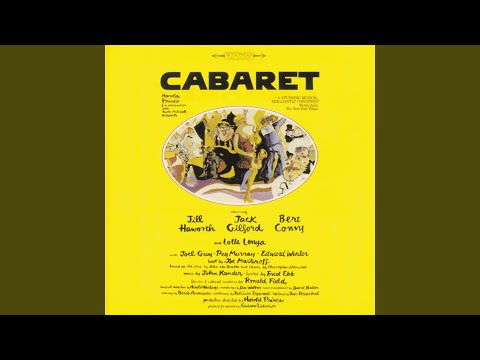
Review and Highlights
Quick summary
- What it is: A comic fable number for Herr Schultz in Cabaret, written as a bedside story with a nightclub wink.
- Where it sits: A book-driven moment (not a Kit Kat Klub turn), usually staged around the Schultz-Schneider courtship when the show briefly lets kindness lead.
- Why it matters: The Original 1966 version is the only licensed edition that keeps this song, so it functions like a fingerprint for that cut of the score.
- What it sets up: It plants the meaning of the title word so later jokes in the show can land with extra sting.
- Recording snapshot: The 1966 cast recording preserves Jack Gilford's folksy timing and the number's quick pivot from ribbing to reassurance.
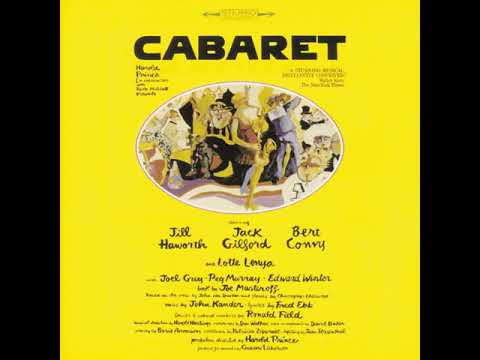
Cabaret (1966) - stage musical - not. This is a story told in-character by Herr Schultz, the Jewish fruit merchant, aimed squarely at Fraulein Schneider and the room they share for a moment. It plays like a parable you could pass down at a kitchen table, except it is delivered with Broadway precision and a punchline cadence.
Some songs win you with volume. This one wins you with posture. Gilford sings as if he is leaning toward you, letting each rhyme pop and then settle. The writing is classic Kander and Ebb craft: short phrases that turn like a vaudeville routine, then a sudden warmth that makes you realize the jokes were a shield, not a weapon. The shift is the hook. We start with mock horror at a face "that could stop a clock," and end with a moral that treats loveliness as something you build, not something you inherit.
The arrangement behaves like a cartoon sketchpad. It follows the text, not the other way around, giving room for spoken setup, then moving through episodes (school, marriage, childbirth) with quick resets. When the song arrives at the "gorgeous" turn, the music brightens as if the curtains open on a surprise gift. That is the number's hidden trick: it lets the audience laugh at the premise, then asks them to protect the people inside it.
Creation History
"Meeskite" belongs to the original Broadway build of Cabaret, where Kander and Ebb still had space for character parables alongside the Kit Kat Klub numbers. Later revisions streamlined the score and moved songs around, but this one stayed a marker of the 1966 blueprint. According to Concord Theatricals, it appears only in the Original 1966 licensed version, which is why longtime fans treat it like a lost chapter when they encounter the later editions.
Song Meaning and Annotations
Plot
Herr Schultz introduces a single word and teaches it by telling a fable. A self-described homely man meets an equally homely girl and loves her fiercely. They marry, worry their child will inherit the same look, and then produce a baby that is stunningly beautiful. Schultz then underlines the point: beauty is not limited to faces, and responsibility for loveliness can be moral, creative, and human.
Song Meaning
The title word is the bait. Schultz uses it for laughs, but the number is really about dignity. The fable says: you can be mocked for how you look, and still be capable of devotion, generosity, and tenderness. In Cabaret, that tenderness is never just personal. It is political pressure waiting at the door. So this song reads as a quiet protest, not shouted from a podium, but offered as a way to treat people decently while the world is learning how not to.
Annotations
"Now the only word you have to know... is the Yiddish word 'meeskite'."
The spoken intro is doing stage business and cultural business at once. It invites the audience in and foregrounds Schultz's Jewish identity without turning him into a lecture. A word becomes a little passport to his world.
"In the cheder... he sat beside this little girl."
The lyric gives you a neighborhood-level detail. This is not generic romance. It is a childhood scene in a community setting, which makes the later "moral" feel earned rather than pasted on.
"Everywhere a flaw... I'm going to love her until I die."
Here is the emotional spine. The rhyme is cute, but the idea is serious: love is chosen with eyes open. The song treats loyalty as an act of will, not a reward for perfection.
"Gorgeous, gorgeous... out of two meeskites like them?"
The surprise baby is a classic fable twist, but Cabaret uses it to sharpen the theme: the world measures worth by appearance, yet something beautiful can come from people the world dismisses. In the show, that lands as both comfort and irony.
"Anyone responsible for loveliness... is not a meeskite at all!"
The final moral widens the definition of beauty until it is almost an ethic. Loveliness can mean care, making a home, creating art, telling a story that keeps someone alive for another day. In a musical about denial and danger, that is a serious claim disguised as a grin.
Genre fuse and the story-song engine
This is musical-theatre patter with a folktale backbone. The rhythm is conversational and spring-loaded, built for timing: setup, punchline, pause, pivot. The emotional arc is a slow thaw. The number begins with self-mockery, passes through affectionate teasing, and ends with an almost parental tenderness toward the audience. A little side note from me: the best performances do not overplay the moral. They trust it.
Symbols and cultural touchpoints
Cabaret is set in a city where labels harden fast. Here, a single word stands for a lifetime of being judged. Yet Schultz reclaims it and bends it into a tool for empathy. That reclaiming sits inside a bigger historical shadow, where Jewish identity is becoming a target. The song does not mention politics, but it hums with it in the background.
Technical Information
- Artist: Jack Gilford
- Featured: None
- Composer: John Kander
- Producer: Goddard Lieberson
- Release Date: November 28, 1966
- Genre: Broadway, musical theatre
- Instruments: Theatre orchestra palette supporting spoken-patter phrasing
- Label: Columbia Masterworks (later Sony Masterworks)
- Mood: Wry, tender, reassuring
- Length: 3:46
- Track #: 12 (Cabaret - Original Broadway Cast Recording)
- Language: English
- Album: Cabaret (Original Broadway Cast Recording)
- Music style: Story-song patter with a fable chorus turn
- Poetic meter: Accentual, speech-led lines built for punchline stress
Questions and Answers
- Who produced this original cast recording track?
- Goddard Lieberson, who produced the 1966 cast album release.
- When was the cast recording first released?
- The first LP release date is listed as November 28, 1966.
- Who wrote the song?
- Music by John Kander and lyrics by Fred Ebb.
- What does the title word mean in the context of the number?
- It is introduced onstage as a Yiddish term meaning ugly or funny-looking, used here as a reclaimed joke that becomes a lesson.
- Why is this song missing from many productions?
- Later revisions of Cabaret reshaped the score. The licensed Original 1966 edition is the one that keeps this specific number.
- Is it a club number at the Kit Kat Klub?
- No. It is a character scene-song, delivered by Schultz as a fable within the book of the musical.
- What is the dramatic function of the "gorgeous" section?
- It flips the fable from teasing to wonder, letting the story turn outward into its moral about what people can carry inside them.
- How does the song connect to the rest of the show?
- It adds dimension to Schultz and to the show's view of outsiders, while also planting a word the audience may hear echoed later.
- Is there a notable cover or alternate release?
- Yes. Fred Ebb recorded the number for a later complete score recording project, which offers a different, author-adjacent flavor.
- What is the best performance approach?
- Play it as storytelling first. The laughs come from clarity and timing, not from pushing the punchlines.
Awards and Chart Positions
This song itself is not a chart single, but it lives on a cast album and inside a show with serious hardware. According to the Tony Awards database, Cabaret won the 1967 Tony for Best Musical. The original cast album also won the Grammy for Best Score From an Original Cast Show Album at the 10th Annual Grammy Awards, credited to Kander, Ebb, Lieberson, and the original cast.
| Award body | Year | Category | Work | Result |
|---|---|---|---|---|
| Tony Awards | 1967 | Best Musical | Cabaret (Original Broadway production) | Won |
| Grammy Awards | 1968 | Best Score From an Original Cast Show Album | Cabaret (Original Broadway Cast Recording) | Won |
On the album side, chart-tracking services that reproduce Billboard 200 runs show the cast recording entering the chart in early 1967 and climbing across several weeks, a reminder that Broadway albums could move like pop records in that era.
How to Sing Meeskite
This is acting with pitch. You are not trying to out-sing the orchestra, you are trying to out-tell the story. Online performance-metric databases commonly list the track around 139 BPM, with a frequently cited original key around E major, and a practical vocal range guide of roughly B3 to A5. Treat those numbers as rehearsal scaffolding, then adjust to your spoken comfort.
- Tempo: Set a metronome near 139 BPM and speak the lyric in rhythm before singing. If the story does not read at speed, slow it until it does.
- Diction: Crisp consonants are your percussion. Keep plosives clean (p, b, t, k) so the jokes land without pushing volume.
- Breathing: Mark breaths at scene breaks, not at random. You want breath support to feel like a narrator turning a page.
- Flow and phrasing: Keep lines forward. Do not linger on rhymes. The charm comes from the next beat arriving on time.
- Character color: Let warmth sit under the humor. If you play only the joke, the moral feels pasted on.
- The "gorgeous" lift: Brighten tone and slightly widen vowels there. It is a reveal, so it needs a sonic change.
- Ensemble and accompaniment: If you have underscoring, ask the band for lightness under spoken moments and a clearer swell into the reveal sections.
- Mic and room: In a small space, speak-singing can work. In a large house, aim for supported speech rather than whispering, so you keep intelligibility.
- Pitfalls: Overacting, rushing setup lines, and treating the moral like a sermon. This is a parable, not a verdict.
Additional Info
One reason this number has a long shadow is its ripple effect on another scene. According to a Masterworks Broadway note on lyric revisions, the 1972 film removed many book songs, including this one, and that created a practical problem: without Schultz defining the title word for the audience, later references could confuse moviegoers. That is a rare case where a small character song changes the engineering of a joke elsewhere in the score.
For alternate listening, a later complete-score recording includes a version by Fred Ebb, which is fascinating in a different way. You hear the lyricist's sense of timing in the phrasing, like a playwright reading his own dialogue. It is not a replacement for Gilford, but it is a useful angle if you are studying how the text wants to move.
Key Contributors
| Entity | Type | Relationship | Statement (S-V-O) |
|---|---|---|---|
| Jack Gilford | Person | Performer | Jack Gilford - performs - the song on the 1966 cast recording. |
| John Kander | Person | Composer | John Kander - composed - the music for the song. |
| Fred Ebb | Person | Lyricist | Fred Ebb - wrote - the lyrics for the song. |
| Goddard Lieberson | Person | Producer | Goddard Lieberson - produced - the original cast album release. |
| Cabaret (Original Broadway Cast Recording) | Work | Album | The cast album - preserves - the Original 1966 version song list on record. |
| Cabaret (Original 1966) | Work | Licensed version | The Original 1966 licensed edition - includes - this number in the score. |
| Herr Schultz | Character | Narrator | Herr Schultz - tells - the fable that delivers the moral. |
| Fraulein Schneider | Character | Listener | Fraulein Schneider - receives - the story as a courtship gesture. |
Sources: Masterworks Broadway, Concord Theatricals, Tony Awards, Recording Academy, SecondHandSongs, Spotify, Singing Carrots, Tunebat, YouTube (Masterworks Broadway)
Music video
Cabaret Lyrics: Song List
- Act 1
- Wilkommen
- So What
- Telephone Song
- Don't Tell Mama
- Mein Herr
- Perfecly Marvelous
- Two Ladies
- It Couldn't Please Me More
- Tomorrow Belongs to Me
- Why Should I Wake Up?
- Maybe this Time
- Money Song
- Married
- Meeskite
- Act 2
- Entr'acte
- If You Could See Her
- What Would You Do?
- Tomorrow Belongs to Me (Reprise)
- Cabaret
- Finale