Perfecly Marvelous Lyrics — Cabaret
Perfecly Marvelous Lyrics
I think people are perfectly marvellous, I really do, Cliff.
Don't you? I don't think people should have to explain
anything. For example, if I should paint my fingernails green
and it just so happens I do paint them green, well, if anyone
should ask me why, I say: " I think it's pretty!" ("I think
it's pretty," I reply.) So, if anyone should ask about you
and me, you have two alternatives: you can either say,
"Oh, yes, it's true. We're living in delicious sin." Or
you can simple tell the truth, and say:
I met this perfectly marvellous girl
In this perfectly wonderful place
As I lifted a glass
To the start of a marvellous year.
Before I knew she called on the phone,
Inviting.
Next moment I was no longer alone,
But sat reciting
Some perfectly beautiful verse,
In my charming Amearican style.
How I dazzled her senses
Was truly no less than a crime.
Now I've this perfectly marvelous girl
In my perfectly beautiful room
And we're living together
And having a marvellous time.
[CLIFF (spoken)]
Sally, I'm afraid this wouldn't work out. You're much
too distracting.
[SALLY (spoken)]
Distracting? No, inspiring!
She tell me perfectly marvellous tales
Of her thrillingly scandalous life
Which I'll probably use
As a chapter or two in my book.
And since my stay in Berlin was to force
Creation,
What luck to fall on a fabulous source
Of stimulation.
And perfectly marvellous, too,
Is her perfect agreement to be
Just as still as a mouse
When I'm giving my novel a whirl.
Yes, I've a highly agreeable life
In my perfectly beautiful room
With my nearly invisible,
Perfectly marvellous, girl.
[CLIFF (spoken)]
Sally- I just can't afford... Do you have any money?
[SALLY]
A few marks... Six!
[CLIFF]
Oh, God!
[SALLY]
Oh, please, Cliff- just for a day or two? Please!
[CLIFF]
I... met... this...
Truly remarkable girl
In this really incredible town,
And she skillfully managed
To talk her way in to my room.
[SALLY]
Oh, Cliff!
[CLIFF]
I have a terrible feeling I've said
A dumb thing.
Beside, I've only got one narrow bed.
[SALLY]
We'll think of something.
Song Overview
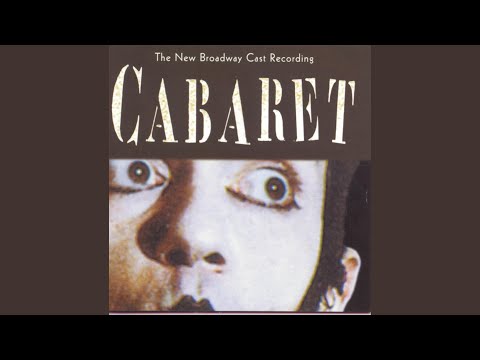
Review and Highlights
Quick summary
- Where it sits: A book-scene duet in Act I, sung in Cliff's room when Sally turns up with her bags and talks her way into staying.
- Who is singing here: Natasha Richardson as Sally Bowles, with John Benjamin Hickey as Clifford Bradshaw on the 1998 New Broadway cast recording.
- What kind of number: A bright, conversational two-hander that plays like a cheeky drawing-room routine, with spoken interruptions that tilt the smile into friction.
- Why it matters: It sells the cohabitation setup while quietly sketching the power balance: she charms, he calculates, both compromise.
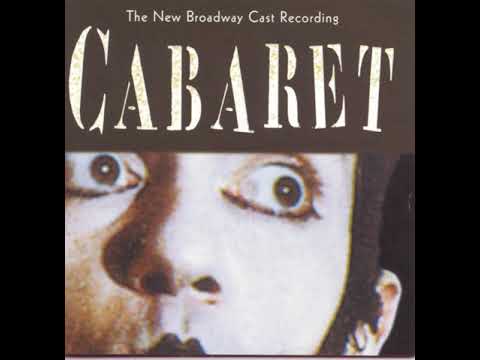
Cabaret (1998) - cast recording - not diegetic. Placement: Act I, Cliff's room, immediately after the night at the club, when Sally arrives abruptly with her luggage and persuades Cliff (and Fraulein Schneider) to let her move in. Why it matters: the show briefly trades neon for daylight; the audience sees that Sally's sparkle can be strategy, and Cliff's caution can be desire wearing a sensible coat.
This performance is built on contrast: a champagne-bubbly rhyme scheme that keeps landing on the word "perfect" while the situation is anything but. The tune has that Kander-and-Ebb knack for making a grin do double duty - half invitation, half warning label. Sally's little manifesto about people not needing to explain themselves is less naive than it sounds; it is a preemptive alibi delivered with a manicure joke. Cliff answers in the spoken bits like a man already tallying rent, bed space, and regret.
Key takeaways: the song works because it keeps the room small. No grand romantic lift, just a cramped bed and two strangers negotiating terms. When Sally calls herself "inspiring," it lands like a wink - and also like a dare. According to Playbill, this cast album arrived right at the revival's cultural peak, and you can hear why: the show sells intimacy as spectacle, and this track is intimacy with teeth.
Creation History
Written by John Kander (music) and Fred Ebb (lyrics) for the stage musical, the number has long served as the narrative hinge that moves Sally and Cliff from flirtation into shared walls. For the 1998 Broadway revival, the cast recording was produced by Jay David Saks and captured the production's claustrophobic, club-adjacent atmosphere while keeping certain scene songs cleaner and more direct. The album was recorded in New York in April 1998 and released in late June - a tidy turnaround that matched the show's momentum on Broadway.
Song Meaning and Annotations
Plot
Sally arrives at Cliff's room with her bags after being thrown out by Max. Cliff resists. Sally reframes the whole situation as bohemian, artistic, and frankly inevitable - then launches into the "perfectly" duet that treats their new living arrangement like a whimsical literary chapter. Cliff pushes back in spoken asides: distracting, unaffordable, impractical. The song ends with a compromise that is not peace, exactly - more like a truce signed in pencil.
Song Meaning
The point is not romance. It is leverage. Sally uses charm as a social solvent, dissolving Cliff's objections into a fantasy of artistic partnership. Cliff tries to maintain adult boundaries, but the lyric logic keeps cornering him: if the story sounds pretty, maybe the reality can be tolerated. Under the sparkle is a survival tactic - and a subtle preview of how each character will later argue for their own version of freedom.
Annotations
She tells me perfectly marvelous tales of her thrillingly scandalous life, which I'll probably use as a chapter or two in my book.
That line plays like flirtation, but it is also the show's meta-wink. The Cabaret story-world traces back through Christopher Isherwood's Berlin writing, with later adaptations reshaping the same raw material for stage and screen. As stated in Vogue magazine, the character of Sally is often linked to the real-life Jean Ross, and the adaptation chain runs from prose to play to musical with each step sharpening the caricature and raising the stakes.
Some perfectly beautiful verse, in my charming American style.
In many synopses and program notes, Cliff is said to recite Ernest Thayer's baseball poem "Casey at the Bat" earlier, and the lyric nods to that habit of showing off with literature on demand. It is a small joke with a big function: Cliff wants to be seen as a writer, while Sally wants to be seen as a muse-maker - two kinds of performance, both hungry for applause.
I don't think people should have to explain anything.
It is a great line because it is both idealistic and convenient. In practice, it becomes a permission slip for impulsivity - and a way to dodge accountability when consequences start tapping on the door.
Style and rhythm
The song's engine is its patter-like forward motion. Even when the melody relaxes, the language keeps skating - perfect this, marvelous that - like a con artist's charm offensive delivered in major-key lace gloves. The spoken interruptions are crucial: they snap the music back into the messy apartment reality, where the bed is narrow and the budget is narrower.
Emotional arc
Start: Sally as breezy philosopher. Middle: Sally as persuasive roommate. End: Cliff tries to reassert control, then concedes just enough to keep the scene moving. The arc is a negotiation disguised as banter, and the laughter is doing work.
Cultural touchpoints
Cabaret is set in late Weimar Berlin, where personal libertinism and political darkness share the same streetlamp. This number stays domestic, but the historical pressure is still there in the background: two outsiders building a tiny refuge that can be broken by money, law, or fear. The lightness is part of the tragedy - it is the sound of people dancing on a floor that is starting to tilt.
Technical Information
- Artist: Natasha Richardson, John Benjamin Hickey
- Featured: None
- Composer: John Kander
- Producer: Jay David Saks
- Release Date: June 30, 1998
- Genre: Musical theatre, Broadway
- Instruments: Vocal duet, theatre orchestra (studio ensemble)
- Label: RCA Victor (cast album release)
- Mood: Witty, flirtatious, faintly combative
- Length: 2:46
- Track #: 5 (on Cabaret - New Broadway Cast Recording)
- Language: English
- Album: Cabaret (New Broadway Cast Recording)
- Music style: Jazz-tinged show tune with conversational phrasing
- Poetic meter: Mixed (speech-driven, with rhymed couplets and patter-like stresses)
Questions and Answers
- Who produced this 1998 cast recording track?
- Jay David Saks, who produced the New Broadway cast album for the revival.
- When was the recording released?
- June 30, 1998, as part of the Cabaret (New Broadway Cast Recording) release schedule reported in theatre press at the time.
- Who wrote the song?
- John Kander (music) and Fred Ebb (lyrics), written for the stage score.
- Where does the number happen in the story?
- In Cliff's room, right after Sally is thrown out by Max and needs a place to stay.
- Is this a club performance number like the Kit Kat Klub songs?
- No. It is a scene song between characters, not a floor-show performance for the club audience.
- Why does the lyric keep pushing the word "perfect" so hard?
- Because Sally is selling a fantasy: if she can frame chaos as charming, she can get Cliff to bend without admitting he is bending.
- What is the literary wink in the verse line?
- Many synopses note Cliff recites "Casey at the Bat" earlier, and the lyric treats that habit as part of his self-myth as a writer.
- How does the spoken dialogue change the feel?
- It punctures the song's bright facade. Every spoken objection is a reminder that the situation has costs, and someone will have to pay them.
- Is this version a cover?
- Yes. The number originates in the stage musical and was recorded by earlier casts, including the original Broadway cast performance by Jill Haworth and Bert Convy.
- What does the song reveal about Sally's politics or worldview?
- It shows her personal creed: liberty first, explanation later. In Cabaret, that stance reads as both liberating and dangerously unprepared for the world outside the room.
Awards and Chart Positions
The song itself was never built for pop chart combat; its public life is tied to the production. The 1998 Broadway revival won the Tony Award for Revival (Musical), cementing the Mendes-era reinvention as the definitive modern Cabaret template. On the recording side, theatre reporting from early 1999 listed the Cabaret cast album among the nominees in the Best Musical Show Album field for the 41st Grammy Awards cycle, placing the recording in the same conversation as the era's biggest Broadway titles.
| Year | Honor | Work | Result |
|---|---|---|---|
| 1998 | Tony Awards - Revival (Musical) | Cabaret (Broadway revival) | Won |
| 1999 | Grammy Awards - Best Musical Show Album | Cabaret (New Broadway Cast Recording) | Nominated (reported) |
How to Sing Perfectly Marvelous
Because editions vary, treat published numbers as a starting point. Online vocal-range databases commonly place the song in Eb major with a practical range around A3 to Eb5 for the sung material. Tempo trackers tend to classify it as brisk, often around the mid- to high-100s BPM depending on the recording and how the spoken sections are counted.
- Tempo first: practice the sung phrases at a comfortable clip, then nudge faster. The trick is clarity, not speed for its own sake.
- Diction: the repeated "perfect" phrasing can blur. Keep consonants forward, especially on plosives, so the rhyme doesn't smear.
- Breath plan: mark quick sips before long sentences. If you wait for a "proper" breath, you will run out mid-thought.
- Rhythm and flow: treat the vocal lines like spoken comedy with pitch. Land the internal rhymes cleanly, then let the melody ride on top.
- Accents: avoid caricature. Sally's charm is conversational; Cliff's replies are dry. Make the contrast in timing, not in fake vocal tics.
- Ensemble awareness: in productions with underscoring, lock into the band hits that set up spoken cues. If you miss a cue, the scene can drift.
- Mic and projection: if miked, do not over-sing. Let the text do the lifting and keep volume consistent through the spoken-to-sung transitions.
- Pitfalls: the biggest mistake is playing it like pure romance. It is negotiation. Let the edges show.
Additional Info
One quiet irony: the song is a loveable little engine for the stage plot, but the 1972 film adaptation famously streamlined the stage score, keeping only a small fraction of the original stage numbers. That is part of why stage revivals feel like restorations - they return the domestic mechanics that make the glitter look dangerous.
On the 1998 cast album, the production concept also shapes the listening experience. A Masterworks Broadway production note later highlighted the creative choice to let certain club numbers carry audience response, while scene-driven material remains tighter and more intimate. That contrast makes this track feel like eavesdropping: you are not in the club, you are in the room, and the room is too small to hide in.
Key Contributors
| Entity | Type | Relationship | Statement |
|---|---|---|---|
| Natasha Richardson | Person | Performer | Richardson performs the role of Sally Bowles on the 1998 cast recording track. |
| John Benjamin Hickey | Person | Performer | Hickey performs the role of Clifford Bradshaw on the 1998 cast recording track. |
| John Kander | Person | Composer | Kander composed the music for the song in Cabaret. |
| Fred Ebb | Person | Lyricist | Ebb wrote the lyrics for the song in Cabaret. |
| Jay David Saks | Person | Producer | Saks produced the 1998 New Broadway cast recording. |
| Cabaret (stage musical) | Work | Source | The song functions as Act I story propulsion, bringing Sally into Cliff's room. |
| Cabaret (New Broadway Cast Recording) | Work | Album | The track appears as Track 5 on the 1998 cast album release. |
| Roundabout Theatre Company | Organization | Producer | Roundabout produced the 1998 Broadway revival recognized by the Tony Awards. |
| Berlin | Location | Setting | The story is set in Berlin at the end of the Weimar era. |
Sources: Playbill theatre news archive, Masterworks Broadway album notes, Concord Theatricals synopsis, IBDB production record, Tony Awards official winners list, Atlanta Opera production synopsis, Poets.org poem archive, Vogue magazine feature, Discogs release notes, YouTube (Masterworks Broadway topic upload)
Music video
Cabaret Lyrics: Song List
- Act 1
- Wilkommen
- So What
- Telephone Song
- Don't Tell Mama
- Mein Herr
- Perfecly Marvelous
- Two Ladies
- It Couldn't Please Me More
- Tomorrow Belongs to Me
- Why Should I Wake Up?
- Maybe this Time
- Money Song
- Married
- Meeskite
- Act 2
- Entr'acte
- If You Could See Her
- What Would You Do?
- Tomorrow Belongs to Me (Reprise)
- Cabaret
- Finale