The Lady Or The Tiger? Lyrics — Apple Tree, The
The Lady Or The Tiger? Lyrics
That's hard to swallow.
I'll tell you a truth,
Oh listen well.
If you are in love,
with a lover who's jealous.
Then sooner or later you're headed for hell!
So say goodbye,
And don't you wait.
Because tomorrow may be to late.
Yes listen well.
To what I say.
Tell jealous lovers,
To go away.
I'll tell you a tale,
For you to ponder.
I'll tell you a tale,
oh listen well.
A curious tale,
It tells of a princess.
And it tells of her lover
and all that befell.
Make way,
he comes.
His royal tallness.
His highest higness.
His way way upness.
His mountainship.
Make way.
He comes.
King Arik.
Make way.
She comes.
Her regal proudness.
Her flashy highness.
Her self indulgeness.
Her godessness.
Make way,
She comes,
Princess Bar-bara.
Song Overview
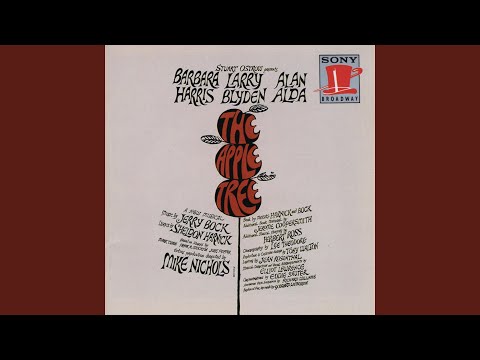
Review and Highlights
Quick summary
- Work: A sequence from Act Two of the 1966 Broadway musical The Apple Tree, adapted from Frank R. Stockton's short story.
- Function: It sets the rules of a public "justice game" and frames the romance as a spectator sport.
- Voices: The Balladeer drives the setup, then the court and crowd energy crashes in.
- Sound: A stage-savvy blend of show-tune storytelling and a sharper, more modern bite for its era, the sort of edge MTI calls a "rock and roll fable."
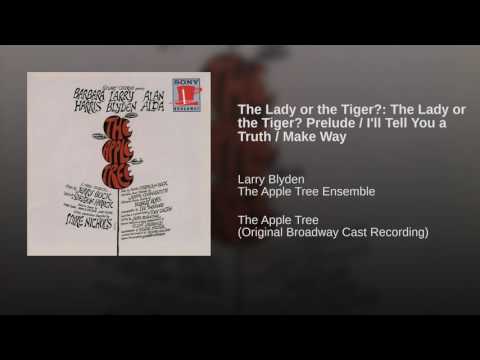
The Apple Tree (1966) - stage musical - Non-diegetic. Act Two opener: the Balladeer introduces the kingdom's rules and the crowd joins the ceremonial arrival. It matters because the show makes jealousy feel like a public ritual, not a private flaw - everyone is complicit.
If you only know The Apple Tree as "that triple-bill Nichols staged," this track is where the evening turns its grin into a smirk. The Balladeer comes in like a streetwise narrator, selling a "truth" that sounds like folk wisdom until you notice how it corners the characters. Then "Make Way" arrives with court pomp that is a little too loud, a little too proud - the kind of celebration that needs victims to keep the party going.
The clever part is pacing: the prelude snaps the lights on, the Balladeer lays down the moral trap, and the chorus floods the space. It is exposition, sure, but it moves like a procession. You feel the arena before you see it. The trick is that the story is famous for its ending, yet the music makes the setup feel inevitable. That is the hook: the audience knows a choice is coming, and the song treats that knowledge like fuel.
Creation History
The number was written by Jerry Bock (music) and Sheldon Harnick (lyrics) as part of the second of three one-act pieces inside The Apple Tree. The original Broadway production opened in October 1966, staged by Mike Nichols, with Barbara Harris, Alan Alda, and Larry Blyden at the center. The cast recording documents the show in performance mode - tight cues, quick tonal shifts, and a narrator who has to land jokes while quietly sharpening the knife.
Song Meaning and Annotations
Plot
This sequence opens Act Two. A Balladeer steps forward and introduces a semi-barbaric kingdom where justice is turned into theatre: a prisoner must choose between two doors, one with a woman and one with a tiger. The court parades in, the rules are made thrilling rather than horrifying, and the story is positioned as entertainment - which is exactly the problem.
Song Meaning
At heart, it is a warning wrapped in pageantry. The Balladeer is not only telling a story; he is putting a price tag on it, the way a carnival barker sells danger as fun. The message is blunt: jealousy and desire do not stay private for long. In this kingdom, they become policy. And once love is forced into a public contest, the "right" choice stops being a moral decision and starts being a survival stunt.
Annotations
I'll tell you a truth.
That opening phrase is doing double duty. It sounds friendly, like advice you could hear at a bar. But it is also a contract: the narrator is telling you, "I warned you," before the characters even enter. The show is loading the dice.
Make way.
Two words, huge implication. The court does not ask, it orders. The crowd response turns authority into a chant, which is how cruelty becomes normal. As stated in MTI's show synopsis, Act Two is staged like a stylized fable, and that is why the slogans hit so hard.
Under the surface, the number is about spectacle: who gets to watch, who gets to choose, and who gets consumed. The rhythm has a forward shove - parade music with a bite - and it pushes the listener into the role of participant. The emotional arc is sneaky: amusement first, then a cold awareness that the laughs are buying time before the blade drops.
Production and instrumentation notes
On the cast recording, the orchestration and chorus staging feel built for quick camera cuts, even though it is theatre. Short figures, brisk entrances, and a narrator line that sits right on top. It is engineered so the plot arrives fast, but the dread arrives faster.
Technical Information (Quick Facts)
- Song: The Lady or the Tiger? (Prelude - I'll Tell You a Truth - Make Way)
- Artist: Original Broadway Cast of The Apple Tree (feature voices include Larry Blyden, with company)
- Featured: The Apple Tree Ensemble
- Composer: Jerry Bock
- Lyricist: Sheldon Harnick
- Producer: (Cast album credit varies by edition; reissues are administered under Sony/Columbia catalog lines)
- Release Date: 1966 (cast recording); recording session documented as October 23, 1966
- Genre: Musical theatre
- Instruments: Orchestra (stage pit arrangement)
- Label: Originally issued as an RCA Victor cast album; later catalog editions appear under Sony/Columbia/Masterworks lines
- Mood: Wry, ceremonial, ominous
- Length: About 4 minutes (varies slightly by edition)
- Track #: Commonly listed as Track 11 on the 1966 cast recording sequence
- Language: English
- Album: The Apple Tree (Original Broadway Cast Recording)
- Music style: Narrated ensemble opener with procession energy
- Poetic meter: Mixed, speech-driven lyric writing typical of a Balladeer setup
Frequently Asked Questions
- Is this a standalone song or part of a longer scene?
- It functions as the Act Two opener sequence: a prelude, a Balladeer setup, and the court entrance number "Make Way" presented as one continuous unit on many releases.
- Who is speaking or singing at the start?
- The Balladeer leads the opening lines, then the ensemble joins as the kingdom's ceremony kicks in.
- What is the "two doors" idea doing dramatically?
- It turns morality into game mechanics. The audience is asked to enjoy the rules before feeling the cost, which is exactly how the story traps you.
- Why does the music feel like a parade?
- Because the kingdom sells violence as civic pride. Procession energy makes the injustice sound respectable, which is the darkest joke in the room.
- How does this connect to the famous Stockton ending?
- It prepares the audience to obsess over choice. By the time the ending arrives later in the act, you are already trained to think in doors, not in people.
- What genre is it aiming for inside the show?
- It is musical-theatre narration with a sharper, pop-leaning edge for 1966. MTI even frames the act as a "rock and roll fable," which matches the attitude.
- Did the 2000s revival treat the number differently?
- The basic structure remains, but revivals often sharpen the narrator's irony and tighten the crowd choreography so the "arena" feels closer to the audience.
- Why does the Balladeer sound both friendly and threatening?
- Because he is the salesman of the story. He invites you in, then watches what you do with the information, the way gossip becomes power.
- Is it comic or serious?
- Both at once. The jokes are part of the mechanism: laughter keeps the ceremony moving while the moral consequences stack up.
- Where does it sit on the cast recording?
- Many editions list it around Track 11, marking the pivot from the Eden act into the Act Two fable.
Awards and Chart Positions
The song itself was not promoted like a pop single, but it sits inside a Broadway title that did serious awards business. The original production of The Apple Tree earned multiple Tony nominations, and Barbara Harris won Best Actress in a Musical for her multi-role performance. According to Playbill archives, the 1966 production is remembered as one of Mike Nichols' sharpest stage successes of the period.
| Year | Award | Category | Result |
|---|---|---|---|
| 1967 | Tony Awards | Best Musical | Nominated |
| 1967 | Tony Awards | Best Actress in a Musical (Barbara Harris) | Won |
| 1967 | Tony Awards | Best Actor in a Musical (Alan Alda) | Nominated |
| 1967 | Tony Awards | Best Composer and Lyricist (Bock and Harnick) | Nominated |
Additional Info
One reason this opener lasts is craft. Bock and Harnick understood that fables work best when they sound like entertainment first. The Balladeer is basically a moral commentator with stage timing, and the chorus is the social pressure that makes "choice" feel compulsory. If you have heard other Bock-Harnick narrators, you can spot the family resemblance: the lyric stays conversational, then suddenly turns the screw.
The act was revived and reinterpreted over time, including major New York stagings in the 2000s, which kept the Act Two framing intact while leaning into the satire. That durability is the point: the story is old, the mechanism is timeless, and the song makes the mechanism sing.
Key Contributors
| Entity | Type | Relationship |
|---|---|---|
| Jerry Bock | Person | Composed the music for The Apple Tree and this Act Two sequence. |
| Sheldon Harnick | Person | Wrote the lyrics for The Apple Tree and this Act Two sequence. |
| Frank R. Stockton | Person | Wrote the short story "The Lady, or the Tiger?" that Act Two adapts. |
| Mike Nichols | Person | Directed the original Broadway production of The Apple Tree. |
| Larry Blyden | Person | Performed as the Balladeer in the original Broadway cast recording. |
| Barbara Harris | Person | Star performer in the original production; Tony-winning lead. |
| Alan Alda | Person | Star performer in the original production; Tony-nominated. |
| The Apple Tree (Original Broadway Cast Recording) | Work | Album document that preserves the Act Two opener as a combined track on many editions. |
| RCA Victor | Organization | Original label associated with historic cast-album issues. |
| MTI (Music Theatre International) | Organization | Licensing publisher that summarizes Act Two as a "rock and roll fable" in show materials. |
Sources
Sources: IBDB production record for The Apple Tree, MTI show page and synopsis, Masterworks Broadway album notes, MusicBrainz release and recording session data, Playbill archives feature, Wikipedia show reference, YouTube topic upload and playlist pages
Music video
Apple Tree, The Lyrics: Song List
- Act 1 The Diary of Adam and Eve
- Eden Prelude
- Here In Eden
- Feelings
- Eve
- Friends
- The Apple Tree (Forbidden Fruit)
- Beautiful, Beautiful World
- It's A Fish
- Go To Sleep, Whatever You Are
- What Makes Me Love Him?
- Act 2 The Lady or the Tiger?
- The Lady Or The Tiger?
- I'll Tell You A Truth
- Make Way
- Forbidden Love (In Gaul)
- The Apple Tree (Reprise)
- I've Got What You Want
- Tiger, Tiger
- Make Way (Reprise)/Which Door?
- Act 3 Passionella
-
Passionella Prelude
- Oh, To Be A Movie Star
- Gorgeous
- (Who, Who, Who, Who,) Who Is She?
- I Know
- Wealth
- You Are Not Real
- Passionella Postlude/Finale