Make Way Lyrics — Apple Tree, The
Make Way Lyrics
Make way!
He comes!
His royal tallness
His highest highness
His way, way-upness
His mountainship!
Make way!
He comes!
King Arik.
Female Chorus:
Make way!
She comes!
Her regal proudness
Her flashy highness
Her self-indulgeness
All:
Her goddessness!
Make way!
She comes!
Princess Barbara.
Song Overview
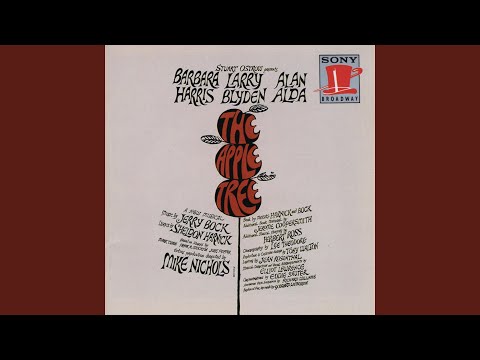
Review and Highlights
Quick summary
- Work: The Apple Tree (Broadway, 1966), Act Two segment adapted from Frank R. Stockton.
- Where it appears: The court entrance beat right after the Balladeer sets the fable in motion.
- Who sings it: King Arik and the King's Court on the recording, with ensemble pressure doing the heavy lifting.
- How listeners meet it: Often bundled inside the combined track "The Lady or the Tiger? Prelude / Ill Tell You a Truth / Make Way" on major platforms.
The Apple Tree (1966) - stage musical - Non-diegetic. Court entrance: the kingdom arrives like a parade, and the story turns into public sport. It matters because the music teaches the crowd (and the audience) how to cheer for power before the moral bill comes due.
"Make Way" is the moment the fable stops being a fireside story and becomes a civic event. The Balladeer has already tipped the theme - jealousy and love as troublemakers - and then the doors fling open on authority. You can hear the show doing stagecraft in real time: bigger steps, brighter brass, sharper accents, the kind of cue that tells a theatre, "eyes front, something important is entering."
What I like here is how the number sells triumph while smuggling in menace. A procession is supposed to feel safe, orderly, even comforting. But this kingdom is built on spectacle, so the march has a tight jaw. The chant is not only celebration, it is permission. The crowd does not merely witness power, it helps power happen.
Creation History
Jerry Bock and Sheldon Harnick wrote The Apple Tree as three linked one-act stories, and Act Two leans into a stylized fable mode. Masterworks Broadway describes the sequence as the Balladeer introducing the dangers of jealousy, then bringing on King Arik and his daughter in a triumphant entrance, which is where "Make Way" does its work. On the 1966 cast recording metadata, the piece is logged as a recording from October 23, 1966, and often grouped with the Act Two prelude and the Balladeer setup.
Song Meaning and Annotations
Plot
Act Two opens in a semi-barbaric kingdom where justice is staged as entertainment. After the Balladeer frames the fable and its emotional fault lines, the royal court enters. "Make Way" underscores that entrance, turning the arrival of the king into a ritual the crowd already knows by heart.
Song Meaning
The number is a study in how crowds are trained. "Make Way" is not subtle about hierarchy: it is literally a command, repeated until it feels like common sense. In a story about two doors and a forced choice, this entrance song is the first door - a lesson in obedience. According to MTI show materials, the Act Two segment is a fable framed by a Balladeer, and "Make Way" signals the moment the fable's machinery starts moving in public.
Annotations
"Make way."
Two syllables, lots of damage. The phrase works because it is practical language, not poetic language. People say it in real life. That familiarity is why it lands like a reflex, and why it is so easy to accept the system that follows.
"Triumphantly."
The staging idea matters: the entrance is designed to feel like a victory lap. Masterworks Broadway explicitly frames this beat as the king and his daughter entering in triumph, and that word choice is telling. Triumph is a mood you can share, which makes the audience and the crowd inside the story feel uncomfortably aligned.
Musically, it is a procession with a hard edge: strong downbeats, massed voices, and clipped phrasing that gives the command a clean outline. The emotional arc is fast but real - excitement first, then the faint realization that excitement is the kingdom's best disguise.
Symbols and pressure points
The symbol here is the pathway itself. When everyone is required to clear space for power, the cleared space becomes a stage. Later, the arena will demand choices from a prisoner. This song shows the culture that makes such demands feel normal.
Technical Information (Quick Facts)
- Song: Make Way
- Artist: Original Broadway Cast of The Apple Tree
- Featured: King's Court (ensemble) and King Arik (as listed on recording guides)
- Composer: Jerry Bock
- Lyricist: Sheldon Harnick
- Music director and conductor: Elliot Lawrence (cast recording credits and discographies)
- Release Date: 1966 (cast recording issue)
- Recording Date: October 23, 1966 (discography entry for the track recording)
- Genre: Musical theatre
- Instruments: Pit orchestra, mixed chorus
- Label: Masterworks Broadway catalog editions (release listings)
- Mood: Ceremonial, bright, sharp-edged
- Length: Commonly heard inside a combined Act Two track around 4 minutes 13 seconds (platform listings vary)
- Track #: Frequently grouped as part of the Act Two combined sequence on digital editions
- Language: English
- Album: The Apple Tree (Original Broadway Cast Recording)
- Music style: Court-procession ensemble number
- Poetic meter: Command-driven, speech-forward theatre prosody
Frequently Asked Questions
- Is "Make Way" a solo or an ensemble number?
- It plays as an ensemble-driven court entrance, credited to the King's Court and King Arik on recording guides, with the crowd sound as the main event.
- Where does it sit in Act Two?
- Right after the Balladeer frames the fable and its warnings, it introduces the king and the public ritual of authority.
- Why is the command so central to the song?
- Because the act is about power under a spotlight. The command trains the room to obey first and think later.
- Is it presented as a standalone track on streaming?
- Sometimes, but many major listings bundle it inside the combined Act Two track with the prelude and the Balladeer setup.
- Who are the composers?
- Jerry Bock wrote the music and Sheldon Harnick wrote the lyrics for The Apple Tree, including this number.
- What is the dramatic job of the entrance?
- It turns the king into an event. That shift matters because the later "two doors" device depends on the crowd accepting spectacle as justice.
- Is the number diegetic inside the story world?
- It functions as story-world ceremony, but it is staged for the theatre audience as a deliberate showcase of the kingdom's values.
- Does the show return to this material later?
- Yes, the Act Two sequence includes a later reprise set that revisits the court-and-arena atmosphere on many albums.
- Why does it feel triumphant if the story is dark?
- That contrast is the point. Triumph is the kingdom's mask, and the music lets the mask shine before the consequences arrive.
Awards and Chart Positions
"Make Way" lives as cast-recording theatre material rather than a chart single, so the milestones attach to the production. The original Broadway run of The Apple Tree earned a Best Musical nomination at the 1967 Tony Awards, and Barbara Harris won Best Actress in a Musical for the show, alongside other major nominations for Bock, Harnick, Mike Nichols, and the design team. According to IBDB, the production's Tony results include the Harris win and multiple nominations tied directly to the 1966-1967 Broadway season.
| Year | Award | Category | Result |
|---|---|---|---|
| 1967 | Tony Awards | Best Musical | Nominated |
| 1967 | Tony Awards | Best Actress in a Musical (Barbara Harris) | Won |
| 1967 | Tony Awards | Best Actor in a Musical (Alan Alda) | Nominated |
| 1967 | Tony Awards | Best Composer and Lyricist (Bock and Harnick) | Nominated |
| 1967 | Tony Awards | Best Choreography (Lee Theodore) | Nominated |
| 1967 | Tony Awards | Best Costume Design (Tony Walton) | Nominated |
Additional Info
A small detail I keep coming back to is how "Make Way" functions like a lighting change. The Balladeer is intimate, almost conspiratorial. Then the entrance hits and the room turns public. That swing is why the Act Two fable lands: it shows you how a private feeling (jealousy) can be turned into policy when the crowd is eager.
One useful bit of listening homework is comparing platform listings. Apple Music and Spotify commonly show the Act Two opener as a combined track that ends with "Make Way," while discography entries like MusicBrainz log "Make Way" as its own recording within the same October 23, 1966 session. It is the same performance world, just different labeling, and it changes how listeners remember where the hook lives.
Key Contributors
| Entity | Type | Relationship |
|---|---|---|
| Jerry Bock | Person | Jerry Bock composed the music for The Apple Tree. |
| Sheldon Harnick | Person | Sheldon Harnick wrote the lyrics for The Apple Tree. |
| Frank R. Stockton | Person | Frank R. Stockton wrote the short story adapted for Act Two. |
| Mike Nichols | Person | Mike Nichols directed the original Broadway production of The Apple Tree. |
| Elliot Lawrence | Person | Elliot Lawrence served as music director and conductor for the cast recording listings. |
| King Arik | Work | King Arik is the ruler character whose court entrance is underscored by this number. |
| Original Broadway Cast of The Apple Tree | Organization | The original cast recorded the 1966 album that preserves the Act Two sequence. |
| MTI (Music Theatre International) | Organization | MTI publishes show materials and the song list that includes this number. |
| IBDB | Organization | IBDB lists Broadway production credits and Tony results for the show. |
Sources
Sources: MTI show page and song list, Masterworks Broadway album notes, MusicBrainz release entry, Overture recording credits, Apple Music album listing, IBDB production record
Music video
Apple Tree, The Lyrics: Song List
- Act 1 The Diary of Adam and Eve
- Eden Prelude
- Here In Eden
- Feelings
- Eve
- Friends
- The Apple Tree (Forbidden Fruit)
- Beautiful, Beautiful World
- It's A Fish
- Go To Sleep, Whatever You Are
- What Makes Me Love Him?
- Act 2 The Lady or the Tiger?
- The Lady Or The Tiger?
- I'll Tell You A Truth
- Make Way
- Forbidden Love (In Gaul)
- The Apple Tree (Reprise)
- I've Got What You Want
- Tiger, Tiger
- Make Way (Reprise)/Which Door?
- Act 3 Passionella
-
Passionella Prelude
- Oh, To Be A Movie Star
- Gorgeous
- (Who, Who, Who, Who,) Who Is She?
- I Know
- Wealth
- You Are Not Real
- Passionella Postlude/Finale