The Apple Tree (Forbidden Fruit) Lyrics — Apple Tree, The
The Apple Tree (Forbidden Fruit) Lyrics
About the rich ripe round red
Rosy apples the call forbidden fruit
What i'm about to say is
Confidential so promise you'll be mute.
Because if every creature in the garden knows
They'll come 'round like hungry buffalos
And in no time there'll be none of those
Precious apples left for you and me.
Now in the average apple
You're accustomed to skin, seeds, flesh and core
But you will find that these are
Special apples that give you something more
Why, every seed contains some information you
Need to speed your education, the
Seeds, indeed, of all creation are here
Why, be foolish my dear
Come with me
To that tree.
With every sweet and juicy
Luscious bite of this not forbidden fruit
You'll see your mind expand and
Your perceptions grow more and more acute
And you can teach him plumbing and philosophy
New techniques for glazing pottery
Wood-craft, first-aid, home economy
Madam, adam will be overjoyed!
When he becomes aware of
Your attainments he'll beam with loving pride
And he will say,
"o, eve, you're
Indispensable! Please, don't leave my side!"
And with your nifty,new-found education, he'll
Relish every conversation,why
You'll be adam's inspiration this way!
Just an apple a day
Wait and see
Come with me
To that tree!
Now!
Song Overview
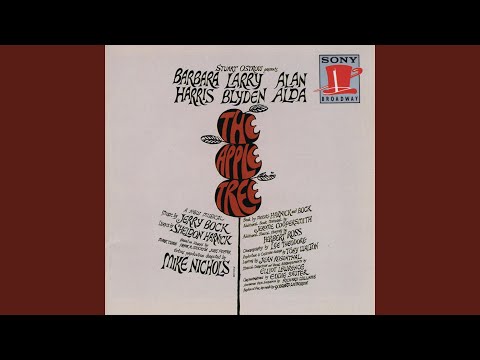
Review and Highlights
Quick summary
- What it is: Snake's persuasion number from The Apple Tree (1966), a sales pitch disguised as friendly advice.
- Who sings it: Larry Blyden as Snake on the original Broadway cast recording.
- Where it appears: Part I, "The Diary of Adam and Eve," right after Eve's pond-reflection moment.
- How it works: Crisp patter, silky charm, and a promise that sounds practical enough to be harmless.
- What changes: Eden stops being a quiet disagreement between two people and becomes an argument about knowledge, control, and appetite.
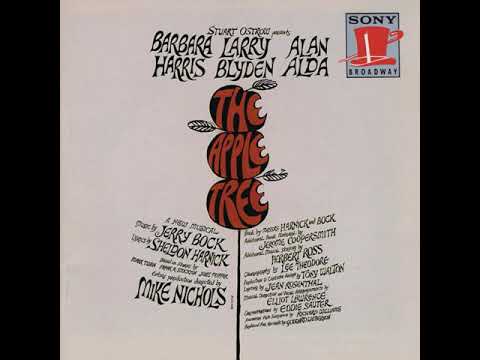
The Apple Tree (1966) - stage musical - diegetic. Eve is alone at the pond when Snake appears and explains, in polished terms, that knowledge is easy to get if she simply eats the apples over the hill. The placement matters because it turns Eve's loneliness into a doorway: she wants conversation, and Snake supplies it with a grin.
The lyric is a masterclass in seduction-by-reassurance. Snake never screams "rebel." He speaks like a tutor who wants to help you pass the exam. The melody keeps moving with a neat, confident bounce, and the orchestration stays light enough that the words can land like a string of reasonable suggestions. Before you know it, the argument has been framed, the risk has been renamed, and the apple is basically a study aid.
It is also funny in that distinctly Bock and Harnick way: clever without feeling smug. Peter Filichia, writing for Masterworks Broadway, points out how Harnick sneaks in wordplay, and this song is full of that spirit. You can hear Snake enjoying his own logic, which makes the moment entertaining even as it quietly tightens the plot's noose.
- Key takeaway: The song sells knowledge as self-improvement, not sin.
- Key takeaway: Snake's charm is musical: rhythm and clarity make the persuasion feel safe.
- Key takeaway: The number is the hinge into "Beautiful, Beautiful World," where Adam feels the change instantly.
Creation History
The Apple Tree opened on Broadway on October 18, 1966 at the Shubert Theatre, directed by Mike Nichols, with music by Jerry Bock and lyrics by Sheldon Harnick. In the licensed synopsis, Snake enters dressed in a tuxedo and tempts Eve with the "forbidden fruit" idea as a shortcut to education. The cast recording credits the performance to Larry Blyden, and the track is commonly listed at 2:38 in digital catalogs, keeping the scene sharp and forward-driving.
Song Meaning and Annotations
Plot
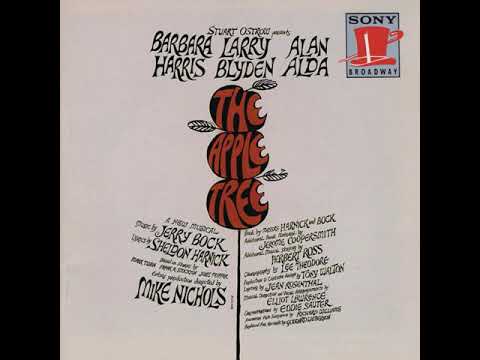
In the Eden playlet, Adam wants order and solitude; Eve wants detail, naming, and response. After an argument, Eve goes to the pond, trying to befriend her reflection. Snake appears and offers a different kind of companionship: conversation that comes with authority. He claims the apples are not truly forbidden and frames the act of eating as the obvious next step toward knowledge. Eve eats, and the world shifts, cueing Adam's heartbreak in the following number.
Song Meaning
The meaning is not "temptation is exciting." It is "temptation is persuasive when it pretends to be helpful." Snake reframes the rule as a misunderstanding and presents knowledge as something Eve deserves. The mood stays bright and chatty, which is the point: the danger is wrapped in manners. Underneath, the song is about language itself - how the right words can turn a boundary into a suggestion.
Annotations
-
"Listen closely, let me fill you in about the rich, ripe, round, red, rosy apples they call forbidden fruit."
A classic patter opening: the alliteration is the hook, and the sensory detail is the trap. Snake makes the apple feel concrete and urgent, like you can taste it before you decide.
-
"Not forbidden fruit."
This is the rhetorical pivot. Snake does not argue that rules are bad. He argues that this rule is mislabeled. Once the label changes, the act feels different.
-
"Madam, Adam will be overjoyed."
Filichia notes the lyric's playful reference to a well-known palindrome, and the line works onstage because it sounds flattering and logical at the same time. Snake promises harmony, which is exactly what Eve wants after the latest fight.
Production and musical feel
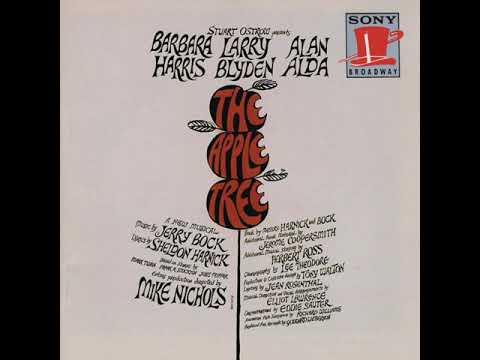
The number sits in a sweet spot between character patter and lyrical persuasion. The accompaniment stays nimble so the text can sparkle, and the vocal line leans on crisp diction rather than sustained power. Masterworks Broadway highlights Eddie Sauter's orchestrations as a key part of what makes the show shift styles across its three playlets, and this song benefits from that precision: light touch, clear colors, and room for words to do the heavy lifting.
Metaphors and symbols
The apple is obvious, but the sharper symbol is "education." Snake treats knowledge like a consumer good: available, portable, and worth bending rules for. Eve is not chasing rebellion. She is chasing competence and respect. The song makes that desire feel reasonable, which is why the moment lands with a sting right after the laughter.
Technical Information (Quick Facts)
- Song: The Apple Tree (Forbidden Fruit)
- Artist: Larry Blyden
- Featured: The Apple Tree Orchestra
- Composer: Jerry Bock
- Producer: Thomas Z. Shepard (cast recording)
- Release Date: January 1, 1966 (common digital listing date for the cast album)
- Genre: Musical theater, show tune
- Instruments: Orchestra, lead vocal
- Label: Masterworks Broadway (major reissue listings)
- Mood: Slick, teasing, persuasive
- Length: 2:38 (common listing)
- Track #: 6 (common cast album sequencing)
- Language: English
- Album (if any): The Apple Tree (Original Broadway Cast Recording)
- Music style: Character patter with a tutor-like cadence
- Poetic meter: Mixed stress, speech-led phrasing
Frequently Asked Questions
- Who sings the song in the original cast recording?
- Larry Blyden performs it as Snake on the original Broadway cast album listings.
- Where does it happen in the Eden story?
- Right after "Friends," when Eve is at the pond and is ready for someone to talk to.
- What is Snake promising, exactly?
- Education and clarity, framed as something Eve can get easily by eating the apples over the hill.
- Is Snake threatening Eve?
- No. The persuasion is friendly and polished, which is why it lands: the danger is wrapped in reassurance.
- Why does the lyric focus so much on describing the apples?
- Because sensory language makes the choice feel immediate and practical, not abstract and moral.
- Does the show revisit the motif later?
- Yes. A reprise of the "Forbidden Fruit" idea appears in the second playlet, "The Lady or the Tiger?", reinforcing the show-wide theme of desire and consequence.
- Is it commonly used for auditions?
- Yes, especially for tenor performers who want a text-driven character piece with comic persuasion and clean pacing.
- What makes the song funny?
- Snake sounds like a courteous lecturer while selling a bad idea, and the lyric slips in clever wordplay that undercuts the seriousness of the moment.
- How long is the track on most streaming listings?
- Common catalog listings place it at 2:38.
Awards and Chart Positions
There is no reliable evidence that the song was released as a standalone pop single with a documented chart run. Its awards profile comes from the Broadway production. In the 1967 Tony Awards cycle, The Apple Tree was nominated for Best Musical, and Barbara Harris won Best Actress in a Musical. The show also received nominations for direction (Mike Nichols), choreography (Lee Theodore), costume design (Tony Walton), score (Bock and Harnick), and Alan Alda was nominated for Best Actor in a Musical.
| Year | Award | Category | Nominee | Result |
|---|---|---|---|---|
| 1967 | Tony Awards | Best Musical | The Apple Tree | Nominated |
| 1967 | Tony Awards | Best Actress in a Musical | Barbara Harris | Won |
| 1967 | Tony Awards | Best Actor in a Musical | Alan Alda | Nominated |
| 1967 | Tony Awards | Best Direction of a Musical | Mike Nichols | Nominated |
| 1967 | Tony Awards | Best Choreography | Lee Theodore | Nominated |
| 1967 | Tony Awards | Best Costume Design | Tony Walton | Nominated |
| 1967 | Tony Awards | Best Composer and Lyricist | Jerry Bock and Sheldon Harnick | Nominated |
Additional Info
The song has a double life: it is a scene in Eden, and it is also a template for later trouble in the show. The second playlet uses a reprise of the "Forbidden Fruit" motif, which tells you what the writers are doing across the whole evening: different stories, same human habit of wanting what comes with a warning label.
There is also a craft detail I keep coming back to. In a Masterworks Broadway blog piece about Harnick's rhyming puzzles, Filichia notes how the lyricist engineered songs around specific rhyme needs and jokes, including the "Madam, Adam will be overjoyed" line. That is a small insight, but it changes how you hear the number: Snake is not only persuasive, he is amused, and that amusement makes him sound even more confident.
Key Contributors
| Entity | Type | Relationship (S-V-O) |
|---|---|---|
| Larry Blyden | Person | Larry Blyden performed the song as Snake on the original cast recording. |
| Jerry Bock | Person | Jerry Bock composed the music. |
| Sheldon Harnick | Person | Sheldon Harnick wrote the lyrics. |
| Mike Nichols | Person | Mike Nichols directed the original Broadway production. |
| Thomas Z. Shepard | Person | Thomas Z. Shepard produced the cast recording. |
| Elliot Lawrence | Person | Elliot Lawrence conducted the cast recording on major reissue listings. |
| Eddie Sauter | Person | Eddie Sauter created orchestrations highlighted in commentary about the score. |
| Shubert Theatre | Venue | The Shubert Theatre hosted the Broadway opening in 1966. |
| Music Theatre International | Organization | Music Theatre International publishes synopsis details for the Eden playlet. |
Sources
Sources: Masterworks Broadway album page and blog, Musicnotes digital sheet music listing, Music Theatre International synopsis, Apple Music track page, Amazon Music tracklist, Tony Awards database, MTI awards list
How to Sing The Apple Tree (Forbidden Fruit)
Sheet-music listings commonly show an original published key of A minor, a marked tempo of q = 130, and a vocal range of B3 to E5. That points you toward a tenor character approach: clean rhythm, quick consonants, and a confident through-line.
- Tempo: Lock the patter at 110 first, then climb to 130 without losing clarity on repeated consonants.
- Diction: Treat the alliteration like percussion. Crisp "r" and "d" sounds make the apple description sparkle.
- Breathing: Plan breaths by clauses, not by measures. This song punishes random gasps.
- Flow and rhythm: Keep the line speech-led. If you smooth everything into legato, the persuasion loses its smile.
- Accents: Punch the reframe words: "not," "easy," "overjoyed." Those are the moments Snake turns a rule into a suggestion.
- Character posture: Play it like a polite lecturer. The power is in being calm while selling a risky idea.
- Ensemble and accompaniment: If you have a pianist, ask for crisp articulation at the marked tempo so you can ride the groove rather than fight it.
- Pitfalls: Do not rush the biggest lists. The joke is in the precision, not the speed.
Music video
Apple Tree, The Lyrics: Song List
- Act 1 The Diary of Adam and Eve
- Eden Prelude
- Here In Eden
- Feelings
- Eve
- Friends
- The Apple Tree (Forbidden Fruit)
- Beautiful, Beautiful World
- It's A Fish
- Go To Sleep, Whatever You Are
- What Makes Me Love Him?
- Act 2 The Lady or the Tiger?
- The Lady Or The Tiger?
- I'll Tell You A Truth
- Make Way
- Forbidden Love (In Gaul)
- The Apple Tree (Reprise)
- I've Got What You Want
- Tiger, Tiger
- Make Way (Reprise)/Which Door?
- Act 3 Passionella
-
Passionella Prelude
- Oh, To Be A Movie Star
- Gorgeous
- (Who, Who, Who, Who,) Who Is She?
- I Know
- Wealth
- You Are Not Real
- Passionella Postlude/Finale