Beautiful, Beautiful World Lyrics — Apple Tree, The
Beautiful, Beautiful World Lyrics
Ev 'ry color, ev'ry shape and size;
Moss and pebbles and a host of wonders,
Gleaming ev 'ry where I aim my eyes.
Soif ever I'm attacked by boredom,
I'll just open up my eyes and see
This diversified, curious, fascinating, bountiful,
Beautiful, beautiful world.
I hear chattering and I hear chirping,
Whistling, murmuring and horks and snorts;
When I simply take the time to listen.
I hear music of a thousand sorts.
So if ever Iwould rest my eyes,
My ears can easily describe to me
This diversified, curious, fascinating bountiful,
Beautiful, beautiful world.
Stlll it's possible a day may come,
When momentarily the world wears thin;
IfI weary of the world outside me,
I can always take a good look in.
For along with ev'ry cloud and cobweb.
I'm emphatic'ly a member of
This diversified, curious, fascinating bountiful,
Beautiful world, I love you.
World, thank you very much for all I see, hear, taste and touch;
Plus ev'ry whiff I sniff. *(Snift)*
It's A Fish
Go To Sleep, Whatever You Are
Song Overview
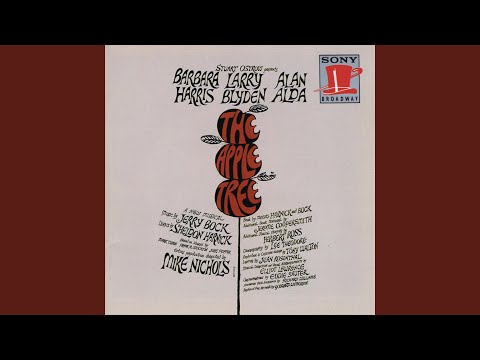
Review and Highlights
Quick summary
- What it is: Adam's post-fall reality-check song from The Apple Tree (1966), where Eden turns from catalog to consequence.
- Who sings it: Alan Alda as Adam on the original Broadway cast recording.
- Where it appears: Part I, "The Diary of Adam and Eve," after the apple decision changes the rules of the garden.
- How it plays: A bitterly funny pivot: the title phrase keeps its shine, but the scene underneath loses it.
- Why it sticks: The song captures a human moment that feels familiar: noticing the world is harsher than the story you were telling yourself.
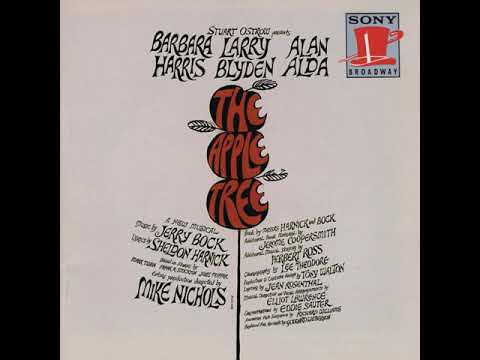
The Apple Tree (1966) - stage musical - diegetic. Adam is bathing when he realizes paradise has shifted: the animals are no longer harmless and the garden no longer behaves. The beat matters because it turns the Eden section into a domestic tragedy played at cartoon speed - still witty, but suddenly sharp.
The craft here is the whiplash. A few minutes earlier, the score is all charm and persuasion. Then this song arrives like cold water, and not just because Adam is literally in the bath. The lyric keeps the bright language of admiration while the scene contradicts it, which creates that uneasy laugh you get when you recognize denial in real time.
What I hear is Adam trying to keep control by narrating. He names what he sees the way he did at the start of the story, but now naming does not fix anything. That is the punch. According to Masterworks Broadway's production notes, the number is the moment his "perfect world" changes and Eden ends, and you can feel the show tightening its screws while still keeping a light step.
- Key takeaway: The song is optimism spoken too late, which is why it stings.
- Key takeaway: The vocal line favors text clarity over display, so acting choices do the heavy lifting.
- Key takeaway: This is the hinge into life outside Eden: need replaces novelty.
Creation History
The Apple Tree opened on Broadway on October 18, 1966 at the Shubert Theatre, directed by Mike Nichols, with music by Jerry Bock and lyrics by Sheldon Harnick. The cast recording was made in studio on October 23, 1966. Ovrtur notes an unusual detail: the recording preserves a longer version of this number than what audiences were hearing by the time the show opened, suggesting the team chose to restore an earlier draft for the album.
Song Meaning and Annotations
Plot
In the Eden playlet, Adam begins content and solitary, naming creation like a proud curator. Eve arrives, hungry for conversation and contact. Snake reframes the apple as a route to knowledge, Eve eats, and the environment changes. This song lands right as Adam discovers the shift: the natural world has teeth now, and the old calm is gone.
Song Meaning
The meaning is a portrait of lost innocence without speeches about sin. Adam is not delivering doctrine. He is noticing. The title phrase becomes ironic because the world is still beautiful, yet no longer safe or simple. Under the comedy, the number argues that knowledge can widen perception while also shrinking comfort. That is a grown-up idea hidden inside a short theatrical scene.
Annotations
-
"Beautiful, beautiful world."
The repetition reads like self-hypnosis. He is trying to keep the earlier Eden story alive with his voice, even as the evidence piles up against it.
-
"I see animals and birds and flowers, ev'ry color, ev'ry shape and size."
A catalog list that echoes Adam's opening behavior. The twist is that cataloging no longer equals mastery. The world is changing faster than his labels.
-
"Adam's perfect world changes while he's bathing."
Masterworks Broadway summarizes the stage action this bluntly, and the bluntness is the joke: a cosmic shift staged like a slapstick interruption.
Rhythm and emotional arc
The tempo sits in a comfortable mid-pace that lets the text read clearly, and that is the trap: a calm groove delivering alarming information. When performed well, the number feels like a man walking around with a smile while his assumptions crumble behind his eyes.
Touchpoints and covers
The song has traveled outside theater. In 1966, The New Christy Minstrels released a version featuring Kim Carnes, treating it as a pop-folk single rather than a stage moment. That cover highlights how adaptable the melody is when the irony is removed and the lyric becomes plain celebration.
Technical Information (Quick Facts)
- Song: Beautiful, Beautiful World
- Artist: Alan Alda
- Featured: The Apple Tree Orchestra
- Composer: Jerry Bock
- Producer: Thomas Z. Shepard (cast recording)
- Release Date: 1966 (original cast album; many digital services display January 1, 1966)
- Genre: Musical theater, show tune
- Instruments: Orchestra, lead vocal
- Label: Masterworks Broadway (major reissue listings)
- Mood: Bright on the surface, unsettled underneath
- Length: 2:14 (common listing)
- Track #: 7 (common cast album sequencing)
- Language: English
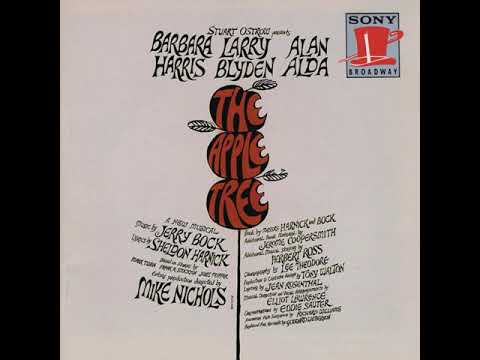
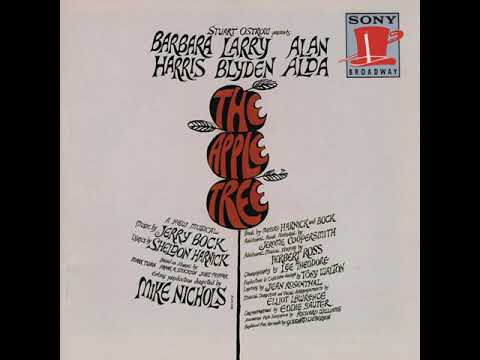
- Album (if any): The Apple Tree (Original Broadway Cast Recording)
- Music style: Actor-forward scene song with a steady mid-tempo pulse
- Poetic meter: Mixed stress, list-driven phrasing
Frequently Asked Questions
- Who sings the number in the original cast recording?
- Alan Alda performs it as Adam on the cast album listings.
- What is happening during the song?
- Adam discovers the garden has changed, with nature turning violent, and the comfort of Eden slipping away.
- Is it meant to be funny or sad?
- Both. The scene is staged with comic timing, but the message is loss: the old rules are gone.
- Why does the lyric sound so cheerful?
- That cheer is the point. Adam is trying to keep the earlier story alive by repeating it, even as the scene contradicts him.
- How long is it on most track listings?
- Common catalog listings place it at 2:14.
- Was the cast recording made during the Broadway run?
- Yes. Ovrtur lists a studio recording date of October 23, 1966, shortly after the show opened.
- Are there notable covers?
- Yes. The New Christy Minstrels recorded a 1966 version featuring Kim Carnes, and later reissues of their album include it as a bonus track.
- Does the cast recording match the stage version exactly?
- Not fully. Ovrtur notes the album includes a longer version than what was being performed by opening time.
Awards and Chart Positions
There is no reliable evidence of a standalone chart run for this stage recording as a single. The best-documented awards story is the show itself. The original Broadway production received seven Tony nominations in 1967, with Barbara Harris winning Best Actress in a Musical. As stated in Playbill's archival feature, the production faced fierce competition that season, but the nominations underlined how strongly the score and performances landed.
| Year | Award | Category | Item | Result |
|---|---|---|---|---|
| 1967 | Tony Awards | Best Musical | The Apple Tree | Nominated |
| 1967 | Tony Awards | Best Actor in a Musical | Alan Alda | Nominated |
| 1967 | Tony Awards | Best Actress in a Musical | Barbara Harris | Won |
| 1967 | Tony Awards | Best Composer and Lyricist | Jerry Bock and Sheldon Harnick | Nominated |
| 1967 | Tony Awards | Best Direction of a Musical | Mike Nichols | Nominated |
| 1967 | Tony Awards | Best Choreography | Lee Theodore | Nominated |
| 1967 | Tony Awards | Best Costume Design | Tony Walton | Nominated |
Additional Info
There is a neat record-collector detail that changes how you hear the track. Ovrtur points out the cast album preserves a longer version than what was in the running show by opening time. That means the recording is not just documentation, it is a choice - a snapshot of an earlier dramatic pace the creators still valued.
The pop-folk cover history is also telling. The New Christy Minstrels treated the song like a clean, bright single, which suggests the melody can survive without the Eden context. Onstage, the line "beautiful world" is complicated by what Adam sees. Offstage, it becomes a postcard again. Two readings, same notes, totally different weather.
Key Contributors
| Entity | Type | Relationship (S-V-O) |
|---|---|---|
| Alan Alda | Person | Alan Alda performed the song as Adam on the original cast recording. |
| Jerry Bock | Person | Jerry Bock composed the music. |
| Sheldon Harnick | Person | Sheldon Harnick wrote the lyrics. |
| Mike Nichols | Person | Mike Nichols directed the original Broadway production. |
| Thomas Z. Shepard | Person | Thomas Z. Shepard produced the cast recording. |
| Elliot Lawrence | Person | Elliot Lawrence conducted the cast recording in major reissue credits. |
| The New Christy Minstrels | Organization | The New Christy Minstrels recorded a 1966 cover featuring Kim Carnes. |
| Shubert Theatre | Venue | The Shubert Theatre hosted the Broadway opening in 1966. |
Sources
Sources: Masterworks Broadway production notes, Ovrtur recording history, Musicnotes digital sheet music, IBDB awards listing, Tony Awards nominees database, Playbill Archives feature, Discogs cast album tracklist, YouTube Topic track upload, Spotify track page, The New Christy Minstrels discography entry
How to Sing Beautiful, Beautiful World
Published sheet-music listings describe a moderate tempo with a metronome mark of q = 116, an original key of Bb major, and a listed vocal range of C4 to Eb5. That points to an actor-singer approach: conversational, steady, and clear.
- Tempo: Start at 96 so the text sits cleanly, then move toward 116 without tightening your jaw.
- Diction: Treat the catalog lines like spoken storytelling. Crisp consonants keep the lists readable.
- Breathing: Breathe by images, not by measures. Each new object you name is a new thought.
- Flow and rhythm: Keep the beat even. The scene is the chaos; the voice is the attempted calm.
- Accents: Lightly emphasize the title phrase each time, but shift the intent: wonder at first, then doubt.
- Style: Avoid operatic weight. The humor comes from understatement and timing.
- Ensemble and piano: Ask for a clean, un-rubato accompaniment so you can land the words like a diary entry.
- Pitfalls: Do not rush the lists. If you speed up, the character starts to sound delighted when he should sound startled.
Music video
Apple Tree, The Lyrics: Song List
- Act 1 The Diary of Adam and Eve
- Eden Prelude
- Here In Eden
- Feelings
- Eve
- Friends
- The Apple Tree (Forbidden Fruit)
- Beautiful, Beautiful World
- It's A Fish
- Go To Sleep, Whatever You Are
- What Makes Me Love Him?
- Act 2 The Lady or the Tiger?
- The Lady Or The Tiger?
- I'll Tell You A Truth
- Make Way
- Forbidden Love (In Gaul)
- The Apple Tree (Reprise)
- I've Got What You Want
- Tiger, Tiger
- Make Way (Reprise)/Which Door?
- Act 3 Passionella
-
Passionella Prelude
- Oh, To Be A Movie Star
- Gorgeous
- (Who, Who, Who, Who,) Who Is She?
- I Know
- Wealth
- You Are Not Real
- Passionella Postlude/Finale