Oh, To Be A Movie Star Lyrics — Apple Tree, The
Oh, To Be A Movie Star Lyrics
I think of chimneys as ports in a storm.
What warm and cozy, or not.
I would give up alot.
If I could only be a movie star.
A movie star.
Ooh to be a movie star.
A beautiful, glamorous, movie star.
No one imagines, I harbor this hope.
People who know me,
Keep sending me soap.
Lacy soot stains and tar,
They'd see how wrong they are.
If I could only be a movie star.
A movie star.
Ooh to be a movie star.
A beautiful, glamorous, radient, ravishing, movie star.
I'd be so grateful, that after premiers.
I'd sweep out the theatre and fold up the chairs.
I would know what it meant, to be truly content.
If I could only be a movie star.
Prospects look dismal, how can I go on?
My piggy is empty, my Kleenex is gone.
If I starve here alone,
Let them carve on my stone.
She never got to be a movie star.
I'm not asking much.
It's not as if I wanna be a rich, glamorous, beautiful, movie star.
Or even a well liked beautiful, glamorous movie star.
I just wanna be a beautiful, glamorous movie star.
Gloria Jones same.
A beautiful, glamorous, radient, ravishing, (achoo) movie star.
Song Overview
Review and Highlights
Quick summary
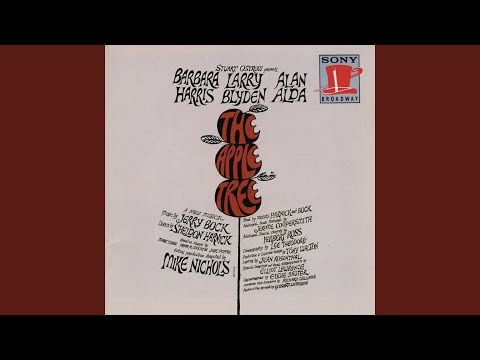
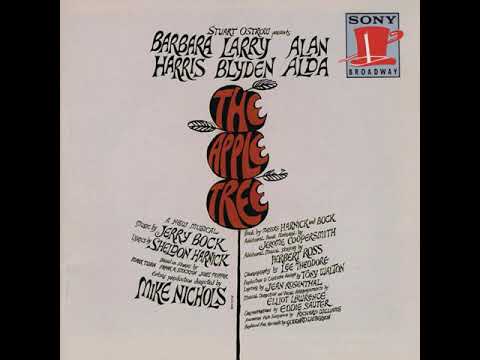
- Work: The Apple Tree (Broadway, 1966), the third playlet "Passionella".
- Where it appears: After the short "Passionella Prelude", when Ella is alone with her TV dreams.
- Who sings it: Ella the chimney sweep (Barbara Harris on the original cast recording).
- What it does: Turns a private fantasy into a character map: ambition, loneliness, and the soft ache of wanting to be seen.
The Apple Tree (1966) - stage musical - Non-diegetic. Ella sings directly to her own imagination while watching television and picturing fame as a way out of drudgery. It matters because the show stops winking at the audience and lets a character admit what she wants, plainly, with no safety net.
This is the number that makes "Passionella" click. The melody has that Bock-Harnick ease, but the lyric is not selling glitter, it is selling need. Ella is not asking the world for romance or status. She is asking for a life where the mirror does not feel like an enemy and the room does not feel like a locked closet.
According to Masterworks Broadway notes on the cast album, Ella is stuck sweeping chimneys by day and spending her nights staring at the TV, dreaming of glamour in this song. That detail is important because it frames the fantasy as a job application, not a daydream: she is rehearsing who she might become if anyone ever opened the door.
Creation History
Jerry Bock and Sheldon Harnick wrote The Apple Tree as three distinct playlets, and "Passionella" leans into modern satire: celebrity as salvation, media as a wish machine. The cast recording documents the song as part of the October 23, 1966 session with Elliot Lawrence conducting, with Barbara Harris carrying the scene on voice, timing, and that particular Harris ability to sound hopeful and cornered in the same breath.
Song Meaning and Annotations
Plot
In the "Passionella" playlet, Ella is a chimney sweep with a bleak day job and a nightly ritual: she watches television and imagines a life of fame. This song is her confession and her pitch. Soon after, the little pleasures in her room fail and her wish becomes more than imagination, pushing her toward the "Passionella" transformation that follows.
Song Meaning
The song is about escape, but not the glamorous kind. It is about visibility. Ella wants a world where she does not have to apologize for wanting something beautiful. There is a faint sting in the humor: she is chasing a fantasy that looks shallow from the outside, yet the lyric keeps insisting it is a form of survival. According to a Masterworks Broadway blog piece quoting the show text, Ella argues she is not asking to be rich or well-liked, she wants to be glamorous "for its own sake", which reframes vanity as hunger.
Annotations
"I just want to be a beautiful glamorous movie star - for its own sake."
That line is the heart of the number. It is not about money, it is about identity. Ella is admitting she wants a self she can live inside. The bluntness is what makes it sting: she is done pretending that wanting beauty is a moral flaw.
"Oh, to be a movie star."
The hook is simple, almost childlike. In context, it feels like a mantra she repeats until it becomes real. The melody lets it float, but the scene around it is cramped, which makes the longing feel bigger than the room can hold.
Style notes
Musically, it plays like a character ballad with showbiz perfume: a gentle line that can bloom into brighter phrases when the fantasy takes over. The emotional arc is steady rather than flashy, which is why it works. Ella is not performing for applause here, she is performing to stay awake.
Technical Information (Quick Facts)
- Song: Oh, To Be a Movie Star
- Artist: Original Broadway Cast of The Apple Tree
- Featured: Barbara Harris
- Composer: Jerry Bock
- Lyricist: Sheldon Harnick
- Music director and conductor: Elliot Lawrence
- Release Date: January 1, 1966 (common digital catalog date for the cast recording)
- Recording Date: October 23, 1966
- Genre: Musical theatre
- Instruments: Pit orchestra, solo vocal
- Label: Masterworks Broadway (catalog editions)
- Mood: Wistful, aspirational, slightly bruised
- Length: About 4:08 to 4:10 (varies by catalog entry)
- Track #: 18 (common cast recording sequence listings)
- Language: English
- Album: The Apple Tree (Original Broadway Cast Recording)
- Music style: Character ballad in the "Passionella" playlet
- Poetic meter: Mixed, speech-led theatre prosody
Frequently Asked Questions
- Which part of the musical uses this song?
- It appears in the third playlet, "Passionella", right after the short prelude, when Ella is alone with her television dreams.
- Who sings it on the 1966 cast recording?
- Barbara Harris sings it as Ella, the chimney sweep.
- Is Ella chasing money or fame?
- The lyric makes it more personal than that. She wants glamour as a new skin, a way to stop feeling invisible.
- Does the number set up later plot events?
- Yes. It establishes the wish that powers the "Passionella" transformation, when fantasy stops being private.
- Why is television so important in this scene?
- It is the doorway Ella can access from a small room. The TV glow is her stage, her mirror, and her exit sign.
- Was this performed outside the show, historically?
- Yes. According to Backstage.com, Barbara Harris performed this song (paired with "Gorgeous") on the Tony Awards broadcast in 1967.
- Is this a pop single with chart history?
- No. It is musical theatre repertoire whose legacy lives through cast recordings, revivals, and performance tradition.
- What kind of performer does the song suit?
- It suits singers who can act through a line and shift from gentle yearning to brighter fantasy without forcing volume.
- Why does the song feel both sweet and uneasy?
- Because the wish is sincere, but the world around it is harsh. The sweetness is a coping skill.
Awards and Chart Positions
This is cast-album theatre repertoire rather than a chart single, so the headline moments are tied to the show and its showcases. According to Backstage.com, Barbara Harris performed "Oh, To Be a Movie Star" and "Gorgeous" on the 1967 Tony Awards broadcast, and she won Best Actress in a Musical that year for The Apple Tree.
| Year | Award Event | Work | Note |
|---|---|---|---|
| 1967 | Tony Awards broadcast performance | The Apple Tree | Harris performed a medley including this song (reported by Backstage.com). |
| 1967 | Tony Awards | The Apple Tree | Barbara Harris won Best Actress in a Musical (show milestone connected to this repertoire). |
Additional Info
Masterworks Broadway has long treated this song as a calling card for Harris. In a piece about Shubert Theatre recordings, the label points listeners straight to this number as one of the tracks that captures her particular mix of bite and vulnerability. That tracks with how the scene functions: Ella is dreaming, but she is also arguing for her own dignity, one sentence at a time.
I also like how the song quietly updates what a theatre "wish" can be. It is not a grand anthem. It is a person in a small room, saying the unvarnished thing. That scale makes the later "Passionella" twist feel less like a gag and more like a warning about what happens when the world sells you a fantasy that cannot love you back.
Key Contributors
| Entity | Type | Relationship |
|---|---|---|
| Jerry Bock | Person | Jerry Bock composed the music for the song in the "Passionella" playlet. |
| Sheldon Harnick | Person | Sheldon Harnick wrote the lyric for the song. |
| Barbara Harris | Person | Barbara Harris performed Ella and recorded the song for the 1966 cast album. |
| Elliot Lawrence | Person | Elliot Lawrence served as music director and conductor for the cast recording session. |
| Masterworks Broadway | Organization | Masterworks Broadway publishes album notes and official audio uploads for the cast recording catalog. |
| MusicBrainz | Organization | MusicBrainz documents track metadata including performer credit, track number, and recording date. |
| Backstage | Organization | Backstage.com published a retrospective noting Harris performed this song on the 1967 Tony broadcast. |
How to Sing Oh, To Be a Movie Star
Licensed accompaniment listings place the published key at F major and label the voice type as soprano, with the song living comfortably in a storytelling zone rather than a constant high-wire. The trick is to sing it like someone trying not to sound desperate, even when the thought underneath is desperate.
- Tempo and breath: Keep the tempo steady and breathe low. A slow inhale before key wish-lines helps the phrases feel intentional, not gasped.
- Diction: Put the consonants forward, especially on words tied to fantasy and identity. The story lives in the text.
- Vocal color: Start with an everyday speaking tone, then let the sound brighten when the fantasy swells. The contrast tells the scene.
- Dynamic control: Do not push volume to create drama. Let intensity come from clarity and timing, like a private confession that accidentally turns bold.
- Act the room: Imagine the TV glow and the small space around it. Keep gestures contained. The restraint makes the wish feel larger.
- Phrase endings: Avoid dropping the ends. Hold the last consonant just long enough to suggest she is convincing herself.
- Common pitfalls: Do not play it as satire only. If it becomes a joke, the later "Passionella" turn loses its sting.
Sources
Sources: Masterworks Broadway album notes (The Apple Tree - 1966), Masterworks Broadway blog (Or Are You in the Middle When It Comes to Lines), Masterworks Broadway blog (Heres Love to the Shubert Theatre), MusicBrainz release entry (The Apple Tree - 1966 OBC), Apple Music track metadata, Presto Music track timings, CS Music accompaniment listing, Backstage.com article on memorable Tony performances, YouTube (auto-generated audio upload)
Music video
Apple Tree, The Lyrics: Song List
- Act 1 The Diary of Adam and Eve
- Eden Prelude
- Here In Eden
- Feelings
- Eve
- Friends
- The Apple Tree (Forbidden Fruit)
- Beautiful, Beautiful World
- It's A Fish
- Go To Sleep, Whatever You Are
- What Makes Me Love Him?
- Act 2 The Lady or the Tiger?
- The Lady Or The Tiger?
- I'll Tell You A Truth
- Make Way
- Forbidden Love (In Gaul)
- The Apple Tree (Reprise)
- I've Got What You Want
- Tiger, Tiger
- Make Way (Reprise)/Which Door?
- Act 3 Passionella
-
Passionella Prelude
- Oh, To Be A Movie Star
- Gorgeous
- (Who, Who, Who, Who,) Who Is She?
- I Know
- Wealth
- You Are Not Real
- Passionella Postlude/Finale