Louise Lyrics — A Day in Hollywood / A Night in the Ukraine
Louise Lyrics
To be in love with you.
Beautiful! You're so beautiful,
You haunt me all day through.
Every little breeze seems to whisper "Louise."
Birds in the trees seem to twitter "Louise."
Each little rose
Tells me it knows I love you, love you.
Every little beat that I feel in my heart,
Seems to repeat, What I felt from the start,
Each little sigh
Tells me that I adore you, Louise.
Just to see and hear you
Brings joy I never knew.
But to be so near you,
Thrills me through and through.
Anyone can see why I wanted your kiss,
It had to be But the wonder is this:
Can it be true,
Someone like you could love me, Louise?
Innocent! You're so innocent
And gentle as a dove.
Heaven sent! You were heaven sent,
An angel from above.
Every little breeze seems to whisper "Louise."
Birds in the trees seem to twitter "Louise."
Each little rose
Tells me it knows I love you, love you.
Every little beat that I feel in my heart,
Seems to repeat, What I felt from the start,
Each little sigh
Tells me that I adore you, Louise.
Often when I'm gloomy
And in my lonely room.
Thoughts of you come to me,
Like a sweet perfume.
Anyone can see why I wanted your kiss,
It had to be But the wonder is this:
Can it be true,
Someone like you could love me, Louise?
Song Overview
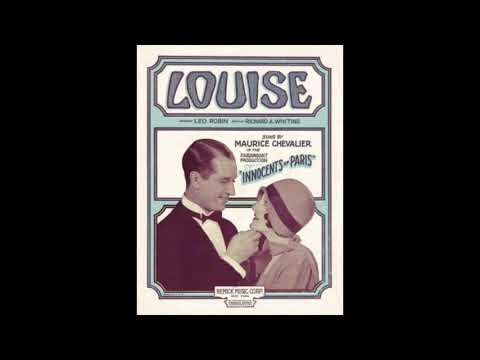
"Louise" is the moment in A Day in Hollywood / A Night in the Ukraine when the Richard A. Whiting medley suddenly turns intimate. The show has been flipping postcards of the movie era, then this tune steps forward and asks for something closer to a serenade. In the Broadway staging list, it is not treated as a solo shrine - it is a shared bit of stage craft, with multiple performers and a whistling effect that makes the theatre feel like a backlot at dusk.
Review and Highlights
Quick summary
- Where it appears: Act 1, inside the Richard A. Whiting medley, following "Double Trouble" and preceding "Sleepy Time Gal" in common production lists.
- Writers: music by Richard A. Whiting; lyrics by Leo Robin.
- Who features it on Broadway lists: Stephen James, Priscilla Lopez, David Garrison, and Kate Draper, with whistling called out as a texture.
- What kind of number: a romantic standard presented as a short medley vignette rather than a full stop.
- What it does for Act 1: it softens the montage, then hands momentum back to the medley engine before sentiment can linger.
The Whiting medley in this show is a moving sidewalk, and "Louise" is one of the spots where you briefly step off to look at the view. The song is not complicated, which is part of its strength. It offers a single-minded devotion, wrapped in a melody that knows how to be tender without getting precious.
The Broadway production detail that makes it theatrical is the whistling. On a stage, whistling reads as private thought made public: a character who cannot help humming the feeling. It also reads as movie grammar - a sound effect that suggests romance without requiring a close-up. I do not need a fog machine for that. A clean whistle and good timing do the job.
Key takeaways: fast recognition, a brief hush in the middle of a collage, and a clever use of ensemble texture to make a standard feel staged rather than merely quoted.
A Day in Hollywood / A Night in the Ukraine (May 1, 1980) - stage musical - diegetic. Act 1, within the movie-palace-usher framing, as a segment of the Richard A. Whiting medley. The effect matters: a standard that once belonged to a screen star becomes a piece of live stagecraft, shared across several performers.
Creation History
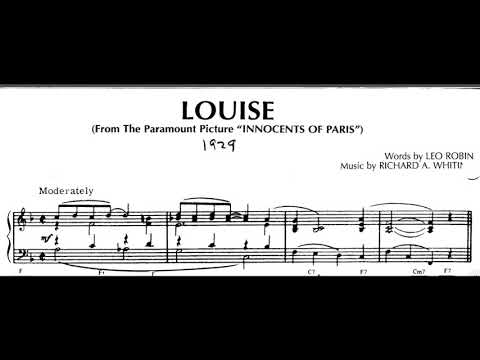
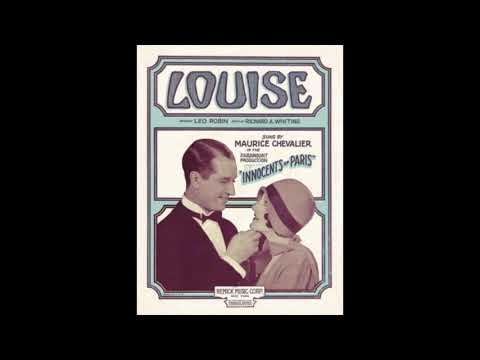
"Louise" was written for the 1929 film Innocents of Paris and introduced on screen by Maurice Chevalier. According to Musicnotes, modern editions still tie it to that film and keep the published key and tempo markings in view, which is useful for performers: this song has always been practical music, meant to be sung in real rooms as well as projected in movie houses.
Song Meaning and Annotations
Plot
Act 1 is a revue of Hollywood song types staged as if the company were working a grand movie palace. After a string of quick numbers and a Whiting tribute introduction, the medley moves through recognizable titles. "Louise" arrives as the romance beat, then exits before the show risks turning into a recital.
Song Meaning
The meaning is a straight serenade, but with a stage-savvy twist: the lyric keeps noticing the world as if the world itself were gossiping the beloved's name. Breezes, birds, and roses become a chorus of confirmation. That is not subtle writing, and it does not need to be. The song aims for the kind of certainty Hollywood used to sell as a product.
In this show, the number becomes a comment on how the movie era packaged intimacy. The medley placement is the clue. We are not asked to live in the romance for five minutes. We are asked to recognize the romance quickly, enjoy the sheen, then move on to the next shot.
Annotations
Wonderful! Oh, it's wonderful to be in love with you.
This opening is practically a curtain line for a love scene. It is not coy. It announces the temperature, then lets the melody do the softening. It is the kind of direct address that reads well in a big house because it does not hide the point.
Every little breeze seems to whisper "Louise."
The lyric turns nature into a supporting cast. Onstage, that is an invitation to theatrical shorthand: a glance up, a small gesture, a shared whistled echo. The show does exactly that by calling out whistling in the production list, giving the line a built-in staging idea.
Can it be true, someone like you could love me, Louise?
Here is the hidden crack in the confidence. The singer is praising, but also doubting his own luck. That twist keeps the serenade from becoming pure bragging and gives performers something to play besides charm.
Genre blend and rhythm
This is traditional pop songwriting with a film-musical spine: clear harmonic path, singable refrain, and lyric images that can be staged in a glance. The rhythm is unhurried, which is why the medley needs to keep it short. The show borrows the glow, not the full runtime.
Touchpoints and afterlife
The song's screen identity has stuck for decades. A simple indication of that staying power: JazzStandards.com lists it among the ranked standards and points to its place in the repertory. That kind of catalog status is what Act 1 is built to celebrate, with a wink and a tap break.
For the complete text, use authorized editions and licensed recordings. This page stays with commentary and brief excerpts only.
Technical Information (Quick Facts)
- Artist: Original Broadway Cast (medley segment)
- Featured: Stephen James, Priscilla Lopez, David Garrison, Kate Draper (with whistling noted in a production list)
- Composer: Richard A. Whiting
- Producer: Hugh Fordin (cast recording)
- Release Date: 1929 (film song; year of first release)
- Genre: traditional pop standard; used in musical theatre as a medley segment
- Instruments: ensemble vocal feature; whistling texture; piano-forward medley arrangement in Act 1
- Label: DRG (cast recording context)
- Mood: romantic, bright, slightly self-mocking at the edges
- Length: brief medley segment; not separately indexed on the cast recording
- Track #: contained within the "Richard A. Whiting Medley" track on the Original Broadway Cast recording
- Language: English
- Album (if any): A Day in Hollywood / A Night in the Ukraine (Original Broadway Cast Recording)
- Music style: screen-era serenade writing with conversational refrain lift
- Poetic meter: accentual phrasing with refrain-led rhyme and repeated name imagery
Frequently Asked Questions
- Is "Louise" original to the stage musical?
- No. It is a 1929 film-era standard used inside Act 1 as part of the Richard A. Whiting medley.
- Who wrote the song?
- Richard A. Whiting wrote the music, and Leo Robin wrote the lyrics.
- Where does it sit in Act 1?
- It appears inside the Whiting medley, typically following "Double Trouble" and preceding "Sleepy Time Gal" on detailed production lists.
- Who is featured for this segment in Broadway song lists?
- Production listings commonly associate it with Stephen James, Priscilla Lopez, David Garrison, and Kate Draper.
- Why is whistling part of the staging note?
- Whistling is a quick cinematic shorthand for romance and memory, and it lets the number feel staged without needing extra plot.
- What film introduced the song?
- It was written for the 1929 film Innocents of Paris and introduced by Maurice Chevalier.
- Is the song meant to be funny?
- It is mostly sincere, but it carries a soft comic twist: the singer marvels at love and also doubts his own luck.
- Is it a separate track on the cast recording?
- On many releases, it is part of the Richard A. Whiting medley track rather than a separate indexed track.
- What key and range are common for performers?
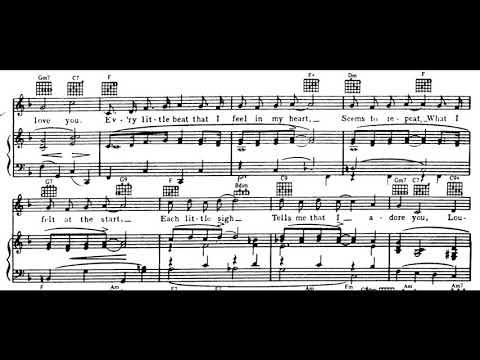
- One widely sold edition lists F major with a vocal range of C4 to D5.
- Does the song have life outside the show?
- Yes. It is treated as a standard in jazz and traditional pop repertory, with many recorded versions across decades.
Awards and Chart Positions
This number does not belong to modern charts so much as it belongs to the long memory of standards. Still, the original release did register as a commercial event. One reference summary notes that Chevalier's record of "Louise" ranked among the best-selling records for a sustained stretch in 1929, and JazzStandards.com assigns it a repertory rank that reflects its continued presence in jazz circles.
| Measure | Value | Context |
|---|---|---|
| First major screen association | Innocents of Paris (1929) | Introduced by Maurice Chevalier |
| Commercial note | Best-selling record run reported in 1929 | Often cited as Chevalier's early U.S. breakthrough |
| Jazz repertory listing | Rank 408 | JazzStandards.com catalog position |
| Stage documentation | Whiting medley segment | Listed in Act 1 song lists for the musical |
How to Sing Louise
A popular digital edition lists F major, a vocal range of C4 to D5, and a tempo marking described as moderately. That points to a crooner-friendly lane: centered, clear, and unhurried.
- Tempo: Keep it steady and conversational. The song reads best when the performer seems to be speaking in pitch, not posing.
- Diction: Land the name cleanly each time. The repeated name is the hook, and it should feel like a private habit, not a slogan.
- Breathing: Take small breaths at image breaks, especially around the nature lines. The images are little camera cuts.
- Flow and rhythm: Let the refrain open up slightly, but keep the verse moving. This is a serenade, not a sermon.
- Accents: Give gentle emphasis to the sensory nouns (breeze, birds, roses), then relax on the held vowels.
- Ensemble version: If you are doing the show segment, agree on one clean whistle color and one clear handoff, so the effect reads as intentional stage language.
- Mic: If amplified, stay close for the soft lines and back off a touch on the higher sustained notes to avoid pushing.
- Pitfalls: Do not overact the charm. A light smile in the voice is enough; anything broader can turn the number into parody.
Additional Info
The stage use of "Louise" is a small example of how this musical works at its best. It borrows a known artifact, then makes the borrowing visible. Overtur's detailed list even names the whistle as part of the effect, which tells you the production is not content to quote old songs. It wants to stage the act of quoting.
If you want to trace the song back to paper, the Academy of Motion Picture Arts and Sciences digital collection catalogs a vocal score with a cover featuring Chevalier, and a university archive listing points to its 1929 publishing trail. These are modest facts, but they matter. They keep the song anchored in a real industry, not a haze of "old Hollywood."
Key Contributors
| Entity | Relation | Statement |
|---|---|---|
| Richard A. Whiting | composer | Richard A. Whiting wrote the music for "Louise" and is the honoree of the Act 1 medley. |
| Leo Robin | lyricist | Leo Robin wrote the lyrics for the 1929 standard "Louise". |
| Maurice Chevalier | screen performer | Maurice Chevalier introduced "Louise" on screen in Innocents of Paris (1929). |
| Stephen James | stage performer | Stephen James is listed as a featured performer for the medley segment in a Broadway production song list. |
| Priscilla Lopez | stage performer | Priscilla Lopez is listed as a featured performer for the medley segment in a Broadway production song list. |
| David Garrison | stage performer | David Garrison is listed as a featured performer for the medley segment in a Broadway production song list. |
| Kate Draper | stage performer | Kate Draper is listed as a featured performer for the medley segment, with whistling noted as a texture. |
| Hugh Fordin | producer | Hugh Fordin is credited as producer for the Original Broadway Cast recording documentation. |
| DRG | label | DRG released the Original Broadway Cast recording that documents the Whiting medley sequence. |
Sources
Sources: Overtur Broadway production musical numbers list, CastAlbums recording entry, Musicnotes sheet music listing, Louise (Maurice Chevalier song) reference summary, JazzStandards.com tune page, Academy of Motion Picture Arts and Sciences digital sheet music collection.
Music video
A Day in Hollywood / A Night in the Ukraine Lyrics: Song List
- Just Go to the Movies
- Famous Feet
- I Love a Film Cliche
- Nelson
- The Best in the World
- It All Comes Out of the Piano
- Ain't We Got Fun
- Too Marvelous for Words
- Japanese Sandman
- On the Good Ship Lollipop
-
Double Trouble
- Louise
- Sleepy Time Gal
- Beyond the Blue Horizon
- Thanks for the Memories
- Another Memory
- Doin' the Production Code
- A Night in the Ukraine
- Samovar the Lawyer
- Just Like That
- Again
- A Duel! A Duel!
- Natasha
- A Night in the Ukraine (Reprise)