Ain't We Got Fun Lyrics — A Day in Hollywood / A Night in the Ukraine
Ain't We Got Fun Lyrics
Haunt the cottage next door
Men the grocer and butcher sent
Men who call for the rent
But within a happy chappy
And his bride of only a year
Seem to be so cheerful, here's an earful
Of the chatter you hear
Ev'ry morning, ev'ry evening
Ain't we got fun?
Not much money, Oh, but honey
Ain't we got fun?
The rent's unpaid dear
We haven't a bus
But smiles were made dear
For people like us
In the winter in the Summer
Don't we have fun
Times are bum and getting bummer
Still we have fun
There's nothing surer
The rich get rich and the poor get children
In the meantime, in between time
Ain't we got fun?
Just to make their trouble nearly double
Something happened last night
To their chimney a gray bird came
Mister Stork is his name
And I'll bet two pins, a pair of twins
Just happened in with the bird
Still they're very gay and merry
Just at dawning I heard
Ev'ry morning, ev'ry evening
Don't we have fun
Twins and cares, dear, come in pairs, dear
Don't we have fun
We've only started
As mommer and pop
Are we downhearted
I'll say that we're not
Landlords mad and getting madder
Ain't we got fun?
Times are so bad and getting badder
Still we have fun
There's nothing surer
The rich get rich and the poor get laid off
In the meantime, in between time
Ain't we got fun?
When the man who sold 'em carpets told 'em
He would take them away
They said, "Wonderful, here's our chance
Take them up and we'll dance"
And when burglars came and robbed them
Taking all their silver, they say
Hubby yelled, "We're famous, for they'll name us
In the pepers today
Night or daytime, it's all playtime
Ain't we got fun?
Hot or cold days, any old days
Ain't we got fun
If Wifey wishes
To go to a play
Don't wash the dishes
Just throw them away
Streetcar seats are awful narrow
Ain't we got fun?
They won't smash up our Pierce Arrow
We ain't got none
They've cut my wages
But my income tax will be so much smaller
When I'm laid off, I'll be paid off
Ain't we got fun?
Song Overview
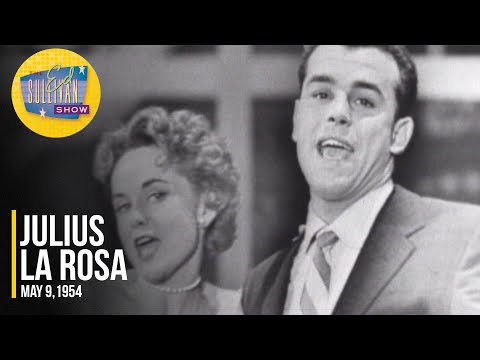
"Ain't We Got Fun" enters A Day in Hollywood / A Night in the Ukraine as part of the Richard A. Whiting medley, a stretch of Act 1 that turns a movie-palace revue into a living jukebox. The show does not treat the song as a museum piece. It treats it as a piece of stage business: quick, bright, and slightly insolent about hard times.
Review and Highlights
Quick summary
- Where it appears: Act 1, inside the Richard A. Whiting medley (after the original intro "It All Comes Out of the Piano").
- Writers of the standard: music by Richard A. Whiting; lyrics by Raymond B. Egan and Gus Kahn.
- Who performs it in the show: Company (ensemble) in the Broadway documentation.
- How it plays onstage: a short burst of upbeat defiance, designed to pivot the medley into its next stylistic lane.
- What makes this placement clever: it lets the show sound like a songwriter's catalog while still feeling staged, not merely sung.
In the musical, the number functions like a brisk grin between bigger bites. The Richard A. Whiting sequence is not a polite anthology; it is an argument, delivered with tempo. This song is the moment when the argument gets its elbows out: the lyric laughs at money trouble, then keeps moving before the laugh can turn sour.
The staging detail that makes me perk up comes from production documentation that assigns David Garrison to clarinet during this segment. That small choice says a lot about the show's Act 1 aesthetic: musicianship as comedy, and comedy as a kind of craft pride.
Key takeaways: the song acts as a rhythmic palate cleanser; the ensemble delivery keeps it from becoming nostalgia wallpaper; and the Whiting medley uses it as a hinge, not a destination.
Creation History
The standard itself dates to 1921, and it became one of the era's durable pop tunes, documented in early commercial recordings and later revived endlessly. The musical borrows it as part of a Whiting salute, and the cast recording discography lists it as an ensemble moment inside the medley, following the original introduction that frames Whiting's output as something you can pull, almost magically, from a keyboard.
Song Meaning and Annotations
Plot
In Act 1, the show presents a Hollywood-era movie-palace setting where ushers and usherettes guide the audience through film-music styles and backstage gossip. The Richard A. Whiting medley is the centerpiece of that strategy: one original setup leads into a run of well-known tunes, including this one, performed as a fast ensemble turn.
Song Meaning
The core idea is comic resilience. The lyric acknowledges bills and bad luck, then shrugs and dances anyway. The Canadian Songwriters Hall of Fame frames the song as reflecting social and economic strain around 1920 to 1921, which helps explain why the cheer feels earned rather than decorative.
Inside the musical, that meaning becomes theatrical shorthand. The show is touring Hollywood fantasy, but it keeps reminding you that the fantasy was sold during real-world pressure. This song is the grin that admits the pressure, then chooses momentum.
Annotations
"Ain't we got fun?"
The question is the trick. It is not asking for an answer; it is forcing a posture. In the revue context, the ensemble sings it like a pact: we agree to enjoy ourselves, even if the balance sheet says otherwise.
"The rich get rich and the poor get poorer"
This line has bite, and the bite is why the song is more than a cute old tune. Onstage, it can land as a wink, but it also lands as a summary of the era's unease. A quick reference like this gives Act 1 a hint of grit beneath the gloss.
Style, rhythm, and arc
The song is built to move. The refrain is compact and repeatable, which is why it thrives in group singing and why it works as a medley link. The emotional arc is quick: a nod to trouble, then a pivot to pleasure, then out. In this show, that quickness is a feature, not a limitation.
Historical touchpoints
Early recordings of the tune appear in 1921 discography listings, which underlines how rapidly it entered circulation. That speed matters: it was a song designed to travel, to be whistled, to be quoted. The musical treats it the same way, as a quotation that still carries voltage.
For the complete text, use authorized editions and licensed recordings. This page stays with commentary and brief excerpts only.
Technical Information (Quick Facts)
- Artist: Company (Original Broadway production documentation)
- Featured: Ensemble; production notes also associate clarinet playing with David Garrison during this segment
- Composer: Richard A. Whiting
- Lyricists: Raymond B. Egan; Gus Kahn
- Release Date: 1921 (original publication year for the standard)
- Genre: popular song standard; used in musical theatre as part of a medley
- Instruments: ensemble vocal; period-dance-band color in arrangements; clarinet highlighted in at least one production listing
- Label: cast recording released by DRG (show album context)
- Mood: buoyant, lightly sardonic
- Length: performed as a brief medley segment (recording durations vary by edit and track indexing)
- Track #: contained within the "Richard Whiting Medley" track on the Original Broadway Cast recording
- Language: English
- Album (if any): A Day in Hollywood / A Night in the Ukraine - Original Broadway Cast Recording
- Music style: Roaring Twenties pop with a refrain designed for group punch
- Poetic meter: mixed accentual phrasing with refrain-forward hook writing
Frequently Asked Questions
- Is this number original to the musical?
- No. It is a 1921 popular song standard used inside the show as a segment of the Richard A. Whiting medley.
- Who wrote the song?
- The standard is credited to composer Richard A. Whiting and lyricists Raymond B. Egan and Gus Kahn in Broadway production documentation.
- Who sings it in the show?
- Broadway documentation lists it for the Company within the Whiting medley.
- Where does it land in Act 1?
- It follows the original medley introduction "It All Comes Out of the Piano" and helps propel the sequence into the next Whiting titles.
- Why does it work so well in a medley?
- The refrain is compact, the hook is immediate, and the lyric is built around a single attitude that can be delivered fast by an ensemble.
- Does the show do it as pure nostalgia?
- No. The best stagings keep a trace of bite in the lyric, which helps Act 1 avoid becoming a postcard rack of old hits.
- Is there an instrument feature tied to this segment?
- At least one production listing associates David Garrison with clarinet during this portion of the medley, reinforcing the show's habit of turning musicianship into stage comedy.
- Are there notable performances of the standard outside the musical?
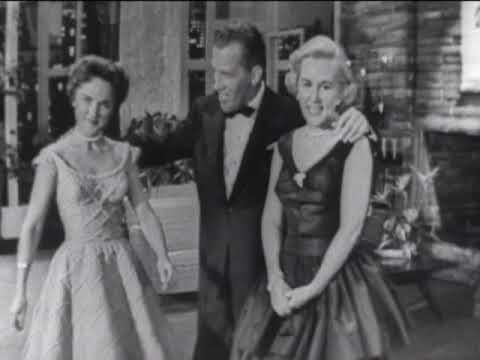
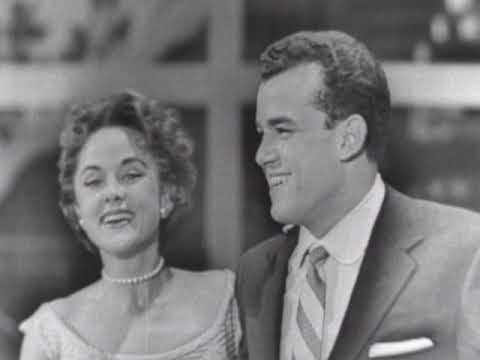
- Yes. Mid-century TV performances, including an Ed Sullivan Show clip, underline how easily the song adapts to different eras and delivery styles.
Awards and Chart Positions
As a standard, the song does not carry a single modern chart narrative that cleanly maps onto the musical. The awards story here belongs to the production: according to the IBDB and Concord Theatricals show pages, the Broadway run won two Tony Awards, including Featured Actress in a Musical (Priscilla Lopez) and Choreography (Tommy Tune and Thommie Walsh).
| Award | Year | Category | Result |
|---|---|---|---|
| Tony Awards | 1980 | Best Performance by a Featured Actress in a Musical | Won |
| Tony Awards | 1980 | Best Choreography | Won |
Additional Info
I like this song's placement because it exposes a contradiction the show enjoys: Hollywood escapism was often sold during economic anxiety. The Canadian Songwriters Hall of Fame points to the early-1920s slump as part of the lyric's backdrop, which makes the refrain's cheer feel less like denial and more like tactic.
For theatre-makers, there is also a practical lesson in the Whiting medley: the strongest medleys are staged like scenes. A rehearsal reflection on mounting the show even calls out the sharp stylistic jump that happens around this segment, which is a reminder that transitions are not filler - they are the engine.
Key Contributors
| Entity | Relation | Statement |
|---|---|---|
| Richard A. Whiting | composer | Richard A. Whiting wrote the music to the 1921 standard used in the Act 1 medley. |
| Raymond B. Egan | lyricist | Raymond B. Egan is credited as lyricist in Broadway production documentation for the medley segment. |
| Gus Kahn | lyricist | Gus Kahn is credited as lyricist in Broadway production documentation for the medley segment. |
| Dick Vosburgh | book writer, lyricist | Dick Vosburgh wrote the show's book and lyrics and helped frame the medley-driven Hollywood half. |
| Frank Lazarus | composer, performer | Frank Lazarus composed the show's primary score and performs the medley introduction that leads into the standard. |
| David Garrison | performer, instrumentalist | David Garrison is associated with clarinet during this segment in at least one production listing. |
| Tommy Tune | director, choreographer | Tommy Tune directed and co-choreographed the Broadway production. |
| Thommie Walsh | co-choreographer | Thommie Walsh shared choreography credit for the Broadway production. |
| DRG | label | DRG issued the Original Broadway Cast recording that documents the Whiting medley. |
Sources
Sources: Internet Broadway Database production record and song list, CastAlbums recording entry, Concord Theatricals show page, Overtur musical numbers listing, Canadian Songwriters Hall of Fame song note, Discography of American Historical Recordings entry for 1921 recordings, rehearsal reflection thesis on staging the Whiting medley, Ed Sullivan Show performance clip listing.
Music video
A Day in Hollywood / A Night in the Ukraine Lyrics: Song List
- Just Go to the Movies
- Famous Feet
- I Love a Film Cliche
- Nelson
- The Best in the World
- It All Comes Out of the Piano
- Ain't We Got Fun
- Too Marvelous for Words
- Japanese Sandman
- On the Good Ship Lollipop
-
Double Trouble
- Louise
- Sleepy Time Gal
- Beyond the Blue Horizon
- Thanks for the Memories
- Another Memory
- Doin' the Production Code
- A Night in the Ukraine
- Samovar the Lawyer
- Just Like That
- Again
- A Duel! A Duel!
- Natasha
- A Night in the Ukraine (Reprise)