Doin' the Production Code Lyrics — A Day in Hollywood / A Night in the Ukraine
Doin' the Production Code Lyrics
The Hollywood Production Code
Nudity can never be permitted
As being necessary for the plot
The effect of nudity on the average audience is immoral
Transparent materials
Translucent materials
And silhouette
Are even more suggestive than exposure
Excessive body movements while the feet are stationary
Violate decency and are wrong
No approval shall be given to
The following words or phrases
"Alleycat", applied to a woman
"Tomcat", applied to a man
"Broad", applied to a woman
"Tart", applied to a woman
"Hot", applied to a woman
"Chippy", applied to a woman
"Adam", applied to prostitution
"Loose", in a vulgar sense
You can?t say "in your hat"
You can't say "hold your hat"
You can?t say "nirts"
You can't say "nuts"
Except when meaning "crazy"
You can't say "pregnant"
You can?t say "virgin"
You can?t say "damn", you can't say "hell"
You can?t say "God", you can't say "gaud"
Can?t say "Lord", can't say "louse"
Can?t make a noise like pfft
Impure love must not be
The subject of farce or comedy
Excessive and lustful kissing
Is not to be shown on the screen
Six seconds is the maximum length of a kiss in a movie scene
And it has to be done
Simply has to be done
And it has to be done, simply has to be done
With a closed, dry mouth
The treatment of bedrooms must be governed by delicacy and good taste
Which means of course
That even though a man and a woman are fully dressed
If they embrace on a sofa or bed
That one at least of the couple must have one foot upon the floor
Way back in 1930
On a shining April morn
The legendary Hollywood Production Code was born
Oh, do the production
Do the production
Do, do, do the production
Do, do, do the production
Do, do, do, do, do, do, do, do, do, do, do, do, do, do!
Do the Production Code!
Song Overview
Review and Highlights
Quick summary
- A late-Act 1 ensemble number in the Hollywood revue half of the show, placed after "Another Memory" and before "A Night in the Ukraine" (the Act 2 preview).
- Built as rhythmic speech and tap, with the cast reciting the Motion Picture Production Code as if it were a novelty chorus.
- Credited to Dick Vosburgh (words) and Frank Lazarus (music).
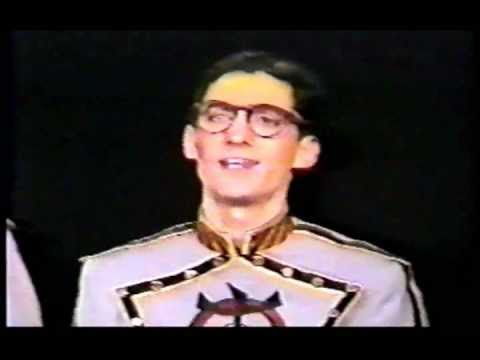
- Often remembered through the televised 1980 Tony Awards performance, where the premise reads instantly in the room.
A Day in Hollywood / A Night in the Ukraine (1980) - stage musical - diegetic. Act 1, in the lobby-world revue at Grauman's Chinese Theatre, leading into the "coming attractions" tease for Act 2. It matters because it turns the very mechanism that shaped old movies into a dance break: the audience laughs, and then realizes the laugh is made of regulations.
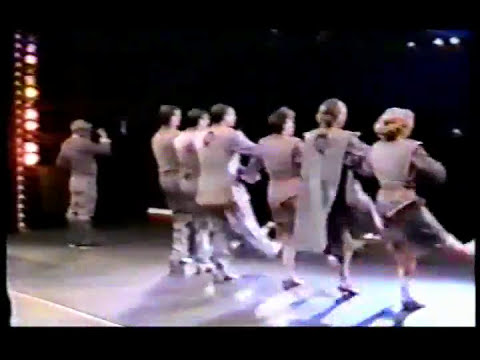
As theatre, the joke is sharp because it is literal. The cast does not sing about censorship in a tidy metaphor. They perform censorship as text, as rhythm, as a kind of percussive patter. The sound of it is the point: clipped phrases, lists, bans, exceptions - the vocabulary of bureaucracy made playable. The number lands like vaudeville that wandered into a law library and came out tapping.
And the pacing is canny. In a revue stacked with familiar standards and pastiche, this number resets the temperature. It is bright, quick, and slightly menacing in the way cheerful rules can be. According to Encyclopaedia Britannica, the Hays Code governed mainstream Hollywood moral content from 1934 to 1968, and the show uses that history as a comic engine rather than a lecture.
Creation History
Broadway documentation lists the show as a "musical double feature" with book and lyrics by Dick Vosburgh and music by Frank Lazarus, plus interpolated classics elsewhere in Act 1. In a first-person production recollection published by Concord Theatricals, Lazarus describes writing a rhythmic setting of the Production Code and performing it while tap-dancing, later reprised for the 1980 Tony Awards telecast. That origin story tracks with how the number plays: written not as a conventional song, but as staged language designed to move.
Song Meaning and Annotations
Plot
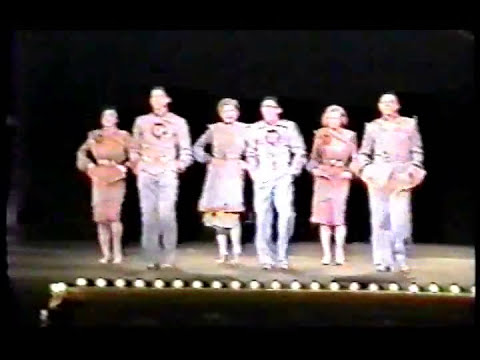
Act 1 is a lobby revue where ushers and usherettes guide the audience through Hollywood's self-mythologizing: star imagery, songcraft, and the sales pitch of glamour. This number arrives near the end, when the show stops admiring the machine long enough to show the machine's safety rails. Immediately after, the company pivots into the Act 2 "preview" that sets up the Marx Brothers-style farce to come.
Song Meaning
The meaning is almost mischievous in its simplicity: Hollywood's fantasy was not only written by artists, it was fenced in by policy. By setting the Code to a tap-driven chant, the show frames censorship as choreography - a system that tells bodies how to move, how long to kiss, what words can be spoken, what kinds of desire can be implied. The laughter is not just at prudishness; it is at the audacity of a checklist claiming authority over imagination.
Annotations
-
"And now, ladies and gentlemen ... the Hollywood Production Code"
The number announces itself like a showroom demonstration. That framing is crucial: it treats regulation as a featured attraction, which is exactly how studio-era morality was marketed - protection packaged as entertainment.
-
"Six seconds is the maximum length of a kiss in a movie scene"
This is where the routine turns from general scolding into stopwatch comedy. The line plays because it is specific. The show lets the audience hear how control often hides inside measurement.
-
"The legendary ... Production Code was born"
Calling it "legendary" is a deliberate wink. Legends are supposed to be heroic. Here, the legend is a list of prohibitions, delivered with showbiz pep - the satire in miniature.
Rhythm and staging
What drives the piece is the collision of two languages: tap rhythm (syncopation, accents, momentum) and bureaucratic writing (clauses, prohibitions, definitions). Put them together and you get an odd kind of propulsion, like a filing cabinet on roller skates. A cast member's account describes the number as recited while tap-dancing, which explains why the text often feels like percussion more than melody.
Cultural touchpoints
For audiences who know old movies, the number lands as an inside joke about "pre-Code" looseness and the later clampdown. For everyone else, it still plays as a universal satire: a committee trying to legislate taste. The laughter is not niche. It is human.
Technical Information (Quick Facts)
- Artist: Original Broadway Cast ensemble
- Featured: Company
- Composer: Frank Lazarus
- Producer: Cast recording producer credit varies by release documentation
- Release Date: May 1, 1980 (Broadway opening date); later digital releases list January 1, 1991 for a catalog edition
- Genre: Musical theatre; tap-chant novelty number
- Instruments: Tap percussion; pit orchestra (theatre rhythm section and brass colors by production)
- Label: DRG Records
- Mood: Bright satire, delivered with brisk showmanship
- Length: About 3 minutes (common digital listings)
- Track #: Often listed as track 7 on the album sequence
- Language: English
- Album (if any): A Day in Hollywood / A Night in the Ukraine (Original Broadway Cast Recording)
- Music style: Patter-like chant with tap-driven groove
- Poetic meter: Accentual patter with list-based phrasing (speech-rhythm foregrounded)
Frequently Asked Questions
- Where does this number appear in the show?
- It is a late-Act 1 ensemble piece in the Hollywood revue, placed after "Another Memory" and immediately before the Act 2 preview number.
- What is the "Production Code" the cast keeps quoting?
- It refers to the Motion Picture Production Code, Hollywood's self-censorship system, adopted in 1930 and enforced strictly starting in 1934.
- Why is it staged as tap plus spoken text?
- The form is the satire. Tap gives the rules swing, while speech keeps the language blunt, like a document that refuses to become poetry.
- Is it sung in the usual sense?
- It behaves more like rhythmic patter, with chant and unison refrains, supported by dance accents.
- Who wrote it?
- It is credited to Dick Vosburgh and Frank Lazarus, the show’s primary lyricist and composer.
- Does the number quote real Code language?
- It draws on the spirit and phrasing of Code-era restrictions, presenting lists and behavioral limits as stage material. The point is the tone of control as much as any single line.
- Why does the audience laugh so hard at rules?
- Because the rules are absurdly specific, and because the performers deliver them with the cheerful polish of classic Hollywood showmanship.
- Is there a well-known filmed performance?
- Yes. A widely circulated clip shows the company performing it on the 1980 Tony Awards telecast.
- What is the dramatic function right before Act 2?
- It tilts the show from fond remembrance into critique, then hands the audience off to the Act 2 "preview" that reframes the evening as a movie-house program.
- Does it have a reprise later?
- Not typically as a formal reprise. Its punch comes from being a single burst of regulation delivered at high speed.
Awards and Chart Positions
This track is not known for a single-and-chart life. Its public footprint comes from performance: the televised awards-night excerpt, and the fact that the show itself was a major season player. Production listings record nine Tony nominations for the Broadway run, with wins for featured actress and choreography.
| Year | Award | Category | Result |
|---|---|---|---|
| 1979 | Evening Standard Theatre Awards | Best Comedy | Won |
| 1980 | Tony Awards | Best Musical | Nominated |
| 1980 | Tony Awards | Best Featured Actress in a Musical (Priscilla Lopez) | Won |
| 1980 | Tony Awards | Best Choreography (Tommy Tune and Thommie Walsh) | Won |
How to Sing Doin' the Production Code
Start by accepting what this is: not a crooned ballad, but a precision routine. Digital audio listings commonly tag it around 100 BPM, which is brisk enough to feel like a chase, but stable enough for clean taps and consonants. The vocal demand is less about range and more about stamina, alignment, and clarity.
- Lock the tempo: Rehearse the spoken sections with a metronome before adding dance. If the pulse drifts, the jokes blur.
- Map the text as choreography: Mark where lists begin, where punch lines land, and where the ensemble unites. Treat those moments like dance accents.
- Diction is your melody: Crisp initial consonants and clean final consonants create the groove. Do not smear syllables to sound "musical".
- Breath like a tapper: Use quick, low breaths that do not interrupt the forward drive. Plan them at clause breaks, not at random.
- Blend in unison: In group patter, the audience hears the slowest mouth. Rehearse consonant timing together, especially on repeated refrains.
- Let the smile do some work: The satire plays best when the delivery is bright, almost salesy. That contrast is the whole point.
- Coordinate feet and tongue: Run the number as three layers: text only, taps only, then together at half speed. Speed arrives last.
- Mic and space: If amplified, keep plosives controlled. If unamplified, project the text forward, not upward.
- Common pitfalls: Rushing lists, swallowing proper nouns, or turning it into pure mockery. The routine needs conviction to stay funny.
- Practice materials: Record a rehearsal click track at performance tempo and drill the toughest list passages in loops of eight bars.
Additional Info
What I like about this number is that it makes a moral panic sound like a dance craze. The piece borrows the show-business habit of selling anything with a catchy refrain, then applies it to a rulebook that tried to police everything from language to bodies to "good taste." When it hits, it hits because the audience can hear the contradiction: freedom of movement, enforced limits.
And it is not just clever on paper. A creator-performer account remembers the routine as recited while tap-dancing, which suggests the staging was built from the ground up as physical comedy - words as footwork, footwork as punctuation. That makes the number a neat hinge for the evening: after this, the audience is primed to view Act 2's farce not just as parody, but as a rebellion against tidy decorum.
Key Contributors
| Subject | Relation | Object | Notes |
|---|---|---|---|
| Frank Lazarus | composed | Doin' the Production Code | Co-creator of the show; described writing and performing the tap-chant routine. |
| Dick Vosburgh | wrote book and lyrics for | A Day in Hollywood / A Night in the Ukraine | Primary writer shaping the revue framing and the Act 2 spoof structure. |
| Tommy Tune | directed and choreographed | Broadway production | Staging and dance language helped make the number read at speed. |
| Thommie Walsh | co-choreographed | Broadway production | Co-choreography credit for the Broadway run. |
| DRG Records | released | Original Broadway Cast Recording | Label most commonly associated with the cast album across listings. |
| John Golden Theatre | hosted | Broadway opening venue | Initial Broadway theatre before the transfer. |
| Royale Theatre | hosted | Broadway transfer venue | Later Broadway home for most of the run. |
| Production Code Administration | enforced | Motion Picture Production Code | The historical system being parodied and quoted. |
Sources
Sources: Internet Broadway Database production listing, Concord Theatricals article by Frank Lazarus, Encyclopaedia Britannica overview of the Hays Code, Shazam track page for tempo and credit line, Apple Music album listing, Wikipedia background summary
Music video
A Day in Hollywood / A Night in the Ukraine Lyrics: Song List
- Just Go to the Movies
- Famous Feet
- I Love a Film Cliche
- Nelson
- The Best in the World
- It All Comes Out of the Piano
- Ain't We Got Fun
- Too Marvelous for Words
- Japanese Sandman
- On the Good Ship Lollipop
-
Double Trouble
- Louise
- Sleepy Time Gal
- Beyond the Blue Horizon
- Thanks for the Memories
- Another Memory
- Doin' the Production Code
- A Night in the Ukraine
- Samovar the Lawyer
- Just Like That
- Again
- A Duel! A Duel!
- Natasha
- A Night in the Ukraine (Reprise)