
Honk Lyrics: Song List
- Act 1
- A Poultry Tale
- The Joy Of Motherhood
- Different
- Hold Your Head Up High
- Look At Him
- Play With Your Food
- The Elegy
- Every Tear A Mother Cries
- The Wild Goose Chase
- Hold Your Head Up High (Reprise)
- Act 2
- It Takes All Sorts
- Together
- The Collage
- Now I've Seen You
- Warts And All
- The Blizzard
- Finale: Look At Him
- Warts And All (Reprise)
About the "Honk" Stage Show
This musical adaptation is based upon a well-known fairy-tale, written by H. Ch. Andersen. The original title of it is “The Ugly Duckling”. Lyrics for “Honk!” were written by A. Drewe, while G. Stiles created music for this show. The action "Honk!" takes place outside town, in the country. It was staged in 1993 for the first time at Watermill Theatre. Its original title was “The Ugly Duckling or the Aesthetically Challenged Farmyard Fowl”. In 2007, the same version appeared at that theatre again. Steven Dexter was a director for both of them.
In 1997, the original production of “Honk!” was officially released. The show took place in England at Stephen Joseph Theatre. Julia McKenzie was a director. Later, in 1999, a West End version appeared in London at Royal National Theatre. It even received Olivier Award in 2000 as Best Musical. Then, in 2003, it was nominated as Best Show by Irish Musicals Association. During the following year, it was also ranked the second at Festival of Waterford International.
The US premier took place in 2000. This show was staged at HHPAC – Helen Hayes Performing Arts Center. After that, the musical was changed – the script became more American oriented. Then it was staged at the North Shore Music Theatre. For both versions, there was one leading actor – Gavin Creel, who played Ugly. The performances were lasting for three weeks and took place in about 30 theatres around the country.
There also exists a junior version of the musical, created especially for young audience. Some characters and songs were omitted. Besides, some lyrics were changed as well.
Release date of the musical: 1993
“Honk!” (1993) – The Musical Guide & Song Meanings
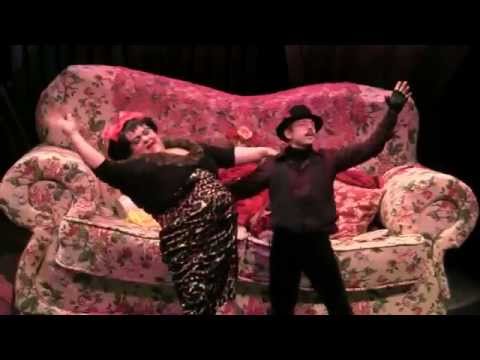
Review: why “Honk!” lands with kids and still needles adults
“Honk!” has the manners of a family musical and the survival instincts of a political comedy. It sells you cuddly barnyard characters, then keeps tightening the screws: group ridicule, predation, exile, weather as threat, and finally the sick joke of popularity arriving only after a makeover nature did for free. The lyrics succeed because they are direct without being flat. Anthony Drewe writes punchline-clean couplets for the ensemble, then switches into plain-spoken pleading when Ida takes over, which is exactly when the show stops pretending it is only for children.
Lyrically, the engine is repetition with pressure. “Different” starts as a label pushed onto Ugly, then becomes the word he tries to own before he even understands it. “Hold Your Head Up High” works because it is not a motivational poster. It is a mother teaching a technique: breathe, float, move, survive. Even the Cat’s numbers weaponize language, turning friendliness into a contract. And underneath it all, Stiles writes with that old-school musical-theatre bounce, the kind that makes a moral lesson feel like a game you can win if you hit the rhyme on time.
Listener tip, if you are coming in cold: follow Ida. When her vocabulary shifts from fussing to ferocity, the show’s heart rate changes. If you are seeing it live, sit far enough back to catch the full “pond” picture (many productions stage swimming in choreographic patterns that read best from mid-stalls or the first balcony), but not so far that Ida’s quiet lines turn into background noise.
Note on “lyrics” requests: I cannot provide full song lyrics from “Honk!” due to copyright, but I can walk you through song meanings, recurring images, and where each number sits in the story, plus where to buy authorized vocal selections and the libretto.
How it was made
“Honk!” first appeared in 1993 at the Watermill Theatre in Newbury, originally under the title “The Ugly Duckling or The Aesthetically-Challenged Farmyard Fowl.” The origin story is unusually practical: Drewe had been asked to develop other Andersen-based musical ideas with high-profile collaborators, those plans collapsed, and he kept the Andersen book and the impulse. The “Ugly Duckling” stayed because its message of acceptance is theatrical shorthand that does not need translation.
From there, the show’s evolution reads like a case study in British musical development: a small-theatre hatch, a crucial re-shape with a new director and design team (Julia McKenzie, with designer Peter McIntosh and choreographer Aletta Collins), and the turning-point invite from Trevor Nunn to restage it at the National Theatre. When “Honk!” won the Olivier Award for Best New Musical in 2000, it did so over two global brands, which is either a minor miracle or proof that a tight lyric can still outpunch a marketing budget on the right night.
Key tracks & scenes
“A Poultry Tale” (Drake and Company)
- The Scene:
- Spring on the farm. A bustle of eggs, gossip, and territorial peacocking. It is usually staged in bright, busy daylight with constant traffic, because the point is community. It also sets up how fast that community turns.
- Lyrical Meaning:
- This is a thesis in disguise: everyone has a role, everyone has a joke, and kindness is conditional. The lyric treats farmyard life as a system, which later makes exclusion feel like policy, not just cruelty.
“The Joy of Motherhood” (Ida and Maureen)
- The Scene:
- Ida and her friend Maureen narrate the romance of nesting while the barnyard crowds in with opinions. Often played with warm lighting and a comic duet stance, like two seasoned performers sharing a microphone that is not there.
- Lyrical Meaning:
- Drewe makes motherhood sound like a choice and a dare. The lyric’s brightness is not naïve, it is defiant. It is also a setup: once Ida declares her joy out loud, the story tests whether she will keep it when the world laughs at her child.
“Hold Your Head Up High” (Ida, Ugly, Fish)
- The Scene:
- Ugly’s first real movement toward confidence, often staged at the “lake” with flowing choreography that suggests water without literal realism. Many productions soften the stage picture into a calm pool after the earlier barnyard noise.
- Lyrical Meaning:
- The lyric is practical encouragement: posture as survival, pride as flotation device. It is also the show’s first serious claim that identity is not granted by the crowd. Ida’s language turns “different” from insult into fact.
“Look at Him” (Ida, Drake, Ugly, Cat, Maureen and Company)
- The Scene:
- A public pile-on. The barnyard points, sings, and turns Ugly into spectacle. It is commonly staged with a harsh central focus on Ugly, bodies angled inward, comedy sharpened into menace.
- Lyrical Meaning:
- This is the lyric as mob. The rhyme scheme becomes a drumline. The words are not describing cruelty, they are performing it, which is why the number can feel funny and uncomfortable at the same time.
“Different” (Ugly)
- The Scene:
- Ugly tries to define himself after the crowd has done it for him. Often staged with space around him, less choreography, more stillness. If “Look at Him” is a chorus, “Different” is a room.
- Lyrical Meaning:
- The lyric’s power is its clarity. Ugly is not yet enlightened; he is cornered. The number is about naming the wound before it scars over. It is also the first moment where the show allows a child character to be serious without apologizing for it.
“Warts and All” (Bullfrog, Ugly and Company)
- The Scene:
- Comic intervention. The Bullfrog reframes Ugly’s self-pity with showbiz swagger, usually staged like a vaudeville turn: claps, kicks, ensemble as backup act.
- Lyrical Meaning:
- Under the jokes, this is a philosophy lesson: accept the messy parts as proof you are real. The lyric’s genius is that it does not deny pain; it interrupts it with rhythm, which is sometimes the only workable cure.
“Every Tear a Mother Cries” (Ida)
- The Scene:
- Ida’s most exposed moment, typically staged with the stage emptied out and the soundscape simplified. The show stops winking.
- Lyrical Meaning:
- Here, Drewe writes grief without ornament. The lyric insists that love is not only comfort, it is endurance. If you want the show’s moral in adult language, it is here: the cost of empathy is that you feel everything.
“The Transformation” (Ugly, Ida, Penny)
- The Scene:
- After winter and survival, the reveal: Ugly is a swan. Productions often stage it as a shift in silhouette and movement language rather than a literal costume trick. The audience should recognize him before the characters do.
- Lyrical Meaning:
- It would be easy for this number to betray the show by making beauty the reward. The best readings resist that. The lyric is less “now you are worthy” and more “you were misnamed.” It corrects the story’s vocabulary.
Live updates (2025/2026)
Information current as of 27 January 2026. A high-profile UK revival is already on the calendar: the Barn Theatre in Cirencester has announced a festive run of “Honk!” from 21 November 2026 to 3 January 2027 (with an opening night listed as 25 November 2026 in several announcements). As of this update, the public notices emphasize a “new” or “bold” revival, with casting details still to come.
Outside headline revivals, “Honk!” continues to live the way many modern family musicals do: through licensing. MTI’s materials for “Honk!” and “Honk! JR.” remain a major pipeline for school and youth productions, which is why the songs keep circulating even when there is no single “current cast” to track.
Notes & trivia
- The 1993 Watermill Theatre version carried the eyebrow-raising earlier title “The Ugly Duckling or The Aesthetically-Challenged Farmyard Fowl.”
- Stiles & Drewe’s official history credits Julia McKenzie’s 1997 staging as the moment the modern “Honk!” blueprint locked in, with designer Peter McIntosh and choreographer Aletta Collins.
- “Honk!” won the Olivier Award for Best New Musical in 2000, beating “The Lion King” and “Mamma Mia!” in that category.
- “Moggy” is British slang for a house cat, and the show gleefully uses it in “Melting Moggy” as a character joke that doubles as vocabulary building for younger audiences.
- The commonly streamed cast album is released under the title “Stiles and Drewe’s Honk! (Original Cast Recording),” credited to George Stiles and Anthony Drewe, and issued by Dress Circle.
- Stiles & Drewe cite over 8,000 productions worldwide and more than six million audience members, which helps explain why the score feels written to “play” in many different spaces.
Reception: critics then vs now
The early critical conversation tended to argue about the show’s stylistic “safety” versus its emotional impact. That tension is still the story: the score wears traditional musical-comedy clothes, while the plot keeps sliding toward real peril.
“The show is intended as a hymn to nonconformity… [yet] resolutely conformist.”
“Very charming, and certainly no wild goose chase.”
“Honk!… walked away… with this year’s Olivier Award for best new musical.”
My read: the lyrics are the reason the show survives the “conformist” charge. Drewe’s language is clean enough for comedy, but pointed enough to make the mob scenes sting and the mother songs ache. If you only half-listen, it sounds like family fare. If you track who gets to name whom, it gets sharper.
Quick facts
- Title: Honk!
- First production year: 1993 (Watermill Theatre, Newbury, England)
- Type: Family musical comedy
- Based on: “The Ugly Duckling” by Hans Christian Andersen
- Music: George Stiles
- Book & lyrics: Anthony Drewe
- Major milestone: National Theatre (Olivier Theatre) production invited by Trevor Nunn; Olivier Award for Best New Musical (2000)
- Commonly streamed album: “Stiles and Drewe’s Honk! (Original Cast Recording)” (Dress Circle; 19 tracks; widely available on Apple Music and Spotify)
- Licensing: Stage versions plus “Honk! JR.” via MTI
Frequently asked questions
- Can you paste the full “Honk!” lyrics?
- No. Full lyrics are copyrighted. I can summarize each song’s meaning, explain recurring imagery, and point you to authorized libretto and songbook listings.
- Is there an official soundtrack album?
- Yes. The widely streamed release is “Stiles and Drewe’s Honk! (Original Cast Recording)” (Dress Circle), available on major platforms.
- What year is “Honk!” from: 1993 or 1999?
- Both matter. The show first appeared in 1993 (Watermill Theatre). A major later milestone was the National Theatre run that opened in 1999, followed by the 2000 Olivier win.
- What is “Honk! JR.”?
- A youth-friendly, shortened adaptation licensed through Music Theatre International, designed for schools and younger casts.
- Is there a movie or proshot?
- There is no single definitive mainstream feature film version. Many productions share clips and promotional trailers, and you can find authorized scripts and vocal selections through official outlets.
- Is “Honk!” touring in 2026?
- A Barn Theatre revival in Cirencester has been announced for 21 November 2026 to 3 January 2027; broader touring details vary by region and are often production-by-production.
Key contributors
| Name | Role | Contribution |
|---|---|---|
| George Stiles | Composer | Music that blends classic musical-comedy propulsion with character-led ballad writing. |
| Anthony Drewe | Book & lyricist | Lyrics that toggle between barnyard wit and plain-spoken emotional stakes. |
| Steven Dexter | Director (Watermill, 1993) | Directed the early Watermill staging under the original title. |
| Julia McKenzie | Director (1997 onward key blueprint) | Helped shape the version that led to the National Theatre breakthrough. |
| Sir Trevor Nunn | Producer-director catalyst | Invited the show to the National Theatre’s Olivier Theatre, elevating its profile. |
| Peter McIntosh | Designer | Credited in the show’s official history as part of the defining creative team. |
| Aletta Collins | Choreographer | Helped establish a movement vocabulary that can suggest “water” without literal sets. |
Sources: Stiles & Drewe (official site), Playbill, The Guardian, MTI (Music Theatre International), StageAgent, MusicalTheatreReview, Apple Music, Spotify, Theatre Weekly, WhatsOnStage.