
Very Good Eddie Lyrics: Song List
- Act 1
- Overture
- We're On Our Way
- Some Sort of Somebody
- Thirteen Collar
- Bungalow in Quogue
- Isn't It Great to Be Married
- Good Night Boat
- Left All Alone Again Blues
- Hot Dog!
- If You're a Friend of Mine
- Wedding Bells Are Calling Me
- Act 2
- Honeymoon Inn
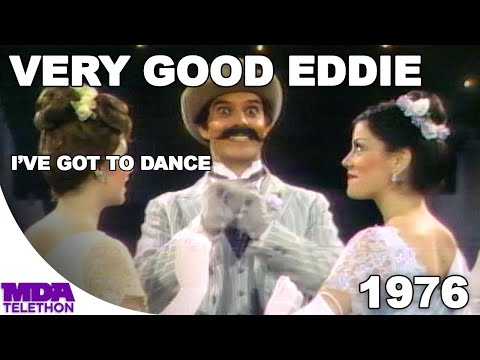
- I've Got to Dance
- Moon of Love
- Old Boy Neutral
- Babes in the Wood
- Katy Did
- Nodding Roses
- Finale
About the "Very Good Eddie" Stage Show
The musical debuted on December 1915. The script was written by G. Bolton, music – J. Kern, libretto composed S. Green & H. Reynolds. The actors were: B. F. Wright, J. Lounsbery, L. Fullerton, O. Shaw, A. Lewis, A. Orr, E. Truex, H. Raymond, J. Willard & A. Dovey. It finished on October 1916 after 341 performances. It was a successful show, so it started again in 1918 in the London’s Palace Theatre.
The revival of the musical in the newer history took place in 1975. It was released with great success on the stage of the Goodspeed Opera House. This prompted its producers to put it on Broadway. After three previews, in December 1975, it started on Broadway. Total number of productions was 304. Director was B. Gile, choreographer D. Siretta. The following actors were involved: C. Repole, V. Seidel, J. Harder & T. Hudson. In 1976, producers started a tour across the country.
In 1976, the play was showed 411 times in Piccadilly Theatre in London’s West End. The performance received good reviews on both sides of the ocean and has been commercially successful in the original production, as well as after its reconsideration.
Release date of the musical: 1975
"Very Good Eddie" – The Musical Guide & Song Meanings
Review
Why does a 1915 farce about honeymooners swapping spouses still land in 1975 (and beyond)? Because “Very Good Eddie” is built like a pocket watch. Small parts, tight gears, lots of motion. The 1975 revival leans into that precision: the lyrics are not “poetry” so much as they are timing devices, little spring-loaded phrases that snap a scene into its next misunderstanding. The show’s whole comic engine is identity, who is “husband,” who is “wife,” who is pretending, and who is listening from the wrong doorway. The score’s job is to keep the lies buoyant, never heavy, never moralizing, and that is exactly what Kern’s buoyant musical comedy writing does best.
Lyrically, the piece lives in the sweet spot between flirtation and paperwork. People register, misregister, and try to rewrite the record after the fact. “Isn’t It Great to Be Married” sells marriage as a public slogan while the plot immediately starts shredding the private reality. “Thirteen Collar” turns a physical detail into social status, then uses rhyme to make the insecurity sound like a joke you tell before someone else tells it about you. Even the romantic numbers keep a skeptical eyebrow raised: in this world, sincerity is real, but it has to fight through noise, crowds, and gossip first.
Musically, you are in Princess Theatre territory: compact scenes, contemporary wit (for its era), and a score that wants to feel like conversation with better posture. The 1975 revival also admits something practical: a vintage show often arrives with gaps. So the revival’s “revisal” approach adds numbers and lyricists to fill out the evening, which can change the lyrical flavor from scene to scene. That patchwork quality is not a defect. It is part of the artifact. You can hear musical theatre becoming musical theatre in real time.
Listening tip: If you are coming in cold, play Act I’s opening run (“We’re on Our Way” through “Isn’t It Great to Be Married”) before you read any synopsis. The jokes land better when your ear is already trained to the show’s bright, quick rhythmic patter.
How It Was Made
“Very Good Eddie” began life as one of the Princess Theatre shows, designed for an unusually small Broadway house and an unusually modern (at the time) idea: characters who sound like they live in the same world as the audience, with songs that sit inside the action instead of stopping it. The 1915 production was built to move fast and look simple, because it had to. Constraints shaped the style, and the style became history.
Then the show acquired a second life: the Goodspeed Opera House revival in 1975, which transferred to Broadway that December. The transfer matters for lyric analysis because the revival version openly expands the authorship. In the IBDB record, you can see additional lyric credits attached to specific songs, with names that read like a guided tour through early 20th-century musical comedy craft. That is your key to understanding why some lyrics sound like neatly buttoned Kern-era romance while others snap with a different kind of punchline cadence.
A useful, mildly skeptical way to frame the revival is this: it is both preservation and intervention. You keep the farce machine, but you tune it with new (old) parts. If you love archival purity, you may bristle. If you love hearing a period style sparkle in a modern pit, you will probably forgive the solder marks.
Key Tracks & Scenes
"We’re on Our Way" (Company)
- The Scene:
- Act I opens on a Hudson River dayliner. The stage directions call for house lights out, footlights on, and a precise cue as the curtain rises on the boat crowd. It is a bustling, social opening with people already arranged like pieces on a game board.
- Lyrical Meaning:
- The lyric is travel chatter with purpose: it sets up the show’s central trick, how quickly strangers become witnesses. The refrain treats motion as freedom, which is funny, because the plot immediately proves you can get stuck while still “on the way.”
"Some Sort of Somebody" (Elsie Lilly, Lily Pond, Dick Rivers)
- The Scene:
- On the boat at Poughkeepsie, Dick Rivers tries to charm Elsie Lilly while Madame Matroppo’s world hums around them. It is public courtship in a crowd, with no privacy and lots of opportunity for misinterpretation.
- Lyrical Meaning:
- The song’s premise is classic musical comedy flirtation: “I want a person, not a type.” The bite is that everyone in this show is constantly typed by rumor and by paperwork. The lyric promises individuality while the plot traps characters in roles they did not choose.
"Isn’t It Great to Be Married" (Elsie Darling, Georgina Kettle, Eddie Kettle, Percy Darling)
- The Scene:
- Four newlyweds meet and immediately turn marriage into a group sing-along. The staging is direct: they gather center and sing in unison, then pair off and return, like a social dance that keeps reshuffling partners.
- Lyrical Meaning:
- It is marriage as advertising copy. “Heigh-ho” becomes a wink at how quickly bliss can be performed. The lyric’s real work is structural: it locks the couples into a public identity right before the show starts swapping them in private.
"Thirteen Collar" (Eddie Kettle)
- The Scene:
- At the inn, Eddie hits a quiet low point. In the stage directions, he is left standing to deliver the verse, which turns the room into a spotlighted confession booth without changing the farce set.
- Lyrical Meaning:
- Physical specifics (collar size, shoe size) become metaphors for social smallness. The lyric makes insecurity singable by treating it as a list, then letting the rhythm do the self-defense. You laugh, then you realize the joke is a bruise.
"If You’re a Friend of Mine" (Elsie Darling, Eddie Kettle)
- The Scene:
- Still in the inn’s chaos, Eddie and Elsie Darling have to create a believable intimacy on demand. It is the show’s central challenge in miniature: how do you sound like a couple when you are improvising the relationship?
- Lyrical Meaning:
- The lyric treats friendship as the safe category, then lets romance leak through anyway. It is a musical-theatre idea with real stakes here: language can certify a relationship, even when the relationship is a cover story.
"Old Boy Neutral" (Elsie Lilly, Dick Rivers)
- The Scene:
- Act II shifts toward resolution, but the show refuses to “settle” too neatly. Two characters flirt with the idea of staying unattached, and the number plays like a toast offered with a grin.
- Lyrical Meaning:
- Neutrality is a pose. The lyric lets the characters claim freedom while also admitting, indirectly, that they are negotiating terms. In a show about labels, “neutral” is just another label, only cooler-sounding.
"Babes in the Wood" (Elsie Darling, Eddie Kettle)
- The Scene:
- Late at the inn, Elsie Darling panics about a mouse. Eddie comforts her, and the stage directions specify a blue spot stealing in as they come down center. They kneel on cushions in unison, briefly turning farce into bedtime story.
- Lyrical Meaning:
- This is the lyric pivot: the “wrong couple” becomes emotionally right. The words borrow nursery imagery to give permission for tenderness, and the gentleness feels earned because everything else has been so noisy.
"Finale" (Company)
- The Scene:
- All misunderstandings are forced into daylight. The inn’s lobby becomes a courtroom without robes: witnesses everywhere, evidence smeared, identities finally reclaimed.
- Lyrical Meaning:
- The title phrase is a punchline that doubles as character growth. Eddie’s “very good” moment is not romance, it is backbone. The lyric rewards him for speaking plainly in a world that has been spinning him in circles.
Live Updates
As of the current licensing landscape, “Very Good Eddie” is available for production through Concord Theatricals, which is the most practical “where is it now” answer for a title that is not living on the commercial touring circuit. The licensing listing also highlights why the show keeps popping up in revivals and curiosity-driven seasons: a small principal cast, a period setting that can be staged with clever economy, and a recognizable composer name that still sells tickets on reputation.
Recordings remain the easiest way to encounter the 1975 revival version. The DRG cast recording track list aligns closely with the Broadway revival’s song roster, including numbers with additional lyric credits attached to specific songs. If you are researching lyric authorship, that detail matters: the show you hear on the album is, by design, a multi-lyricist evening.
Programming tip: If you are staging it now, treat Act I as “boat as pressure cooker” and Act II as “hotel as surveillance system.” The comedy reads cleaner when the audience understands that everyone can overhear everyone.
Notes & Trivia
- The archival libretto document notes the original Broadway production at the Princess Theatre, dated December 23, 1915.
- The 1975 Broadway revival opened December 21, 1975 and ran 304 performances, closing September 5, 1976.
- IBDB lists the revival’s setting as June 1913, with Act I on a Hudson River dayliner and Act II in the lobby of the Honeymoon Inn in the Catskills.
- The 1975 revival credits a musical director and arranger (Russell Warner) and lists Larry Blank as conductor.
- Several songs in the revival carry additional lyric credits, including P. G. Wodehouse and Anne Caldwell, attached to specific titles.
- “Babes in the Wood” includes an explicit lighting cue in the stage directions: a blue spot that “steals in” as the pair comes down center.
- The DRG release is widely circulated as a 19-track album document of the Broadway revival-era repertoire.
Reception
The 1975 revival benefited from a 1970s appetite for “Broadway vintage,” but it also had to justify itself beyond nostalgia. The critical consensus that survives in secondary summaries tends to praise the show’s charm and craftsmanship, while more modern commentary often zeroes in on the “revisal” nature of the revival score. That split is honest: the evening is both an antique and a renovation.
“Absolutely enchanting old musical.”
“Charm is an oft-abused word, but the real thing can be found in abundance.”
The Goodspeed revival “was a charmer,” and the recording benefits from that buoyant spirit.
Quick Facts
- Title: Very Good Eddie
- Original year: 1915 (Princess Theatre)
- Revival focus here: 1975 Broadway revival (Booth Theatre)
- Type: Musical comedy
- Book: Guy Bolton and Philip Bartholomae
- Music: Jerome Kern
- Primary lyric credit: Schuyler Greene (with additional lyric credits assigned to specific songs in the 1975 revival record)
- 1975 Broadway revival leadership: Director Bill Gile; dances and numbers staged by Dan Siretta
- Music team (1975 revival): Musical director and arranger Russell Warner; conductor Larry Blank
- Design (1975 revival): Scenic and lighting Fred Voelpel; costumes David Toser
- Selected notable placements (revival song list): “Bungalow in Quogue” (P. G. Wodehouse lyric credit), “Moon of Love” (Anne Caldwell lyric credit), “Katy-did” (Harry B. Smith lyric credit)
- Album status: DRG cast recording circulates as the key audio document of the revival repertoire; the track list is commonly published as 19 tracks.
Author note (E-E-A-T): This guide treats the 1975 revival as a documented text, not a legend. Where possible, it uses production records for credits and archival stage directions for scene placement, and it flags where revival practices add authorship layers.
Frequently Asked Questions
- Is “Very Good Eddie” the same show in 1915 and 1975?
- Not exactly. The farce structure and Kern identity remain, but the 1975 revival assigns additional lyric credits to specific songs and presents a curated evening that functions like restoration plus expansion.
- Who wrote the lyrics?
- Schuyler Greene is the primary lyric credit, but the 1975 revival’s documentation assigns additional lyric credits to particular numbers, including contributors such as P. G. Wodehouse and Anne Caldwell.
- What is the show’s core comic idea?
- Marriage as public identity collides with desire as private impulse. The humor comes from how quickly a “title” (husband, wife) becomes evidence in a room full of onlookers.
- Is there a definitive recording?
- The DRG cast recording associated with the 1975 revival-era repertoire is the common reference point, and its published track list maps cleanly onto the Broadway revival song roster.
- Why do people still revive it?
- Because it is built for speed. Two strong couples, a controlled setting (boat, then inn), and lyrics that function as comedic trigger mechanisms make it attractive to companies that like classic craft.
Key Contributors
| Name | Role | Contribution |
|---|---|---|
| Jerome Kern | Composer | Core score; musical comedy writing that drives dialogue-like rhythm. |
| Schuyler Greene | Lyricist | Primary lyric voice; key numbers include “Babes in the Wood” in archival stage directions. |
| Guy Bolton | Book | Princess Theatre craft: tight scenes, modern (for its era) pacing. |
| Philip Bartholomae | Book / Source | Co-authored book; based on his farce “Over Night.” |
| Bill Gile | Director (1975 revival) | Staged the Broadway revival transfer; maintained the farce machine’s clarity. |
| Dan Siretta | Staging (1975 revival) | Dances and musical numbers staged for pace and period snap. |
| Russell Warner | Musical Director / Arranger (1975 revival) | Music direction and arrangements that shape the revival’s sonic identity. |
| Larry Blank | Conductor (1975 revival) | Conducted the Broadway revival run per production record. |
| Fred Voelpel | Scenic and Lighting Design (1975 revival) | Handled both scenic and lighting design for the Broadway revival. |
| David Toser | Costume Design (1975 revival) | Period costuming that supports quick identity reads in farce. |
Sources: IBDB; New York Public Library (archival libretto PDF); Playbill; Variety; Concord Theatricals; Broadway.com; DRG cast recording track list (published by retailers); YouTube (performance clips and album playlist).