Two Gentlemen of Verona Lyrics – All Songs from the Musical
Two Gentlemen of Verona Lyrics: Song List
- Act 1
- Summer, Summer
- I Love My Father
- That's A Very Interesting Question
- I'd Like To Be A Rose
- Thou Julia, Thou Has Metamorphosed Me
- Symphony
- I Am Not Interested In Love
- Love, Is That You?
- Thou, Proteus, Thou Has Metamorphosed Me
- What Does A Lover Pack?
- Pearls
- I Love My Father (Reprise)
- Two Gentlemen Of Verona
- Follow The Rainbow
- Where's North?
- Bring All The Boys Back Home
- To whom It May Concern
- Night Letter
- Love's Revenge
- Calla Lily Lady
- Act 2
- Land Of Betrayal
- Thurio's Samba
- Hot Lover
- What A Nice Idea
- Love Me
- Eglamour
- Kidnapped
- Mansion
- What's A Nice Girl Like Her
- Dragon Fight
- Don't Have A Baby
- Love's Revenge (Reprise)
- Love Has Driven Me Sane
About the "Two Gentlemen of Verona" Stage Show
Try-outs were held in the summer of 1971 in the New York’s Delacorte Theater in Central Park. About 20 preliminaries were successful, after which director M. Shapiro and choreographer J. Erdman decided to put this histrionics in December of the same year in the St. James Theatre. More than 600 performances were given there. An acting troupe consisted of: R. Julia, D. Davila, S. Channing, J. Goldblum & J. Allen. The musical directed by M. Shapiro won in two nominations of Tony, including Best Musical.In April 1973, the theatrical was staged in the West End in Phoenix Theatre. This play also directed by M. Shapiro, withstood more than 230 hits. In London, the spectacular took part with following actors: J. Gilbert, B. J. Arnau, R. C. Davis, B. Lee, S. E. Wright & M. Staniforth.
In 1996, during the New Jersey’s Shakespeare Festival on the scene was played one part of the production, managed by R. Duke & P. Hernandez.
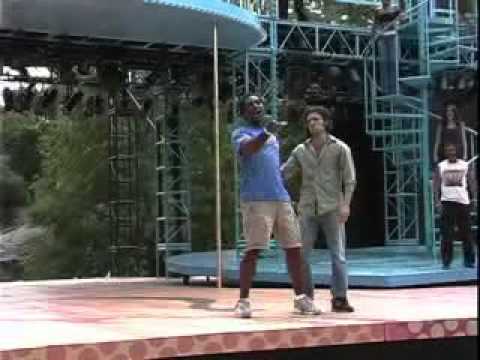
In 2005, the musical was revived and staged in the Public Theater and Delacorte Theater. It had cast: N. Lewis, P. Montalban, O. Isaacs, R. Dawson, M. Johnson Jr. & J. Cariani.
In 1972, the musical also won the Drama Desk, in particular, for the best performance, best choreography & music. In The New York Times has been published an article, whose author was a theater critic B. Brantley. In it, the play has received a very cool score. The main emphasis was done on the reduction of some scenes that, according to critics’ wrong opinion, was an evidence of lack of work of playwright and director.
Release date: 1971
"Two Gentlemen of Verona" – The Musical Guide & Song Meanings
Review: what the lyrics are really doing
How do you turn a Shakespeare comedy that already behaves like a soap opera into a rock musical without sanding off the chaos? You do it by leaning into the mess and keeping the words blunt. John Guare’s lyrics do not aim for Elizabethan polish. They aim for velocity. The show keeps swapping sincerity for satire in the space of a rhyme, then dares you to notice how similar betrayal and romance sound when they are set to the same beat.
The lyric strategy is basically two modes, constantly interrupting each other. Mode one is communal chorus, which treats the world like a street party: everybody sings, everybody comments, the story becomes a crowd. Mode two is character confession, usually short, usually direct, often funny in a way that stings. The result feels like Shakespeare translated into a 1971 downtown sensibility: people announce what they want, then do the worst possible thing to get it.
Musically, Galt MacDermot writes in the post-Hair neighborhood, but he is not trying to repeat Hair. The grooves are looser, the styles jump around, and the show’s best joke is how happily it mixes Renaissance romance with contemporary attitudes. That stylistic scattershot is not accidental. It matches the plot, where loyalty is a costume and love is a dare.
Listener tip: If you are new to the score, start with “Summer, Summer,” then jump to “I Am Not Interested In Love,” then “Night Letter,” then “Mansion” (or “Howl,” depending on the edition). That path shows you the show’s whole personality: crowd noise, private refusal, romantic idealism, and the late-night New York wisecrack that somehow wandered into Milan.
How it was made
The origin story is unusually theatrical: Joseph Papp commissioned an adaptation and what was supposed to be “incidental” music, then left town. When he came back, he found the creators had turned it into a full-scale rock musical with roughly three dozen songs and a multi-ethnic company, which was part of the point. The piece began at the Delacorte in Central Park, built momentum outdoors, then rode that energy to Broadway. It was one of the clearest examples of Papp’s larger mission: make “high culture” behave like it belongs to everyone.
That path also explains why the lyrics often sound like they are written for an audience sitting on grass. They need to land fast. They need to read in open air. They are shaped for momentum and group storytelling, which is why the ensemble does so much narrative heavy lifting.
And then there is the practical, very human detail that still makes the show feel alive in licensing: “Mansion” was replaced in the original London production by an alternate song, “Howl,” because the “Mansion” lyric was considered too New York specific. Modern productions can choose either version, which means the show still contains an argument about its own accent.
Key tracks & scenes
"Summer, Summer" (Company)
- The Scene:
- Lights up on Verona as a public celebration. The chorus builds a warm-weather world where friendship feels permanent and consequences feel theoretical. The staging likes brightness here: bodies in motion, a town that can sing as one.
- Lyrical Meaning:
- This is the show’s bait. The lyric sells ease, youth, and sunshine so the later betrayals register as a fall, not a plot requirement. It also teaches you the sound of the piece: communal, percussive, a little unruly.
"That’s a Very Interesting Question" (Proteus, Valentine)
- The Scene:
- Two friends debating the big-city future. Valentine pushes outward. Proteus hesitates. The energy is conversational, like the show is turning dialogue into rhythm.
- Lyrical Meaning:
- Guare uses wit as character definition. The lyric frames loyalty as something you can argue yourself out of, with the right joke at the right time.
"I’d Like To Be A Rose" (Proteus, Valentine, Company)
- The Scene:
- A burst of romantic fantasy that feels half earnest, half self-mocking. The ensemble becomes an echo chamber for desire, the way friends do when they are young and confident they will not hurt anyone.
- Lyrical Meaning:
- The lyric plays with the idea of wanting to be adored without being responsible. A rose gets love for existing. People do not. That difference becomes Proteus’ problem.
"I Am Not Interested In Love" (Julia)
- The Scene:
- Julia draws a line, loudly. Depending on the production, it is staged as defiance, denial, or both. The light often narrows to her, because the show wants this to be a private manifesto spoken in public.
- Lyrical Meaning:
- It is a refusal song that already contains its own collapse. The lyric is too specific, too energetic, to be true. The point is not that Julia is lying. The point is that she is trying to control the speed of her feelings.
"Follow The Rainbow" (Company)
- The Scene:
- Travel music, momentum music. Characters shift from Verona toward Milan, and the staging tends to treat the road like a dance floor. The chorus becomes the landscape.
- Lyrical Meaning:
- This is aspiration with a wink. The lyric promises arrival, then undercuts itself by making the chase feel endless. It is the show’s way of saying: the dream is real, but it is also a trap.
"Night Letter" (Silvia, Valentine)
- The Scene:
- In Milan, romance becomes plot. Two people writing to each other in the dark, trying to make language do the work of touch. The scene tends to be staged with softer light, more stillness, less crowd.
- Lyrical Meaning:
- The lyric is earnest by design. The show needs at least one love story that feels clean, otherwise Proteus’ turn is just soap. This number gives the audience something to protect.
"We Come From The Land Of Betrayal" (Lucetta)
- The Scene:
- After the damage is underway, Lucetta comments on the mess with the clarity of someone who can see the ending from the beginning. The staging often lets this feel like a cabaret aside, a spotlight and a shrug.
- Lyrical Meaning:
- It is the show’s chorus of consequences, sung by a character who lives on the edge of the action. The lyric is bitter comedy: betrayal is not a surprise, it is a hometown.
"Mansion" (Valentine) / "Howl" (Valentine)
- The Scene:
- Valentine in exile, alone enough to be honest. In many stagings, this lands as the late-night city rant that Shakespeare never wrote but Broadway always needs. Some productions swap in “Howl,” depending on which edition they use.
- Lyrical Meaning:
- “Mansion” is the score’s most openly contemporary joke, using modern references to frame old heartbreak. The alternate “Howl” keeps the same emotional function while shifting the language away from New York specificity.
"Love Has Driven Me Sane" (Company)
- The Scene:
- Final reconciliation energy, delivered with the show’s signature group-drive. The staging typically pulls the company back together as if community is the only cure available.
- Lyrical Meaning:
- The lyric flips romantic madness into a kind of clarity. It is not subtle. It is also not pretending. The show chooses joy as an ending because the alternative is to stare too hard at Proteus’ behavior and ask questions it cannot answer in two hours.
Live updates (2025-2026)
In 2025-2026, the musical’s public life is not a commercial tour. It is a licensing title and an occasional “let’s re-open the file” event. Concord Theatricals continues to license the show, complete with materials and song list details, which is the most reliable indicator that it remains actively produced in schools, universities, and regional theatres.
The other signal is the recent uptick in prestige-concert activity. Red Bull Theater mounted a benefit concert version with an all-star lineup and a named creative team, which is exactly the kind of event that usually precedes renewed interest in a score’s reputation. It is not a revival announcement, but it is a reminder that this piece still has friends in high places.
Finally, the cast recording has become more discoverable through mainstream streaming storefronts, where listeners can find the full track list without hunting for out-of-print vinyl. That matters because this show has always depended on curiosity: you hear the title, you assume it is impossible, then you press play.
Notes & trivia
- The Broadway run opened December 1, 1971 and closed May 20, 1973 at the St. James Theatre, with 20 previews and 614 performances.
- The show began as part of the New York Shakespeare Festival at the Delacorte in Central Park before moving to Broadway.
- Playbill’s history note says Papp expected incidental music and returned to discover a full musical with about three dozen songs and a multi-ethnic cast.
- There is an alternate-song choice: “Mansion” was replaced by “Howl” in the original London production, and many modern productions can choose either.
- The cast album is widely listed as the 1971 Original Broadway Cast recording, and it is available on major streaming services.
- The show won the Tony for Best Musical, beating major 1971-72 competition, which remains the most startling fact about its legacy.
- The show’s reputation has always been split: some people remember the joy; others remember the mess. Both memories are accurate.
Reception
The critical story of Two Gents is basically a tug-of-war between affection and skepticism. In 1971, the production’s energy and novelty mattered, and critics often wrote about the people inside the spectacle, not just the spectacle itself. Later, when the 2005 Shakespeare in the Park revival arrived, reviewers were more likely to treat the piece as a time capsule, a hippie-era riff that does not always age gracefully. That is the price of being so explicitly of-your-moment.
What I really love about Two Gentlemen is its simplicity. Beneath all the multicolored gimmicks and extravagances, there are real people living and loving, and this I find very moving. Clive Barnes, quoted in BroadwayWorld (originally The New York Times)
Two Gentlemen of Verona starts with a blast, a trumpet blast. Playbill, “On the Record”
The 1971 musical version of Shakespeare's "Two Gentlemen of Verona" is rarely mentioned without some outraged show queen seething. Variety (review excerpt)
Awards
- Tony Awards (1972): Best Musical (won)
- Tony Awards (1972): Best Book of a Musical, John Guare and Mel Shapiro (won)
- Drama Desk Awards (1972): Outstanding Book (won)
- Drama Desk Awards (1972): Outstanding Music (won)
- Drama Desk Awards (1972): Outstanding Lyrics (won)
- New York Drama Critics Circle Awards (1972): Best Musical (won)
Quick facts
- Title: Two Gentlemen of Verona
- Year: 1971 (Broadway opening)
- Type: rock musical comedy
- Book: John Guare and Mel Shapiro
- Lyrics: John Guare
- Music: Galt MacDermot
- Original Broadway venue: St. James Theatre
- Original Broadway run: 20 previews; 614 performances; Dec 1, 1971 to May 20, 1973
- Notable production pipeline: Delacorte (Central Park) to Broadway
- Album: Two Gentlemen of Verona (1971 Original Broadway Cast Recording)
- Album label context: commonly documented as an ABC Records release, later issued digitally in remastered form
- Availability: streaming on major services (track list publicly visible)
- Notable placement note: “Mansion” vs “Howl” is an edition choice in some production materials
- Licensing: Concord Theatricals
Frequently asked questions
- Is this the same story as Shakespeare’s play?
- Yes, structurally. The musical keeps Shakespeare’s core engine (friendship, betrayal, disguises, a forest, reconciliation) while filtering it through 1971 rock theatrics and a chorus-driven storytelling style.
- Who wrote the lyrics?
- John Guare wrote the lyrics. The book is credited to Guare and Mel Shapiro, with music by Galt MacDermot.
- What should I listen to first if I only have ten minutes?
- Try “Summer, Summer” for the show’s sound, “I Am Not Interested In Love” for character voice, and “Night Letter” for the score’s earnest romantic lane.
- What is the “Mansion” vs “Howl” thing?
- “Mansion” was replaced in the original London production by an alternate number, “Howl,” due to concerns about New York specific references. Some modern productions can choose which to use.
- Is it touring right now?
- Not as a single commercial tour brand. The show’s current footprint is mainly licensed productions, plus occasional concert events.
- Where can I get performance rights?
- Concord Theatricals lists the title for licensing and provides materials information.
Key contributors
| Name | Role | Contribution |
|---|---|---|
| Joseph Papp | Producer | New York Shakespeare Festival pipeline from Central Park to Broadway; commissioned the project and backed its transfer. |
| John Guare | Lyricist, co-book | Lyrics built for speed and punch; adapted Shakespeare’s scenes into rock-theatre momentum. |
| Mel Shapiro | Co-book, director | Stage engine that treats the chorus as narrative infrastructure. |
| Galt MacDermot | Composer | Rock score with wide stylistic range; post-Hair musical vocabulary without copying Hair. |
| Jean Erdman | Choreographer | Choreography that helped define the show’s communal, festival-like identity (Tony-winning production credits). |
| Theoni V. Aldredge | Costume designer | Iconic 1971 look that critics and historians still cite as part of the show’s “gimmicks and extravagances.” |
| Kathleen Marshall | Director-choreographer (2005 revival) | Shakespeare in the Park revival that re-framed the piece for a new era. |
| Zi Alikhan | Director (benefit concert) | Recent concert event indicating continued artistic interest in the score. |
References & Verification: Broadway run dates and performance counts verified via IBDB and Playbill production vault. Origin story and Central Park-to-Broadway context verified via Playbill feature reporting. Licensing status and song list verified via Concord Theatricals. Track list visibility verified via Overture, Spotify, and Apple Music storefront listings. Recent concert-event activity verified via Red Bull Theater and BroadwayWorld coverage.