
Marvelous Wonderettes, The Lyrics: Song List
- Act 1
- Mr. Sandman
- Lollipop
- Sugartime
- Allegheny Moon
- All I Have to Do Is Dream
- Dream Lover
- Stupid Cupid
- Lipstick on Your Collar
- Lucky Lips
- Secret Love
- Mr. Lee
- Born Too Late
- Teacher's Pet
- Sincerely
- Goodnight, Sweetheart, Goodnight
- Hold Me, Thrill Me, Kiss Me
- Act 2
- Heat Wave
- It's in His Kiss
- Wedding Bell Blues
- You Don't Own Me
- With This Ring
- I Only Want to Be With You
- That's When the Tears Start
- It's My Party
- Son of a Preacher Man
- Leader of the Pack
- Maybe
- Maybe I Know
- Needle in a Haystack
- Rescue Me
- Respect
- Thank You and Goodnight / Sincerely
About the "Marvelous Wonderettes, The" Stage Show
This is a comedy musical based on the book by R. Bean. Throughout its history, it appeared 5 times at the scenes of big theatre, but the most popular and quality is considered to be Off-Broadway version. The project takes viewers in 50th years of 20th century in some average school and tells the story of four friends who get the chance to compete for the title of Prom Queen. Throughout the play, several supremely cheerful compositions are used.
The first show of the musical took place on September 2008 in the Westside Theatre of New York. The play was written and directed by R. Bean. The team also includes sound & vocal arranger B. W. Baker, choreographer J. Miller, costume designer B. Pearce & lighting designer C. S. Myers. Off-Broadway’s shows lasted more than a year and a half and were closed on January 2010. The project has received two nominations from the Drama Desk Award, and was able to win the main prize of Gypsy of the Year Awards.
The basis of the acting troupe made B. Malone, V. Matlock & F. Alvin. They performed accordingly the roles of Betty, Cindy & Missy.
Release date of the musical: 2008
"The Marvelous Wonderettes" – The Musical Guide & Song Meanings
Review
How do you turn a stack of famous pop lyrics into plot without making the audience feel like they’re trapped inside a diner jukebox? The Marvelous Wonderettes answers with a blunt theatrical trick: put four girls on risers in a school gym, give them harmony assignments, then let the songs betray what the smiles are hiding. The first act sells you the pastel. The second act admits the decade did not stay pastel.
Because this is a jukebox musical, the “lyrics” are not newly written for the show. They’re inherited. That’s the point. Bean’s book treats mid-century pop language as social evidence: what girls were allowed to say in 1958, what they start saying in 1968, and what they still can’t say out loud even when the mic is on. The smartest moments are when a lyric you thought you knew becomes a confession you didn’t expect.
Musically, the sound is engineered nostalgia: tight four-part blend, radio-clean vowels, and arrangements that move like a pep squad drill. But the best joke is structural, not musical. The show doesn’t “get darker” so much as it changes the rules of what a pop song can mean when the character singing it is older and bruised. If you want a viewing tip: sit close enough to read the micro-reactions during the harmony sections. The whole plot is in the smiles they keep singing through.
How it was made
Roger Bean has described the project less like a single-artist tribute and more like a “scrapbook” of songs people recognize, which explains why the score hops across writers, groups, and sub-genres instead of staying loyal to one catalog. His stated inspiration is personal: his mother was a varsity song leader and sang this material at home, so the show’s “prom night” frame is basically a memory made stageable.
Bean has also been unusually candid about process: he has talked about building playlists, looping tracks, rating them, and letting storylines “bubble” until the right character found the right lyric. That matters because Wonderettes is a musical where character is revealed by song selection. When the playlist shifts from “dream” language to “don’t own me” language, the book is telling you that the culture changed, and the women did too.
On the music side, the show’s polish comes from arrangement craft. The vocal writing is designed to make four distinct personalities sound like one unit when the scene needs solidarity, then fracture into solos when the story needs truth. In other words, the harmonies aren’t decoration. They’re dramaturgy.
Key tracks & scenes
These are not “best songs,” because most of these songs were hits long before the show existed. These are the moments where familiar lyrics do unfamiliar work.
"Mr. Sandman" (The Wonderettes)
- The Scene:
- A gymnasium becomes a stage. Crepe-paper optimism everywhere. The girls appear as last-minute entertainment, and the night begins with performance nerves disguised as pep.
- Lyrical Meaning:
- “Bring me a dream” plays like prom fluff until you notice it’s also a mission statement: each girl is bargaining for a future, and the bargain is already unequal.
"Stupid Cupid" (Suzy)
- The Scene:
- Suzy’s teen-romance logic goes public, bright and bouncy, while the others clock what she can’t: the joke is on the girl singing it.
- Lyrical Meaning:
- The lyric externalizes responsibility. Cupid did it. Not him. Not me. That denial is funny, and then it isn’t.
"Lipstick on Your Collar" (Betty Jean)
- The Scene:
- Prom-night rivalry turns into evidence. The song lands like a public accusation, with the group forced to keep smiling while the temperature spikes.
- Lyrical Meaning:
- It’s a pop lyric built as proof. In the show, that “proof” becomes power: who gets believed, who gets mocked, who gets called “dramatic.”
"Secret Love" (Missy)
- The Scene:
- Missy steps out of blend into solo space. The air shifts. She starts carefully, like she’s asking permission from the room.
- Lyrical Meaning:
- The song is about concealment that feels noble. In context, it reads as the first crack in the show’s cheerful mask: the girls are experts at hiding.
"Hold Me, Thrill Me, Kiss Me" (Suzy)
- The Scene:
- A prom-queen moment, played as triumph, lands with the sting of a contest: somebody won, somebody didn’t, and everyone has to clap.
- Lyrical Meaning:
- The lyric is pure want, no irony. That’s why it hurts later. The show plants the seed of what happens when a simple want meets a complicated life.
"You Don't Own Me" (The Wonderettes)
- The Scene:
- Act II: ten years later, reunion night. Same women, different edges. The pop vocabulary suddenly contains refusal.
- Lyrical Meaning:
- This is the thesis of the decade change: the lyric draws a boundary. In the show, it’s a boundary the character has been trying to draw for years.
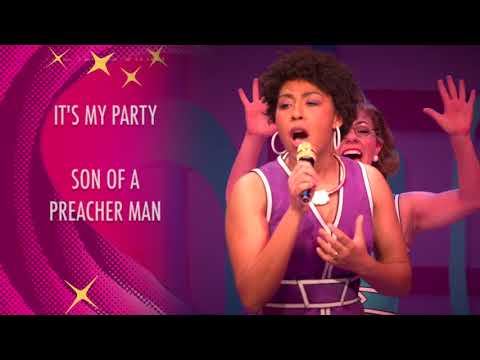
"It's My Party" (Betty Jean)
- The Scene:
- What once would have been a novelty number becomes a private breakdown performed in public. The laugh catches in your throat if the actor is honest.
- Lyrical Meaning:
- The lyric is permission to feel bad on a night that demands cheer. That’s basically the whole show in one sentence.
"Respect" (Suzy)
- The Scene:
- Late in the reunion set, the energy stops being polite. The song arrives like a demand the character has finally earned the right to make.
- Lyrical Meaning:
- In a prom-frame musical, “respect” is a plot device. It’s also a verdict on everything that happened between the acts.
Live updates
Information current as of January 29, 2026. The Marvelous Wonderettes functions less like a single tour brand and more like a perpetual licensing engine: it pops up everywhere because it’s four performers, a band (often small), and a crowd-pleasing song list. That means “what’s running” changes weekly by region.
Two concrete examples that anchor the 2025–2026 picture: Sierra Repertory Theatre scheduled the show for April 18 to May 18, 2025 (Fallon House Theatre, California), and Theatrikos Theatre Company listed performances April 2–19, 2026 (Flagstaff, Arizona). Ticket marketplaces also keep persistent listings and ratings, reflecting steady demand rather than a single centralized production.
If you’re choosing seats: closer is better than wider. The material rewards facial comedy and the tiny shifts in harmony dynamics. And if you’re listening first: sample the cast recording’s Act I medleys, because the show uses medley structure as storytelling shorthand, not just nostalgia.
Notes & trivia
- Yes, “lyrics” are by many original pop-song writers. The new writing here is the book, plus vocal and musical arrangement work that reframes those lyrics.
- The Off-Broadway production opened at Westside Theatre on September 14, 2008.
- The original Off-Broadway cast recording was produced by PS Classics and released in November 2008, with the cast recording session reported on September 18, 2008.
- Bean has described curating from a personal music library and building playlists until characters and songs snapped together.
- There is a shorter licensed version, Wonderettes ’58, designed to compress the prom act into a school-friendly runtime.
- The show has sequels and spin-offs in the “Wonderettes” universe, including Dream On and Caps & Gowns, with later cast albums circulating on major platforms.
- Audience-participation bits (often involving “school” personnel) are common staging choices in regional productions, leaning into the prom-night frame.
Reception
In 2008, reviews tended to agree on one thing: the evening is engineered to make you happy, even when the story turns. The disagreement was about how much book you want between your songs.
“An infectiously charming homage to the music of the 1950s and 1960s.”
That line is accurate, but incomplete. The show’s real craft is how it makes “homage” double as character study once Act II starts translating sweetness into survival.
“Bean’s sticky sweet ... book keeps slowing down the proceedings.”
Fair complaint if you want pure concert. But the book is why certain lyrics land like plot points instead of karaoke, especially when the reunion material starts describing consequences.
“An all-female tour through ’50s and ’60s favorites.”
That’s the surface. The subtext is the tour from “please like me” to “listen to me,” charted in language pop music didn’t always let women use on the radio.
Quick facts
- Title: The Marvelous Wonderettes
- Major Off-Broadway year: 2008
- Type: Jukebox musical comedy (mid-century pop catalog)
- Book / creator: Roger Bean
- Music & lyrics: Various artists (pre-existing pop songs)
- Vocal / musical arrangements (commonly credited): Roger Bean & Brian William Baker
- Orchestrations (commonly credited): Michael Borth
- Setting: Springfield High School gym, 1958 prom (Act I) and 1968 reunion (Act II)
- Cast recording: “The Marvelous Wonderettes (Original Off-Broadway Cast Recording)”
- Label: PS Classics
- Release context: Issued during the Off-Broadway run (reported in stores November 11, 2008)
- Availability: Widely available on major streaming platforms; later “Wonderettes” albums also circulate
Frequently asked questions
- Is The Marvelous Wonderettes an original score?
- No. It’s a jukebox musical. The pop songs are pre-existing; the new work is the book and the arrangements that re-contextualize the lyrics.
- What’s the difference between Act I and Act II?
- Act I is the 1958 prom-night performance frame. Act II jumps ten years to the reunion, and the song choices reflect a sharper, more independent decade.
- Is there an official cast recording?
- Yes. The Original Off-Broadway Cast Recording was released by PS Classics in November 2008 and tracks the show’s medley structure.
- Are there sequels?
- Yes. The “Wonderettes” world includes titles such as Dream On and Caps & Gowns, each extending the group’s timeline and playlist.
- Do productions usually use a big orchestra?
- Not typically. Many stagings use a small band and rely on tight vocal blend for impact, which is part of why the show is popular with regional theatres.
Key contributors
| Name | Role | Contribution |
|---|---|---|
| Roger Bean | Creator / Book | Built the prom-and-reunion frame that reassigns meaning to well-known pop lyrics. |
| Brian William Baker | Musical arrangements / music direction (credited in multiple productions) | Shapes the four-part “girl group” sound and the show’s medley-driven storytelling. |
| Michael Borth | Orchestrations | Provides the instrumental architecture that keeps the nostalgia glossy and the Act II material punchier. |
| Jeffrey Lesser | Cast recording producer | Produced the 2008 Original Off-Broadway Cast Recording release. |
| Farah Alvin, Beth Malone, Bets Malone, Victoria Matlock | Original Off-Broadway cast (2008) | Recorded the original cast album and set the vocal template many later productions reference. |
Sources: Playbill, TheaterMania, Time Out New York, Utah Shakespeare Festival study guide, Concord Theatricals, Sierra Repertory Theatre, Theatrikos Theatre Company, ABC7 Chicago, Spotify.
Author note: Written from a critic’s angle: lyric meaning here is about re-contextualization, not transcription.