Could We Start Again Please? Lyrics
Could We Start Again Please?
MARY MAGDALENEI've been living to see you.
Dying to see you, but it shouldn't be like this.
This was unexpected,
What do I do now?
Could we start again please?
I've been very hopeful, so far.
Now for the first time, I think we're going wrong.
Hurry up and tell me,
This is just a dream.
Oh could we start again please?
PETER
I think you've made your point now.
You've even gone a bit too far to get the message home.
Before it gets too frightening,
We ought to call a vote,
So could we start again please?
ALL
I've been living to see you.
Dying to see you, but it shouldn't be like this.
This was unexpected,
What do I do now?
Could we start again please?
I think you've made your point now.
You've even gone a bit too far to get the message home.
Before it gets too frightening,
We ought to call a vote,
So could we start again please?
Could we start again please? (Repeat 5 times)
MARY MAGDALENE
Could we start again?
Song Overview
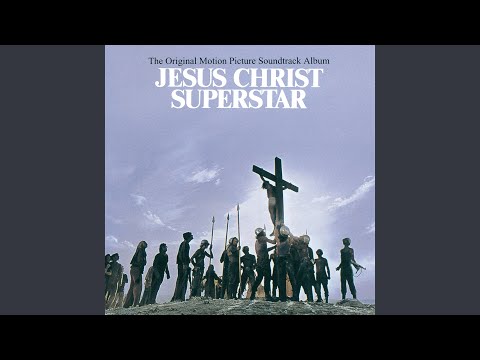
Review and Highlights
Quick summary
- What it is: A regrouping hymn for the frightened, sung by Mary with Peter answering from the edge of a panic spiral.
- Where it appears: Written for the stage era and carried into the 1973 film soundtrack, placed after Herod and before Judas collapses into despair.
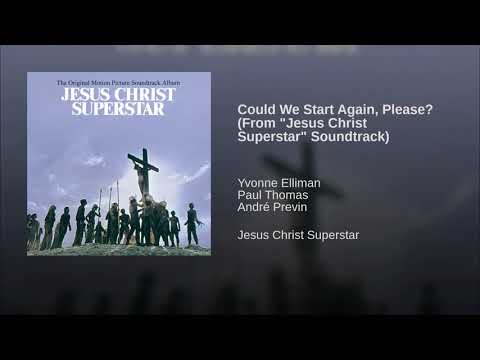
- Cast focus: The film soundtrack performance is centered on Yvonne Elliman (Mary) and Paul Thomas (Peter), with disciples joining as the refrain grows.
- How it differs across versions: Track timings vary slightly by release and platform, but the core idea stays the same: rewind the week, undo the damage.
- Why it sticks: The hook is not bravado. It is a plain sentence that keeps getting repeated because nobody knows what else to say.
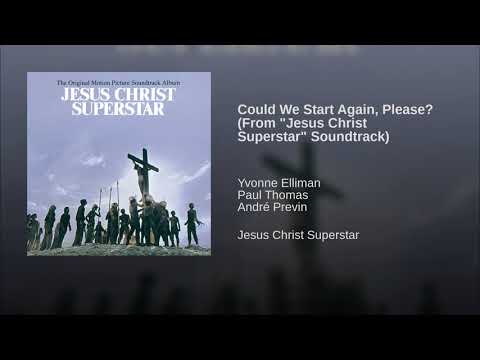
Jesus Christ Superstar (1973) - film soundtrack - not diegetic. The song lands as a brief island of reflection after the public spectacle of Herod. In the film, a subtitle-indexed excerpt places Peter's line "I think you've made your point now" at 01:21:27 (movie timestamp), which captures the scene's purpose: disciples trying to bargain with the plot itself. Why it matters: this is the one moment where the followers stop selling Jesus as a symbol and start admitting they are scared, confused, and out of moves.
Creation History
This number has a slightly unusual birth certificate. It is associated with the Broadway production period and then becomes part of the film's recorded narrative, rather than being a flagship single in the conventional sense. Cover databases trace the earliest releases to 1971, and later documentation points out that the song functioned as a practical fix in the show: it gives Mary a post-interval presence and pairs her with Peter for a shared, human-scale reaction. That is why it plays so cleanly - it was engineered to plug a dramatic gap, and it does the job with a soft hammer rather than a wrecking ball.
Song Meaning and Annotations
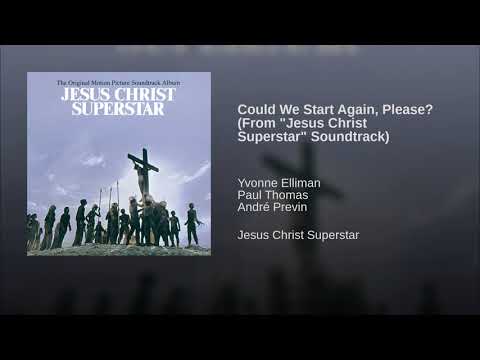
Plot
Mary begins in a rush of relief that turns instantly into dread: she has found Jesus, but the situation is wrong, and the air feels dangerous. Peter responds like someone trying to talk down a fire, arguing that the message has gone far enough and pleading for a halt. As the disciples join, the request becomes communal. They are not asking for a miracle so much as a reset button.
Song Meaning
The song is a negotiation with time. Most of the score runs forward on rails, driven by prophecy, politics, and a crowd that treats faith like a trend. Here, the followers attempt the only rebellion they can imagine: undo the past hour. The repeated question is also a confession. They wanted signs and certainty. They got arrests, trials, and a reality that does not care about their good intentions.
Annotations
I've been living to see you, dying to see you, but it shouldn't be like this
Mary starts with devotion, but she does not romanticize what she is seeing. The line is two impulses colliding: longing finally satisfied, then instantly corrected by fear. That tension is why the melody feels like it is leaning forward, trying to catch up with events that are already running away.
Now for the first time, I think we're going wrong
This is the quiet turning point. Earlier in the story, the group can argue about tactics. Here, the doubt is existential. In a rock opera full of big claims, it is refreshing to hear a small, honest sentence: we misread the room.
You've even gone a bit too far to get the message home
Peter's reply is a survival instinct dressed as reason. He frames the catastrophe as a lesson that has overshot its teaching goal. It is not malice. It is a man trying to regain control by re-labeling terror as strategy.
Before it gets too frightening, we ought to call a halt
That word "frightening" is doing work. It admits that the disciples do not feel brave anymore, and it exposes how little they understand about the machinery around them. The song does not scold them for fear. It lets fear speak.
Driving rhythm and style fusion
Despite its prayer-like shape, this is still rock theater. The pulse sits back, letting the vocal phrasing land like spoken regret, while the ensemble repetition turns the line into a chant you could imagine in any decade. That blend of pop simplicity and stage pacing is why the song can survive wildly different productions.
Cultural touchpoints
The idea of "starting again" has become a recurring lens for modern revivals. According to The Guardian's 2025 review of a UK production, the plea can be staged as a direct reaction to how frightening the passion narrative feels to the people caught nearby, not just to the central figures. That reading fits the song: it is less theology than fallout.
Technical Information
- Artist: Jesus Christ Superstar Cast
- Featured: Paul Thomas; Yvonne Elliman
- Composer: Andrew Lloyd Webber
- Lyricist: Tim Rice
- Release Date: June 26, 1973
- Genre: Rock
- Instruments: Rock rhythm section with orchestral support; ensemble vocals
- Label: MCA Records (original film soundtrack release)
- Mood: Anxious, pleading, regrouping
- Length: 2:44
- Track #: 21 (common CD sequencing)
- Language: English
- Album (if any): Jesus Christ Superstar - The Original Motion Picture Soundtrack
- Music style: Rock-opera ballad with chorus build
- Poetic meter: Mixed, speech-led phrasing with refrains built on repeated stresses
Questions and Answers
- Why does the song arrive after the spectacle of Herod?
- Because it functions like a recoil. After mockery and noise, the story needs a quieter admission of damage, and this track provides it.
- Is the plea directed at Jesus, at God, or at time itself?
- All three, which is the clever part. The lyric never chooses one target, so the line can read as prayer, panic, and bargaining in the same breath.
- What is Mary doing that differs from her earlier songs?
- She is no longer managing the group or soothing Jesus. She is naming fear and uncertainty, which makes her sound like the most grounded person in the room.
- Why does Peter sound almost reasonable while saying something impossible?
- Because denial often borrows the language of calm. He tries to reduce the crisis to a lesson that went too far, as if a trial can be paused like a rehearsal.
- Did the song exist in the earliest album version of the show?
- Production histories frequently describe it as a later addition associated with the stage era, created to give Mary a stronger second-half presence.
- How does the chorus change the meaning?
- Once the disciples join, the request stops being one person's sorrow and becomes group guilt. The repetition turns into a communal coping mechanism.
- Why is the melody so direct compared with the more theatrical set pieces?
- Directness is the point. The characters are out of rhetoric. A simple tune carries the simplest thought: please, let us undo this.
- What is the most important acting choice for Mary?
- Do not play it as pure softness. Let the urgency show, as if she is trying to keep her voice steady while everything in her is shaking.
- Does the song have notable modern performances?
- Yes. Later televised and concert versions often highlight it as a duet moment that resets the audience's focus from spectacle back to consequence.
- What is the hidden irony of the title line?
- The phrase sounds polite, almost like a classroom request. That politeness makes the catastrophe feel even larger, because it shows how unprepared they are.
Awards and Chart Positions
The track was not positioned as a standalone chart single, but the 1973 film soundtrack album had measurable chart life. In the UK, the Official Albums Chart lists the soundtrack's peak at number 23. In the US, Billboard reporting has cited the 1973 film soundtrack's Billboard 200 peak at number 21, a reminder that cast recordings could compete in the same lane as mainstream pop releases when the cultural moment hit.
| Chart or recognition | Work | Result | Notes |
|---|---|---|---|
| UK Official Albums Chart | Jesus Christ Superstar - Original Soundtrack | Peak 23 | Listed on the chart week dated December 23, 1973 |
| US Billboard 200 | 1973 film soundtrack album | Peak 21 | Cited by Billboard in a later chart-history note |
How to Sing Could We Start Again, Please?
This is a duet that rewards restraint. The vocal writing is accessible on paper, but the real challenge is breath control while sounding like a person who has run out of certainty.
- Tempo: about 79 BPM (common database listing)
- Key: D major (common database listing)
- Mary range: F3 to Eb5 (common casting breakdowns)
- Mary style: alto or mezzo approach with clean belt options on sustained phrases
- Tempo: Rehearse speaking the lyric in time at 70 BPM, then move to 79 BPM. The song collapses if you rush the questions.
- Diction: Land the consonants of "start" and "please" without hardening the tone. This is persuasion, not confrontation.
- Breathing: Take quick, silent inhales after "unexpected" and after "going wrong." Those are natural punctuation points that keep the phrases honest.
- Flow and rhythm: Let Mary lead with longer lines, then let Peter answer with shorter, firmer phrases. The contrast is the scene.
- Accents: Stress "first time" and "dream" lightly, then widen on "start again." That is where the thought becomes a plea.
- Ensemble blend: When the disciples join, sing slightly under the lead voices. The chorus should feel like hands on shoulders, not a wall of sound.
- Mic and space: If amplified, keep the tone forward and conversational. If unamplified, aim for a bright vowel focus so the text stays clear.
- Pitfalls: Avoid turning the hook into a pop-climax. It is repetition because they are stuck, not repetition because they are triumphant.
- Practice materials: Record three passes: one almost spoken, one fully sung, one in between. Choose the middle and keep it.
Additional Info
There is a quiet historical twist in the song's afterlife. Cover databases list a 1971 release lineage, and then the 1973 film recording cements the number in the popular imagination through Elliman's performance style: direct, unfussy, and intimate even when the band is present. Later cast albums and televised versions often return to the track as a key Mary moment, partly because it reframes her story. Instead of romance or devotion as headline, she becomes the witness who admits how frightening the week looks from ground level.
One small detail I have always liked: the lyric never claims it will fix anything. It only asks permission to try. That is why it is so usable for directors. Put it on a bare stage and it feels like a group confession. Put it in a large venue and it becomes a communal whisper that somehow reaches the back row.
Key Contributors
| Entity | Type | Relationship (S-V-O) |
|---|---|---|
| Andrew Lloyd Webber | Person | Andrew Lloyd Webber - composed - the music |
| Tim Rice | Person | Tim Rice - wrote - the lyrics |
| Yvonne Elliman | Person | Yvonne Elliman - performed - Mary Magdalene on the film soundtrack recording |
| Paul Thomas | Person | Paul Thomas - performed - Peter on the film soundtrack recording |
| Jesus Christ Superstar (1973 film) | Work | The film - places - the song after Herod and before Judas' Death |
| Jesus Christ Superstar - The Original Motion Picture Soundtrack | Work | The soundtrack album - includes - the track at 2:44 |
| Official Charts Company | Organization | Official Charts Company - lists - the UK album peak data |
| IMDb | Organization | IMDb - prints - soundtrack credit lines for the film |
Sources: YouTube soundtrack upload listing, Apple Music album listing, Discogs master release page, IMDb soundtrack credits, Clip.Cafe transcript page, SongBPM, Musicstax, StageAgent, ALW Show Licensing cast requirements, Official Charts Company, Billboard magazine, The Guardian review, SecondHandSongs cover history