The Temple Lyrics
The Temple
MONEYCHANGERS AND MERCHANTSRoll on up Jerusalem,
Come on in Jerusalem,
Sunday here we go again,
Live in me Jerusalem.
Here you live Jerusalem,
Here you breathe Jerusalem,
While your temple still survives,
You at least are still alive.
I got things you won't believe,
Name your pleasure I will sell.
I can fix your wildest needs,
I got heaven and I got hell.
Roll on up, for my price is down.
Come on in for the best in town.
Take your pick of the finest wine.
Lay your bets on this bird of mine.
What you see is what you get.
No one's been disappointed yet.
Don't be scared give me a try,
There is nothing you can't buy.
Name your price, I got everything.
Hurry it's going fast.
Borrow cash on the finest terms.
Hurry now while stocks still last.
Roll on up Jerusalem,
Come on in Jerusalem,
Sunday here we go again,
Live in me Jerusalem.
Here you live Jerusalem,
Here you breathe Jerusalem,
While your temple still survives,
You at least are still alive.
I got things you won't believe,
Name your pleasure I will sell.
I can fix your
(fade, screaming)
JESUS
My temple should be a house of prayer,
But you have made it a den of thieves.
Get out! Get out!
My time is almost through.
Little left to do.
After all, I've tried for three years.
Seems like thirty, seems like thirty.
CROWD
See my eyes, I can hardly see.
See me stand, I can hardly walk.
I believe you can make me whole.
See my tongue, I can hardly talk.
See my skin, I'm a mass of blood.
See my legs, I can hardly stand.
I believe you can make me well.
See my purse, I'm a poor, poor man.
Will you touch, will you mend me Christ?
Won't you touch, will you heal me Christ?
Will you kiss, you can cure me Christ?
Won't you kiss, won't you pay me Christ?
See my eyes, I can hardly see.
See me stand, I can hardly walk.
I believe you can make me whole.
See my tongue, I can hardly talk.
See my skin, I'm a mass of blood.
See my legs, I can hardly stand.
I believe you can make me well.
See my purse, I'm a poor, poor man.
Will you touch, will you mend me Christ?
Won't you touch, will you heal me Christ?
Will you kiss, you can cure me Christ?
Won't you kiss, won't you pay me Christ?
JESUS
There's too many of you...Don't push me.
There's too little of me...Don't crowd me.
Heal yourselves!
Song Overview
Review and Highlights
Quick summary
- Scene engine: A two-part surge - merchants sell the city back to itself, then the sick crowd overwhelms the one person they think can fix them.
- Placement: A major Act I turning point that helps justify the authorities moving from worry to action.
- Sound: Rock-opera collage, with street-market patter turning into a relentless chant and a breakdown confession.
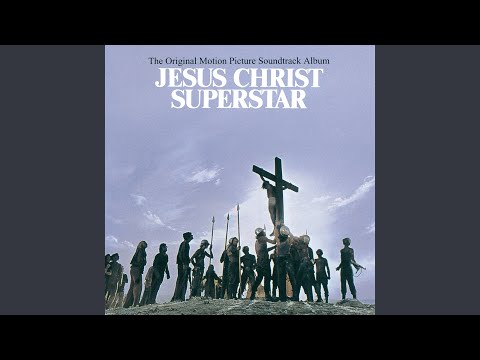
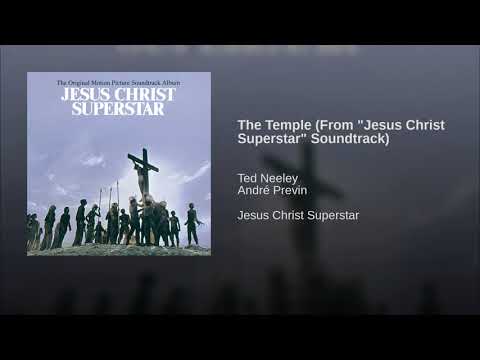
- Catalog note: Best known via the 1973 film soundtrack, later repackaged for a 25th anniversary reissue dated March 24, 1998.
- Why it sticks: It treats commerce, spectacle, and desperation as one crowded room - and it never lets you look away.
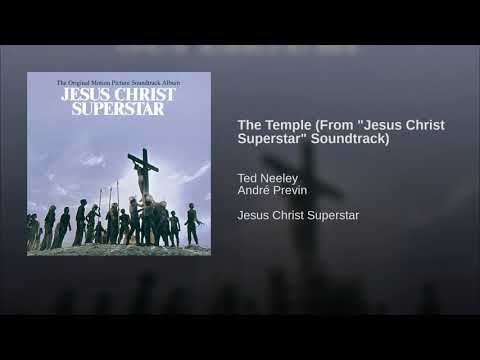
Jesus Christ Superstar (1973) - film soundtrack - not. Temple-cleansing sequence and the leper crowd, as presented in a widely circulated film clip: merchants hawk pleasures and loans, Jesus quotes scripture, then admits he is running out of time as the crowd presses in. In the clip, the confrontation lands around 01:55 (clip time) and the exhaustion line lands shortly after, around 02:20. The moment matters because it turns holiness into a battleground over attention, money, and need.
Creation History
Andrew Lloyd Webber and Tim Rice write this as a controlled riot. The merchant chorus is a parody of salesmanship with a hymn-like hook, then the score pivots into a wall of voices that demands healing and payment in the same breath. The 1973 film soundtrack sessions, associated with Andre Previn in major discographic references, keep the layers readable: you can hear who is selling, who is begging, and who is cracking. As stated in a RogerEbert.com review of the film, the screen version can feel "bright" and "breathtaking" in its best passages, and this is one of the passages that earns that claim by sheer pressure and pacing.
Song Meaning and Annotations
Plot
The merchants advertise the city as a marketplace and treat the temple as a mall. Jesus interrupts with a scripture-based accusation, driving them out. Then the crowd shifts the scene: the sick and the desperate arrive in waves, pleading for healing, and the chant becomes suffocating. Jesus tries to hold the line, then admits he is drained and cornered, pushing back against the physical and spiritual crowding.
Song Meaning
The number argues that exploitation is not only about money. It is also about turning faith into a product, and turning suffering into a bargaining chip. When Jesus says the space should be for prayer, he is not scolding commerce in the abstract - he is rejecting a system that makes worship feel like a transaction. Then the second half complicates the picture: the crowd is not evil, just desperate, and desperation can still become a kind of violence. The meaning lands in that uncomfortable overlap: greed is loud, need is loud, and both can drown the person in the middle.
Annotations
My temple should be a house of prayer
But you have made it a den of thieves
This is a direct lift from the Gospel phrasing associated with Matthew 21:13. The line is staged as an indictment with a built-in citation: a sacred space is being used as cover for taking advantage of people. In performance, it plays best as cold clarity, not just anger - the sentence is a judgment, not a tantrum.
My time is almost through
Little left to do
After all I've tried for three years
Seems like thirty
Here the show turns the riot inward. The earlier shouting is public, but this feels like an aside you were not meant to overhear. The "three years" detail is a narrative shorthand, anchoring the ministry timeline without turning the scene into a lecture.
See my legs, I can hardly stand
Some productions swap this out for a line closer to "Change my life, oh I know you can." That variant is not just a lyric tweak - it shifts the plea from physical collapse to total reinvention, which changes how the crowd reads: less hospital ward, more life-coach stampede.
Genre fusion, rhythm, and the crowd as percussion
Rock is the chassis, but the structure is music-theater craft at its most ruthless. The merchant section uses fast patter and bright hooks like an advertisement you cannot stop humming. Then the sick-crowd chant becomes the rhythm section. The repeated "See my" phrases act like drum hits, and the story becomes a wave pattern: each new plea is another shove. If the scene is staged well, you can feel the air disappear. If it is staged poorly, it turns into noise. That is the knife-edge.
Technical Information
- Artist: Jesus Christ Superstar Cast (Ted Neeley)
- Featured: Ensemble (merchants and crowd)
- Composer: Andrew Lloyd Webber
- Lyricist: Tim Rice
- Producer: Film soundtrack production (edition-dependent credits); Andre Previn is associated with the soundtrack album credit line on major catalog references
- Release Date: June 26, 1973 (film soundtrack album date on major platforms); March 24, 1998 (25th anniversary reissue date)
- Genre: Rock
- Instruments: Rock rhythm section, orchestra, massed vocals, spoken-sung passages
- Label: MCA (original release history); later catalog distribution varies by territory
- Mood: Chaotic, abrasive, claustrophobic
- Length: 5:36
- Track #: 12 (common soundtrack sequencing)
- Language: English
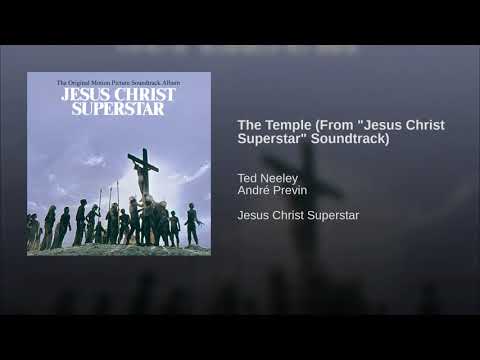
- Album (if any): Jesus Christ Superstar: The Original Motion Picture Soundtrack
- Music style: Rock-opera montage with a market chorus and a chant-driven crowd sequence
- Poetic meter: Mixed, with sales-patter phrasing and repeated anaphora ("See my")
Questions and Answers
- Who wrote the song?
- Andrew Lloyd Webber composed it and Tim Rice wrote the words.
- Why does the opening sound like a street commercial?
- Because it is written as satire. The score turns buying and selling into a chorus line, making the corruption catchy on purpose.
- What is the function of the scripture quote in the middle?
- It is the moral stamp that changes the scene from bustle to judgment. It also gives the character a public reason that is bigger than mood.
- Is the crowd of the sick portrayed as villains?
- No. They are portrayed as need, multiplied. The danger is not malice, it is the way desperation can crush boundaries.
- Why does Jesus complain about being crowded?
- It humanizes him at the exact moment the story needs vulnerability. The line admits limitation in a world that demands unlimited miracles.
- What does the merchant section reveal about the city?
- That the city can sell anything, including the promise of salvation. The lyric makes capitalism feel like a hymn.
- What is the sharpest dramatic pivot?
- The switch from "Get out!" to the tired confession about time running out. The show goes from righteous force to personal depletion in a breath.
- Why do some productions change one of the "See my" lines?
- Alternate wording such as "Change my life" shifts the plea from a physical ailment to total transformation, and that subtly changes the crowd from patients to seekers of a personal reset.
- How is this scene linked to the political plot?
- It gives the priesthood a practical fear: public disorder. The same energy that cheers can also riot, and authorities notice that.
- Does the number have a standard pop-single history?
- Not in the usual sense. Its impact is tied to cast recordings, the film soundtrack, and televised and stage revivals.
Awards and Chart Positions
The track itself was not treated as a standalone single, so the measurable milestones sit with the film and the soundtrack album that carries it. The 1973 original soundtrack logged a peak of 23 on the UK Official Albums Chart. The film received an Academy Awards nomination for adaptation scoring, and BAFTA lists it as a Soundtrack winner. The Golden Globes database records major acting nominations tied to the film cast, a reminder of how closely the music and performances were judged as one package.
| Category | Work | Result | Detail |
|---|---|---|---|
| UK Official Albums Chart | Jesus Christ Superstar - Original Soundtrack | Peak | 23 |
| Academy Awards | Jesus Christ Superstar (1973 film) | Nomination | Music (Song Score and Adaptation) |
| BAFTA Film Awards | Jesus Christ Superstar (1973 film) | Winner | Soundtrack (Les Wiggins, Gordon K McCallum, Keith Grant) |
| Golden Globe Awards | Jesus Christ Superstar (1973 film) | Nominations | Acting nominations include Ted Neeley and Carl Anderson |
How to Sing The Temple
This number is a marathon disguised as a scene. You have two jobs: satirical bite in the market material, then survival-mode truth once the crowd closes in. The lead part is typically cast as a rock tenor, but the smartest approach here is pacing, not brute force.
- Tempo and meter (common listing): about 102 BPM with a triple feel (3 beats per bar).
- Key (common listing): E minor.
- Role guide: Casting references describe Jesus as rock tenor, with an approach that must handle sustained intensity and speech-forward phrasing.
- Tempo: Rehearse the merchant section at 70 percent speed first, keeping consonants crisp. Then bring it up to tempo without adding volume.
- Diction: Treat the sales lines like patter. Quick tongue, short vowels, and clean endings so the satire reads.
- Breathing: Mark breaths in the second half where the crowd phrases repeat. Stagger your own breaths so you do not start chasing air.
- Flow and rhythm: Keep the triple feel steady but not dainty. Think rolling pressure, not a waltz.
- Accents: Save your sharpest edge for the scripture quote and the "Get out!" command. Everything else sets up those hits.
- Ensemble handling: The crowd must be a wall, but a controlled wall. If you are directing, drill matching vowels on repeated words so the sound becomes one organism.
- Mic craft: Stay close on the tired confession lines. This is where intimacy is more frightening than shouting.
- Pitfalls: Do not play the exhaustion as weakness. Play it as limit. That difference keeps the character grounded instead of defeated.
- Practice materials: Speak the crowd text in rhythm, then sing it. Record rehearsals and listen for blur in repeated phrases.
Additional Info
This scene has a long second life because it is easy to excerpt and hard to fake. A well-known example is the original Broadway cast appearance on the Tony Awards, which included this number in the televised segment. It is also a favorite for reinterpretation across recordings: SecondHandSongs lists early concept-album lineage with Ian Gillan in 1970, and later performances and versions tied to cast albums and highlights releases. In 2018, the NBC live television event issued a soundtrack that includes the number, and the 2000 screen version has its own cast track, both keeping the sequence in the public ear long after the film era.
Key Contributors
| Entity | Type | Relationship (S-V-O) |
|---|---|---|
| Andrew Lloyd Webber | Person | Andrew Lloyd Webber - composed - the music |
| Tim Rice | Person | Tim Rice - wrote - the words |
| Ted Neeley | Person | Ted Neeley - performed - the film soundtrack lead vocal for the scene |
| Andre Previn | Person | Andre Previn - is credited with - music direction on the film soundtrack reissue |
| Jesus Christ Superstar (1973 film) | Work | The film - stages - the temple-cleansing sequence and crowd pressure scene |
| Jesus Christ Superstar (Original Motion Picture Soundtrack) | Work | The soundtrack album - includes - the track |
| Official Charts Company | Organization | Official Charts Company - documents - the UK chart run of the soundtrack album |
| Academy of Motion Picture Arts and Sciences | Organization | The Academy - lists - the film's adaptation scoring nomination |
| BAFTA | Organization | BAFTA - records - a Soundtrack win for the film |
| Golden Globes | Organization | Golden Globes - records - acting nominations tied to the film cast |
Sources: Universal Music Group YouTube topic upload, Apple Music album listing, AllMusic 25th anniversary reissue page, Official Charts Company album stats page, Oscars ceremony page (1974), BAFTA Soundtrack winners page, Golden Globes film database page, BibleGateway verse page, SongBPM track metrics page, RogerEbert.com film review, SecondHandSongs performance and cover history, JesusChristSuperstarZone FAQ and discography pages, Spotify album listings for 2018 live event and 2000 cast track