Pilate And Christ Lyrics
Pilate And Christ
PILATEWho is this broken man, cluttering up my hallway?
Who is this unfortunate?
SOLDIER
Someone Christ,
King of the Jews.
PILATE
Oh, so this is Jesus Christ,
I am really quite surprised.
You look so small,
Not a king at all.
We all know that you are news,
But are you king?
King of the Jews?
JESUS
Your words, not mine.
PILATE
What do you mean by that?
That is not an answer.
You're deep in trouble friend,
Someone Christ,
King of the Jews.
How can someone in your state be so cool about his fate?
An amazing thing, this silent king.
Since you come from Galilee, then you need not come to me,
You're Herod's race!
You're Herod's case!
MOB
Hey Ho Sanna Hey Sanna Sanna Sanna Hosanna
Hey Sanna Ho and how
Hey J.C., J.C. please explain to me,
You had everything.
Where is it now?
Song Overview
Review and Highlights
Quick summary
- Where it sits: A short pivot-scene between the arrest and Herod, built like a courtroom sketch that suddenly turns into a stampede.
- Who drives it: Pilate does the measuring-up; Jesus answers in clipped, almost philosophical counters; the mob supplies the pressure-cooker chorus.
- What it does dramatically: It relocates the conflict from faith to jurisdiction - a bureaucratic shrug with a political fuse.
- Why it lands: The music stays taut and marching while the dialogue circles one question: are you a king, or just a headline?
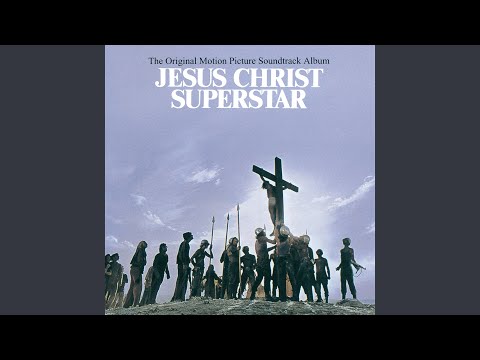
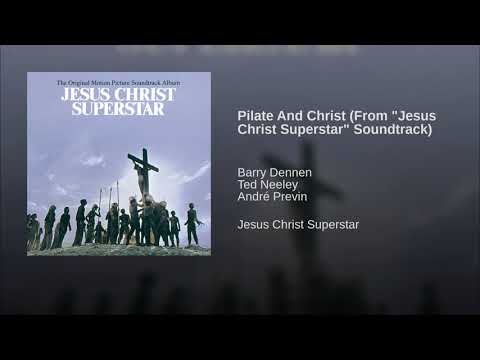
Jesus Christ Superstar (1973) - film soundtrack - not diegetic. The song begins during Pilate's hallway interrogation (the film places the opening lines at about 01:14:05) and ends with the administrative handoff to Herod. The moment matters because it frames the coming violence as paperwork disguised as destiny: authority trying to stay clean while the crowd wants blood.
Creation History
The number comes from the show that Andrew Lloyd Webber and Tim Rice first pushed into the world as a concept album before the stage production took off. It has always been a hinge: not a big aria, not a full set-piece, but a dramatic lever that flips us from religious panic to Roman process. In the film recording, the writing is brisk and rock-leaning, with Pilate's melody behaving like controlled speech over a steady pulse - a musical version of a governor keeping his hands from shaking.
Song Meaning and Annotations
Plot
Jesus is delivered to Pilate. Pilate is unimpressed by the physical reality of the man rumored to be "King of the Jews" and tries to pin down what Jesus is claiming. Jesus refuses to play the game on Pilate's terms. Then comes the procedural twist: when Pilate hears Galilee, he punts the case to Herod, and the crowd surges to keep the story moving.
Song Meaning
This is a song about power pretending it is neutral. Pilate is not written as a frothing villain here - he is written as a professional trying to survive his own office. He wants a clean answer, a charge that fits, a reason the empire can file. Jesus replies with language that turns every accusation back into a mirror. The tension is not only theological; it is administrative, like watching a trial turn into a press conference.
Annotations
Who is this broken man cluttering up my hallway?
Pilate starts with contempt, but it is a specific kind: the impatience of someone whose corridor has become a public stage. In the film, that line arrives like a sung sneer - the governor using status as armor.
King of the Jews?
The title is the trap. In the biblical narrative, Pilate's questioning turns on the same claim, because "king" is a political word before it is a spiritual one. The musical keeps that double meaning intact: the crowd hears myth, Rome hears insurgency.
Your words, not mine
A minimalist dodge that feels modern. Jesus does not deny the label; he refuses ownership of Pilate's framing. The line also undercuts the entire idea of confession: the state wants a sentence; the accused offers a philosophy.
Since you come from Galilee, then you need not come to me. You're Herod's race! You're Herod's case!
This is the sharpest example of the show's political satire. Jurisdiction becomes morality. Pilate uses geography as an exit ramp, echoing the Gospel detail that Jesus is sent to Herod after being identified as a Galilean. In a rock opera full of grand statements, this is the cold little trick that changes everything.
Driving rhythm and style fusion
The writing blends rock cadence with quasi-recitative: Pilate's phrases are clipped and forward, as if he is speaking in rhythm, while the mob's interjections arrive like a stadium hook. That push-pull keeps the track moving even when the scene is basically legal small-talk.
Emotional arc
Pilate begins certain of his superiority. Then, as Jesus stays calm, Pilate's certainty reads less like confidence and more like discomfort. The crowd's "Hosanna" callback is the acid in the beaker: worship turned into pressure, devotion turned into threat.
Cultural and historical touchpoints
The scene plays on a real historical anxiety: Rome did not care about internal religious disputes until they looked like rebellion. The show dramatizes that fear in shorthand: one word, "king," is enough to put everyone on edge. As stated in the Academy Awards record for the 1974 ceremony, the film's music drew formal industry attention in the adaptation-scoring category, and this compact scene is a good example of why the material stayed sticky.
Technical Information
- Artist: Jesus Christ Superstar Cast
- Featured: Ted Neeley, Barry Dennen
- Composer: Andrew Lloyd Webber
- Lyricist: Tim Rice
- Release Date: June 1973 (film soundtrack album release)
- Genre: Rock
- Instruments: Rock band and orchestra (guitars, bass, drums, keys, brass and strings as arranged for the film recording)
- Label: MCA (original soundtrack release)
- Mood: Tense, procedural, sardonic
- Length: 2:57
- Track #: Side 3, track 5 on the original 2xLP sequence
- Language: English
- Album: Jesus Christ Superstar - The Original Motion Picture Soundtrack (reissued 1998)
- Music style: Rock opera, theatrical recitative with choral chants
- Poetic meter: Mixed meter (speech-like phrasing over a steady pulse)
Questions and Answers
- Why does Pilate focus so hard on the word "king"?
- Because "king" is a political accusation in Roman terms. If Jesus accepts it plainly, Pilate has grounds to treat him like a rebel rather than a local preacher.
- What does "Your words, not mine" achieve dramatically?
- It keeps Jesus from participating in the state's script. Pilate wants a tidy admission; Jesus returns the claim to the questioner, forcing Pilate to own the implication.
- Is the handoff to Herod just plot convenience?
- No - it is a character reveal. Pilate shows how power survives: by delegating risk. The show makes bureaucracy feel like a moral choice.
- Why does the crowd chant "Hosanna" here?
- It is the show's irony engine. Earlier, "Hosanna" is welcome and worship; here it becomes a mob refrain, proving how quickly public devotion can flip into public menace.
- How does this scene connect to the biblical account?
- The Gospel of Luke describes Pilate sending Jesus to Herod after learning he is a Galilean. The song compresses that detail into a punchline about jurisdiction.
- What is Pilate's vocal type in typical productions?
- Pilate is often cast as a high baritone or baritenor, with the role demanding punchy text delivery as much as sustained singing.
- Why is the number so short compared to the big set pieces?
- Because it functions like a hinge. It is there to move the story across a political border, not to stop time for reflection.
- What is the biggest performance pitfall?
- Playing Pilate as only cruel or only comic. The tension comes from his need to look in control while the room threatens to run away from him.
- Did the song exist before the film soundtrack?
- Yes. The show originated as a concept album release, and the piece appears among the early recorded versions of the score before the film recording.
Awards and Chart Positions
The track itself was not marketed as a pop single, but it lives on an album with serious commercial and awards footprint. According to Official Charts Company data, the original soundtrack album reached a top-25 peak in the UK, and the US Billboard listing for the soundtrack places it among the higher-charting film cast recordings of its day. The film's music also earned major awards attention, including an Academy Awards nomination for adaptation scoring and a BAFTA win in the soundtrack category.
| Category | Result | Work | Notes |
|---|---|---|---|
| UK album chart peak | Peak 23 | Jesus Christ Superstar - Original Soundtrack | 15 weeks on the UK albums chart |
| US album chart peak | Peak 21 | Jesus Christ Superstar - film soundtrack album | Listed on Billboard Top LPs and Tape in 1973 |
| Academy Awards | Nominee | Jesus Christ Superstar (film) | Music scoring category (adaptation) |
| BAFTA Film Awards | Winner | Jesus Christ Superstar (film) | Soundtrack award credited to the film's sound team |
How to Sing Pilate and Christ
Pilate is typically cast as a high baritone with an upper extension, and the role's range is often summarized in production resources as roughly A2 to B4. This particular number is less about floating a long melody and more about delivering text like a blade: rhythmic clarity, status, and controlled sarcasm.
- Tempo first: Practice at a slow count, then move toward the commonly listed performance tempo range for the film recording. Keep consonants crisp so the rhythm stays readable.
- Diction: Over-articulate the questions ("Who is" and "King") without turning them into caricature. Pilate sounds sharper when you land the ends of phrases.
- Breath plan: Mark breaths like a speaker, not like a bel canto aria. Short inhales between clauses keep the authority intact.
- Flow and rhythm: Think of it as sung dialogue over a march. Lock into the pulse, then let the attitude ride on top.
- Accents: Highlight the power words - "king", "Galilee", "Herod" - with slight dynamic stress rather than extra volume.
- Ensemble management: When the crowd enters, do not fight them with force. Cut through with precision and placement, staying forward in the mask.
- Mic and space: If amplified, back off on the loudest attacks and keep the tone focused. If unamplified, aim for a bright, speech-led resonance.
- Common pitfalls: Rushing the questions, swallowing final consonants, or leaning too far into parody. The comedy is in the situation, not in mugging.
Additional Info
One of the sly tricks here is how the show turns a sacred narrative into a modern political problem: Pilate treats the case like bad publicity, and the chorus treats it like sport. That tension is why the song keeps resurfacing in later recordings and televised versions of the musical - it is compact, it is legible, and it hits the story's nerve in under three minutes.
The earliest widely documented recording lineage runs from the concept-album era into the film version, and cover databases list multiple recorded interpretations, including later cast revivals and televised event performances. If you want a quick comparison exercise, listen to how different Pilates handle the laugh on "You're Herod's case" - it can be bitter, amused, or nervous, and each choice changes the scene.
Key Contributors
| Entity | Type | Relationship |
|---|---|---|
| Andrew Lloyd Webber | Person | composed the music for the show and this number |
| Tim Rice | Person | wrote the lyrics and book framework for the show |
| Barry Dennen | Person | performed as Pilate on the 1973 film soundtrack recording |
| Ted Neeley | Person | performed as Jesus on the 1973 film soundtrack recording |
| Norman Jewison | Person | directed the 1973 film adaptation that frames the scene |
| Universal Pictures | Organization | distributed the 1973 film adaptation |
| MCA Records | Organization | released the original 1973 film soundtrack album |
| Jesus Christ Superstar (1970 concept album) | Work | introduced early recorded versions that predate the film recording |
| Jesus Christ Superstar (1973 film) | Work | places the scene as a jurisdictional pivot before Herod |
Sources: Official Charts Company, Oscars, BAFTA, Wikipedia, BibleGateway, Clip.Cafe, StageAgent, SecondHandSongs, Spotify