Tomorrow Is A Latter Day Lyrics — Book of Mormon, The
Tomorrow Is A Latter Day Lyrics
know this much is true.
Tomorrow is a latter day,
and I am here for you.
Tomorrow is a latter day,
tomorrow is a latter day,
tomorrow is a latter day.
I am a latter day saint (latter day)
I help all those I can
I see my friends through times of joy an sorrow.(times of joy and sorrow)
What happens when we're dead?
We shouldn't think that far ahead
The only latter day that matters is tomorrow.
The skies are clearing and the sun's coming out.
It's a latter day tomorrow.
Put your worries and your sorrows and your cares away
and focus on a latter day.
Tomorrow is a latter day!
I am a latter day saint,
along with all my town
we always stick together come one more.
We love to dance and shout
and let all the feelings out,
and work to make a better latter day.
Han-a-hay-ya
han-han-a-hay-yah
We'll be here for each other every step of the way
and make a latter day tomorrow (han-a-hay-yah)
Americans are ready for the cure for AIDS
but they're saving it for a latter day,
tomorrow is a latter day.
Tomorrow is a latter day
(I believe)
full of joy and all the things that matter day
(I believe)
Tomorrow is a bigger better latter day.
(I believe)
Tomorrow, tomorrow is a latter day
(I believe)
A happy ending on a platter day
(I believe)
Tomorrow is a don't forget her latter day
(I believe)
Why are Mormons happy?
It's because we know it's a latter day tomorrow.
So if you're sad put your hands together and pray,
that tomorrows gonna be a latter day.
And then it probably will be a latter day.
Tomorrow is a latter day!
So what will tomorrow bring?
what does the future hold?
I can almost see it now.
Hello my name is elder matombo
and I would like to share with you the most amazing book.
Hello!
Hello!
My name is sister Kimbe!
it's a book about a people who were poor and sad like you.
A sacred text of pioneers and frogs (fuck frogs)
and how you can find salvation if you just believe.
Hi-ho
Ding dong
Hello
Wabafet!
You have a lovely mudhut
and if you just put down the gun I'll show you
oh ok I'll leave.
Hello my name is elder kali
you will love all of the happiness this book can bring!
Hello
Hello
My name is elder butt-fucking-naked
did you know that the clitoris is a holy sacred thing?
Find paradise (jesus christ!)
and no more war (hello, nice door)
You've read the book of Mormon did you know there's more? (hi-ho)
We swear
This is not a scam (no ma'am)
Have you heard the story of our prophet Arnold Cunningham?
Arnold Cunningham
Arnold Cunningham
Hello!
Hello
Hello
Hello
Our church is growing strong
and if you let us in we'll show you can belong!
Join our family!
and set your spirit free
we can fully guarantee you that this book will change your life
(hello)
this book will change your life
(hello)
this book will change your life
this book will change your life
The book of Arnold!
Hello!
We are latter day saints
we take life one day at a time.
when the chips are down
we know just what to say.
The past may be in tatters
but today is all that matters.
Because today is yesterday\'s latter day.
Thank you god
Ma'hanibu eebowai!
tomorrow is a latter day!
(I still have maggots in my scrotum!)
Song Overview
Review and Highlights
Quick summary
- Act II finale sequence: Price and company pivot from rulebook faith to a practical, make-it-work future.
- On the cast album, the track also appends the "Hello!" reprise and the encore as a continuous finish.
- Built like a group vow: broad chorus writing, quick character spotlights, then a final communal lift.
- Cast recording placement: Track 16, running about six minutes in album form.
The Book of Mormon (2011) - stage musical - not diegetic. Act II finale and curtain-coda flow. Full placement: the newly baptized villagers and missionaries spread "The Book of Arnold," Price reframes belief as teamwork, and the show rolls into the final reprise and encore sequence that seals the goodbye.
This is the show putting its cards on the table. After all the satire, the ending chooses a strangely generous thesis: faith is not only doctrine, it is what people build when life gives them lousy materials. The score does not stop being funny, but it stops using laughter as a shield. The chorus lands like a promise spoken aloud so it can become real.
The clever move is structural. The track starts as a finale song, then - on the album - keeps going, folding in the last bits of stage electricity as a continuous ribbon. That decision turns the listening experience into a mini curtain call: you hear the story resolve, then you feel the room take a victory lap.
Creation History
Written by Trey Parker, Matt Stone, and Robert Lopez, the finale was recorded with the original cast during March 2011 sessions at MSR Studios in New York and released by Ghostlight Records on May 17, 2011. A free, time-limited full-album listen appeared on NPR ahead of release, a smart move for a show that people were already quoting in the lobby. According to Playbill, that early preview helped fuel the album buzz while the production was still fresh news and still winning converts of its own.
Song Meaning and Annotations
Plot
After the pageant and the mission president fallout, the villagers carry forward a new, improvised scripture - the so-called Book of Arnold - shaped by Cunningham's inventions and their own needs. Price, chastened and newly clear-eyed, stops trying to be the perfect missionary hero and starts being a partner. The company looks to the future with a shared plan: make a life, make a community, and keep moving.
Song Meaning
The message is a pivot from purity to practice. The finale argues that belief can survive doubt if it still produces solidarity, care, and work. It is not saying rules do not matter. It is saying people matter more than rules, and sometimes the only honest faith is the one that admits it is stitched together.
What makes the ending sing is the tone: uplift with a mischievous grin. The show never turns into a sermon, but it allows a sincere idea to occupy the stage for long enough to register. In that sense, the finale is a handshake between two versions of the musical: the sharp parody and the surprisingly warm human comedy.
Annotations
-
"Tomorrow is a latter day"
A wordplay hook that does double duty. It nods to the church name, and it also functions like a folk saying: keep your head up, you get another shot in the morning.
-
"The Book of Arnold"
The phrase is funny because it is brazen, but it is also the plot in miniature. Scripture becomes local, improvised, and community-owned. The joke carries an uneasy truth about how stories travel.
-
"Work together"
This is where Price changes. Instead of chasing a spotless testimony, he settles on cooperation as the true miracle. In performance, the line lands best when it sounds like relief.
Style fusion, pulse, and payoff
Musically it behaves like a Broadway finale with pop clarity: chorus-forward writing, steady rhythmic drive, and harmonies stacked for glow. The track is also a container, because it has to carry the last reprise and the encore material in album form. That means the arrangement has to do two jobs: resolve the plot and then translate applause energy into sound.
Key touchpoints and the arc of belief
The finale is not about proving theology. It is about what people do with hope when their world is harsh. New York Theatre Guide describes the final moment as Price appreciating Cunningham and embracing a future even with doubt, which frames the ending as reconciliation rather than victory. And yes, the title phrase also lands as a sly wink at the LDS naming tradition, a joke that still respects how meaningful names can be to believers.
Technical Information
- Artist: The Book of Mormon - Original Broadway Cast
- Featured: Andrew Rannells; Josh Gad; Nikki M. James; Company
- Composer: Trey Parker; Matt Stone; Robert Lopez
- Producer: Stephen Oremus; Trey Parker; Matt Stone; Robert Lopez (cast recording team)
- Release Date: May 17, 2011
- Genre: Musical theatre; musical comedy; finale ensemble
- Instruments: vocals; nine-piece pit colors (woodwinds, brass, percussion, keys, strings, guitars, basses)
- Label: Ghostlight Records
- Mood: resolved, buoyant, communal
- Length: 6:01 (album track timing)
- Track #: 16
- Language: English
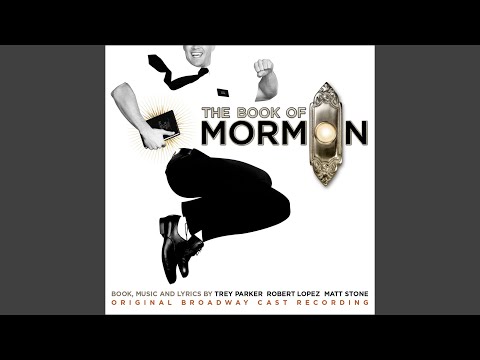
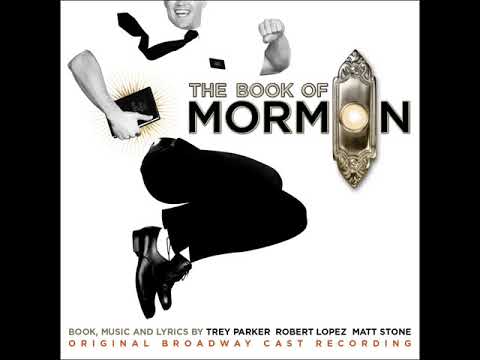
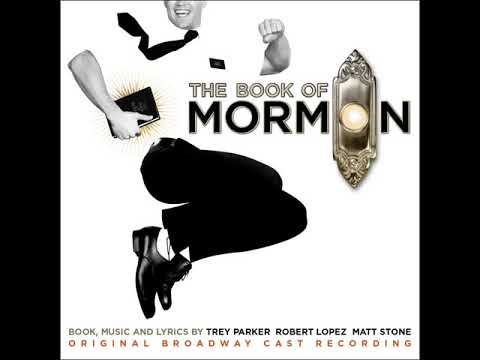
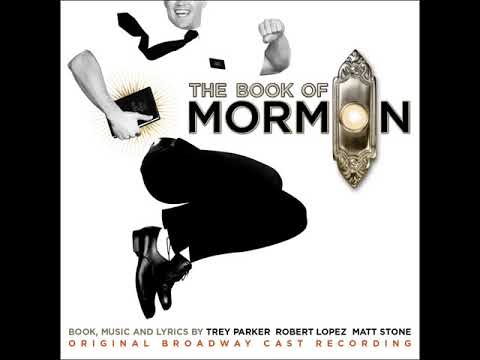
- Album (if any): The Book of Mormon: Original Broadway Cast Recording
- Music style: finale chorus writing with pop-bright phrasing
- Poetic meter: mixed, chorus-led with speech-like phrasing for comic clarity
Questions and Answers
- Why does the finale feel like more than one song on the album?
- Because the cast recording attaches the final "Hello!" reprise and the encore to the end of the last track, creating one continuous closing sequence.
- What changes for Price in this moment?
- He stops chasing perfection and starts valuing partnership. The finale frames his growth as reconciliation with Cunningham and with reality.
- Is the number meant to be a triumph or a compromise?
- Both. The sound is triumphant, but the idea is compromise: people can still build meaning even when belief is messy.
- What is the dramatic point of the Book of Arnold idea?
- It shows how stories adapt under pressure. Cunningham invents, the villagers translate, and the result becomes a community artifact with consequences.
- Does the title phrase reference LDS terminology?
- Yes, it plays on "Latter-Day" from the church name while also functioning as a plain promise of tomorrow.
- Why does the show end with a group voice instead of a solo?
- The finale argues that the real resolution is collective. Ending as an ensemble makes the message sound like a shared decision, not a personal brag.
- Is there an official filmed movie version that uses this number?
- No widely released film adaptation exists as of recent reporting, though creators and cast have discussed the idea in interviews over the years.
- What makes the comedy still work in the final minutes?
- The writing keeps a light touch. Even when it turns sincere, it keeps the language clever enough to avoid a sentimental slide.
- Why is the ending debated by audiences?
- Because it asks viewers to laugh at the absurdity while also accepting that the characters found a workable form of hope. Some people want the satire to stay sharper to the last beat.
Awards and Chart Positions
The track itself was not promoted as a standalone single, but it lives on a cast album with unusual pop-chart reach. According to Billboard magazine, the recording debuted at No. 31 on the Billboard 200 and later jumped to No. 3 after the 2011 Tony Awards wave. According to Playbill, the cast recording won the 2012 Grammy Award for Best Musical Theater Album, and Playbill later reported the album reaching RIAA Gold certification.
| Item | Result | Date |
|---|---|---|
| Billboard 200 debut (cast album) | No. 31 | May 2011 |
| Billboard 200 peak (cast album) | No. 3 | June 2011 |
| Grammy Awards (cast recording) | Best Musical Theater Album - won | February 12, 2012 |
| RIAA certification (cast album) | Gold | November 22, 2017 |
How to Sing Tomorrow Is a Latter Day
Common reference metrics: Tempo is often listed around 170 BPM, with a key listing commonly shown as G major. Because the album track also contains appended material, treat these as starting points rather than a fixed law for every staged cut.
Range anchors for typical casting: StageAgent lists Elder Kevin Price as a tenor (C3 to B4) and Elder Arnold Cunningham as a tenor (C3 to G4). The finale is ensemble-led, so stamina, diction, and blend matter as much as top notes.
- Tempo: Rehearse the chorus at 150 BPM first, then raise speed only when the consonants stay clean.
- Diction: Put extra focus on the hook line and on character names. If the audience misses those, the ending loses its snap.
- Breathing: Mark shared breaths for the ensemble blocks. A unified inhale makes the finale sound like one organism.
- Flow and rhythm: Keep the pulse buoyant, not frantic. Let the groove carry you instead of forcing volume.
- Accents: Sing the reconciliation lines warmer and rounder, then brighten the communal slogans. Contrast is the storytelling.
- Ensemble balance: Decide who leads each phrase. A finale can get messy fast if everyone tries to be the lead.
- Mic and placement: Aim for forward resonance and speech-like clarity. Save heavier belt for moments that truly need lift.
- Pitfalls: Do not turn it into a victory lap too early. The best ending keeps a hint of humility in the tone.
Additional Info
The finale has a busy second life because it is useful. Licensed digital sheet music exists for piano and voice, and accompaniment releases circulate for rehearsal rooms that need show-keys practice without a full pit. That kind of infrastructure is not glamorous, but it is how theatre songs stay alive once the original cast is history.
It is also a neat case study in how a cast album can reshape dramaturgy. The stage ending is a sequence of moments; the recording turns it into a single track experience. You do not just hear the resolution, you hear the handoff into bows. I have always liked that choice. It is a little bit of stagecraft smuggled into headphones.
For anyone tracking adaptation talk: in a 2024 interview, Josh Gad recalled early plans that imagined the property as an animated film before it became a stage musical, a reminder that this story has been orbiting different formats for years without settling into an official movie release.
Key Contributors
| Entity | Type | Relationship (S-V-O) |
|---|---|---|
| Trey Parker | Person | Parker co-wrote the score and co-produced the cast recording. |
| Matt Stone | Person | Stone co-wrote the score and co-produced the cast recording. |
| Robert Lopez | Person | Lopez co-wrote the score and co-produced the cast recording. |
| Stephen Oremus | Person | Oremus produced the cast album sessions and shaped the vocal-forward mix. |
| Ghostlight Records | Organization | Ghostlight Records released the cast recording and distributed the official audio upload. |
| Andrew Rannells | Person | Rannells performed the finale track as part of the original Broadway cast. |
| Josh Gad | Person | Gad performed the finale track as part of the original Broadway cast. |
| Nikki M. James | Person | James appears on the finale track with the company on the cast album. |
| MSR Studios (New York) | Organization | MSR Studios hosted the March 2011 cast recording sessions. |
Sources: Ghostlight Records YouTube track page, Ghostlight Records album listing, New York Theatre Guide song guide, London Theatre song guide, The Book of Mormon (musical) song notes, The Book of Mormon: Original Broadway Cast Recording notes, Playbill NPR preview article, Billboard cast-album chart debut report, Entertainment Weekly chart story, Broadway.com chart note, Playbill Grammy win report, GRAMMY.com acceptance clip page, Playbill cast recordings certification list, Musicstax track metrics, StageAgent role profiles, Sheet Music Plus listing, Stage Stars accompaniment release, IndieWire interview