Book of Mormon, The Lyrics – All Songs from the Musical
Book of Mormon, The Lyrics: Song List
About the "Book of Mormon, The " Stage Show
Release date: 2011
"The Book of Mormon" – The Musical Guide & Song Meanings
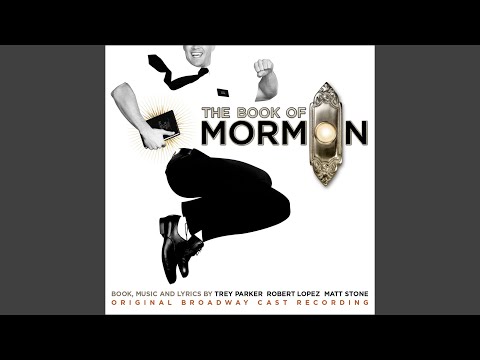
Review
How can a show be so polite in its opening seconds, then spend the next two hours weaponizing politeness? That is the core gag of "The Book of Mormon." The lyrics treat missionary cheer like a hard-sold product, then test what happens when that product hits a place that cannot afford fantasies. The cleverness is not just the profanity. It’s the musical-theatre fluency. Parker, Stone, and Lopez write jokes that land because the rhyme is clean, the phrase is simple, and the cadence is Broadway-tight.
The lyric engine runs on contrasts. Utah diction meets Ugandan reality. Innocent optimism meets the blunt language of survival. When the score turns to tap, gospel, Disney-ish balladry, and big Act II adrenaline, it’s not random pastiche. Each style is a mask a character tries on to avoid looking directly at what is happening. Elder Price sings certainty like it is oxygen. Elder Cunningham sings need like it is friendliness. Nabulungi sings a dream that starts as escape and ends as diagnosis.
Under the laughs, the show is about storytelling as power. Who gets to write the narrative, whose narrative gets believed, and what happens when belief becomes a performance requirement. The lyrics keep asking the same question in different keys: are you telling the truth, or are you making something useful?
How It Was Made
The origin story is theatre-world perfect. In 2003, Parker and Stone saw "Avenue Q," met Robert Lopez, and found a shared obsession with Joseph Smith and Mormonism. That meeting, and a later research trip to Salt Lake City, is repeatedly cited as the spark that turned a joke into an actual musical project. The work then stretched for years, written around "South Park" schedules and retooled through workshops before going straight to Broadway. The creators have also described the collaboration as a split personality that became productive: Lopez drawn to craft and musical form, Parker and Stone hungry for emotion as well as shock.
Even the album tells you something about the writing. The original Broadway cast recording was produced with unusual care for clarity, partly because the vocal architecture is busy and the jokes have to read on first listen. The track list moves like the show does: a bright pitch, a fast plot, then a sudden descent into nightmare and an equally sudden sprint back into uplift.
Key Tracks & Scenes
"Hello!" (Elder Price, Missionaries)
- The Scene:
- The Missionary Training Center. White shirts, tight smiles, doorbells like percussion. Lighting is clean and corporate, like an ad for certainty. Cunningham is already off-beat, already sweating the choreography.
- Lyrical Meaning:
- This is sales training set to harmony. The lyric turns testimony into script. It’s funny because it’s precise. It’s also unsettling because it works.
"Hasa Diga Eebowai" (Villagers, Missionaries)
- The Scene:
- Arrival in a Ugandan village staged in hard daylight and dust. The ensemble moves like a wall of lived experience. The missionaries keep their smiles, but the space does not accept them. The number hits like a punchline that refuses to be just a punchline.
- Lyrical Meaning:
- The song is a thesis about coping. The lyric isn’t “shock for shock.” It’s a blunt language of despair, and it forces the missionaries’ positivity to look like denial.
"Turn It Off" (Elder McKinley, Elders)
- The Scene:
- A sudden pivot into showbiz polish. Bright stage light, crisp lines, tap breaks that feel too cheerful for the advice being given. McKinley leads with charm, then the charm hardens into instruction.
- Lyrical Meaning:
- The lyric is repression turned into a technique. It’s funny because it is packaged as self-help. It stings because the packaging is the point.
"All-American Prophet" (Joseph Smith, Company)
- The Scene:
- A pageant-history number that plays like a bright cartoon with a live orchestra. Colors pop, movement is fast, and the staging treats mythmaking as entertainment. The room feels like it’s cheering while it’s being sold a story.
- Lyrical Meaning:
- This song shows how belief becomes narrative. The lyric is deliberately breezy. That breeziness is the critique.
"Sal Tlay Ka Siti" (Nabulungi)
- The Scene:
- One figure in a softer pool of light while the village recedes. The song breathes. The orchestration goes tender. The dream is staged as a postcard that keeps flickering at the edges.
- Lyrical Meaning:
- A classic “somewhere else” song, written with a smile that is trying not to break. The lyric makes hope feel real, then makes it feel expensive.
"Spooky Mormon Hell Dream" (Elder Price, Company)
- The Scene:
- A fever-dream spectacular. Lighting snaps to neon, shadows go aggressive, and the stage becomes a nightmare revue. The speed is the joke and the horror. Price is trapped inside his own mental choreography.
- Lyrical Meaning:
- The lyric turns doctrine into anxiety. It’s not about theology. It’s about fear as fuel, and what fear does to a person who needs to be perfect.
"I Believe" (Elder Price)
- The Scene:
- Price alone, forward-facing, like he’s testifying to a jury. The lighting steadies, the song builds in stacked declarations, and the audience watches a man talk himself back into function.
- Lyrical Meaning:
- The lyric is confidence as performance. It’s also a moment of character truth: he believes because he cannot survive not believing.
"Tomorrow Is a Latter Day" (Company)
- The Scene:
- Finale uplift with a wink. The staging often restores Broadway shine, but the village and the missionaries now share the same stage language. The light is warmer, less clinical, as if the show is offering a complicated truce.
- Lyrical Meaning:
- The lyric lands as pragmatic optimism. Not “everything is fine,” but “we keep going.” In this show, that is a radical statement.
Live Updates
On Broadway, "The Book of Mormon" is still running at the Eugene O’Neill Theatre, with IBDB listing 5,495 performances as of January 11, 2026. The current Broadway cast is led by Kevin Clay (Elder Price) and Diego Enrico (Elder Cunningham), with Sydney Quildon (Nabulungi) and Derrick Williams (General) among the principals listed by Playbill.
In London, the Prince of Wales Theatre continues to sell through at least mid-May 2026 via the official ticketing pages, with group booking windows extending later in 2026. That longevity matters because the show’s tone keeps being re-litigated. The West End audience has effectively turned the piece into a long-running argument that still fills seats.
In Australia, the official site lists an active 2026 tour path: Sydney is billed as “must close” on January 25, 2026, Melbourne is scheduled to open February 2026 at the Princess Theatre, and Brisbane is slated for July 2026, supported by the production’s own news update and venue listings.
For North America beyond Broadway, Playbill’s tour listing shows "The Book of Mormon" playing San Francisco’s Golden Gate Theatre from January 13 to February 1, 2026. The official tour site also indicates it is “now on tour,” with additional dates to be announced.
Notes & Trivia
- Broadway opened March 24, 2011 at the Eugene O’Neill Theatre and is still running, with IBDB tracking 5,495 performances as of January 11, 2026.
- The Broadway cast recording was released digitally May 17, 2011, with a physical release following in June 2011, per Playbill’s release announcement.
- Ghostlight Records’ official track list includes 16 main tracks, ending with “Tomorrow Is a Latter Day.”
- The Ticketmaster “By Numbers” guide publishes an act-by-act song list and short contextual descriptions for each number, including the opening “Hello!” setup at missionary training.
- London Theatre notes that some West End songs and reprises are not on the cast album, including “Orlando” for Price and several reprises.
- The Washington Post’s headline framing in 2013 became part of the show’s marketing afterlife: the idea that this satire still “restores your faith” in the form.
- In 2025, an interview with Robert Lopez described the collaboration as a “meeting of the spirits,” balancing emotional writing impulses with the creators’ comedic instincts.
Reception
Critics largely agreed on one thing: the craft is serious, even when the content is not. The strongest notices praised how the lyrics make the gags do narrative work, and how the score moves between pastiche styles without losing momentum. The more skeptical responses tend to focus on the portrayal of Africa and the way the show turns real suffering into comic structure. That debate has not cooled with time, it has sharpened, because the production has become a permanent part of the commercial theatre landscape.
“Every song enhances the hilarity, expert staging heightens every gag.”
“It is the kind of evening that restores your faith. In musicals.”
“It has tuneful songs, clever lyrics, winning characters, explosive laughs.”
Technical Info
- Title: The Book of Mormon
- Year: 2011 (Broadway opening March 24, 2011)
- Type: Musical comedy (satire)
- Book / Music / Lyrics: Trey Parker, Matt Stone, Robert Lopez
- Broadway theatre: Eugene O’Neill Theatre (still running)
- Selected notable placements: Missionary Training Center (“Hello!”); Uganda arrival (“Hasa Diga Eebowai”); district leader lesson (“Turn It Off”); Nabulungi’s dream (“Sal Tlay Ka Siti”); Price’s nightmare (“Spooky Mormon Hell Dream”); Price’s declaration (“I Believe”)
- Album / soundtrack status: Original Broadway Cast Recording (Ghostlight Records), released May 17, 2011 (digital), with physical release in June 2011
- Availability: Widely available on major streaming platforms (regional catalog availability may vary)
- 2025–2026 footprint: Broadway ongoing; London booking through at least May 2026; Australia touring with Melbourne (Feb 2026) and Brisbane (July 2026) publicly scheduled
FAQ
- Who wrote the lyrics for "The Book of Mormon"?
- The lyrics, music, and book are credited to Trey Parker, Matt Stone, and Robert Lopez.
- Is the soundtrack album the same as the full show?
- Not exactly. The Original Broadway Cast Recording is the core musical sequence, but some reprises and at least one song used in the stage version have been noted as not appearing on the album.
- Where does "Turn It Off" happen in the story?
- It’s presented as a lesson from the district leader to the missionaries, staged as a polished tap-style showpiece that turns emotional avoidance into a rule.
- What is "Spooky Mormon Hell Dream" really doing?
- It externalizes Elder Price’s panic. The lyric turns doctrine, guilt, and performance pressure into a spectacle, so you can hear the fear inside the joke.
- Is "The Book of Mormon" still running in 2026?
- Yes. It remains on Broadway, continues in the West End with booking windows into 2026, and the official Australian site lists a 2026 tour route including Melbourne and Brisbane.
Key Contributors
| Name | Role | Contribution |
|---|---|---|
| Trey Parker | Book / Music / Lyrics | Comedy structure that behaves like real musical theatre writing, with jokes locked to rhythm and rhyme. |
| Matt Stone | Book / Music / Lyrics | Satirical bite and narrative pacing that keeps scenes moving fast, even when the subject turns dark. |
| Robert Lopez | Book / Music / Lyrics | Broadway craft and melodic architecture that lets the score pivot styles without losing clarity. |
| Casey Nicholaw | Director / Choreographer (original production) | Precision staging that makes “missionary cheer” look like choreography training, then breaks it open. |
| Stephen Oremus | Album producer (credited); musical leadership (credited) | Helps translate dense vocal writing and joke timing into a recording that reads cleanly. |
| Ghostlight Records | Label | Released and maintains the official Original Broadway Cast Recording catalog entry and track list. |
Sources: IBDB; Playbill; The Book of Mormon Broadway (official); Ghostlight Records (official); Ticketmaster UK Discover; London Theatre; The Washington Post; Variety; The Hollywood Reporter; The Book of Mormon Australia (official); Delfont Mackintosh (Prince of Wales Theatre official); QPAC (official).