Baptize Me Lyrics — Book of Mormon, The
Baptize Me Lyrics
Im about to do it for the first time.
And Im gonna do it with a girl!
A special girl-
Who makes my heart kind of flutter-
Makes my eyes kind of blur-
I cant believe Im about
To baptize her!
NABULUNGI:
He will baptize me!
He will hold me in his arms,
And he will baptize me!
Right in front of everyone
And it will set me free-
When he looks into my eyes.
And he sees just how much
I love being baptized...
ELDER CUNNINGHAM:
Im gonna baptize her!
NABULUNGI:
Baptize me!
ELDER CUNNINGHAM:
Bathe her in Gods glory!
And I will baptize her-
NABULUNGI:
Im ready.
ELDER CUNNINGHAM:
-With everything I got.
And Ill make her beg for more,
NABULUNGI:
Oooh,
ELDER CUNNINGHAM:
As I wash her free of sin.
And itll be so good,
Shell want me to
ELDER CUNNINGHAM and NABULUNGI:
Baptize her/me again.
ELDER CUNNINGHAM:
Excuse me, Im gonna need another minute!
NABULUNGI:
Never known a boy to gentle,
One like him is hard to find.
A special kind.
Who makes my heart kind of flutter,
Like a moth in a cocoon.
I hope he gets to baptizin me soon!
ELDER CUNNINGHAM:
Im gonna baptize you.
Im through with all my stalling.
NABULUNGI:
Youre gonna baptize me.
Im ready to let you do it.
BOTH:
And it will set us free.
Its time to be immersed.
And Im so happy youre
About to be my first.
ELDER CUNNINGHAM:
Okay, you ready?
NABULUNGI:
I am ready. So... how do we do it?
ELDER CUNNINGHAM:
Well, I hold you like this-
NABULUNGI:
Yeah?
ELDER CUNNINGHAM:
And I lower you down-
NABULUNGI:
Yeah?
ELDER CUNNINGHAM:
And then I-
(splash)
I just baptized her!
She got doused by Heavenly Father!
I just baptized her good!
NABULUNGI:
You baptized me!
ELDER CUNNINGHAM:
I performed like a champ!
NABULUNGI:
Im wet with salvation!
BOTH:
We just went all the way!
Praise be to God,
Ill never forget this day...
ELDER CUNNINGHAM:
I baptized you!
NABULUNGI:
You baptized me!
ELDER CUNNINGHAM:
I gotcha good!
NABULUNGI:
Baptize me!
ELDER CUNNINGHAM:
You want it more, baby?
NABULUNGI:
Baptize me!
Ill text you later.
Song Overview
Review and Highlights
Quick summary
- A comic duet for Elder Arnold Cunningham and Nabulungi, staged as a baptism scene that plays like a love song spoof.
- Appears in Act II, positioned after "I Believe" and before the ensemble celebration that follows.
- Built for stage timing: clean melodic hooks on top, cheeky subtext underneath.
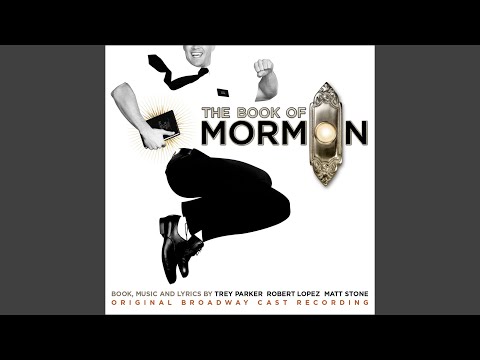
- Cast recording placement: Track 13 on the 2011 Original Broadway Cast Recording.
The Book of Mormon (2011) - stage musical - diegetic. Act II baptism sequence: Cunningham and Nabulungi lock into a duet that frames a sincere ritual as flirtation, using the ceremony as a character beat for both of them. The joke lands because the staging reads sweet and earnest while the lyric strategy keeps slipping into double meaning.
This number is where the show proves it can play two games at once. On the surface, it is a Broadway-friendly duet with balanced phrases and a steady pulse. Underneath, it is a carefully engineered misunderstanding: two people singing past each other, or maybe directly at each other, depending on how you stage the glances. The rhythm keeps it moving, the melody keeps it legible, and the comedy comes from how politely it refuses to say the quiet part out loud.
Creation History
Written by Trey Parker, Matt Stone, and Robert Lopez, the song entered the world through the Original Broadway Cast Recording released by Ghostlight Records in 2011. The album sessions were captured at MSR Studios in New York in March 2011, with Stephen Oremus among the key production hands shaping the final sound. There is no glossy, plot-heavy music video in the pop sense; what circulates officially is the label-distributed, auto-generated YouTube track, plus broadcast or event clips from stage companies. According to Playbill, the cast album also carried a mainstream awards footprint, which matters because it helped turn individual numbers like this into audition staples outside the theater.
Song Meaning and Annotations
Plot
In Act II, the missionaries push toward conversions while the story pressure spikes around them. In the middle of that push, the baptism scene arrives as a pocket of intimacy: Cunningham and Nabulungi share a moment that is framed as tender onstage and read as comic because the language and subtext keep leaning into romance. The placement is strategic: it resets the audience after a big declaration number and before the ensemble swings back into larger-scale commentary.
Song Meaning
The core meaning is simple, then it gets mischievous. It is a duet about desire and consent, disguised as a religious rite. Nabulungi voices eagerness in terms that sound spiritually literal, while Cunningham tries to stay on mission even as his phrasing and tone betray that he is not made of stone. The writers use the classic musical-theatre trick: a sincere melodic frame that can hold irony without winking too hard. In other words, the tune plays it straight so the audience can laugh at what the characters cannot admit.
Annotations
“Baptize me.”
Four words, a whole engine. The phrase works as ritual request, romantic invitation, and punchline. The scene often succeeds or fails based on how gently the performers treat it.
“I’m wet with salvation.”
This is the show at its most precise: a line that can read as naive joy in context, while the audience hears the other meaning instantly. The trick is that the line still has to sing as if it believes itself.
“I want you to do it.”
A consent-forward sentence with a comic edge. In performance, this is where directors can calibrate the temperature: playful and awkward, or openly charged, without turning it crude.
Style and musical mechanics
Think of it as a love ballad wearing a missionary name tag. The groove moves fast enough to keep the jokes from sagging, while the phrasing stays singable and clear for a duet that needs crisp coordination. The number leans on contemporary musical-theatre polish, with a pop-leaning vocal approach that supports belt and bright diction. That fusion is why it travels so well beyond the show: it is funny, but it is also built like a real duet, not a throwaway sketch.
Subtext, staging, and the cultural touchpoints
The song is also a small study in how musicals turn institutions into metaphors. Here, a formal rite becomes a flirtation language, and the audience is invited to hold two readings at the same time. It is not just a dirty joke; it is a character scene that reveals how badly both people want connection, and how different their vocabularies are. I have seen the number land hardest when it is played with almost innocent sincerity. The more it strains for laughs, the less it works.
Technical Information
- Artist: Original Broadway Cast (principal voices: Josh Gad, Nikki M. James)
- Featured: Duet for Elder Arnold Cunningham and Nabulungi
- Composer: Trey Parker, Matt Stone, Robert Lopez
- Producer: Stephen Oremus (album production also credited to the creators and producing team)
- Release Date: May 17, 2011
- Genre: musical comedy, showtune, contemporary musical theatre duet
- Instruments: vocals, pit orchestra (cast-album orchestration)
- Label: Ghostlight Records
- Mood: playful, teasing, oddly sincere
- Length: 4:15
- Track #: 13
- Language: English
- Album: The Book of Mormon: Original Broadway Cast Recording
- Music style: love-duet parody with pop-rock belt sensibility
- Poetic meter: mixed (mostly iambic phrasing with punchy, speech-like turns for comedic timing)
Questions and Answers
- Where does the song sit in the stage story?
- It arrives in Act II during the conversion push, staged around a baptism scene that becomes a private moment between Cunningham and Nabulungi.
- What is the main joke, musically speaking?
- The music behaves like a sincere duet while the lyric strategy invites the audience to hear romance and ritual at once.
- Is it written to sound like a traditional Broadway love song?
- Yes, and that is the point. The straight-faced structure gives the comedy a firm base and keeps the scene from turning into sketch comedy.
- Why do performers treat it as an audition piece?
- It tests coordination, diction, and acting beats between partners while staying within a practical range for many tenors and mezzos.
- What do Cunningham and Nabulungi learn about each other here?
- They discover a shared hunger for connection, even if they label it differently. The scene can be played as awkward, tender, or both.
- Is there an official filmed version from a movie adaptation?
- No. As stated in Playbill reporting about adaptation chatter, there have been discussions, but no official movie plan has been locked as a finished release.
- Does the track function without knowing the show?
- Surprisingly, yes. Even out of context, the duet reads as a flirtation with a formal vocabulary, which is why it still makes sense on playlists.
- What is the safest way to stage it without pushing it too far?
- Play the characters sincere and let the audience do the extra reading. The restraint is where the humor sharpens.
- How does it contrast with the surrounding Act II numbers?
- It is smaller and more intimate than the big declarations around it, which creates variety and gives the audience a breather before the next ensemble surge.
- What is the secret to making the comedy land?
- Timing and clarity. Clean consonants, shared breath points, and eye-contact choices that feel specific rather than muggy.
Awards and Chart Positions
The song itself was not rolled out as a standalone pop single, but it benefits from the cast album being a genuine commercial player. According to Playbill, the Original Broadway Cast Recording won the Grammy for Best Musical Theater Album in 2012, and it later reached RIAA Gold certification status. That success helped cement the score as more than a souvenir: it became a living repertory source for performers.
| Category | Result | Date or Year |
|---|---|---|
| Album chart peak (US Billboard 200) | No. 3 | 2011 |
| Album chart peak (US Cast Albums) | No. 1 | 2011 |
| Grammy Awards | Best Musical Theater Album (win, cast recording) | 2012 |
| RIAA certification | Gold (cast recording) | 2017 |
How to Sing Baptize Me
Core metrics (common reference points): Key: C major. Tempo is commonly listed around a brisk 168 BPM (often felt in cut time depending on phrasing). The duet sits comfortably in contemporary musical-theatre technique, with a premium on diction and comic intention.
Vocal ranges (role-based):
- Nabulungi: A3 to E5 (mezzo-soprano)
- Elder Arnold Cunningham: C3 to G4 (tenor)
Step-by-step practice method
- Tempo first: Rehearse at a slower click, then climb. The joke timing relies on arriving together, not arriving loud.
- Diction: Treat consonants like choreography. Crisp starts and clean releases stop the lyric from blurring into mush.
- Breathing: Mark shared breath points as a duet, not as two soloists. That unity sells the tenderness.
- Flow and rhythm: Keep the line buoyant. If you over-legato it, the scene droops. If you over-staccato it, it turns brittle.
- Accents and intention: Decide which words are "public" (ritual) and which words are "private" (flirtation). Let the shift live in your tone.
- Blend and balance: When the harmony locks, do not compete. This is one of those duets where winning means disappearing into the partnership.
- Mic and placement: Aim for forward resonance and speech-like clarity. Save heavier belt for moments that actually need lift.
- Pitfalls: Avoid pushing the subtext too hard. The humor is stronger when the characters sound like they mean every innocent syllable.
Practice materials: Use a piano-vocal edition or a vetted backing track in C major, then rehearse with a metronome and recorded cues for each entrance. If you are preparing for an audition cut, pick a section that shows both character switch and ensemble timing.
Additional Info
One reason this duet has legs is that it keeps escaping the theater. Official London Theatre posted a West End LIVE 2021 performance clip, a reminder that the number can read as crowd-pleasing even in a condensed outdoor set. And on the practical, performer side, the song has been absorbed into mainstream vocal repertoire publications: Hal Leonard includes it in a duets anthology that sits on a lot of pianists' shelves. According to London Theatre coverage that inventories Act II numbers, its position in the show is also part of its identity - it is the small, intimate hinge between larger set pieces, which makes it a reliable change of pace in performance.
Key Contributors
| Entity | Type | Relationship (S-V-O) |
|---|---|---|
| Trey Parker | Person | Parker wrote music and lyrics for the stage musical and its songs. |
| Matt Stone | Person | Stone co-wrote the score and book that frames the duet's scene. |
| Robert Lopez | Person | Lopez co-composed and co-lyricized the number in contemporary musical-theatre style. |
| Stephen Oremus | Person | Oremus helped produce and shape the cast recording sound. |
| Ghostlight Records | Organization | Ghostlight Records released the Original Broadway Cast Recording in 2011. |
| Josh Gad | Person | Gad performed the track on the Original Broadway Cast Recording. |
| Nikki M. James | Person | James performed the track on the Original Broadway Cast Recording. |
| The Book of Mormon: Original Broadway Cast Recording | Work | The cast album contains the track as Track 13. |
| Eugene O'Neill Theatre | Venue | The Broadway production premiered at the Eugene O'Neill Theatre in 2011. |
| West End LIVE | Event | West End LIVE featured a live performance clip that circulated widely online. |
Sources: Ghostlight Records track listing page, Playbill, GRAMMY.com, London Theatre, StageAgent, Musicstax, Official London Theatre YouTube