Spooky Mormon Hell Dream Lyrics — Book of Mormon, The
Spooky Mormon Hell Dream Lyrics
Long ago when I was five,
I snuck in the kitchen late at night
And ate a donut with a maple glaze.
My father asked who ate the snack
I said that it was my brother Jack,
And Jack got grounded for 14 days.
Ive lived with that guilt
All of my life
And the terrible vision
That I had that night!
No! Please, I dont wanna go baaaaaack!!!!
CHORUS:
Ha ha ha ha ha!!!
Down, down thy soul is cast!
From the Earth whenceforth ye fell!
THe path of fire leades thee to
Spooky Mormon Hell Dream!
Welcome back to
Spooky Mormon Hell Dream!
You are having
A Spooky Mormon Hell Dream now!
ELDER PRICE:
And now Ive gone and done it again!
CHORUS:
Rectus!
ELDER PRICE:
Ive committed another awful sin!
CHORUS:
Dominus!
ELDER PRICE:
I left my mission companion
All alone...
CHORUS:
Spookytus!
ELDER PRICE:
Oh God, how could I have done this to you?!
CHORUS:
Deus!
ELDER PRICE:
How could I break rule seventy-two?
CHORUS:
Creepyus!
ELDER PRICE:
And now my soul hath just been
Thrown-
Back into Spooky Mormon Hell Dream!
CHORUS:
Down, down to Satans realm!
See where you belong!
There is nothing you can do!
No escape from
Spooky Mormon Hell Dream!
JESUS:
You blamed your brother for eating the donut,
and now you walk out on your mission companion?! You're a DICK!
ELDER PRICE:
Jesus, Im sorry!
CHORUS:
Jesus hates you, this we know!
For Jesus just told you so!
SKELETON 1:
You remember Lucifer!
SKELETON 2:
He is even spookier!
SATAN:
Minions of Hades,
Have you heard the news?
Kevin was caught playing hooky!
Now hes back
With all you Cathlics and Jews
Its super spooky-wooky!
ELDER PRICE:
Im sorry, Lord, it was selfish of me
To break the rules, please I
Dont wanna be in this
Spooky Mormon Hell Dream!
CHORUS:
Spooky Mormon Hell Dream!
Genghis Khan,
Jeffrey Dahmer,
Hitler,
Johnnie Cochran!
The spirits all surround you,
Spooky spooky spooky!
ADOLPH HITLER:
I started a war, and killed millions of Jews!
GENGHIS KHAN:
I slaughtered the Chinese!
JEFFREY DAHMER:
I stabbed a guy and fucked his corpse!
JOHNNIE COCHRAN:
I got O.J. freed!
ELDER PRICE:
You think thats bad?
I broke rule seventy-two!
HITLER, KHAN, DAHMER, COCHRAN:
Hoh?!?!?
ELDER PRICE:
I left my companion!
Im way worse than you!
I hate this Spooky Mormon Hell Dream!
CHORUS:
Spooky Mormon Hell Dream!
KHAN:
AHHHH-
ELDER PRICE:
Please, Heavenly Father! Give me one more chance!
I wont break the rules again!
I cant believe Jesus called me a dick!
CHORUS:
Welcome, welcome
To Spooky Mormon Hell Dream!
You are never waking up
From Spooky Mormon Hell Dream!
ELDER PRICE:
Oh, please help me Father! Please let me wake up!
Give me one more chance! I wont let you down again!
CHORUS:
Down, down thy soul is cast!
From the Earth whenceforth ye fell!
This must be it, you must be there,
You must be in-
Spooky Mormon Hell Dream now!
Song Overview
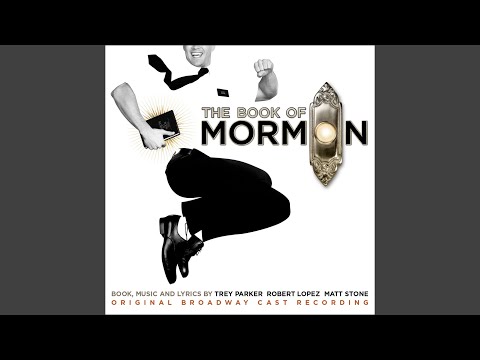
Review and Highlights
Quick summary
- Act II spectacle: Elder Price hits a nightmare wall and the show turns his guilt into a full-throttle hallucination.
- Built like a theme-park ride in musical form: rapid scene-shifts, chorus chants, and jump-cut jokes that keep escalating.
- Track 11 on the Original Broadway Cast Recording, running about 4:30.
- It is a morality play that refuses to behave, using shock-and-awe to reveal what fear sounds like.
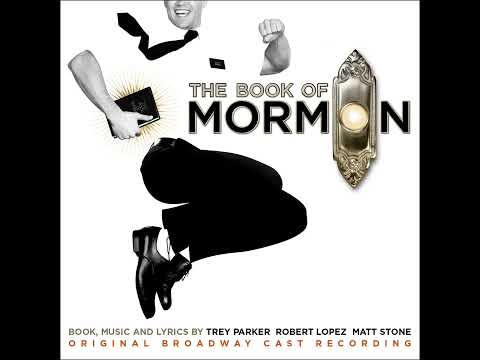
The Book of Mormon (2011) - stage musical - not diegetic. Act II, as Price's anxiety detonates into a nightmare where religious icons, demons, and notorious villains crowd in at once. Approx placement: 0:00-0:40 sets the dread, 0:40-2:30 the chorus hammers the hook, 2:30-4:30 becomes a runaway parade of threats and taunts. Why it matters: the show turns a clean-cut missionary fantasy into a panic attack with choreography, and it clarifies that Price's biggest enemy is not Uganda, it is the internal scoreboard he cannot stop checking.
This number is the score doing stagecraft with a grin: it moves fast so you cannot brace, then lands on a chorus that keeps returning like a bad thought. If Act I sells you certainty, Act II opens by showing what certainty looks like when it curdles. The writing is cartoonish by design, but the engine underneath is real dread. You can laugh at the parade, then realize you are hearing a character bargaining with his own conscience at performance volume.
Key takeaways: The song is not just "the big crazy sequence." It is the plot announcing a change in Price. After this, he cannot pretend he is simply unlucky. He has to reckon with what he is doing, and why.
Creation History
Trey Parker, Matt Stone, and Robert Lopez wrote the piece as a maximalist counterpunch: the show returns from intermission by turning guilt into spectacle. On record, the cast album sessions took place at MSR Studios in New York in March 2011, with the album released digitally on May 17, 2011 via Ghostlight Records. According to Playbill, the producers treated the recording as a major narrative artifact, and this track is one of the clearest examples of why: even without sets and costumes, the arrangement still sounds like a scene change every few seconds.
Song Meaning and Annotations
Plot
Price is rattled by his choices and the pressure of his self-image. That pressure erupts as a nightmare where condemnation takes physical form, piling on in a grotesque, high-speed pageant. The sequence is packed with figures meant to shame him, mock him, or terrify him back into obedience. When the dream breaks, the story has reset his direction: he is no longer coasting on the myth of being perfect.
Song Meaning
The core idea is simple: fear is a storyteller. Price has been trained to measure himself by rules and rewards, and the nightmare is his mind staging the worst possible grade report. The show also toys with the mechanics of shame. It does not arrive as a quiet whisper. It arrives as a chorus line, loud enough to drown out nuance.
According to Entertainment Weekly, the cast album's mainstream chart reach helped turn several of these songs into stand-alone calling cards. This one is a calling card for a different reason: it shows how the musical can shift from satire to psychological portrait without changing the volume knob.
Annotations
-
Hell dream
The phrase is blunt, almost childish, which makes it stick. It also signals what the number is doing: translating private dread into something the audience can see, hear, and clap at.
-
Spooky
The repeated word is a rhythm device and a joke, but it also mimics intrusive thoughts. The mind does not always invent new fears. It loops the same one until it feels permanent.
-
One more chance
This is the human heartbeat inside the spectacle: bargaining. Under the costumes and chaos, Price is pleading for a reset, not a punishment.
Style, tempo, and the jump-scare groove
Data trackers typically tag the recording around 158 BPM in E flat major, which is a neat little trick: a bright key and brisk tempo for a scene that is supposed to feel terrifying. That contrast is the point. The nightmare is not scored like a horror film, it is scored like an irresistible parade. The audience taps a foot while the character panics, and the show is perfectly aware of the contradiction.
Symbols and the target of the joke
The villains and demons are props in a private trial. Price is not being prosecuted for complex moral failure. He is being prosecuted for failing his own fantasy of greatness. The nightmare turns the concept of "worthiness" into a carnival, and once you hear it that way, you can spot the pattern across the show: belief as comfort, belief as control, belief as performance, all competing in the same room.
Technical Information
- Artist: The Book of Mormon (The musical) - Original Broadway Cast
- Featured: Andrew Rannells; Lewis Cleale; Michael Potts; ensemble
- Composer: Trey Parker; Robert Lopez; Matt Stone
- Producer: Stephen Oremus; Trey Parker; Robert Lopez; Matt Stone
- Release Date: May 17, 2011
- Genre: Musical theatre; musical comedy; ensemble spectacle
- Instruments: Broadway pit orchestra with brass, woodwinds, percussion, keyboards, strings, guitars, bass
- Label: Ghostlight Records
- Mood: Frenzied, comic-horrific, shame-driven
- Length: About 4:30
- Track #: 11 (Original Broadway Cast Recording)
- Language: English
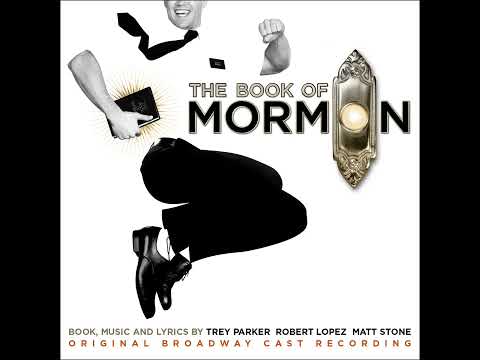
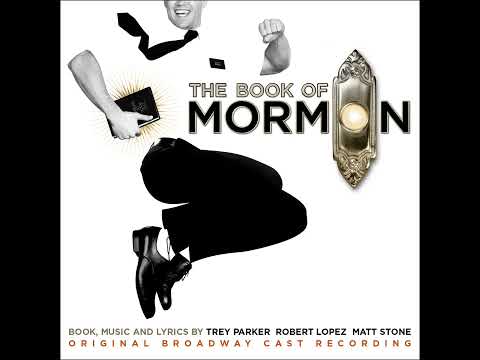
- Album (if any): The Book of Mormon: Original Broadway Cast Recording
- Music style: Rapid scene-montage writing with chorus hook and comedic orchestral hits
- Poetic meter: Mixed, with chant-like refrain and patter compression in the narrative lines
Questions and Answers
- Where does the number appear in the story?
- It lands in Act II as a nightmare sequence that externalizes Price's guilt and fear.
- Is it meant to be scary or funny?
- Both, on purpose. The laughs arrive through exaggeration, while the fear is real because it is Price arguing with his own shame.
- Why does it move so fast?
- Nightmares do not respect pacing. The speed also prevents reflection, mirroring how panic skips logic and goes straight to worst-case images.
- What makes it different from other big ensemble moments in the show?
- Most ensemble numbers push a public idea. This one stages a private collapse, with the ensemble acting like a swarm of judgment.
- What is Price actually afraid of?
- Not just punishment. He is afraid of failing the identity he has built around being the best, the most worthy, the future leader.
- Does the song change Price's trajectory?
- Yes. After the nightmare, he has a reason to recommit, and he stops pretending his choices are harmless.
- Why is the chorus refrain so repetitive?
- Repetition is how shame works. The hook behaves like a thought you cannot shake, even when you want to.
- What should a performer focus on when learning it?
- Timing and clarity. The humor depends on crisp text, and the scene depends on not dropping the pulse as the chaos stacks.
- Is it commonly used for auditions?
- Less than the showy solos, but it is a strong showcase for comic rhythm, stamina, and ensemble coordination.
Awards and Chart Positions
The track was not promoted as a pop single, but it sits inside a cast album with rare mainstream traction. Billboard reported the cast album's strong early performance and later resurgence, and Entertainment Weekly noted its climb to No. 3 on the Billboard 200 in June 2011. According to Playbill, the recording won the 2012 Grammy Award for Best Musical Theater Album, and Playbill later listed the album as RIAA Gold certified on November 22, 2017.
| Item | Result | Date |
|---|---|---|
| US Billboard 200 peak (cast album) | No. 3 | June 15, 2011 |
| US Cast Albums peak (cast album) | No. 1 | 2011 |
| Grammy Award (cast recording) | Best Musical Theater Album - won | February 12, 2012 |
| RIAA certification (cast album) | Gold | November 22, 2017 |
How to Sing Spooky Mormon Hell Dream
This is an ensemble sprint with a lead who has to stay readable while the scene explodes. Tempo and key listings commonly point to about 158 BPM in E flat major. For a practical range reference, StageAgent lists Elder Kevin Price at roughly C3 to B4, which helps you map where stamina and clarity matter more than sheer volume.
- Tempo: Build speed in layers. Start well under tempo, then add 5 BPM steps until your consonants stay sharp at full pace.
- Diction: Keep vowels clean and consonants percussive. The scene is dense, so you cannot afford swallowed syllables.
- Breathing: Treat it like athletic speech. Take quick, silent breaths early, not desperate breaths late.
- Flow and rhythm: Speak the text in time first, then add pitch. Comedy timing lives in rhythm, not in vibrato.
- Accents: Punch the words that signal threat and judgment, then soften on the bargaining moments so the arc is audible.
- Ensemble coordination: Rehearse entrances and cutoffs like a drumline. The chorus needs to feel inevitable, not polite.
- Mic and projection: If amplified, resist shouting. Bright placement and crisp diction will read better than brute force.
- Pitfalls: Rushing beyond the beat, laughing through entrances, or letting pitch drift when the staging gets busy.
Additional Info
The scene is famous because it weaponizes theatrical abundance. An "ultimate guide" published by the Eugene O'Neill Theatre site points to the sequence as one of the production's most memorable comedic set pieces, a moment where satire, choreography, and shock effects collide. That reputation matters: it is a reminder that the show can deliver sincerity and then smash the frame whenever it wants.
Another useful detail comes from track documentation. MusicBrainz credits multiple principals and ensemble voices on the recording, reinforcing what you can hear: this is not a solo with backup. It is a crowd scene in audio form, with the mix treating the chorus as a character in its own right.
Key Contributors
| Entity | Type | Relationship (S-V-O) |
|---|---|---|
| Trey Parker | Person | Trey Parker wrote the score and co-produced the cast recording. |
| Matt Stone | Person | Matt Stone wrote the score and co-produced the cast recording. |
| Robert Lopez | Person | Robert Lopez wrote the score and co-produced the cast recording. |
| Stephen Oremus | Person | Stephen Oremus produced the cast recording and guided music direction. |
| Andrew Rannells | Person | Andrew Rannells originated Elder Price and performs the track. |
| Ghostlight Records | Organization | Ghostlight Records released the Original Broadway Cast Recording. |
| MSR Studios (New York) | Organization | MSR Studios hosted the March 2011 recording sessions. |
| The Book of Mormon: Original Broadway Cast Recording | Work | The album contains the track as part of the Act II run-up. |
| Eugene O'Neill Theatre | Venue | The Eugene O'Neill Theatre hosted the Broadway production. |
Sources: Playbill, Billboard, Entertainment Weekly, Ghostlight Records, MusicBrainz, Discogs, StageAgent, Tunebat, Eugene O'Neill Theatre site