All-American Prophet Lyrics — Book of Mormon, The
All-American Prophet Lyrics
You all know the Bible
Is made of Testaments old and new.
Youve been told its just tose two parts,
Or only one, if youre a Jew.
But what if I were to tell you
Theres a FRESH third part out there?
That was found by a HIP new prophet
Who had a little...
Donny Osmond flair?
Have you heard of the
All-American Prophet?
The blonde-haired,
Blue-eyed voice of God!
He didnt come from the Middle East
Like those other holy men!
No, Gods favorite prophet was...
All-American!
Im gonna take you back to Biblical times; 1823.
An American man man named Joe livin on a farm in the holy land of Rodchester, New York!
ELDER CUNNINGHAM:
You meant he Mormon prophet Joseph Smith?!
ELDER PRICE:
Thats right, that young man spoke to God!
ELDER CUNNINGHAM:
He spoke to God?!
ELDER PRICE:
And God said:
"Joe, people really need to know
That the Bible isnt two parts!
Theres a part THREE to
The Bible, Joe! And I, God
Have anointed you to dig up this
Part three that is buried by the
Tree on the hill in your backyard!"
ELDER CUNNINGHAM:
Wow, God says go to you backyard and start digging, that makes PERFECT SENSE!
ELDER PRICE:
Joseph Smith went up to that hill,
And dug where he was told.
And deep in the ground, Joseph found
Shining plates of gold!
JOSEPH SMITH:
What are these golden plates?
Who buried them here, and why?
ELDER PRICE:
Then appeared an angel!
His name was Moroni!
MORONI:
I am Moroni....
ELDER PRICE:
The All-American Angel!
My people lived here
Long, long ago!
This is the history of my race!
Please read the words within!
We were Jews who met with Christ,
But we were...
All-American!
But dont let anybody see these plates
Except for you...
They are only for you to see...
Even if people ask you to show
The plates to them, DONT.
Just copy them onto normal paper.
Even thought this might make them
Question if the plates are real, or not,
This is sort of what God is going for....
Joseph took the plates home,
And wrote down what he found inside!
He turned those plates into a book,
Then rushed into town and cried:
JOSEPH SMITH:
Hey! God spoke to me and gave me
This blessed ancient tome!
He hath commanded me to publish it,
And stick it in every home!
ELDER CUNNINGHAM:
Wow! So the Bible is really a trilogy,
and the Book of Mormon is Return of the Jedi?! IM interested!
ELDER PRICE:
Now, many people didnt believe
Yhe prophet Joseph Smith.
They thought hed made up this part three
That was buried by a tree on the hill in his backyard!
TOWNSPEOPLE:
LIAR!
ELDER PRICE:
But Joe said:
JOSEPH SMITH:
This is no lie1
I speak to God all the time,
And he told me to head west!
So Ill take my part three
From the hill with the tree,
Feel free if youd like
To come along with me,
To the promised land!
TOWNSPEOPLE:
The PROMISED LAND?
JOSEPH SMITH:
Paradise!
On the west coast!
Nothing but fruit and fields
As far as the eye can see!
ALL:
Have you heard of the
All-American prophet?
He found a brand new book
About Jesus Christ!
Were following him to paradise;
We call ourselves Mormons!
And our new religion is...
All-American!
ELDER CUNNINGHAM:
Wow! How much does it cost!?
ELDER PRICE:
The Mormons kept on searching for
That place to settle down,
But every time they thought theyd found it,
They got kicked out of town!
And even though people wanted
To see the golden plates,
Joseph never showed em!
GOTSWANA:
I have maggots in my scrotum.
ELDER PRICE:
Um... okay.
Well, anyway...
Now comes the part of our story
That gets a little bit sad...
On the way to the promised land,
Mormons made people mad.
Joseph was shot by and angry mob,
And knew hed soon be done....
JOSEPH SMITH:
You must lead the people now,
My good friend... Brigham Young.
Oh, God... why are you letting me die?
Without having me
Show people the plates?
Theyll have no proof I was
Telling the truth or not.
Theyll have to believe it just...
Cause.
Oh! I guess thats kinda what you
Were going for....
Blargggh...
ELDER PRICE:
The prophet Joseph Smith DIED for what he believed in.
But his followers, they kept on heading west.
And Brigham Young led them to paradise. A sparkling land in Utah called...
Salt Lake City!
And there the Mormons multiplied, and made BIG MORMON families.
Generation to generation until finally... they made ME.
And now its my JOB,
TO LEAD YOU WHERE THOSE EARLY SETTLERS WERE LEAD LONG AGO!!!
TOWNSPEOPLE and PRICE:
Have you heard of the All-American prophet?
ELDER CUNNINGHAM:
Kevin Price!!!
TOWNSPEOPLE and ELDER PRICE:
The next in line
To be the voice of God?!
ELDER CUNNINGHAM:
My best friend!!!
TOWNSPEOPLE, ELDER PRICE, and ELDER CUNNINGHAM:
Hes gonna do something
Incredible!
And be Joseph Smith again!
Cause Kevin Price the prophet is...
All...
All...
All...
ALL-AMERICAN-!
ELDER CUNNINGHAM:
If you order now, well also throw in a set of steak knives!
ALL:
ALL-AMERICAN!
Song Overview
Review and Highlights
Quick summary
- Act I set piece: Elder Price tries to "sell" early Mormon history to Ugandan villagers, with ensemble support and pageant-like cameos.
- Built as a sermon-meets-sales-pitch pastiche: brisk 4/4 drive, patter bursts, and sudden gear shifts that mimic a traveling showman.
- Track 7 on the Original Broadway Cast Recording, running a little over six minutes.
- It is the moment where confidence meets incomprehension, and the room turns awkward in slow motion.
The Book of Mormon (2011) - stage musical - diegetic. Act I, in the Ugandan village, Price launches into a polished origin story meant to inspire converts, complete with staged flashbacks to Joseph Smith and Angel Moroni. According to New York Theatre Guide, the villagers do not find the tale relatable, and the number exposes how a neatly packaged "American miracle" can miss the point when the audience is living a different emergency.
The number plays like a carnival barker who accidentally wandered into a crisis meeting. Price brings rhythm, certainty, and big-boy showmanship, then the show keeps slipping banana peels under his feet: the more brightly he performs, the less the villagers connect. That tension is the gag and the ache. The score is laughing at the mechanics of persuasion, but it also shows why those mechanics are tempting when you are desperate to be useful.
Musically it is a tight piece of Broadway misdirection. The groove keeps marching forward, the rhymes keep landing, and the ensemble keeps "helping" with a smile that is too rehearsed to be comforting. Whenever the song turns theatrical, the staging usually gets more literal: gestures that illustrate doctrine, formations that look like a recruiting poster, and cameo entrances that feel like a pageant on wheels.
Creation History
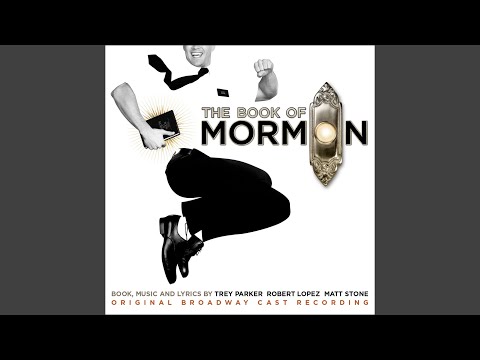
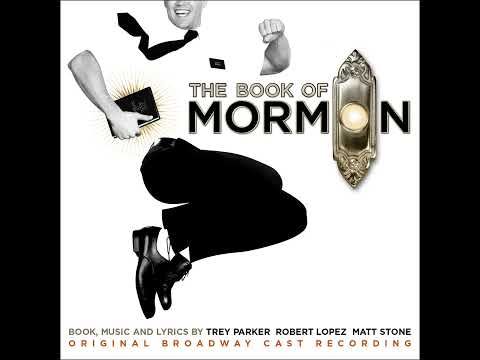
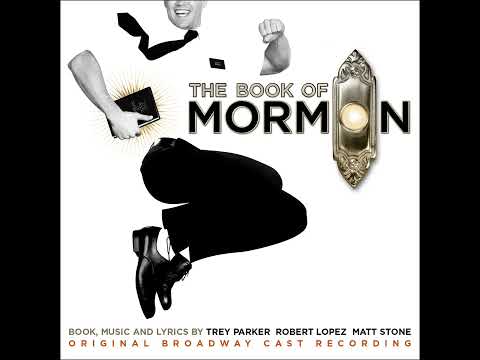
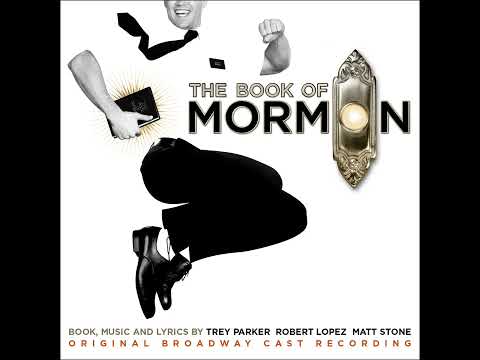
The song was written by Trey Parker, Robert Lopez, and Matt Stone for the Broadway production that opened in March 2011. The cast album was released digitally on May 17, 2011 via Ghostlight Records, with music supervision and production anchored by Stephen Oremus. According to Playbill, the digital release was treated like an event, with cast signings at the Eugene O'Neill Theatre, which hints at how quickly the recording became part of the show's identity beyond the building.
Song Meaning and Annotations
Plot
Price and Cunningham attempt to teach their faith to a village that is dealing with hunger, illness, and fear of violence. Price responds by doing what he does best: delivering a confident lesson, complete with historical characters and a staged "proof" of why the story should matter. The villagers listen, but their reactions keep puncturing the presentation. By the end, Price has performed impressively, yet he has not communicated effectively, and the show underlines the difference between being convincing and being understood.
Song Meaning
At the surface, it is a missionary origin story number. Under the surface, it is a satire of the sales instinct: a belief that the right pitch, delivered with enough shine, can convert any room. The song makes that instinct audible by using classic Broadway propulsion and showman polish, then undercutting it with context. The villagers are not rejecting music or story. They are rejecting irrelevance.
According to a Dialogue journal essay on the show, the number fuses showman-style preaching with an infomercial-like pitch, linking proselytizing and advertising as cousins in the same family. That framing helps explain why the song keeps revving like a presentation: it is not only "what happened" in history, it is how the history is marketed.
Annotations
-
Have you heard of the All-American Prophet
A classic opening gambit: a rhetorical hook that assumes attention. The music answers with a confident downbeat, like a salesman clicking on a projector.
-
A hip, new prophet
The phrasing is intentionally contemporary, and it is a clue to the character's strategy: translate the sacred into pop-culture friendliness so the audience relaxes. The show then asks whether that translation solves anything.
-
It makes perfect sense
Listen to how the arrangement "proves" the point with its own certainty. Harmonies lock in, rhythm tightens, and the band sounds like it is nodding along. The joke is that musical confidence is not the same thing as lived relevance.
Rhythm, texture, and the persuasion engine
The beat sits in a medium-brisk pocket that favors patter and clean consonants. The band writing often feels like a motor under the text: steady enough for storytelling, punchy enough for punchlines. When the song shifts register, it usually does it with theatrical "reveals" - a new character entrance, a new mini-chorus, a new demonstration. That modular structure mirrors a pitch deck: section after section, each one meant to remove doubt.
Symbolism and cultural friction
The song turns Joseph Smith into a stage-friendly icon, a figure presented with charm and theatrical swagger. In the village context, that iconography bumps into reality. The villagers are not shopping for a mascot, they are looking for safety. The number becomes a study in cultural friction: a story can be internally coherent and still fail the audience it is aimed at.
Technical Information
- Artist: The Book of Mormon (The musical) - Original Broadway Cast
- Featured: Andrew Rannells; Josh Gad; ensemble
- Composer: Trey Parker; Robert Lopez; Matt Stone
- Producer: Stephen Oremus (cast recording production credit)
- Release Date: May 17, 2011
- Genre: Musical theatre; musical comedy
- Instruments: Broadway pit orchestra (woodwinds, brass, percussion, keyboards, strings, guitars, bass)
- Label: Ghostlight Records
- Mood: Bright persuasion, then comic discomfort
- Length: About 6:14
- Track #: 7 (Original Broadway Cast Recording)
- Language: English
- Album (if any): The Book of Mormon: Original Broadway Cast Recording
- Music style: Broadway pastiche with sermon-showman pacing and patter
- Poetic meter: Mixed conversational iambic with patter-friendly anapestic bursts
Questions and Answers
- Who drives the number?
- Elder Price leads, with Cunningham and the ensemble reinforcing the pitch, and staged appearances by Joseph Smith and Angel Moroni.
- What is the dramatic purpose in Act I?
- It shows Price attempting to convert through presentation skills, and it reveals how little those skills help when the audience needs practical answers.
- Why is it staged like a pageant?
- The show turns doctrine into showbiz to underline how faith stories can be packaged like entertainment, especially when the speaker is trying to persuade fast.
- What is the main comic mechanism?
- Escalation: the pitch gets bigger and slicker while the villagers remain unconvinced, making the performance feel increasingly misplaced.
- Is the song mocking belief or the act of selling it?
- More the selling. The satire targets the assumption that a polished story automatically becomes meaningful in any context.
- What musical-theatre style does it borrow from?
- It leans into showman sermon energy and classic Broadway patter, with a structure that feels like a traveling lecture set to a band.
- Why does the number matter for Price's character?
- It is his comfort zone: he can perform certainty. The story then pressures him to learn that certainty is not the same as connection.
- Does the cast album include every stage moment connected to it?
- The cast album is comprehensive, but it does not include certain short reprises from the stage version elsewhere in the show, so it is best heard as a streamlined narrative document.
- Does it have an official pop single release?
- It is primarily known as a cast-album track, later circulated via label and platform uploads rather than a standalone radio single campaign.
Awards and Chart Positions
The track is not a chart single, but it rides inside one of the most commercially visible Broadway cast albums of its era. According to Billboard coverage, the Original Broadway Cast Recording peaked at No. 3 on the Billboard 200 in 2011, and it won Best Musical Theater Album at the 54th Annual Grammy Awards. The stage musical itself won nine Tony Awards in 2011, a sweep that helped push the cast album into mainstream visibility.
| Item | Result | Date |
|---|---|---|
| US Billboard 200 peak (cast album) | No. 3 | June 2011 |
| US Top Cast Albums (cast album) | No. 1 peak | 2011 |
| Grammy - Best Musical Theater Album (cast recording) | Won | February 12, 2012 |
| Tony Awards (stage musical) | Nine wins, including Best Musical | June 12, 2011 |
How to Sing All-American Prophet
This is a stamina number: medium-fast tempo, long stretches of text, and a lead line that has to stay bright while landing punchlines. Data trackers commonly list the cast-recording audio around 116 BPM in C sharp major. For a practical range reference, StageAgent lists Elder Kevin Price at roughly C3 to B4, and this number frequently sits in that neighborhood in performance, though productions may adjust for casting.
- Tempo: Start at a slower click, then climb in small steps until the patter stays crisp at performance speed.
- Diction: Treat consonants like percussion. Every "t" and "k" is part of the groove, not an afterthought.
- Breathing: Mark quick, silent inhales between phrases. Do not wait for a perfect rest, because the song rarely gives you one.
- Rhythm: Speak the text in time first, then add pitch. If you sing it "pretty" too early, the timing softens.
- Style: Keep the tone sales-bright: confident, forward placement, and clean vowels that read like public speaking.
- Dynamic control: Save the loudest push for the biggest reveal moments. Most of the song should feel like persuasive talk set to music.
- Ensemble coordination: Lock cutoffs and shared syllables. The comedy improves when the group hits like a single machine.
- Pitfalls: Rushing through story points, swallowing proper nouns, or turning the whole number into a shout. Precision sells it.
Additional Info
Hal Leonard has published a piano-vocal sheet music edition (16 pages), which is useful because it reveals how deliberately the number is built for breathless storytelling: quick syllable clusters, then brief landing pads that reset the pitch before the next run. In the theater, those landing pads are where Price can flash a smile and pretend the pitch is effortless.
One detail I keep circling back to is how the ensemble functions like a marketing department. They do not only sing background harmony. They validate the premise in real time, the way a crowd in a commercial nods at the product, until the villagers' silence breaks the spell.
Key Contributors
| Entity | Type | Relationship (S-V-O) |
|---|---|---|
| Trey Parker | Person | Trey Parker wrote the score and co-produced the cast recording. |
| Matt Stone | Person | Matt Stone wrote the score and co-produced the cast recording. |
| Robert Lopez | Person | Robert Lopez wrote the score and co-produced the cast recording. |
| Stephen Oremus | Person | Stephen Oremus supervised music and produced the cast recording. |
| Casey Nicholaw | Person | Casey Nicholaw co-directed and choreographed the Broadway production. |
| Andrew Rannells | Person | Andrew Rannells originated Elder Price and leads the cast recording performance. |
| Josh Gad | Person | Josh Gad originated Elder Cunningham and performs on the cast recording. |
| Ghostlight Records | Organization | Ghostlight Records released the Original Broadway Cast Recording. |
| MSR Studios (New York) | Organization | MSR Studios hosted the 2011 cast recording sessions. |
| Eugene O'Neill Theatre | Venue | Eugene O'Neill Theatre hosted the Broadway premiere production. |
Sources: Playbill cast-album release coverage, Ghostlight Records track listing, New York Theatre Guide song guide, Billboard reporting on the Billboard 200 peak, GRAMMY.com awards pages, Dialogue journal critical essay, StageAgent character range notes, Discogs track timing, Musicstax key and tempo listing, Hal Leonard sheet music listings