

Merci, Madame Lyrics
Merci, Madame
Aimable: Genevieve, Genevieve! Look around! Well, do you like it?Genevieve: I think I like it!
Aimable:
Did you hear that - she likes it! Did you hear that, Pompom?
My darling says she likes it --- Did you hear that, Pompom?
Can you see her face is shining and her eyes give off a light?
Bright as the moon is bright...
Come take a little look at our bakery, a little look at our house.
Other men might look at that sight, and only see a house.
But I can see something better, than the emperor?s place in Rome
Ask me what....
Genevieve: All right, what?
Aimable:
I can see ... a home! Merci, madame, merci, madame
You make a home for us, Pompom and I agree, madame.
It?s heaven just to watch you dust or hear the oven slam. - Merci, merci, madame!
I know exactly what you are thinking. Exactly what?s on your mind,
you?re looking around thinking we?ve found the best place we could find.
But I can imagine someplace I would rather be, it?s true. Ask me where
Genevieve: All right, where?
Aimable:
Here...a little closer to you. To say merci, madame! Merci, madame!
If you are there, then that is where I want to be, madame
Sit on my lap and I?m as happy as a giant clam. Merci, merci, madame.
Aimable:
Ah, oui, merci, madame
Merci, madame
The past is past, and now at last
It?s you and me, madame.
The past is past, and now at last
I?m feeling safe and sure
Merci, merci
Madame
Genevieve:
Et vous, monsieur
You too, monsieur
How true, monsieur
And now at last
I?m feeling safe and sure
Merci, merci
Monsieur
I?ve got a little lift in my outlook, a little lift in my step.
Darling, I mean, when have you seen a man with so much pep?
And suddenly I can do things, other men my age can?t do
Ask me how.... ?All right how?? I caught youth from you...
Merci, madame, merci madame
The years just drop and they won?t stop while you?re with me, madame
It seems your age is as contagious as a case of flu Look at this.... Look at that....
I?ve got a new life, a new wife, and someday, if maybe We could have a baby.
What else is there to say Besides merci, madame....? Merci, beaucoup?
Song Overview
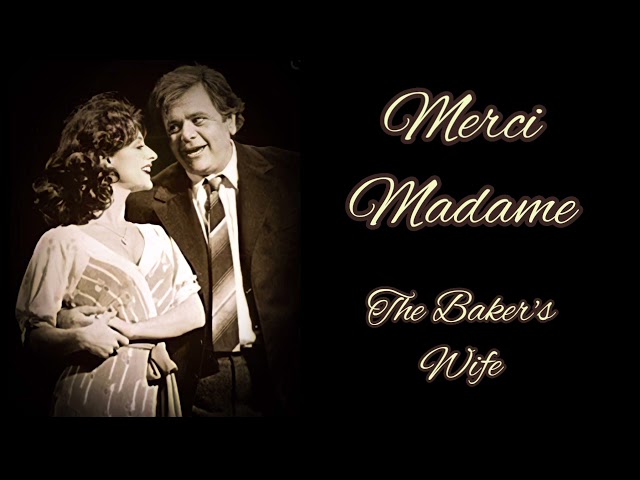
"Merci, Madame" is the first private glow inside The Baker's Wife. After the villagers fuss, complain, and size up the newcomers, Aimable Castagnet turns to Genevieve with gratitude that sounds half love song, half home blessing. He is enchanted by his young wife, his new bakery, and the possibility of an orderly future. That is why the number matters so much. It does not just say he loves her. It shows what kind of love he believes in - warm, domestic, thankful, hopeful, maybe a little too trusting for the world he has entered.
Review and Highlights
"Merci, Madame" is one of Stephen Schwartz's slyest early character duets. On the surface, it is cheerful, almost courtly. Aimable thanks Genevieve and dreams aloud about work, marriage, and a settled life. Yet the song sits right on the fault line of the whole musical. BroadwayWorld once called it one of the score's "joyous melodies" that reveals bitter undercurrents in context, and that gets to the heart of it. The tune smiles. The story winces. Aimable is sincere, but the audience can already hear the trouble in the age gap, the village gossip, and Genevieve's effort to play the role expected of her.
Key takeaways:
- It is Aimable and Genevieve's first featured duet in Act One.
- The song frames Aimable as generous, grateful, and emotionally open rather than possessive.
- Its sweetness is dramatic irony. The warmth of the melody makes later hurt land harder.
- In the 1976 remastered album, Patti LuPone and Paul Sorvino carry the number with a blend of tenderness and unease.
The Baker's Wife (1976) - stage musical number - diegetic. The song arrives in Act One after the Marquis brings the new baker Aimable Castagnet and his wife Genevieve to their shop in Concorde. Aimable sings to her as he takes in the bakery and imagines a prosperous, loving life with family and fresh bread at the center. It matters because it defines his emotional world before Dominique's flirtation and Genevieve's restless past begin to pull against it.
Creation History
The Baker's Wife was written by Stephen Schwartz and Joseph Stein from the film source by Marcel Pagnol and Jean Giono, then tested on the road in 1976 instead of opening directly on Broadway. Ovrtur's 1976 musical numbers list places "Merci, Madame" in Act One for Aimable and Genevieve, and later versions kept the song in roughly the same dramatic position. The original tour did not get a full in-run cast album, but after the production closed, Bruce and Doris Yeko worked with Schwartz to preserve selected songs from the score. The 2014 remastered release of that recording lists "Merci, Madame" as track 2, running 4:07, sung by Patti LuPone and Paul Sorvino. A surviving 1976 video clip on YouTube gives the song extra historical weight because so much of the show's original staging lives more in legend than in easy-to-find footage.
Lyricist Analysis
Schwartz writes this lyric in a plainspoken, grateful register. That matters. Aimable is not a rake, a cynic, or a grand romantic poet. He is a baker. His language needs to feel workable, domestic, kneaded by habit. "Merci, Madame" gets there by sounding courteous and lightly old-fashioned, almost like a blessing said with flour on the hands.
The meter is more settled than in the village ensemble numbers. Phrases land cleanly, with enough repetition to make Aimable's gratitude feel genuine rather than ornate. There is something almost waltz-adjacent in the way the thought circles back to appreciation and hope. Schwartz knows the trick here: keep the lyric simple, then let context complicate it.
Phonetically, the title gives the song its little French perfume, but the body of the writing stays accessible. No need to gild the loaf. The rhyme patterns are gentle, and the emotional momentum comes less from verbal surprise than from the contrast between Aimable's certainty and Genevieve's more guarded presence. In other words, the lyric works because it says enough and leaves enough unsaid.
Song Meaning and Annotations
Plot
The villagers have just met the new baker and his much younger wife. Their marriage is already being judged on sight. In that charged atmosphere, Aimable looks at Genevieve and sings "Merci, Madame" with deep affection. He is thankful for her, for the bakery, and for the life he thinks they are beginning together. Genevieve participates in the duet, but the dramatic weight falls on Aimable's vision of home. That vision becomes the standard by which the rest of the story breaks his heart.
Song Meaning
The song means gratitude, but not only gratitude. It also means trust. Aimable believes love can be built through kindness, stability, and daily devotion. That belief is not mocked by the musical. Quite the opposite. The show treats it as noble, which is why Genevieve's later pull toward passion feels so painful.
There is also a quiet irony in the title. "Merci, Madame" sounds formal, even playful, but it points to the central issue in the marriage: Genevieve is being thanked, admired, and cherished, yet she still feels trapped by the role of "Madame." The song's sweetness carries that tension inside it from the start.
Annotations
To Genevieve, he sings "Merci, Madame", as enchanted with her as he is with his new surroundings.
The official synopsis on the show page puts the dramatic function in one neat line. Aimable's love for Genevieve and his love for the bakery are bound together. He sees both as gifts, both as the beginning of a better life.
He is excited about the prospects of a prosperous life with a family.
This is the dream state inside the song. Aimable is not just flirting. He is imagining continuity - work, marriage, children, routine. All the ordinary things. In this musical, ordinary things are never as secure as they look.
Two joyous melodies that demand to be danced to, "Merci Madame" and "Any Day Now Day", reveal bitter undercurrents when presented in context.
That BroadwayWorld line is sharp because it hears the double game. The melody invites pleasure, but the dramatic frame quietly tells us pleasure will not hold forever.
Theme and message
The central theme is love as daily offering rather than feverish obsession. Aimable believes tenderness, work, and gratitude can sustain a marriage. The show respects that idea even while testing it hard.
Mood and dramatic arc
The mood is buoyant, courtly, and warmly comic at first. Underneath, though, there is the first real ache of the piece. We are hearing a man completely sincere in his happiness while standing closer to disappointment than he knows.
Style, rhythm, and instrumentation
Musically, the duet moves with a dance-like lift instead of grand operatic weight. Schwartz's score for The Baker's Wife often borrows French atmosphere without becoming costume music, and this number is a good example. The rhythm feels social, public, and smiling. That is why the undertow stings.
Cultural and historical touchpoints
The show is set in a small French village in the 1930s, but written through an American musical-theater lens in the 1970s. "Merci, Madame" lives right in that blend. It uses French address and local color while speaking in a Broadway language of character definition and foreshadowing.
Metaphors and key phrases
The title phrase carries more than politeness. It turns Genevieve into a figure of gratitude, respect, and domestic aspiration. Yet it also hints at distance. "Madame" is loving, but formal. The song's ache starts there, in the gap between reverence and intimacy.
One more wrinkle makes the number even better. Because it arrives before Genevieve's big confession songs, it lets the audience feel Aimable's decency first. That is smart storytelling. You do not have to agree with his idea of marriage to feel the heartbreak waiting in the wings.
Technical Information (Quick Facts)
- Song: Merci, Madame
- Artist: Patti LuPone and Paul Sorvino
- Featured: Members of the 1976 original cast
- Composer: Stephen Schwartz
- Producer: Dennis Anderson
- Release Date: 1977 recording sessions; remastered digital edition released January 8, 2014
- Genre: Show tune, musical theater, duet
- Instruments: Orchestra
- Label: Original Cast Records on the 2014 remaster
- Mood: Warm, hopeful, gently ironic
- Length: 4:07
- Track #: 2 on The Baker's Wife (Members of 1976 Original Cast) [Remastered]
- Language: English with French title wording
- Album: The Baker's Wife (Members of 1976 Original Cast) [Remastered]
- Music style: French-tinged Broadway character duet
- Poetic meter: Regular conversational phrasing with dance-song lift
Frequently Asked Questions
- Who sings "Merci, Madame" on the 1976 recording?
- Patti LuPone and Paul Sorvino sing the remastered 1976 cast recording version.
- Who wrote "Merci, Madame"?
- Stephen Schwartz wrote both the music and lyrics, with Joseph Stein writing the book of The Baker's Wife.
- Where does the song appear in the show?
- It appears in Act One after Aimable and Genevieve arrive in Concorde and enter their new bakery.
- What is the song about?
- Aimable thanks Genevieve and celebrates the promise of their new life, their bakery, and the family future he hopes they will build.
- Why is the song important?
- It establishes Aimable's decency and hopeful view of marriage before Genevieve's dissatisfaction and Dominique's pursuit complicate everything.
- Is "Merci, Madame" a love duet or a character song?
- It is both. On one level it is a duet of affection, but it also defines the emotional values Aimable brings into the story.
- Did later versions of The Baker's Wife keep the song?
- Yes. Ovrtur listings for the 1989 London production and later revivals still include "Merci, Madame" for Aimable and Genevieve.
- Was the original 1976 production recorded live?
- Not as a full live cast album during the road run. Stephen Schwartz later worked with Bruce and Doris Yeko to preserve selected songs after the show closed.
- Is there a later cast recording of the song?
- Yes. The 1990 London cast recording includes "Merci Madame" sung by Alun Armstrong and Sharon Lee Hill.
- Did the song chart or win awards?
- No reliable chart placements or song-specific awards turned up in the available sources, so it is best understood as a cast-album favorite within a cult score.
Additional Info
- According to the official synopsis, Aimable sings the number while thrilled by both Genevieve and his new bakery. That double gratitude is the whole dramatic key.
- BroadwayWorld's 2005 review of the Paper Mill production singled out "Merci Madame" as a joyful tune with darker implications once heard in context.
- The 1989 London cast recording kept the song and expanded the surrounding scene structure, with Alun Armstrong and Sharon Lee Hill taking the roles.
- A surviving 1976 video clip gives the song unusual documentary value, since the original road production left behind far less visual evidence than most major Schwartz scores.
Key Contributors
| Entity | Type | Relationship |
|---|---|---|
| Stephen Schwartz | Person | Wrote music and lyrics for The Baker's Wife and "Merci, Madame" |
| Joseph Stein | Person | Wrote the book for The Baker's Wife |
| Paul Sorvino | Person | Sang Aimable on the 1976 recording |
| Patti LuPone | Person | Sang Genevieve on the 1976 recording |
| Aimable Castagnet | Work role | New baker who expresses gratitude and marital hope in the song |
| Genevieve | Work role | Aimable's young wife and duet partner in the song |
| Bruce Yeko | Person | Helped preserve selected songs from the score after the original run |
| Doris Yeko | Person | Helped preserve selected songs from the score after the original run |
Sources
Data verified via Stephen Schwartz's official show page, Ovrtur production and recording records, Apple Music and Shazam remaster metadata, Discogs release data, and BroadwayWorld coverage of the Paper Mill production. Later recording context also checked through Apple Music and Shazam listings for the London cast album.