

Proud Lady Lyrics
Proud Lady
Ah, i'm in loveI'm in love at last
I'm in love, i'm in love
And isn't it a crime?
Isn't it a crying shame that the love of my life
Should have to be another man's wife?
But i've finally found the one true love of my life...
She splits my senses at the seams
She sends a shiver up my spine
I see her body in my dreams
And if she's normal, she sees mine
She's all i'm ever thinking of
Her mouth, her hair, and all the rest
I think all women should have love
And one like her should have... The best!
There is no rule or law in heaven or on earth
There is no way to stop this fire once it starts
In lips and hands and hearts
And other moving parts...
And i'm singing
Oh, proud lady
You and i both know
Someday you will be mine
And we'll go to a place where the grass is cool
And shady
And with a smile on your face, you'll come into my
Arms
And love will flow like wine...
Next time i go to get the bread
I know exactly what i?ll wear
A belt that?s tight, a shirt that?s red
And open just enough to show a little hair
No other girl i've ever known
Has looked as hot and kept as cool
I know she can't be made of stone
I know i can't be such a fool
No matter what the pain, no matter what the price
No matter what, i wouldn't stop it if i could
How can a thing be bad
When it feels so good?
And i'm singing
Oh, proud lady
You and i both know
Oh, yes, you will be mine
And we'll go to that place
Where the grass is cool and shady
And with a smile on your face,
You'll come into my arms
And love will flow like wine...
I'm in love
I'm in love, at last
I'm in love, i'm in love
And isn't it a crime?
Isn't it a crying shame that the love of my life
Should have to be another man's wife...?
Well, i'm sorry for the guy
But there's nothing i won't try
To win the one true love of my whole life!
Song Overview
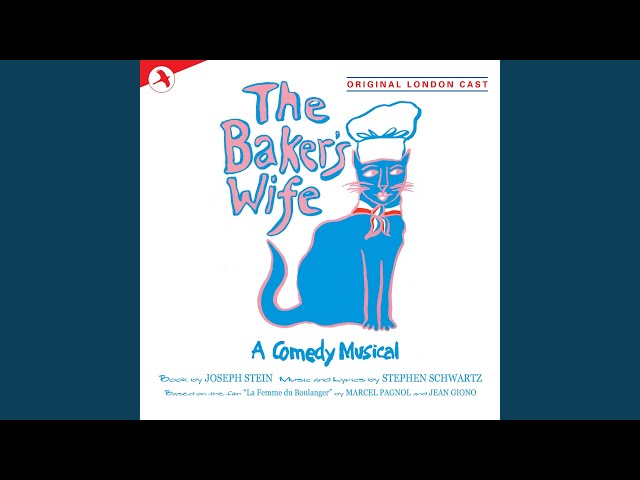
"Proud Lady" is Dominique's desire song in The Baker's Wife. He has seen Genevieve, heard her insist on "Madame" instead of "Mademoiselle," and decides that resistance is only part of the spark. This is not a shy serenade. It is a swaggering pursuit number, full of appetite, nerve, and the kind of confidence that makes trouble before the audience has time to blink. In the 1976 score, it sits in Act One and gives Dominique his first clear musical identity: he is the outsider force who treats Genevieve less as settled wife than as a challenge.
Review and Highlights
"Proud Lady" gives The Baker's Wife a jolt of heat. Up to this point, the musical has been building village texture, domestic hope, and the small pressures of Concorde. Then Dominique arrives with a song that is all forward motion. He is not polite, not reflective, not patient. He wants Genevieve, and Stephen Schwartz writes the number so that his certainty sounds seductive and faintly dangerous at the same time. A 2024 Financial Times review of the Menier Chocolate Factory revival called it Dominique's "lust-driven solo," which is blunt but fair. The song works because it never pretends Dominique is offering safety. He is offering thrill.
Key takeaways:
- It is Dominique's Act One solo in the 1976 road score.
- The number establishes pursuit, vanity, and sexual confidence rather than tender romance.
- It sharpens the contrast between Aimable's domestic love and Dominique's restless hunger.
- Later versions kept the song, and a 2005 rewrite reportedly included new lyrics.
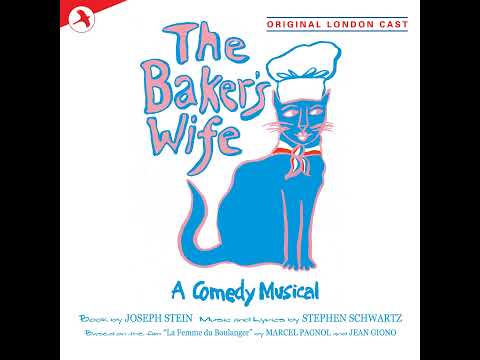
The Baker's Wife (1976) - stage musical number - diegetic. In Act One, after Genevieve rebuffs Dominique and reminds him she is happily married, he answers not with retreat but with resolve. He decides she will be his "proud lady." Dramatically, the song matters because it turns flirtation into pursuit and gives the affair plot its first real musical engine.
Creation History
The Baker's Wife was written by Stephen Schwartz and Joseph Stein, based on the French film source by Marcel Pagnol and Jean Giono. The 1976 production opened in Los Angeles on May 11 and closed its road run on November 13 without reaching Broadway. Ovrtur's 1976 song list places "Proud Lady" in Act One for Dominique, played by Kurt Peterson. The post-run recording later remastered in 2014 lists the track as "Proud Lady (Remastered)" by Kurt Peterson, while the complete 1989 London recording preserves a later version sung by Drue Williams. One important bit of revision history also survives in secondary summaries: the 2005 Paper Mill Playhouse staging introduced new lyrics for "Proud Lady," which tells you the song stayed central enough to keep being refined.
Lyricist Analysis
Schwartz writes this one with less softness and more attack. Dominique is not observing village life or thanking a spouse for stability. He is naming desire and pushing straight toward it. So the lyric needs bite. It gets that from direct address, compact phrases, and a hook that sounds like possession dressed up as admiration.
The meter feels more driven than conversational. You can almost hear the boots on the stones. Phrases land with a rhythmic insistence that suits a man who takes resistance as invitation. That is risky writing, but it is effective because the song does not confuse Dominique's heat with virtue. The lyric sells his magnetism without asking the audience to mistake him for Aimable.
Phonetically, the title phrase helps. "Proud Lady" sounds courtly on paper, but inside the scene it carries challenge and fantasy. Schwartz likes that kind of double edge. The language is elevated just enough to keep Dominique from sounding crude, but the momentum underneath stays physical and urgent.
Song Meaning and Annotations
Plot
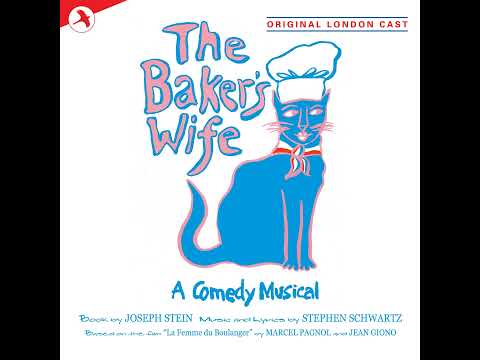
Genevieve has arrived in Concorde as the much younger wife of Aimable, the new baker. Dominique, the Marquis' driver in early versions and later often a farmhand or local charmer, spots her quickly. She pushes back against his flirtation, insisting on her married status. He refuses to let the matter go. "Proud Lady" is the moment when his private determination becomes public music. He decides that Genevieve's reserve only makes her more desirable.
Song Meaning
The song means conquest more than courtship. Dominique is not wondering whether he loves Genevieve. He is imagining how he will win her. That difference matters. "Proud Lady" is built on the intoxicating arrogance of a man who thinks passion itself is justification. In the world of the musical, that confidence is both the attraction and the danger.
It also serves as a foil to Aimable's songs. Aimable sings gratitude, loyalty, and daily devotion. Dominique sings hunger. The audience is asked to hear both kinds of male energy and understand why Genevieve, trapped between duty and longing, feels the pull of each for different reasons.
Annotations
She rebuffs him, reminding him that she is happily married, but he resolves that he will be with his "Proud Lady."
This synopsis detail lays out the scene cleanly. The song is not abstract fantasy. It is Dominique's answer to refusal, which is why the number feels charged from the start.
lust-driven solo
The Financial Times phrase is sharp because it cuts through any attempt to make the number sound sweeter than it is. Dominique is driven by desire, and the song is honest about that.
new lyrics for Proud Lady
The later rewrite note matters because it suggests the song was always structurally important but textually flexible. Directors and writers kept returning to it because Dominique needs a strong musical statement if the central triangle is going to hold.
Theme and message
The core theme is desire as pursuit. Dominique sees Genevieve's pride, marriage, and distance not as stop signs but as fuel. The song is less about mutual feeling than about the thrill of trying to break through restraint.
Mood and dramatic arc
The mood is hot, cocky, and impatient. The arc moves from fascination to self-appointed mission. By the end, Dominique has talked himself into certainty. That certainty is exciting to hear and ominous to watch.
Style, rhythm, and instrumentation
Musically, the number sits on a stronger pulse than the village songs and the domestic duets. It needs lift, but not sweetness. In performance, the best versions keep it lithe rather than heavy, closer to prowling charm than grand operatic declaration. The line wants to move. Dominique does too.
Cultural and historical touchpoints
Set in a French village but written for American musical theater, "Proud Lady" turns a classic rake figure into a Schwartz character number. The song fits a long stage tradition of the seductive interloper, yet it also reflects the 1970s interest in desire as destabilizing force rather than mere villainy.
Metaphors and key phrases
The title phrase is the key. "Proud" suggests dignity, distance, self-command. "Lady" suggests respect, but also a fantasy image Dominique can chase. Put together, the phrase flatters Genevieve while quietly turning her into his chosen prize.
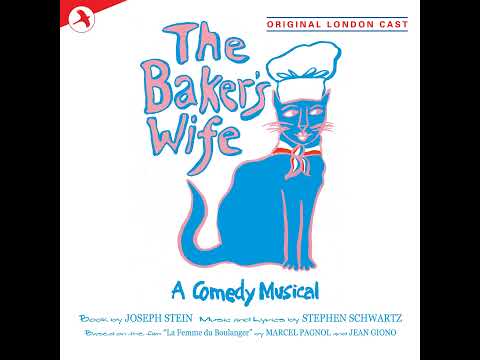
One reason the song survives outside the show is simple: it gives tenors and baritones something juicy to do. Not noble. Not apologetic. Just hungry, musical, and a little dangerous. That is catnip for performers.
Technical Information (Quick Facts)
- Song: Proud Lady
- Artist: Kurt Peterson on the 1976 recording; Drue Williams on the original London cast recording
- Featured: Members of the cast of The Baker's Wife
- Composer: Stephen Schwartz
- Producer: Dennis Anderson for the 1976 recording
- Release Date: 1977 recording sessions for the 1976 material; remastered digital edition January 8, 2014; London cast album June 1, 1999
- Genre: Show tune, musical theater, character solo
- Instruments: Orchestra
- Label: Original Cast Records on the 2014 remaster; JAY Records for the London cast album
- Mood: Bold, seductive, restless
- Length: 3:17 on the 2014 remaster; 3:12 on the London cast recording
- Track #: 5 on the 2014 remaster; 10 on the London cast album
- Language: English
- Album: The Baker's Wife (Members of 1976 Original Cast) [Remastered]; The Baker's Wife (Original London Cast)
- Music style: French-tinged Broadway pursuit song
- Poetic meter: Driven lyric phrasing with a strong forward pulse
Frequently Asked Questions
- Who sings "Proud Lady" in the 1976 version?
- Kurt Peterson sings it as Dominique in the 1976 road-production recording later remastered in 2014.
- Who wrote "Proud Lady"?
- Stephen Schwartz wrote the music and lyrics, with Joseph Stein writing the book of The Baker's Wife.
- Where does the song appear in the show?
- It appears in Act One as Dominique's solo after Genevieve rebuffs his flirtation and insists on her married status.
- What is the song about?
- Dominique decides he will pursue Genevieve anyway, turning fascination into a vow of seduction.
- Why is "Proud Lady" important?
- It establishes Dominique as the force of temptation in the story and sets up the triangle between him, Genevieve, and Aimable.
- Is the song romantic or predatory?
- It is written to be seductive, but it is not tender romance. Its energy comes from pursuit, vanity, and appetite.
- Did later versions of the show keep the song?
- Yes. The 1989 London production retained it, and the 2005 Paper Mill version reportedly revised it with new lyrics.
- Are there notable later recordings?
- Yes. The original London cast recording features Drue Williams, and solo recordings by singers such as Matt Bogart and David Campbell helped keep the song in circulation.
- Is there an official YouTube upload?
- Yes. A topic-channel upload exists for the London cast recording version sung by Drue Williams.
- Did the song chart or win awards?
- No reliable song-specific chart or award history turned up in the sources checked.
Awards and Chart Positions
No reliable evidence turned up for chart placements, certifications, or song-specific awards for "Proud Lady." The song's reputation comes from performance history, cast recordings, and later concert and recital life rather than from commercial chart success.
Additional Info
- The 2024 Menier Chocolate Factory revival drew fresh notice to the number, with the Financial Times highlighting Dominique's solo as one of the show's vivid moments.
- SecondHandSongs lists Kurt Peterson as the original performer and notes multiple later covers, which helps explain why the number still pops up in cabaret and audition circles.
- Playbill's "Turning the Page" series featured Nick Rashad Burroughs singing the song, another sign that performers keep returning to it outside full productions.
- The 2005 Paper Mill Playhouse revision reportedly gave the song new lyrics, showing Schwartz and collaborators were still tuning Dominique's voice decades after the first tryout.
Key Contributors
| Entity | Type | Relationship |
|---|---|---|
| Stephen Schwartz | Person | Wrote music and lyrics for The Baker's Wife and "Proud Lady" |
| Joseph Stein | Person | Wrote the book for The Baker's Wife |
| Kurt Peterson | Person | Originated Dominique in 1976 and performed the song in the road production |
| Drue Williams | Person | Sang the song on the original London cast recording |
| Dominique | Work role | Sings the number and pursues Genevieve |
| Genevieve | Work role | Married woman Dominique calls his "proud lady" |
| Dennis Anderson | Person | Produced the preserved 1976 recording |
| JAY Records | Organization | Released the original London cast recording |
Sources
Data verified via Stephen Schwartz's official show page, Ovrtur production and recording records, Apple Music, Amazon Music, Shazam, Discogs, SecondHandSongs, Playbill video features, and recent review coverage from the Financial Times.