
Baker's Wife, The Lyrics: Song List
- Act 1
-
If It Wasn't for You

- Chanson
- Merci, Madame
-
Bread
-
Gifts Of Love
-
Plain and Simple
- Proud Lady
-
Look for the Woman
-
Serenade
- Meadowlark
-
Buzz A-Buzz
- Act 2
-
If It Wasn't for You (Reprise)
- Any-Day-Now Day
-
Endless Delights
-
Luckiest Man in the World
-
Feminine Companionship
- If I Have To Live Alone
-
Romance
- Where Is The Warmth?
-
Finale (Gifts Of Love)
About the "Baker's Wife, The" Stage Show
Producers of the musical – Ernest Martin & Cy Feuer, who adapted the film of 1938 and in 1952 made a play for the stage. Frank Loesser wrote the music and Abe Burrows – libretto, with Zero Mostel in the title role.
In 1976, these people were engaged in staging: David Merrick (producer), J. Stein & S. Schwartz (directors). Paul Sorvino & Carole Demas starred baker and his wife, along with Patti LuPone. The production was made several times in Los Angeles and Washington, but has not reached Broadway, but has been staged in London in 1989, where it lasted for 56 performances, before it was closed in early 1990. Paul Sorvino, who starred a major role, is a famous film’ and theater actor (which often depicts gangsters), has three children, one of which – Mira Sorvino, which received an Oscar in 1995 and during her career played even Marilyn Monroe.
The reasons for the closure of so frankly good musical named different, including the slowness of the plot and financial problems. The public perceived every show with standing ovations, indicating the phenomenally positive appreciation. Not wanting to lose completely such a great show, it was reopened in 1997, directed by Scott Schwartz at The Round Barn Theatre (Indiana) and in 2002 played in Connecticut, in Norma Terris Theatre.
The show also went to New Jersey in 2005 with such participants: Gordon Greenberg (director), Christopher Gattelli (choreographer); actors were: L. Wolpe, R. Pruitt, M. von Essen, A. Ripley & G. Marshall.
Many critics agreed that the play in 2005 was the best and very well-tuned, and must reach Broadway. They were showing even pity that this has not reached there, but many other musicals that were frankly worse than this, did, allowing multiple kind words addressed to this play.
Release date of the musical: 1976
"The Baker’s Wife" – The Musical Guide & Song Meanings
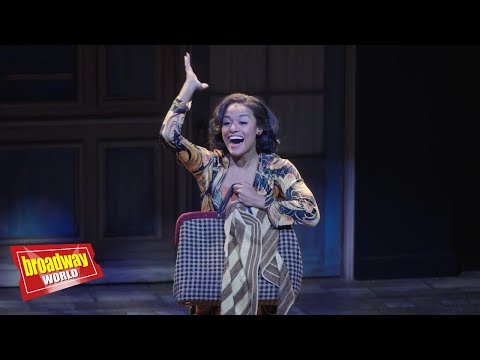
Review
The Baker’s Wife asks a sharp question in a soft voice. What does a community do when love becomes a public emergency? The premise is almost comic: a village needs bread, the baker needs his wife, and everybody decides they are qualified to fix a marriage. The twist is that the show keeps making the villagers’ meddling feel understandable, then uncomfortable, then weirdly moving.
Stephen Schwartz’s lyrics are at their best when they behave like social pressure. The town sings in arguments, in gossip, in rules. Geneviève sings in images that keep shifting, like she cannot stand still long enough to be owned. Aimable sings in plainspoken devotion that starts sweet and then turns frightening, because simplicity can be a weapon when it refuses to hear the truth. Joseph Stein’s book gives the village a chorus function that is almost Greek, but without the dignity. They are petty. They are funny. They are also the engine of the plot.
Musically, the score leans into a European-flavored Broadway sound without trying to be “authentic France.” It’s café bounce, folk warmth, and theatrical sweep. That choice matters. The music makes the village feel cozy even when the story is about control. When the show works, the contrast is the point. When it doesn’t, the sugar can soften the bite too much.
How It Was Made
The Baker’s Wife has one of those histories where the backstage story becomes part of the text. The Classic Stage Company show guide traces the long chain of hands that held the property before it found its authors: early attempts involved Cy Feuer and Ernest Martin, with Frank Loesser and Abe Burrows attached at one stage, before the rights ultimately landed with producer David Merrick. Neil Simon even shared the film with Schwartz as a potential project, but stepped away; Joseph Stein came on to write the book.
Then came the notorious 1976 pre-Broadway tour: a production in flux, with casting upheavals and a Broadway booking that got cancelled. The CSC timeline notes Topol as the original Aimable and Carole Demas as Geneviève, then Patti LuPone taking over in Los Angeles, and Paul Sorvino replacing Topol late in the Kennedy Center stretch. The show closed before it could transfer.
Here’s the rare detail that explains why the lyrics and score survived the collapse: the recording. The CSC guide documents a 1977 cast recording session held in a tiny Greenwich Village apartment studio, yielding a principal-voices album that helped keep the material alive, and it notes a Grammy nomination. In other words, the show’s afterlife began as an engineering problem: too small a room for an ensemble, so the music had to be curated. That constraint shaped the “album-first” mythology of The Baker’s Wife, and it’s why the songbook became famous even when the show itself stayed elusive.
Key Tracks & Scenes
"Chanson" (Denise)
- The Scene:
- Early autumn, mid-1930s. Café tables. Routine chores. Light like morning that has done this a thousand times, until it suddenly hasn’t.
- Lyrical Meaning:
- Denise frames the show as a story about ordinary days and the rare moment when the world tilts. The lyric tone is observational, not romantic. It’s a town teaching you how it sees itself.
"If It Weren’t for You" (Villagers)
- The Scene:
- The villagers bicker in overlapping conversations: priest versus teacher, neighbor versus neighbor. The stage picture should feel crowded even with a small ensemble, like conflict is the local weather.
- Lyrical Meaning:
- A communal confession: everyone is unhappy and wants a culprit. The lyric makes blame sound like a hobby, which sets up the town’s later decision to police a marriage.
"Merci, Madame" (Aimable)
- The Scene:
- Inside the bakery. New home, new ovens, new hope. Warm light on flour and wood. He moves through the space like a man trying to deserve it.
- Lyrical Meaning:
- Aimable’s gratitude is real, and that’s why it hurts later. The lyric is devotion as identity: he is good because he is grateful, and he expects the world to reward that goodness.
"Gifts of Love" (Geneviève)
- The Scene:
- She smiles for customers, then breaks alone. The lighting should isolate her from the bakery’s warmth, a private cold inside a public smile.
- Lyrical Meaning:
- Geneviève admits the split: passion from the past, gentle love in the present, and the pressure to call one of them “enough.” Schwartz writes her conflict as memory fragments, not speeches.
"Proud Lady" (Dominique)
- The Scene:
- Village square. Dominique flirts like it’s sport. Bright daylight. The kind of light that makes a bad idea look clean.
- Lyrical Meaning:
- He speaks in certainty. Destiny. Ownership. Future tense. The lyric is seduction that ignores consent and calls it romance, which is exactly why Geneviève’s resistance feels exhausted, not coy.
"Meadowlark" (Geneviève)
- The Scene:
- Night in the bakery. Dominique’s touch still on her, Aimable asleep upstairs, the ovens quietly breathing. One pool of light. One woman deciding who she is allowed to be.
- Lyrical Meaning:
- This is not a “run away” anthem. It’s a song about self-erasure dressed as flight. The lyric’s bird imagery lands because it admits the shame underneath the longing: she wants freedom, and she hates herself for wanting it.
"Buzz-a-Buzz" (Villagers)
- The Scene:
- Morning after. Charred loaves. Missing wife. The town gathers like a single organism, feeding on news. Lighting can flicker between streetlight and bakery glow, as if gossip is ignition.
- Lyrical Meaning:
- Schwartz writes gossip as music. It’s quick. It’s pleased with itself. It turns a disappearance into entertainment, which is the show’s bluntest critique of “community.”
"Any-Day-Now Day" (Aimable)
- The Scene:
- At the café, the baker who never drinks orders cognac, then another. His body loosens while his mind tightens. A warm, tipsy haze that keeps slipping into panic.
- Lyrical Meaning:
- Denial as prayer. The lyric is Aimable choosing a lie because the truth would break his hands, his job, his place in town. It’s devastating because it is almost funny.
"If I Have to Live Alone" (Aimable)
- The Scene:
- Empty bakery. Flour everywhere. Dough hanging from the ceiling. The lights feel colder now, as if the ovens have stopped loving him back.
- Lyrical Meaning:
- Schwartz gives Aimable a statement of fear, not rage. The lyric frames loneliness as exile. It’s the show’s argument that need can be tender, then controlling, then tragic.
Live Updates
The Baker’s Wife has had a loud 2024 to 2025 re-entry. London’s Menier Chocolate Factory mounted a major revival in summer 2024, reviewed widely and marketed around the cult status of “Meadowlark.”
In New York, Classic Stage Company mounted what it billed as the musical’s first full New York production, running October 23 to December 21, 2025 at CSC’s Lynn F. Angelson Theater, with opening night on November 11. The production’s public-facing reality became part of the story: CSC’s ticket page notes the run sold out and that there was no rush, a rare “event” posture for a show that spent decades as a recording. Playbill also reported that the CSC production would be filmed for the Theatre on Film and Tape archive, another sign that this run was treated as historical documentation, not just a limited engagement.
For 2026, the most concrete “status” is licensing and concert life. MTI promotes the Paper Mill Playhouse version as its primary licensed edition, and it also offers concert selections for approved songs. The Baker’s Wife is no longer only a legend. It’s a rentable score, with an audience that keeps growing one “Meadowlark” cover at a time.
Notes & Trivia
- The show is based on the 1938 French film La Femme du Boulanger (Marcel Pagnol and Jean Giono), and the CSC show guide traces the lineage back to Jean Giono’s 1932 novel Jean le Bleu.
- The 1976 pre-Broadway tour was produced by David Merrick and went through high-profile casting changes: Patti LuPone replaced Carole Demas as Geneviève in Los Angeles, and Paul Sorvino replaced Topol as Aimable late in the Kennedy Center run.
- The planned Broadway booking at the Martin Beck Theatre was cancelled, and the show closed before transferring.
- A principal cast recording was made in 1977 in a small Greenwich Village apartment studio, and CSC’s guide notes it earned a Grammy nomination.
- The West End production opened at the Phoenix Theatre on November 27, 1989 and played 56 performances before closing January 6, 1990; the CSC timeline notes it received an Olivier nomination for Musical of the Year.
- MTI licenses the “Paper Mill Playhouse Version (2005),” developed through revisions and re-structuring work described by director Gordon Greenberg in CSC materials.
- The CSC Off-Broadway production ran October 23 to December 21, 2025, and Playbill reported it would be filmed for the Theatre on Film and Tape archive.
Reception
In its modern revival era, the reception has been consistent in one way: critics love the score more than the plot, and they argue about whether that gap is charming or fatal. The Menier production drew the familiar verdict, warm on craft and skeptical on the book’s dramatic spine. The CSC run sparked a different conversation: what happens when a “cast album show” finally has to live in front of a New York audience that knows the legend and expects the proof.
“a charming and nostalgic musical set in a picturesque 1930s French village.”
“the show’s second act weakens.”
“standout performances … elevate the otherwise uneven production.”
Technical Info
- Title: The Baker’s Wife
- Year: 1976 (pre-Broadway tour premiere)
- Type: Book musical adapted from film
- Book: Joseph Stein
- Music & lyrics: Stephen Schwartz
- Based on: La Femme du Boulanger (1938), associated source material noted in CSC materials (including Jean Giono’s Jean le Bleu)
- Licensed edition: “Paper Mill Playhouse Version (2005)” (MTI)
- Selected notable placements: “Chanson” opens in the café; “If It Weren’t for You” introduces village feuds; “Meadowlark” lands after Geneviève agrees to run away; “Buzz-a-Buzz” follows the discovery she’s gone; “Any-Day-Now Day” is Aimable’s drunken denial at the café; “If I Have to Live Alone” is Aimable alone in the bakery; “Where Is the Warmth?” happens in the hotel room after the elopement; “Chanson (Reprise)” closes as the couple returns to bread-making (MTI synopsis).
- Recordings: A principal cast recording session is documented in 1977 (CSC show guide); a 1990 two-disc Original London Cast recording is widely listed by retailers and discographies.
- Recent major productions: Menier Chocolate Factory (London, July 6 to Sept 14, 2024); Classic Stage Company (New York, Oct 23 to Dec 21, 2025).
FAQ
- Who wrote the lyrics to The Baker’s Wife?
- Stephen Schwartz wrote both music and lyrics, with the book by Joseph Stein.
- Why is “Meadowlark” so famous?
- Because it’s the show’s clearest psychological portrait: Geneviève admits she is choosing flight even while feeling trapped by her own choices. It’s vivid, singable, and privately brutal.
- Where does “Meadowlark” happen in the story?
- After Dominique pressures Geneviève late at night and the two plan to run away together; Aimable is asleep, and she weighs her “choice” alone before leaving.
- Is The Baker’s Wife on Broadway?
- No. The 1976 production closed during its tryout period and never transferred. Its recent high-profile New York run was Off-Broadway at Classic Stage Company.
- Which version do theatres license today?
- MTI licenses the “Paper Mill Playhouse Version (2005),” a revised edition shaped through later development.
Key Contributors
| Name | Role | Contribution |
|---|---|---|
| Stephen Schwartz | Composer & lyricist | Writes the show’s push-pull between village chorus comedy and private yearning (“Meadowlark” as the emblem). |
| Joseph Stein | Book writer | Builds the village as a pressure system, turning bread into civic infrastructure and marriage into public business. |
| Marcel Pagnol | Source (film) | Provides the story’s moral frame: community ritual, scandal, forgiveness, and the hunger underneath civility. |
| David Merrick | Producer (1976 tour) | Backed the pre-Broadway tour whose volatile development shaped the show’s legend. |
| Gordon Greenberg | Director (major revivals) | Leads modern re-shaping work referenced in CSC materials and directed the 2025 CSC production. |
| Ariana DeBose | Performer | Led CSC’s 2025 New York production as Geneviève, re-centering the role around emotional precision and vocal clarity. |
| Scott Bakula | Performer | Played Aimable in CSC’s 2025 run, anchoring the show’s moral tenderness and denial. |
| Judy Kuhn | Performer | Played Denise in CSC’s 2025 run, giving “Chanson” its grounded, weathered perspective. |
| Music Theatre International | Licensing | Licenses the Paper Mill Playhouse version and supports concert selections, giving the show its present-day infrastructure. |
Sources: Music Theatre International, Classic Stage Company, Playbill, TheaterMania, Financial Times, The Guardian, The Daily Beast, Menier Chocolate Factory, Discogs, Apple Music.