

Beyond the Blue Horizon Lyrics
Beyond the Blue Horizon
[faint, almost in background].... blue horizon
Waits a beautiful day
Goodbye to things that bore me
Joy is waiting for me
I see a new horizon
My life has only begun
Beyond the blue da-dum, dee-dum
[full voice]
Beyond the blue horizon
Waits a beautiful day
Goodbye to things that bore me
Joy is waiting for me
I see a new horizon
My life has only begun
Beyond the blue horizon
Lies a rising sun
Beyond the blue horizon
Waits the beautiful day
Goodbye to things that bore me
Joy is waiting for me
I see a new horizon
My life has only begun
Beyond the blue horizon
Lies a rising sun
Beyond the blue horizon
Lies a rising sun
[faint, almost in background]
Beyond the blue horizon
Waits a beautiful day
Da-da, bum, da, bum....
Joy is waiting for me
I see a new horizon
Song Overview
Review and Highlights
Quick summary
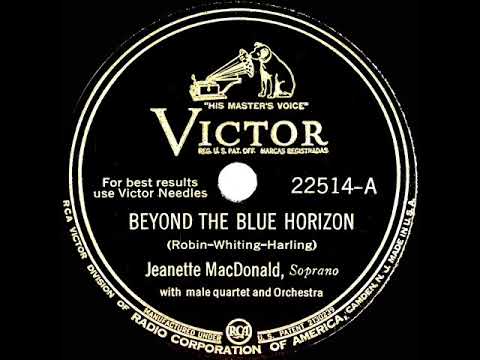
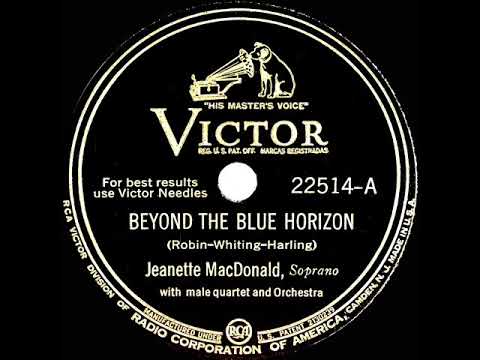
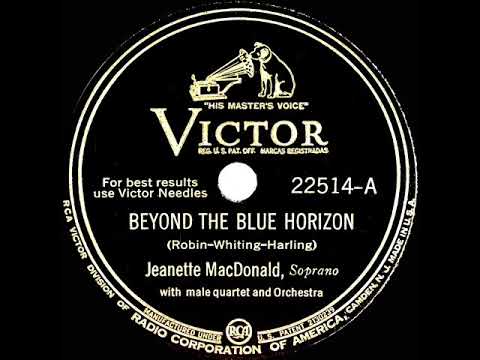
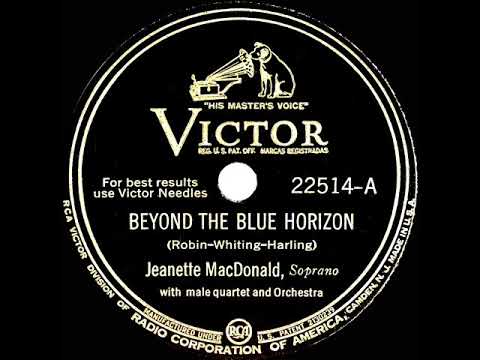
- Originally introduced on screen in 1930 in the film Monte Carlo, with music by Richard A. Whiting and W. Franke Harling and words by Leo Robin.
- In A Day in Hollywood / A Night in the Ukraine, it appears inside the Act 1 Richard Whiting Medley, sung by the company, as part of a fast, knowing salute to studio-era songcraft.
- On the cast album, it is not a standalone track - it is a featured stop within a longer medley, so the number lands like a cameo rather than a full scene.
- The hook sells optimism with a showbiz wink: tomorrow is brighter, and the orchestra politely insists you believe it.
A Day in Hollywood / A Night in the Ukraine (1980) - stage musical - non-diegetic. Act 1, within the Richard Whiting Medley (performed by the company). The tune functions as a bright splash of melodic sunlight inside a larger montage of familiar Hollywood-era standards - a moment that refreshes the ear before the medley keeps moving.
Here is the theatrical trick: the show does not ask the song to carry plot. It asks it to carry a mood, then get out of the way. Inside the medley, the refrain reads like a studio backlot painted in perfect perspective. The melody rises with that practiced confidence of early film musicals - a vocal line that seems to step onto a staircase made of brass voicings.
What makes the number useful in this particular musical is its tone. A Day in Hollywood is a revue about America watching itself. So this is not just a sunny song - it is a sunny song presented as a piece of cultural memory, the kind of thing a chorus can wear like costume jewelry: sparkling, familiar, slightly ironic if you tilt your head.
Creation History
The song began life in 1930, written for the film Monte Carlo and associated with Jeanette MacDonald early on. Decades later, the musical A Day in Hollywood / A Night in the Ukraine borrowed it as part of a Richard Whiting tribute medley, folding it into an evening built on quotation, pastiche, and show-business archaeology. As stated in New Yorker magazine, that original film sequence is often cited as a landmark kind of musical set-piece - which helps explain why theatre-makers still reach for the song when they want instant, camera-ready uplift onstage.
Song Meaning and Annotations
Plot
In the original song context, there is not much story, and that is the point. The speaker is leaving boredom behind, turning from the dull room toward the bright window. In the musical, the number is even more distilled: it becomes a communal burst of optimism, one stop on a guided tour through the sound of Hollywood fantasy.
Song Meaning
The meaning is straightforward but not simple: optimism as self-direction. The speaker does not wait to be rescued. They choose a new horizon, and the lyric treats that choice like a physical act - a turn, a step, a breath. When the company sings it in the medley, the meaning shifts again: optimism becomes an era style, a studio-era promise that entertainment will outshine the daily grind.
Annotations
-
Blow, whistle, blow away the past
The opening gesture is not a soft goodbye - it is a command. That whistle image is both train-travel and show-business: motion, escape, and a little stagey bravado.
-
Beyond the blue horizon
The title phrase sets distance as comfort. The horizon is far enough away to hold dreams without being tested. In Act 1 of the musical, that distance also reads as nostalgia - the past is far enough away to look polished.
-
Waits a beautiful day
The line sells certainty. Not "maybe" - waits. In performance, that certainty is the real product. The singer is marketing tomorrow to the room, and the orchestra backs the pitch.
Style and rhythm
As a standard, the song sits comfortably in traditional pop, with a period-typical vocal line built to float over a steady, dance-friendly pulse. In the theatre medley, the style becomes even more theatrical: phrasing tightens, consonants sharpen, and the arrangement is likely shaped to hand off cleanly into the next quote. The result is genre fusion by context: classic film-pop language performed with revue timing.
Emotional arc
The arc is a single, clean climb - from dismissal of boredom to declaration of new possibility. There is no detour into grief, no bargaining scene. That simplicity is why it works as a medley segment: it can ignite quickly and leave the stage still glowing.
Cultural touchpoints
In its first life, it belongs to early sound cinema and the invention of the Hollywood musical vocabulary. In its second life, inside A Day in Hollywood / A Night in the Ukraine, it becomes a comment on that very vocabulary - a loving citation that also lets the audience feel how strongly the old movies trained people to hear hope.
Technical Information (Quick Facts)
- Artist: Jeanette MacDonald (origin); Company (medley segment in A Day in Hollywood / A Night in the Ukraine)
- Featured: Ensemble (stage medley context)
- Composer: Richard A. Whiting; W. Franke Harling
- Lyricist: Leo Robin
- Release Date: November 1930 (original single); 1980 (Original Broadway Cast album release year)
- Genre: Traditional Pop; Film Musical Standard; Stage Revue Number (context)
- Instruments: Voice; orchestra (typical); stage band (revue setting)
- Label: Victor (1930 single); DRG (cast album)
- Mood: Bright, forward-leaning optimism
- Length: Varies by recording; medley excerpt is shorter than full performance
- Track #: Within the Richard Whiting Medley on the cast album
- Language: English
- Album (if any): A Day in Hollywood, A Night in the Ukraine (Original Broadway Cast Recording)
- Music style: 1930s studio-era popular song, frequently arranged for stage and concert
- Poetic meter: Mixed accentual-syllabic phrasing, often felt as iambic with an anapestic lift in the refrain
Frequently Asked Questions
- Is Beyond the Blue Horizon a standalone number in A Day in Hollywood / A Night in the Ukraine?
- No. In the Broadway materials it is presented as part of the Richard Whiting Medley in Act 1, so it plays as a featured excerpt rather than a full scene.
- What is the song trying to do dramatically?
- It sells forward motion. The speaker clears the air of yesterday and announces a decision to move on - perfect fuel for a revue montage.
- Why does the medley include this particular tune?
- Because it is instantly legible: a clean refrain, a lift in the melody, and a Hollywood-built optimism that reads in under a minute.
- Who wrote it?
- Music by Richard A. Whiting and W. Franke Harling, with words by Leo Robin.
- Where did audiences first hear it?
- It is strongly associated with Jeanette MacDonald and the early sound-film musical Monte Carlo.
- Does the song have a character point of view in the stage show?
- In the revue act, the point of view is collective. The cast borrows the song as a shared memory of movie-era glamour.
- Is it comedy material or sincere material?
- Both. Played straight, it is sincere. In a revue that knows it is quoting history, sincerity can arrive with a knowing smile.
- Is there a famous later pop cover?
- Yes. Lou Christie recorded a version in the 1970s that charted and later turned up in a film soundtrack context.
- What is the most quoted line for interpretation?
- The title phrase - it is a tidy metaphor for hope held at a safe distance, where reality cannot scuff it up yet.
- Why does it still work onstage?
- The refrain is built for projection. It gives the singer a clear target, and it gives the audience an easy emotional contract: trust the next day.
Awards and Chart Positions
The musical that later quoted the song did very well in the awards circuit. According to Playbill, the Broadway production earned major nominations and wins, including choreography recognition, and it also took home a featured-acting Tony.
| Year | Item | Category | Result |
|---|---|---|---|
| 1980 | A Day in Hollywood / A Night in the Ukraine | Tony Award - Best Choreography (Tommy Tune and Thommie Walsh) | Won |
| 1980 | A Day in Hollywood / A Night in the Ukraine | Tony Award - Featured Actress in a Musical (Priscilla Lopez) | Won |
| 1930 | Beyond the Blue Horizon (Jeanette MacDonald) | US chart peak | No. 9 |
| 1974 | Beyond the Blue Horizon (Lou Christie) | Billboard Hot 100 peak | No. 80 |
How to Sing Beyond the Blue Horizon
For singers, the classic-sheet-music version gives useful boundaries: a published key often listed in Bb major, a moderate tempo marking (often treated around the mid-80s in quarter-note terms), and a range that sits in a comfortable traditional-pop lane but still asks for clean top notes. The stage-medley excerpt may be transposed or clipped, but the technique problems stay familiar.
- Tempo first: Set a metronome around the moderate marking before you add rubato. The refrain feels better when it rides a stable pulse.
- Diction: Treat the opening consonants like stage cues. The first phrase is about clearing space - crisp "b" and "w" sounds help sell the decision.
- Breath plan: Do not try to sing the whole thought on one tank. Mark a breath before the title phrase so the refrain arrives with buoyancy, not strain.
- Legato line: The melody wants a smooth arch. Keep vowels tall and connected as you climb, especially on sustained syllables in the refrain.
- Style: Aim for film-musical brightness, not operatic weight. A little smile in the resonance goes a long way.
- Accents: Put gentle emphasis on the action words (blow, goodbye, waits). That is where the song claims momentum.
- Ensemble version: If you are singing it in a group, unify consonant timing. A medley excerpt dies when entrances are fuzzy.
- Mic or no mic: With a mic, keep the breath noise out of the pickup and let the phrasing do the work. Without a mic, think forward placement so the text carries.
- Common pitfalls: Rushing the refrain, flattening the emotional lift, or over-scooping into notes like a parody. The number works best when it believes itself.
- Practice materials: Rehearse the refrain on a neutral vowel, then add text, then add dynamic shape. Finish by speaking the text in rhythm like a monologue.
Additional Info
There is a useful irony in how the song travels. In 1930 it helped define what a big musical moment could feel like in early sound cinema. In 1980 it returns as quotation - a bright tile in a mosaic about Hollywood fantasy. And the show that quotes it is itself a kind of double feature: one half revue, one half Marx Brothers-inspired farce, with a legal afterlife that reads like backstage gossip turned federal case.
As reported in court records, the production became entangled in a right-of-publicity dispute connected to Marx Brothers likeness and characterization, a reminder that imitation can be affectionate and still expensive.
Outside the theatre, the song has an unusually long cover history. A notable pop update is Lou Christie's 1970s version, which charted and later appeared as part of a film soundtrack ecosystem. That sort of migration - from studio musical to pop single to stage quote - is the American songbook in fast motion.
Key Contributors
| Subject | Relation | Object | Notes |
|---|---|---|---|
| Richard A. Whiting | wrote music for | Beyond the Blue Horizon | Co-composer; celebrated for a catalog frequently quoted in stage revues. |
| W. Franke Harling | wrote music for | Beyond the Blue Horizon | Co-composer; associated with early film musical writing teams. |
| Leo Robin | wrote words for | Beyond the Blue Horizon | Lyricist; specialized in film-era popular song language. |
| Jeanette MacDonald | introduced | Beyond the Blue Horizon | Early signature performance in the 1930 screen context. |
| Dick Vosburgh | wrote book and lyrics for | A Day in Hollywood / A Night in the Ukraine | Built a show that frames standards as theatrical storytelling. |
| Frank Lazarus | composed for | A Day in Hollywood / A Night in the Ukraine | Original score plus integration of additional classic songs. |
| Tommy Tune | directed and choreographed | A Day in Hollywood / A Night in the Ukraine | Broadway staging shaped the revue language into a high-gloss machine. |
| Thommie Walsh | co-choreographed | A Day in Hollywood / A Night in the Ukraine | Co-winner for choreography recognition. |
| DRG Records | released | Original Broadway Cast album | Cast recording that preserves the medley structure. |
| John Golden Theatre | hosted | Broadway opening | Initial Broadway venue for the production. |
| Royale Theatre | hosted | Broadway transfer run | Later Broadway venue for the production. |
Sources
Sources: Wikipedia entry for A Day in Hollywood / A Night in the Ukraine, Internet Broadway Database listing, Playbill production page, Tony Awards winners database, CastAlbums.org recording page, New Yorker article on Ernst Lubitsch, Musicnotes sheet music listing, Wikipedia entry for Beyond the Blue Horizon (song), SecondHandSongs work and performance pages, Justia case record for Groucho Marx Productions v. Day & Night Co., People magazine obituary coverage mentioning Lou Christie and the Rain Man connection