

Sleepy Time Gal Lyrics
Sleepy Time Gal
Sleepy time gal,You're turning night into day,
Sleepy time gal,
You've danced the evening away.
Before each silvery star
Fades out o' sight,
Just give me one little kiss,
Then let us whisper goodnight.
It's gettin' late and dear, your pillow's waitin'!
Sleepy time gal,
When all your dancin' is through,
Sleepy time gal,
I'll find a cottage for you.
You'll learn to cook and to sew,
What's more, you'll love it I know
When you're a stay at home,
Play at home,
Eight o'clock sleepy time gal.
And "Ten Little Fingers And Ten Little Toes",
"Oh What A Pal Was Mary" and "Margie" and "Secondhand Rose",
"Alice Blue Gown" and "Sometimes I'm Happy" and "Do It Again",
And "Sweet Georgia Brown" and "Stouthearted Men".
To continue,
"If I Had The Wings Of An Angel" and "Dinah",
Or "Love Me Or Leave Me" or "Constantinople",
Songs about Susie and Sal,
Not to mention
A stay at home,
Play at home,
Eight o'clock sleepy time gal.
Song Overview

"Sleepy Time Gal" lands in A Day in Hollywood / A Night in the Ukraine as one of the softer pivots inside the Richard A. Whiting medley. Act 1 is busy with lobby patter and movie-palace bustle, then this standard lets the air out of the room for a moment. Not a full stop, not a sermon, just a brief hush with a melody that knows how to lean in.
Review and Highlights
Quick summary
- Where it appears: Act 1, inside the Richard A. Whiting medley.
- Writers (standard): music by Ange Lorenzo and Richard A. Whiting; lyrics by Joseph R. Alden and Raymond B. Egan.
- Show credit: listed for the Company in Broadway documentation.
- Stage function: a short, romantic downshift that keeps the medley from becoming a nonstop grin.
- Why it matters: it gives the Hollywood parade a human scale, then hands the wheel back to the montage.
The Whiting medley is built like a camera reel: bright title, bright title, then a slower shot to reset the eye. This song is that slower shot. Its melody does not beg for applause; it invites the audience to listen, which in a revue-style act is a small miracle of pacing.
The secret is restraint. The number comes from the dance-band world, yet it carries a late-night tenderness that reads cleanly onstage. A smart staging lets the performer keep it simple - a line delivered straight, a gesture that looks like it belongs to the character rather than to the choreographer, and then the show moves on before sentiment starts to puddle.
Key takeaways: a gentle tonal contrast inside a fast medley, writing that favors clarity over fireworks, and a reliable chance for a company member to register as a person, not just a silhouette.
Creation History
The tune is widely documented as a 1925 publication credited to Ange Lorenzo and Richard A. Whiting with lyrics by Joseph R. Alden and Raymond B. Egan, issued by Leo Feist in New York. As stated in a Morgan Library and Museum catalog record for the sheet music, the printed edition is tied to that Leo Feist publication trail, which helps explain the song's feel: it was made to circulate, to be played at home, to survive beyond a single show or star turn.
Song Meaning and Annotations
Plot
In Act 1, the show presents a movie-palace lobby world where musical numbers arrive like attractions. The Richard A. Whiting medley is the centerpiece, framed as Hollywood songwriting pulled from the piano and tossed to the audience. This song appears late in that sequence, offering a calmer romantic beat before the medley continues its tour of familiar titles.
Song Meaning
The meaning is courtship at closing time. The speaker is inviting someone into rest, comfort, and a small private space away from the noise outside. In the context of the musical, that invitation becomes a comment on Hollywood's promise: even the factory-made dream had room for a quiet scene, a soft light, and a melody that does not strain.
Annotations
"Sleepy time gal"
A title that does most of the work upfront. It signals tone (late-night), relationship (familiar), and attitude (tender) in three quick words. In a medley, that kind of instant tone-setting is gold.
"Don't you know it's sleepy time?"
The line functions like a gentle stage direction. It is an invitation and a boundary: the night is ending, the scene is narrowing, and the singer is coaxing the world into quiet.
"Dream a little dream"
The phrase is a period flourish that sits right on the edge of cliche, but it works if the performer treats it as personal. A small smile, not a wink, and the room follows.
Style and emotional arc
The style is traditional pop with dance-band roots, but the arc is built for intimacy: invitation, reassurance, and a fade rather than a finish. In this show, that fade is the point. It gives Act 1 a breath, then the Whiting parade picks up again.
Touchpoints
If you want a quick map of how deeply this song traveled, look at the long line of recorded versions across the 1950s and beyond, including sessions by major crooners. The tune became repertory, which is exactly what a Hollywood tribute wants: a title that arrives with history attached.
For the complete text, use licensed editions and authorized recordings. This page stays with commentary and brief excerpts only.
Technical Information (Quick Facts)
- Artist: Company (stage listing for the medley segment)
- Featured: ensemble medley moment
- Composer: Ange Lorenzo; Richard A. Whiting
- Release Date: 1925 (first publication widely documented)
- Genre: standard; fox-trot era popular song; used in musical theatre as a medley segment
- Instruments: piano-forward medley arrangement; ensemble support
- Label: DRG (cast recording context)
- Mood: late-night tender, lightly nostalgic
- Length: brief segment within the Richard A. Whiting medley track
- Language: English
- Music style: dance-band standard with crooner-friendly phrasing
- Poetic meter: accentual phrasing shaped to speech cadence
Frequently Asked Questions
- Is this number original to the stage musical?
- No. It is a 1920s standard used in Act 1 as part of the Richard A. Whiting medley.
- Who wrote it?
- The standard is credited to Ange Lorenzo and Richard A. Whiting for music, with Joseph R. Alden and Raymond B. Egan for lyrics.
- Who sings it in the Broadway documentation?
- Broadway listings credit it to the Company as a medley segment.
- Why does it feel calmer than the surrounding medley titles?
- Because it is built as an invitation rather than a punchline. The hook leans toward intimacy, which creates a brief breath before the next shift.
- Is it usually a full song in the show?
- Typically it is presented as a short excerpt inside the medley rather than a standalone track-length performance.
- What era does it evoke?
- It reads as late-1920s dance-band popular songwriting, a style designed to move from theatre to home piano to recording studio.
- What key and range should singers expect?
- One common lead sheet listing shows G major with a vocal range from D4 to E5.
- How fast should it go?
- A common published lead sheet lists a moderate tempo with a metronome marking of quarter note equals 138, though performers often interpret it more relaxed depending on style.
- Does it have notable recorded versions?
- Yes. It has been recorded by multiple major singers across decades, which is part of why it reads as instant period shorthand onstage.
- What is the simplest staging choice that works?
- Keep the body still and let the phrasing do the work. A small shift toward a partner or the audience can create the close-up without any scenery.
How to Sing Sleepy Time Gal
Practical sheet music metadata gives a clean starting grid: G major, range D4 to E5, and a tempo marking shown as quarter note equals 138 on a widely used lead sheet. That places it in an easy-to-place lane for many voices: not a belter showcase, more a phrasing test.
- Tempo: Start near the published marking, then decide whether your delivery wants a slightly lazier pocket. In a medley, clarity beats indulgence.
- Diction: Keep consonants soft but present. The title words must land without sounding like a punchline.
- Breathing: Take quick refills at the ends of images, not in the middle of them. Treat each phrase like a camera cut.
- Flow and rhythm: Let the line ride forward. Avoid dragging the ends of phrases, which can make the song feel heavier than it is.
- Accents: Give gentle emphasis to invitation words (sleep, dream, stay), then relax into sustained vowels.
- Ensemble version: Agree on one unforced dynamic level, then let a single voice lead the hook for definition. The rest supports like a halo.
- Mic: If amplified, stay close on quiet text and step back slightly on longer notes to keep the tone warm.
- Pitfalls: Do not milk the nostalgia. Play it as a present-tense invitation and the period flavor will follow.
Additional Info
One reason this title keeps showing up in revues is that it has a sturdy paper trail. IMSLP hosts public-domain-era scans tied to a 1925 first publication listing, and a Morgan Library catalog entry describes the Leo Feist edition in a way that reads like a time capsule of the business. That concrete evidence matters when a show is trading in nostalgia: it keeps the romance connected to an industry, not just a mood.
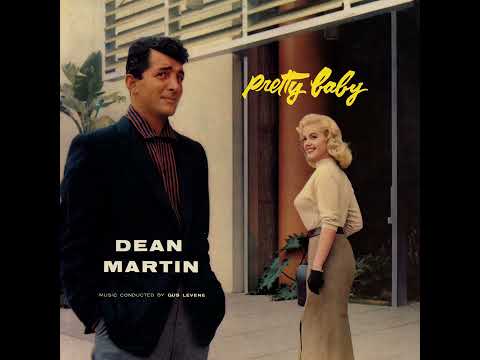
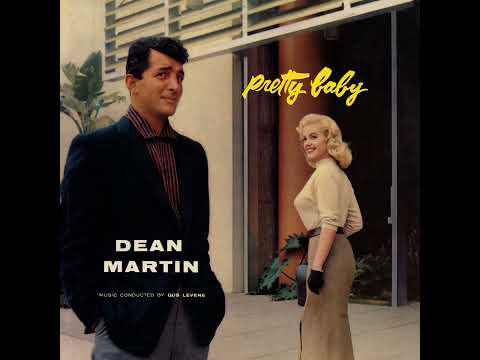
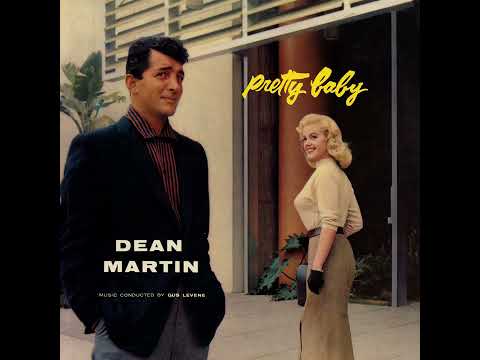
For performers looking for reference listening, the song's discography is a small tour of mid-century vocal style: Bing Crosby and Dean Martin both have well-circulated recordings, and database listings document those sessions. According to the Discography of American Historical Recordings, Crosby recorded the tune in the 1950s, a reminder that this number did not stay locked in the 1920s.
Key Contributors
| Entity | Relation | Statement |
|---|---|---|
| Ange Lorenzo | composer | Ange Lorenzo co-wrote the music for the standard. |
| Richard A. Whiting | composer | Richard A. Whiting co-wrote the music and is the honoree of the Act 1 medley. |
| Joseph R. Alden | lyricist | Joseph R. Alden is credited as a lyricist for the standard. |
| Raymond B. Egan | lyricist | Raymond B. Egan is credited as a lyricist for the standard. |
| Leo Feist, Inc. | publisher | Leo Feist, Inc. published a 1925 sheet music edition in New York. |
| Tommy Tune | director, choreographer | Tommy Tune directed and co-choreographed the Broadway production that features the medley. |
| DRG | label | DRG released the cast recording that documents the Whiting medley sequence. |
| Bing Crosby | recording artist | Bing Crosby recorded the song in a documented studio session in the 1950s. |
| Dean Martin | recording artist | Dean Martin recorded a well-circulated version released in the mid-1950s. |
Sources
Sources: Internet Broadway Database production record and song list, Musicnotes lead sheet listing, IMSLP first-publication entry, The Morgan Library and Museum sheet music catalog record, SecondHandSongs work page, Discography of American Historical Recordings, YouTube studio audio listing (Dean Martin).