

On the Good Ship Lollipop Lyrics
On the Good Ship Lollipop
I've thrown away my toys, even my drum and train.I wanna make some noise with real live aeroplanes.
Some day I'm going to fly, I'll be a pilot too.
And when I do, how would you like to be my crew?
On The Good Ship Lollipop.
It's a sweet trip to a candy shop
Where bon-bons play
On the sunny beach of Peppermint Bay.
Lemonade stands everywhere
Crackerjack bands fill the air
And there you are
Happy landing on a chocolate bar.
See the sugar bowl do the tootsie roll
With the big bad devil's food cake.
If you eat too much ooh-ooh
You'll awake with a tummy ache.
On The Good Ship Lollipop
It's a night trip into bed you hop
And dream away
On The Good Ship Lollipop.
Song Overview
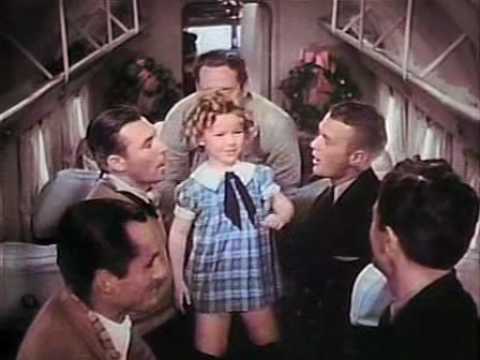
"On the Good Ship Lollipop" is one of those Hollywood artifacts that sounds like pure sugar until you notice the craft behind the grin. In A Day in Hollywood / A Night in the Ukraine, it appears as a compact stop inside the Richard A. Whiting medley - a fast burst of candy-colored fantasy that keeps Act 1 moving while still letting a performer flash personality. On paper, it is just another standard. In performance, it is a theatrical device: instant recognition, quick rhythm, and an excuse for stage business that reads like a movie close-up.
Review and Highlights
Quick summary
- Where it appears: Act 1, inside the Richard A. Whiting medley.
- Writers: music by Richard A. Whiting; lyrics by Sidney Clare.
- Who is featured in the Broadway staging list: Peggy Hewett (with baritone saxophone noted).
- What it does: a bright, short jolt of child-star sparkle used as medley propulsion, not as a standalone centerpiece.
- Why it matters: it proves the show can do Hollywood sweetness without slowing the evening into nostalgia wallpaper.
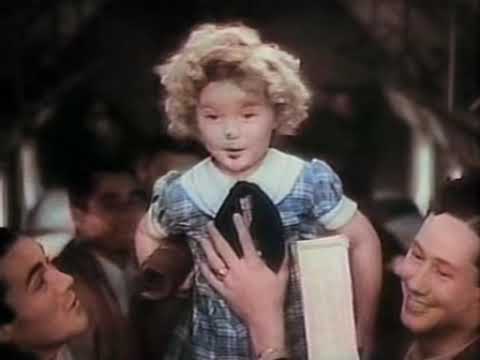
In the medley context, the song functions like a handoff in relay. The refrain is simple and sticky, so the audience catches it quickly, and that quick catch lets the show pivot to the next Whiting title without losing energy. It is not asking for deep listening. It is asking for a shared memory, even if that memory is secondhand.
The Broadway production detail that sharpens the theatricality is the instrumentation note: Peggy Hewett is listed not only as the singer but also as playing baritone saxophone for the segment. That is classic Act 1 logic for this show - the musicianship is part of the joke and part of the charm, visible and playful rather than hidden in the pit.
Key takeaways: quick recognition, clean ensemble timing, and a featured performer moment that lands without interrupting the medley engine.
Screen & Media Placements
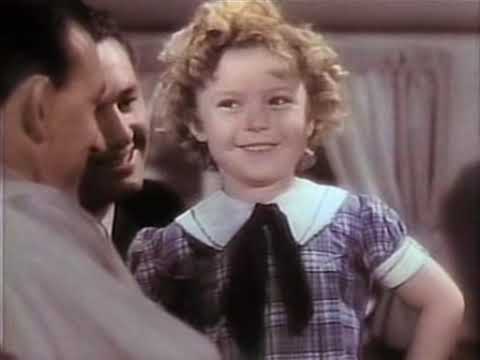
Bright Eyes (1934) - film - diegetic. Sung in a staged fantasy sequence tied to an airplane setting, turning a travel image into a candyland dream. The placement matters because it explains why the song reads as a visual number even when you hear it in concert: it was born with a camera in mind.
A Day in Hollywood / A Night in the Ukraine (May 1, 1980) - stage musical - diegetic. Act 1, within the movie-palace framing, as a segment of the Richard A. Whiting medley. Its job is to keep the revue rolling while letting a performer step forward and paint a quick period picture.
Creation History
The song is credited to Richard A. Whiting and Sidney Clare and is closely identified with Shirley Temple, who performed it in the 1934 film Bright Eyes. It later became a touchstone for movie-song history, to the point that the American Film Institute lists it among its ranked cinema songs. In the musical, the tune is borrowed as part of the Whiting tribute, which is a neat dramaturgical trick: the show is about Hollywood mythmaking, so it uses a Hollywood myth that arrived already packaged as an image.
Song Meaning and Annotations
Plot
In Act 1, the show presents a Hollywood-era revue staged as entertainment at a famous movie palace. The Richard A. Whiting medley is the centerpiece of that strategy: an original setup leads into familiar standards, performed in quick succession. This song enters as one of the medley stops, a bright flash that signals "movie memory" before the show glides onward.
Song Meaning
The meaning is a childlike travel fantasy: the "ship" becomes a vehicle to a place where daily limits disappear and sweets replace responsibility. In a film, that fantasy reads as spectacle. In this musical, it reads as a commentary on how Hollywood sold comfort - not as a sermon, but as a tune you could hum on the way out of the theatre.
Annotations
"On the good ship Lollipop"
The opening phrase is a hook that does not waste time explaining itself. It names the vehicle, names the destination mood, and invites the audience to accept the premise as instantly true. That directness is why the line works so well in a medley.
"It's a sweet trip to the candy shop"
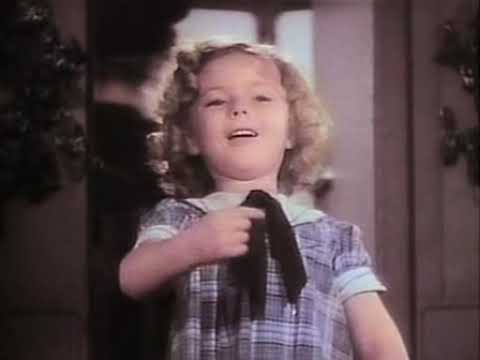
The lyric does not aim for metaphorical subtlety. It aims for clarity and sensory detail. Onstage, that gives performers license to physicalize the words - pointing, tasting, dancing the consonants - without inventing extra story.
"If you eat too much you'll awake with a tummy ache"
This is the wink inside the sugar: indulgence has a consequence, but the consequence is so mild it becomes part of the joke. In the show, that small sting keeps the number from becoming purely sentimental.
Driving rhythm and emotional arc
The emotional arc is compact: invitation, tour, and a comedic caution. The rhythm is refrain-forward, designed for repetition and group attack. In A Day in Hollywood, that compactness is an advantage. The show is always changing outfits; this tune changes the room in seconds.
Cultural touchpoints
The song's cinema identity is not a footnote. The American Film Institute ranks it on its list of notable movie songs, and that kind of cultural stamp is exactly what the musical trades on: shared references delivered with show-business timing.
For the complete text, use authorized editions and licensed recordings. This page stays with commentary and brief excerpts only.
Technical Information (Quick Facts)
- Artist: Original Broadway Cast (medley segment)
- Featured: Peggy Hewett (listed as singing and on baritone saxophone in a Broadway production song list)
- Composer: Richard A. Whiting
- Producer: Hugh Fordin (cast recording)
- Release Date: 1934
- Genre: film song standard; used in musical theatre as a medley segment
- Instruments: vocal; baritone saxophone feature noted in production documentation; ensemble support
- Label: DRG (cast recording context)
- Mood: playful, bright, fantasy-forward
- Length: performed as a brief segment within the "Richard A. Whiting Medley" track (not typically indexed as a separate track)
- Track #: within the "Richard A. Whiting Medley" on the Original Broadway Cast recording
- Language: English
- Album (if any): A Day in Hollywood / A Night in the Ukraine (Original Broadway Cast Recording)
- Music style: 1930s film-pop with a refrain built for chorus delivery
- Poetic meter: accentual phrasing with hook-led repetition
Frequently Asked Questions
- Is this song original to A Day in Hollywood / A Night in the Ukraine?
- No. It is a 1934 film-era standard used in Act 1 as part of the Richard A. Whiting medley.
- Who wrote it?
- Richard A. Whiting is credited for the music, and Sidney Clare is credited for the lyrics.
- Where does it appear in the show?
- It appears in Act 1 inside the Richard A. Whiting medley, listed among the medley titles in production documentation.
- Who is featured on the Broadway production list for this segment?
- One Broadway staging list singles out Peggy Hewett for the segment and notes her on baritone saxophone.
- What is the dramatic function inside the medley?
- It is a quick fantasy beat that resets the color of the montage - a flash of child-star sweetness before the medley shifts to another style.
- How is the song tied to classic Hollywood?
- It is strongly associated with Shirley Temple and the 1934 film Bright Eyes, where it was introduced as a screen number.
- Does the song have a recognized place in movie-song history?
- Yes. The American Film Institute lists it in its ranked selection of notable cinema songs.
- What key and range are commonly listed for singers?
- Sheet music listings commonly show C major and a range from C4 to D5, making it accessible for many light-voice performers.
- How should a performer avoid making it too precious?
- Keep the diction clear, keep the tempo buoyant, and treat the sweetness as a choice, not a personality trait. The quickest way to dull the number is to linger.
- Is it separated as its own track on the cast recording?
- Usually no. It is typically documented as part of the "Richard A. Whiting Medley" rather than as a separately indexed track.
Awards and Chart Positions
The song's reputation is anchored less in radio charts than in screen canon. The American Film Institute ranks it at number 69 in its list of notable movie songs, credited to Shirley Temple in Bright Eyes (1934). In the world of this stage musical, that kind of canon status is the punchline and the payoff: the show borrows a famous artifact and lets it sparkle for just long enough to remind you why Hollywood sold dreams so efficiently.
| List | Rank | Film | Year | Credited performer |
|---|---|---|---|---|
| AFI 100 Years - 100 Songs | 69 | Bright Eyes | 1934 | Shirley Temple |
How to Sing On the Good Ship Lollipop
Sheet music listings commonly place the song in C major with a vocal range of C4 to D5 and describe the tempo as lightly moderate, with a metronome marking shown as half note equals 64 on one popular edition. That points to a clean, forward bounce rather than a dragged lullaby.
- Tempo: Keep it buoyant. A steady pulse makes the fantasy feel like travel, not like a recital.
- Diction: Crisp consonants sell the candyland nouns. Treat each sweet as a prop you can point to.
- Breathing: Take quick refills between images. Do not let one long breath flatten the phrasing into mush.
- Flow and rhythm: Aim for conversational lift. The refrain should feel effortless, like a chorus line you can step into.
- Accents: Emphasize the names of places and treats, then relax on the sustained tones. It keeps the number playful rather than pushy.
- Style: Keep the sweetness as performance, not as personality. A slight edge of knowing humor helps.
- Mic: If amplified, stay close on fast text, then ease back slightly on louder hook moments to avoid harshness.
- Pitfalls: Avoid exaggerating childlike mannerisms. The tune already does the work; your job is clarity and rhythm.
Additional Info
There is a small irony in how the musical uses this song. The original film identity is all about spectacle and camera framing. The stage version, by contrast, can be done with almost nothing - a performer, a tempo, and a few well-chosen gestures. That contrast is the evening's larger theme in miniature: Hollywood sells you an image, theatre sells you the labor that makes the image believable.
Overtur's Broadway musical-numbers list is especially revealing because it documents performance business rather than just titles. The baritone saxophone note is not trivia. It is an insight into how the show treats nostalgia as active craft, not passive quoting.
Key Contributors
| Entity | Relation | Statement |
|---|---|---|
| Richard A. Whiting | composer | Richard A. Whiting wrote the music to the 1934 song used in the Act 1 medley. |
| Sidney Clare | lyricist | Sidney Clare wrote the lyrics credited in production documentation. |
| Shirley Temple | screen performer | Shirley Temple performed the song in the film Bright Eyes and remains its best-known screen association. |
| Peggy Hewett | stage performer | Peggy Hewett is listed as singing the segment in a Broadway musical-numbers list, with baritone saxophone noted. |
| Dick Vosburgh | book and lyrics | Dick Vosburgh wrote the book and lyrics for the stage musical framework that houses the Whiting medley. |
| Frank Lazarus | composer, performer | Frank Lazarus composed the musical's primary score and is central to the medley-driven design of Act 1. |
| Tommy Tune | director, choreographer | Tommy Tune directed the Broadway production that staged the medley sequence. |
| American Film Institute | institution | The American Film Institute ranked the song on its 100 Years - 100 Songs list. |
| Bright Eyes | film | Bright Eyes is the 1934 film credited by AFI for the song's screen placement. |
| A Day in Hollywood / A Night in the Ukraine | stage work | A Day in Hollywood / A Night in the Ukraine uses the song as part of the Richard A. Whiting medley in Act 1. |
Sources
Sources: Internet Broadway Database production record and tour song list, Overtur Broadway musical numbers list, American Film Institute 100 Years - 100 Songs page, Musicnotes sheet music listing, New York Public Library research catalog record for the DRG cast recording, Shirley Temple film clip listing.