Something Lyrics — Across the Universe
Something Lyrics
Attracts me like no other lover.
Something in the way she woos me.
I don't want to leave her now,
You know I believe in how.
Somewhere in her smile she knows,
That I don't need no other lover.
Something in her style that shows me.
I don't want to leave her now,
You know I believe in how.
You're asking me will my love grow,
I don't know, I don't know.
You stick around now, it may show,
I don't know, I don't know.
Something in the way she knows,
And all I have to do is think of her.
Something in the things she shows me.
I don't want to leave her now.
You know I believe in how.
Song Overview
Review and Highlights
Quick summary
- Film performer: Jim Sturgess as Jude.
- Original writer: George Harrison. First issued by The Beatles on Abbey Road (1969), then as a double A-side single with "Come Together" in October 1969.
- Scene placement in the film: Jude sings while drawing and watching Lucy sleep.
- Diegetic status: yes. It plays as an on-screen serenade rather than background wallpaper.
- Arrangement shift: the cover trades the Beatles recording's classic-rock polish for an intimate, actor-sung hush that reads like a sketchbook margin.
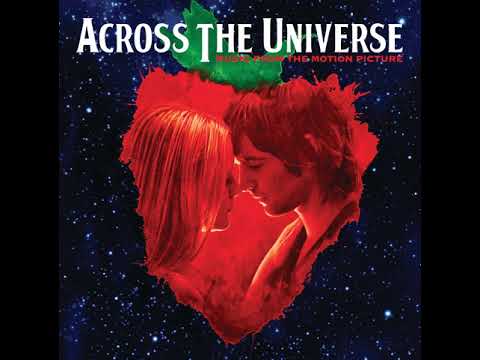
Across the Universe (2007) - film musical number - diegetic. Jude is alone with his work and his worry, and the song lands like an admission he cannot say in dialogue. A timestamp guide places it at about 1:17, with the note that he draws while Lucy sleeps. That staging matters: it makes the love song less public pledge, more private proof.
This is one of Julie Taymor's smartest uses of a famous melody: she avoids parody by lowering the volume of the whole enterprise. No masks. No protest pageant. Just a young man, a pencil, and the kind of tenderness that shows up when the room finally stops spinning. The song is already a masterclass in romantic economy, so the film wisely lets it behave like a monologue you sing when speech would ruin it.
BroadwayBox, in a ranking of the movie's numbers, jokes about how the scene opens with a classic art-school pose, then admits the vocal has a longing quality that sells the moment. I agree with the second part, and I will add a theater note: the camera is doing what a good lighting designer does, isolating the actor so the lyric can land without decoration.
Key Takeaways
- Intimacy is the effect: the scene plays like a ballad staged as drawing, not as performance.
- The lyric's restraint matches the character's restraint, which is why it feels earned.
- The cover functions as a narrative hinge before bigger ruptures arrive.
Creation History
George Harrison developed the song during the Abbey Road sessions, with documented work continuing through spring and summer 1969. Beatles Bible details a key remake date in May 1969 as the band rebuilt the track, and standard histories note the single release in October 1969 as a double A-side with "Come Together." Across the Universe pulls that legacy into a different register: the same harmonic tenderness, but delivered as an actor-sung moment that prioritizes breath and intention over studio gloss.
Song Meaning and Annotations
Plot
The story has passed through the Dr. Robert corridor and the carnival fever, and now it needs a human-scale moment to reset the audience's pulse. Jude sings while he draws and watches Lucy sleep. The scene is not about action, it is about focus: what he chooses to see, and what he is afraid to lose. The song sits between shared-group trance and the film's later fractures, so it functions like a brief, fragile truce.
Song Meaning
At its core, the lyric is a portrait of attraction that resists explanation. The singer can name the effect, but the cause stays mysterious, and that mystery becomes the romance. In the film, the mystery is sharpened into anxiety: Jude is not only in love, he is trying to hold onto a version of Lucy he can still recognize. The drawing is the subtext. When you sketch someone, you are both worshipping and controlling them. Taymor lets that tension sit there quietly, which is braver than underlining it.
Annotations
-
Something in the way she moves
In the Beatles original, it is classic, almost mythic devotion. In the film, it becomes observational - the kind of line a person says when they have been watching too closely and cannot stop. The drawing makes the gaze literal.
-
Attracts me like no other lover
This is not a brag. It is a confession of vulnerability: the singer is admitting that comparison has ended. The cover keeps it soft, which helps the line read as truth, not flourish.
-
I don't know, I don't know
The lyric's little stumbles are the secret engine. The film uses them as character detail - Jude is articulate when he makes art, less so when he tries to explain love.
-
You're asking me will my love grow
The question lands differently in this story. Love in the film is always under pressure from war, ideology, and ego. So the line plays like a plea for time: let us keep this simple before the world complicates it.
Style and emotional arc
The song moves with slow confidence: a steady pulse, a melodic line that avoids cheap dramatics, and a harmonic language that sounds warm even when the singer is uncertain. The emotional arc is modest by design - it starts with awe, slips into hesitation, then returns to commitment. In film terms, it behaves like a close-up: small shifts read huge.
Instrumentation and production choices
The Beatles recording is famous for its full-band sheen and carefully arranged parts. The film version is built around voice and restraint. That choice brings out the lyric's conversational quality, and it fits Taymor's habit of treating songs like scenes rather than hits that must be replicated.
Technical Information (Quick Facts)
- Artist: Jim Sturgess
- Featured: None
- Composer: George Harrison
- Producer: T Bone Burnett
- Release Date: October 2, 2007
- Genre: Film soundtrack; rock ballad cover
- Instruments: Lead vocal; band accompaniment (screen mix varies by cut)
- Label: Interscope
- Mood: Tender; reflective; vulnerable
- Length: 3:02
- Track #: Deluxe edition disc 2, track 17 (common listing)
- Language: English
- Album (if any): Across the Universe (Music from the Motion Picture) - Deluxe Edition
- Music style: Actor-sung ballad with classic-rock harmony
- Poetic meter: Mixed stress phrasing shaped by conversational clauses
Frequently Asked Questions
- Who performs the song in the film?
- IMDb soundtrack listings credit Jim Sturgess as the performer for the film version.
- What is happening in the scene?
- A scene guide places it at about 1:17, with Jude singing while he draws and watches Lucy sleeping.
- Is it performed on screen or used as background music?
- It is staged as an on-screen performance, tied to Jude's actions and point of view.
- Who wrote the original?
- George Harrison wrote it, and The Beatles released it on Abbey Road in 1969.
- Was it a single?
- Yes. It was issued as a double A-side with "Come Together" in October 1969.
- What makes the lyric feel different in this film?
- The scene turns admiration into observation. The drawing angle adds a layer of longing and control that is not always felt in the original recording.
- What key and tempo are commonly listed for the soundtrack track?
- Track-metric listings often show F sharp major and about 136 BPM for the Jim Sturgess recording.
- What vocal range should singers expect?
- Sheet arrangements vary by key, but a common published arrangement lists the melody around G4 to G5.
- Did the soundtrack album receive awards recognition?
- Yes. The soundtrack was nominated for Best Compilation Soundtrack Album for Visual Media at the 50th Annual Grammy Awards.
- Did the original song earn major accolades?
- It received the Ivor Novello Award for Best Song Musically and Lyrically for 1969, and it became a major chart hit in the United States.
Awards and Chart Positions
The film track was not pushed as a stand-alone single, but the soundtrack program around it has a documented record. According to Billboard chart summaries reproduced in major soundtrack references, the album reached the US Billboard 200 and the Top Soundtracks chart, and it was nominated in the Grammy compilation soundtrack category.
Soundtrack milestones
| Item | Result | Notes |
|---|---|---|
| Grammy Awards (50th Annual) | Nominated - Best Compilation Soundtrack Album for Motion Picture, Television or Other Visual Media | Producers credited include T Bone Burnett, Elliot Goldenthal, and Matthias Gohl. |
| US Billboard 200 (soundtrack album) | Peak: 36 | Weekly chart peak listed in the soundtrack chart table. |
| US Top Soundtracks (Billboard) | Peak: 12 | Category chart peak listed in the soundtrack chart table. |
| US Soundtrack Albums year-end | Position: 22 (2008) | Year-end placement listed in the soundtrack year-end table. |
Original song achievements
| Item | Result | Notes |
|---|---|---|
| Single release | Double A-side with "Come Together" (October 1969) | Issued two weeks after Abbey Road, and it was Harrison's first Beatles A-side. |
| US chart peak | No. 1 on the Billboard Hot 100 (as the double A-side) | Chart history notes the single reached the top during its run. |
| Ivor Novello Awards | Best Song Musically and Lyrically (for 1969) | Song history references cite the award in contemporaneous recognition. |
How to Sing Something
For practice planning, two common data anchors show up in track-metric listings and sheet catalogs: the Jim Sturgess soundtrack cut is often listed in F sharp major at about 136 BPM, and a widely circulated published arrangement places the melody roughly from G4 to G5 (key and range can shift with edition). Use the numbers as a map, not a cage.
- Tempo: Start at 120 BPM to shape legato, then move toward 136 BPM once breath feels unhurried. If the scene feels slower to you, rehearse it in half-time feel while keeping the click steady.
- Diction: Keep consonants gentle. This lyric works when it sounds spoken, not punched.
- Breathing: Plan for long lines. Mark a silent inhale before the opening phrase and a second reset before the "I don't know" refrain.
- Flow and rhythm: Avoid rushing the repeated "I don't know" figure. Let it fall back into the groove like a thought returning.
- Accents: Emphasize meaning words, not volume peaks. The song is persuasive because it stays calm.
- Style: Aim for warm tone with minimal vibrato changes. Save the most color for the last third of the song, where the lyric turns toward commitment.
- Mic technique: If amplified, stay close and sing under the mic. This is a ballad that reads strongest when it feels private.
- Pitfalls: Oversinging the hook, scooping into pitch, and letting breath noise interrupt legato.
- Practice materials: Sing the melody on "oo" through the whole form, then add text without changing the vowel line. Record once a day and check whether the phrasing stays conversational.
Additional Info
A bit of history sharpens the film moment. The original became one of the most covered Beatles compositions, and major summaries list well over a hundred versions by other artists. The song's durability is partly craft and partly restraint: it offers romance without melodrama, then leaves room for performers to supply their own subtext.
One famous anecdote from song histories: Frank Sinatra regularly performed it and praised it as a high-water mark for love songs, even while misattributing its authorship in some introductions. That little mistake is almost comic, but it also proves the point: the tune became bigger than the details around it.
In the film, that bigness is domesticated. The scene is not trying to outdo Abbey Road; it is trying to reveal Jude. According to a YouTube release line for the soundtrack upload, the credit is straightforward: performer Jim Sturgess, writer George Harrison. Simple credits, complicated feelings.
Key Contributors
| Subject | Verb | Object |
|---|---|---|
| Jim Sturgess | performs | the film version as Jude and the soundtrack recording |
| Julie Taymor | stages | the number as a diegetic studio serenade tied to drawing |
| George Harrison | writes | the original composition and lyric |
| T Bone Burnett | produces | the soundtrack recording program |
| Mike Piersante | mixes | the soundtrack track (credits in release listings) |
| Interscope | releases | the soundtrack album and deluxe edition |
Sources
Sources: YouTube (Provided to YouTube by Universal Music Group) track upload, Soundtrackradar scene-and-timestamp guide, Wikipedia - Across the Universe (soundtrack) charts and track listings, Wikipedia - Something (Beatles song) release and awards summary, Beatles Bible session notes for the 1969 recording dates, Billboard chart pages and Hot 100 references, Discogs release credits for the soundtrack, MusicBrainz release credits for producer and mixer, Musicnotes sheet listing for a common vocal range
Music video
Across the Universe Lyrics: Song List
- Girl
- Helter Skelter
- Hold MeTight
- All My Loving
- I Wanna Hold Your Hand
- With A Little Help From My Friends
- It Won't Be Long
- I've Just Seen A Face
- Let It Be
- Come Together
- Why Don't We Do It In The Road?
- If I Fell
- I Want You / She's So Heavy
- Dear Prudence
- Flying
- Blue Jay Way
- I Am The Walrus
- Being for the Benefit of Mr. Kite!
- Because
- Something
- Oh, Darling
- Strawberry Fields
- Revolution
- While My Guitar Gently Weeps
- Across the Universe
- Helter Skelter (Reprise)
- And I Love Her
- Happiness Is A Warm Gun
- A Day in the Life
- Blackbird
- Hey Jude
- Don't Let Me Down
- All You Need Is Love
- Lucy In The Sky With Diamonds