Blackbird Lyrics — Across the Universe
Blackbird Lyrics
Take these broken wings and learn to fly
All your life
You were only waiting for this moment to arise
Blackbird singing in the dead of night
Take these sunken eyes and learn to see
All your life
You were only waiting for this moment to be free.
Blackbird fly, Blackbird fly
Into the light of the dark black night.
Blackbird fly, Blackbird fly
Into the light of the dark black night.
Blackbird singing in the dead of night
Take these broken wings and learn to fly
All your life
You were only waiting for this moment to arise
You were only waiting for this moment to arise
You were only waiting for this moment to arise
Song Overview
Review and Highlights
Quick summary
- Across the Universe (2007) assigns the song to Lucy, performed by Evan Rachel Wood.
- It arrives after Max is out of the hospital, staged as a quiet, direct address rather than a spectacle cue.
- The soundtrack release presents it as "Black Bird" and runs a little over three minutes.
- The film uses the number as a reset: one voice, one guitar-led frame, no crowd to hide behind.
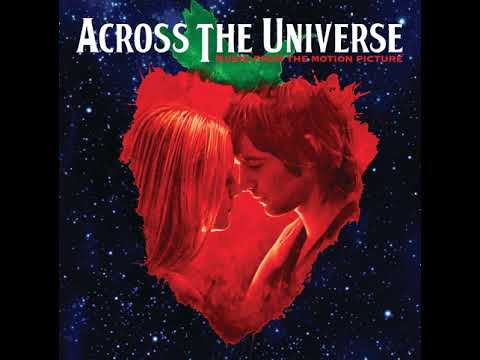
Across the Universe (2007) - film - diegetic. Lucy sings to Max in a small, grounded setting as the story exhales after the hospital trauma. It matters because Taymor briefly stops the collage from spinning and lets care look like care, not performance.
Julie Taymor is often accused of treating the Beatles catalog like a box of fireworks. Here she does the opposite: she treats it like a bedside lamp. The camera does not beg you to marvel, it asks you to listen. The arrangement stays lean, with the vocal line carrying the scene's weight. No choral scaffolding, no editorial frenzy. Just a person trying to steady another person.
The clever part is how the song lands inside the film's emotional traffic. The plot around it is full of hard-edged images - military machinery, protest theater, bruised friendships. This cue is a small kindness set against that backdrop, and the contrast is the dramatic device. The tenderness is not decoration. It is a counterargument.
Creation History
Paul McCartney wrote the original in 1968, credited to Lennon-McCartney, and it has lived an unusually long life as a guitar-and-voice rite. Across the Universe keeps that simplicity, then re-aims it at character care. As stated on IMDb, the film credits the performance to Evan Rachel Wood, and the soundtrack configuration presents the track as part of the cast-centered program rather than an archival Beatles master.
Song Meaning and Annotations
Plot
Max returns from Vietnam wounded and shaken, and the film shows the aftereffects in his relationships. The story has already taught us that music can be protest, seduction, or disguise. Here, music becomes caretaking. Lucy sings while Max listens, and the scene's stakes are simple: can he sit in the room without breaking apart?
Song Meaning
In this film, the lyric reads as permission to heal without pretending the wound is gone. The image of broken wings is not a metaphor the movie has to translate. It is already the plot. Lucy is not delivering inspiration like a speech. She is offering a steady line and staying present long enough for it to land.
Annotations
"Blackbird singing in the dead of night"
Across the Universe plays this as a private hour, even when the story is surrounded by public history. The night is not romance, it is recovery time. The phrase turns into a stage direction: lower the lights, lower the defenses.
"Take these broken wings and learn to fly"
In a jukebox film, this could become a slogan. Taymor avoids that trap by keeping the scene unadorned. The line becomes a practical wish directed at Max, not a banner for the audience.
"You were only waiting for this moment to arise"
Spoken as Lucy's address, it reads less like destiny and more like timing: the moment when someone finally stops pushing and starts listening. The film treats that as a turning point with human scale.
Style fusion and driving rhythm
The song sits in a folk-pop pocket, and the film keeps the pulse gentle. The rhythmic drive is not speed, it is continuity: a steady meter that holds when the character cannot. That steadiness is the point of the scene.
Images and symbols
The bird image can drift toward sentiment, but the movie anchors it in the physical. Max has returned altered. Lucy is learning that love is not only desire, it is endurance. The song becomes a small, clear emblem of that shift.
Technical Information (Quick Facts)
- Artist: Evan Rachel Wood
- Featured: none
- Composer: Paul McCartney (credited Lennon-McCartney)
- Producer: T Bone Burnett; Elliot Goldenthal; Matthias Gohl (soundtrack compilation credits)
- Release Date: September 14, 2007 (standard soundtrack)
- Genre: film soundtrack; folk-pop cover
- Instruments: lead vocal; guitar-led accompaniment
- Label: Interscope
- Mood: calm; consoling; intimate
- Length: about 3:03 to 3:05 (release metadata varies by platform)
- Track #: not on the 16-track standard edition; included on deluxe configurations
- Language: English
- Album (if any): Across the Universe (Music from the Motion Picture) - Deluxe editions
- Music style: close-mic, actor-forward phrasing with minimal arrangement weight
- Poetic meter: mixed pop prosody with speech-led stress
Frequently Asked Questions
- Who sings the song in the film
- Lucy sings it, performed by Evan Rachel Wood.
- Where does it appear in the story
- It occurs after Max is out of the hospital, framed as Lucy addressing him directly.
- Is it a spectacle number
- No. It is staged as intimate diegetic performance, a brief pause from the film's larger set pieces.
- Why does the film keep the arrangement simple
- Because the scene is about attention and care. Too much production would turn comfort into show.
- Is it on the standard soundtrack edition
- The core 16-track standard edition focuses on a smaller set of numbers; this track appears on the deluxe configurations.
- Why is it titled Black Bird on some platforms
- That is the soundtrack metadata styling used on several services, even though the source title is commonly written as one word.
- What is a useful practice tempo
- Musicnotes arrangements list a metronome marking around q equals 96, while platform metadata for the cast track is commonly indexed in the low 90s BPM range.
- What vocal range should a singer plan for
- Published sheet music commonly lists a range around E4 to G5 in the original published key of G major, though transpositions are widely available.
- Does the film use it as protest
- Not in this placement. It functions as recovery music, aimed at one listener rather than a crowd.
Awards and Chart Positions
The track is best understood as part of the album's story rather than a standalone single campaign. According to Wikipedia's soundtrack chart summary, the album reached the top half of the Billboard 200 and also placed on Billboard's soundtrack chart. As stated on Grammy documentation referenced in the same release coverage, the soundtrack received a nomination in the compilation soundtrack category during the 50th ceremony cycle.
| Item | Result | Notes |
|---|---|---|
| Soundtrack - US Billboard 200 peak | 36 | Album-level weekly peak during 2007-2008. |
| Soundtrack - US Top Soundtracks peak | 12 | Album-level peak on the soundtrack chart. |
| Soundtrack - US Soundtrack Albums year-end (2008) | 22 | Album-level year-end placement. |
How to Sing Blackbird
This song rewards honesty and punishes strain. The best approach is to treat it like speech set to melody: clear words, steady breath, and a guitar-like sense of rhythm. Musicnotes lists the original published key as G major with a typical vocal range around E4 to G5, and a moderate metronome marking around q equals 96. Platform metadata for the cast track is commonly indexed around 93 BPM. Use those figures as rehearsal landmarks, then adjust to your arrangement.
- Tempo - Start at 90 to 96 BPM. Learn the guitar-pulse feel before you chase nuance.
- Diction - Keep consonants tidy, especially ending sounds. Soft delivery still needs clarity.
- Breathing - Plan low, quiet inhales before longer phrases. Do not grab air mid-word.
- Flow and rhythm - Think in two-bar arcs. Let the line travel rather than pecking at each note.
- Accents - Emphasize the verbs and image-words, not every noun. One well-placed stress carries the whole sentence.
- Vowel tuning - On higher notes near G5, narrow vowels slightly to keep pitch centered.
- Style - Aim for close-mic intimacy even on stage. The song reads best when it feels personal.
- Pitfalls - Avoid pushing volume on the top line. If it feels like you need more sound, you probably need more breath, not more force.
Additional Info
Blackbird is one of the film's shrewdest pieces of casting. Evan Rachel Wood has a screen presence that can turn stillness into action, and Taymor uses that quality here. The song becomes a form of caretaking that is not sentimental, just steady. The film's politics are loud; this is a scene that argues for private repair as part of the same decade.
If you want a quick external checkpoint on how the moment is positioned, the film's own musical-number list identifies "Blackbird" as Lucy's song, and IMDb plot summaries describe it as Lucy singing to Max after his hospital stretch. Those are not interpretive essays, but they anchor the who-what-when so the scene can be read theatrically rather than as a floating cover.
Key Contributors
| Entity | Type | Relationship (S-V-O) |
|---|---|---|
| Evan Rachel Wood | Person | Wood - performs - the film and soundtrack version as Lucy. |
| Julie Taymor | Person | Taymor - directs - the film and stages the cue as intimate diegetic performance. |
| Joe Anderson | Person | Anderson - portrays - Max, the in-scene listener for the cue. |
| Paul McCartney | Person | McCartney - writes - the source song (credited Lennon-McCartney). |
| Elliot Goldenthal | Person | Goldenthal - composes - the film score and shares soundtrack producer credit. |
| T Bone Burnett | Person | Burnett - produces - the soundtrack compilation. |
| Matthias Gohl | Person | Gohl - produces - the soundtrack compilation. |
| Interscope Records | Organization | Interscope Records - releases - the soundtrack editions. |
| Sony Pictures Releasing | Organization | Sony Pictures Releasing - distributes - the film. |
| IMDb | Organization | IMDb - lists - soundtrack performance credits and plot summaries. |
Sources
Sources: Wikipedia: Across the Universe (film) musical numbers list, IMDb soundtrack credits and plot summary notes, Wikipedia: Across the Universe (soundtrack) charts and release details, YouTube: Evan Rachel Wood - Topic official audio upload, Spotify track metadata for Black Bird, SongBPM track metadata, Musicnotes sheet music listing data
Music video
Across the Universe Lyrics: Song List
- Girl
- Helter Skelter
- Hold MeTight
- All My Loving
- I Wanna Hold Your Hand
- With A Little Help From My Friends
- It Won't Be Long
- I've Just Seen A Face
- Let It Be
- Come Together
- Why Don't We Do It In The Road?
- If I Fell
- I Want You / She's So Heavy
- Dear Prudence
- Flying
- Blue Jay Way
- I Am The Walrus
- Being for the Benefit of Mr. Kite!
- Because
- Something
- Oh, Darling
- Strawberry Fields
- Revolution
- While My Guitar Gently Weeps
- Across the Universe
- Helter Skelter (Reprise)
- And I Love Her
- Happiness Is A Warm Gun
- A Day in the Life
- Blackbird
- Hey Jude
- Don't Let Me Down
- All You Need Is Love
- Lucy In The Sky With Diamonds