Blue Jay Way Lyrics — Across the Universe
Blue Jay Way Lyrics
And my friends have lost their way
We'll be over soon they said
Now they've lost themselves instead
Please don't be long
Please don't you be very long
Please don't be long
Or I may be asleep
Well it only goes to show
And I told them where to go
Ask a policeman on the street
There's so many there to meet
Please don't be long
Please don't you be very long
Please don't be long
Or I may be asleep
Now it's past my bed I know
And I'd really like to go
Soon will be the break of day
Sitting here in Blue Jay Way
Please don't be long
Please don't you be very long
Please don't be long
Or I may be asleep
Please don't be long
Please don't you be very long
Please don't be long
Or I may be asleep
Please don't be long
Please don't you be very long
Please don't be long
Or I may be asleep
Don't be long
Don't be long
Don't be long
Don't be long
Don't be long
Don't be long
Don't be long
Song Overview
Review and Highlights
Quick summary
- Performer in the film and deluxe soundtrack program: Secret Machines.
- Original writer: George Harrison. First released by The Beatles in 1967 on Magical Mystery Tour.
- Screen function: a foggy, off-screen vocal cue that pulls the film into its psychedelic corridor.
- Diegetic status: not. The singers are not shown performing.
- Interpretation shift: the cover keeps the drone-and-wait mood, but trades 60s studio shimmer for indie-rock grit and space.
Across the Universe (2007) - film musical cue - not. The film's musical-number notes single this out as one of the rare off-screen vocals, credited to Secret Machines rather than a character. The placement is part of a three-step drift: "Flying" (instrumental) sets the glide, this cue thickens the air, and the Dr. Robert set-piece takes the baton next. No exact timestamp is consistently published, but the sequencing is spelled out in the film's music listing and mirrored in deluxe soundtrack track lists.
On stage, you would call this a scene change with attitude. Julie Taymor uses songs like scene partners, and this one is the partner that refuses to smile for the spotlight. The hook is not a belt-your-face-off chorus - it is a slow, insistently circular phrase, the musical equivalent of driving around the block because you missed the turn. The cover understands that circularity and leans into it, letting the groove work like a hypnotist's watch.
It also helps that the underlying composition is built on waiting. George Harrison wrote it as a jet-lagged vigil in the Hollywood Hills, watching fog swallow the streets while he waited for friends to arrive. According to NME magazine's Beatles-song ranking, the track still divides listeners, but that is part of its charm: it commits to atmosphere, not reassurance.
Key Takeaways
- The cover functions as connective tissue, not a stand-alone plot monologue.
- Drone-like harmony and repetition create tension without raising the volume ceiling.
- Off-screen vocals make the cue feel like a thought passing through the room.
Creation History
Harrison wrote the original after arriving in Los Angeles in August 1967 and staying on a street called Blue Jay Way, with the lyric framing a fog-bound wait for Derek Taylor to find his way. The Beatles recording is famous for its studio manipulations - rotary speaker effects, reversed sounds, and a keyboard-led drone - and Wikipedia's song history notes how the track borrows from Indian-music concepts without using Indian instruments. Across the Universe reassigns that hallucinatory toolset to Secret Machines, and the credit trail is unusually clean: the film's music notes name them as off-screen performers, the soundtrack credits repeat it, and the YouTube audio upload lists the same performer credit.
Song Meaning and Annotations
Plot
The film slides into its psychedelic stretch, where image, editing, and music start to behave like memory rather than reportage. This cue sits in that corridor: after the apartment material and before the Dr. Robert spectacle, it nudges the story from domestic tension into chemical unreality. Because the vocals are off-screen, the cue reads like the city itself singing, not any one person.
Song Meaning
In its Beatles origin, the song is about disorientation made literal - fog, jet lag, and the nervous desire for other people to arrive so you can stop being alone with your thoughts. In the film, it becomes a mood cue for the same feeling: the characters are not sure what they want, and the world around them is slippery. The line between search and drift gets thin. The key detail is that the cue does not push narrative forward with new information; it changes the temperature so the next scene can land harder.
Annotations
-
There's a fog upon L.A.
Not just scenery - it is a behavioral note. When the air is thick, everyone moves slower and guesses more. The film borrows that sensation to soften edges before the next burst of spectacle.
-
Please don't be long
Harrison wrote this as an anxious wait for friends. In Taymor's world, it doubles as a prayer for clarity: the characters want answers, but the era keeps changing the question.
-
Don't delay
Repetition is the trick here. Each return of the phrase makes the request feel less like a polite ask and more like a private panic, which is why the off-screen delivery works so well.
Genre and rhythmic engine
The song lives on a slow churn: steady time, minimal harmonic travel, and a repeated vocal shape that circles back on itself. The Beatles original achieved its unease through studio technique; the cover achieves it through rock texture and a locked-in pulse, more band-in-a-room than laboratory, but still unsettling.
Symbols and atmosphere
Fog is the headline symbol, but the deeper metaphor is navigation under pressure: the streets exist, the address exists, yet you cannot quite get there. That is the sensation the film borrows. In a story about young people trying to locate themselves amid war, art, and love, getting lost is not an accident - it is the point.
Technical Information (Quick Facts)
- Artist: Secret Machines
- Featured: None
- Composer: George Harrison
- Producer: Elliot Goldenthal; Benjamin Curtis; Brandon Curtis; Josh Garza
- Release Date: October 2, 2007 (deluxe soundtrack release)
- Genre: Film soundtrack; psychedelic rock cover
- Instruments: Lead vocals; electric guitars; bass; drums; keys (arrangement dependent)
- Label: Interscope
- Mood: Hazy; anxious; nocturnal
- Length: 5:04 (commonly listed for the soundtrack track)
- Track #: Disc 1 track listing varies by edition; commonly shown as track 15 in deluxe sequencing
- Language: English
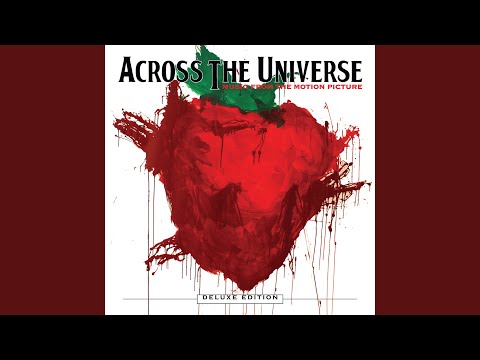
- Album (if any): Across the Universe (Music from the Motion Picture) - Deluxe Edition
- Music style: Drone-leaning rock with repeated chorus phrasing
- Poetic meter: Mixed stress, chant-like repetitions over steady time
Frequently Asked Questions
- Who performs the song in the film?
- Secret Machines are credited as the performers for the film cue and the deluxe soundtrack track.
- Is anyone shown singing it on screen?
- No. The film's music notes describe it as an off-screen vocal track, unlike most cast-performed numbers.
- Where does it fall in the film's sequence of songs?
- It is listed after "Flying" (instrumental) and before "I Am the Walrus," marking the slide into the Dr. Robert stretch.
- Who wrote the original composition?
- George Harrison wrote it for The Beatles, and it was released in 1967 on Magical Mystery Tour.
- What is the song about in its original context?
- Harrison wrote it while waiting on Blue Jay Way in Los Angeles, using fog and delay as the story.
- Why does the film choose this track for a transition?
- Because it is built on suspension: a steady pulse, repeated phrases, and a mood that suggests disorientation without needing plot exposition.
- What key and tempo are commonly listed for the cover?
- Track-metric listings commonly show C major at about 93 BPM for the soundtrack version.
- What vocal range should singers expect?
- A widely used piano-vocal-guitar sheet listing places the melody from C4 to E5, with other editions narrowing the top note.
- Does the soundtrack album have award recognition?
- Yes. As stated on Grammy.com, Elliot Goldenthal has a nomination tied to Across the Universe in the compilation soundtrack category for the 50th Annual Grammy Awards.
- Are there other notable covers beyond the film?
- Yes. Published song histories list versions by artists such as Siouxsie and the Banshees, Tracy Bonham, and Colin Newman, among others.
Awards and Chart Positions
The cue itself is not treated like a stand-alone single, but the soundtrack album around it had a clear public footprint. The Recording Academy credit pages show a nomination connection for Elliot Goldenthal under the compilation soundtrack category, and the soundtrack's chart peaks are widely reprinted in album references.
| Item | Result | Notes |
|---|---|---|
| Grammy Awards (50th Annual) | Nominated - Best Compilation Soundtrack Album For Motion Picture, Television Or Other Visual Media | Nomination credited to the soundtrack's producer team in the category listing and artist nomination pages. |
| US Billboard 200 (soundtrack album) | Peak: 36 | Weekly peak commonly reported for the 2007-2008 run. |
| US Top Soundtracks (Billboard) | Peak: 12 | Category chart peak commonly reported for the release. |
| US Soundtrack Albums year-end | Position: 22 (2008) | Year-end placement commonly reported for the soundtrack line. |
How to Sing Blue Jay Way
This is not a song that rewards big, shiny delivery. It rewards patience and control. Two useful metric anchors are easy to find online: track listings often place the cover around C major at about 93 BPM, while a common piano-vocal-guitar arrangement lists the melody roughly from C4 to E5. Treat those as guardrails, then adjust for your own voice - the vibe survives transposition.
- Tempo: Start slower than the listing - try 80 BPM - and aim for steadiness, not speed. When you move up toward 93 BPM, keep the same calm breath pace.
- Diction: Make consonants clear but unforced. The phrases are short; clarity sells the unease.
- Breathing: Plan a low, quiet inhale before each repeated request line. The danger is running out of air and pushing tone sharp.
- Flow and rhythm: Keep the pulse even. The song's tension comes from repetition over steady time, not dramatic rubato.
- Accents: Stress the plea words lightly, then back off. If every repeat hits the same, the track turns flat.
- Drone sense: Imagine a held note under you even if the band is moving. That mental drone keeps pitch centered in a modal-feeling melody.
- Mic technique: Stay close and under-sung. This is a song where intimacy reads as authority.
- Pitfalls: Overdoing vibrato, forcing darkness, and letting repeated lines become lazy. Make each repeat a slightly different shade.
- Practice materials: Speak the text in tempo for two minutes, then sing on one pitch, then restore the melody. The aim is trance-like consistency without losing diction.
Additional Info
Harrison's original is a peculiar slice of Los Angeles autobiography - a street name turned into a mantra - and published song histories underline how the composition uses studio effects to mimic dislocation. That makes it a natural fit for Across the Universe, a film that treats the late 60s as a collage of sensations as much as a timeline.
For cover-watchers, the song has a long afterlife. Wikipedia's song page lists artists from Colin Newman to Siouxsie and the Banshees, and it is telling that many covers emphasize the track's darker edge rather than trying to brighten it. Secret Machines do the same, which is why the cue lands as a nocturnal bridge rather than a party sing-along.
Key Contributors
| Subject | Verb | Object |
|---|---|---|
| Secret Machines | perform | the off-screen film cue and soundtrack track |
| George Harrison | writes | the original composition for The Beatles (1967) |
| Julie Taymor | directs | Across the Universe and places the cue in the psychedelic corridor |
| Elliot Goldenthal | produces | soundtrack recordings and oversees the film's music program |
| Interscope | releases | the soundtrack album and deluxe edition |
Sources
Sources: GRAMMY.com artist nomination page for Elliot Goldenthal, Wikipedia - Across the Universe (film) music section, Wikipedia - Across the Universe (soundtrack) charts and editions, Wikipedia - Blue Jay Way (song history and covers), YouTube (Provided to YouTube by Universal Music Group) audio upload, Discogs track listings for the deluxe soundtrack, IMDb soundtrack credits page, Tunebat key and BPM listing, Musicnotes sheet listing (vocal range and key), NME magazine Beatles songs ranking article
Music video
Across the Universe Lyrics: Song List
- Girl
- Helter Skelter
- Hold MeTight
- All My Loving
- I Wanna Hold Your Hand
- With A Little Help From My Friends
- It Won't Be Long
- I've Just Seen A Face
- Let It Be
- Come Together
- Why Don't We Do It In The Road?
- If I Fell
- I Want You / She's So Heavy
- Dear Prudence
- Flying
- Blue Jay Way
- I Am The Walrus
- Being for the Benefit of Mr. Kite!
- Because
- Something
- Oh, Darling
- Strawberry Fields
- Revolution
- While My Guitar Gently Weeps
- Across the Universe
- Helter Skelter (Reprise)
- And I Love Her
- Happiness Is A Warm Gun
- A Day in the Life
- Blackbird
- Hey Jude
- Don't Let Me Down
- All You Need Is Love
- Lucy In The Sky With Diamonds